2020 was not kind to the garden. The weather was marginal for much of the summer and the wildfire smoke finished off a prime part of the growing season.
20-25 pounds of produce per box is pretty normal. (“Normal” is around 30 pounds of tomatoes per box, 10 pounds of peppers, and 25 pounds of tomatillos.)
This year we grew fewer boxes overall, and the yield per box was way down as well:
Last night was pumpkin carving. We brought along a pumpkin-shaped cheesy bread:
It’s almost as large as a sheet tray and easy to make. The recipe is basically just two generic pizza doughs: 700g bread (or AP) flour, 440g water (63% hyrdration), 14g kosher salt, 2 tsp instant yeast.
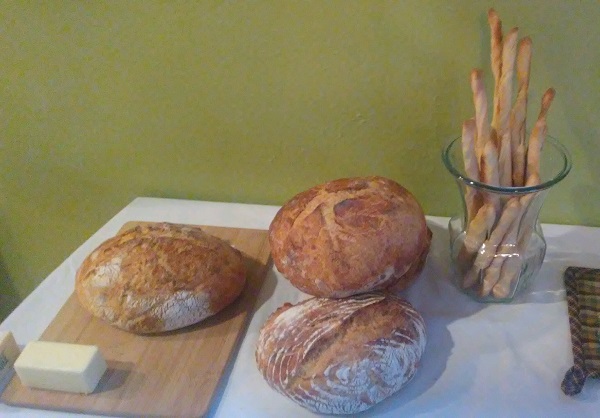
We had a socially-distanced birthday dinner on the covered back deck. Everyone got their own tear-apart Epi De Ble — instead of messing around with whole loaves and bread knives.
These Epi De Ble were inspired by this King Arthur webpage. Note that two Epi will fit on an 18″ sheet tray, at 150-175 grams of bread flour per Epi. The recipe below makes four Epi.
It’s been a very mild summer here Vaguely-North-of-Seattle. We finally got a few days that could be called “very warm or hot” strung together and the basil really responded. Happy and productive basil means it’s time for panzanella (last week, didn’t get a picture), flatbreads (more below), and pizza:
The toppings are basil, roasted red pepper puree, and fresh mozzarella that I squeezed as much water as possible out of so it wouldn’t make the pizza soggy.
Recipe: 300g bread flour, 175g water (58% hydration), 6g olive oil (2%), 6g kosher salt, 3/4 tsp instant yeast. Knead and let rise 2-3 hours, folding the dough about halfway through. Preheat oven to 425F. Stretch the dough out over the screen, top with red pepper puree and bake 10 minutes. Top with mozzarella and bake 4-5 more minutes. Remove from the oven. After the pizza has cooled somewhat top with the basil, unless you’re ok with dark green wilted basil, in which case putting the basil onto a hot pie will work fine too.
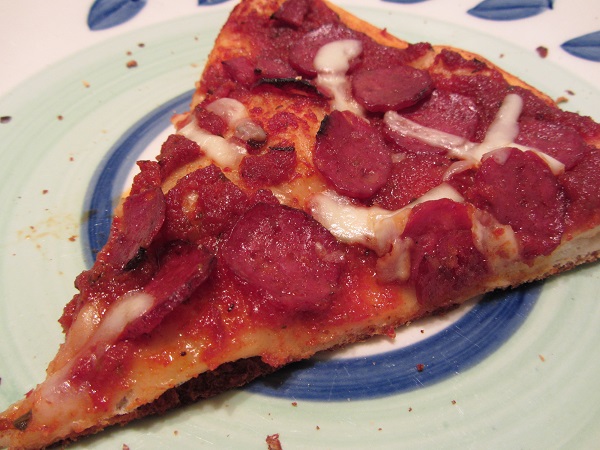
We really enjoy Salt Blade’s cured meats. The business is small and local and we like to support local artisans. Salt Blade is distributed in the Seattle area through Haggen’s, Met Market, and many other outlets. They also ship through their website. Tonight it was Pepperoni Pizza:
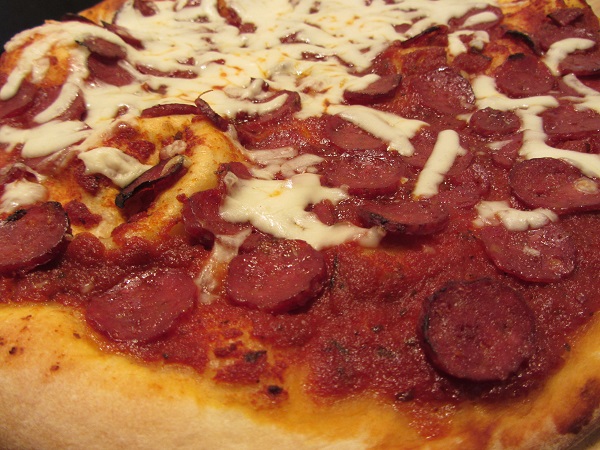
The full pie. It’s 1/2 really cheesy and 1/2 with sparing amounts of cheese:
The Salt Blade package:
The pizza was topped with the pepperoni, a Roma tomato sauce from the garden by way of the freezer, and mozzarella.
The pizza dough recipe is simple: 300g bread flour, 160g water, 6g kosher salt, 9g olive oil, 1 tsp or less of instant yeast, depending upon how long you want to wait for the dough to rise. I used 1/4 tsp of yeast, let the dough rise for a couple of hours, then put it in the refrigerator until the next day.
The pizza was baked at 450F for about 15 minutes on a pizza screen. The cheese was was added at about the 11 minute mark.
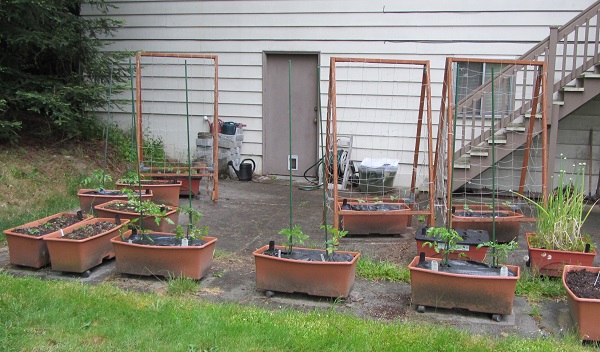
Our patio “Container Garden” consists of twelve EarthBoxes and three City Pickers. This year we’re going to leave a few idle, or fill them with a rotation of short-season veggies and greens. I don’t feel like this is the right summer to be committing to wrangling a jungle of big plants.
Here’s a picture of the almost-complete garden. you’re looking basically East. The first sun hits the grassy edge of the patio at around 10am and by 11am-1pm (summer day-length dependent) the rear trellises will be in full sunlight:
In the front there are (L-R) – two empty boxes, a box of Taxi and Oregon Spring tomatoes, a box of two San Marzano Romas, and a box of two Oregon Spring. They’re all determinate and should play well together.
In the mid-left back there are two indeterminate Black Krim tomatoes sharing a box. Behind that under the trellis are Fortex (pole) beans in a City Picker box — 20 plants in a 4 x 5 layout.
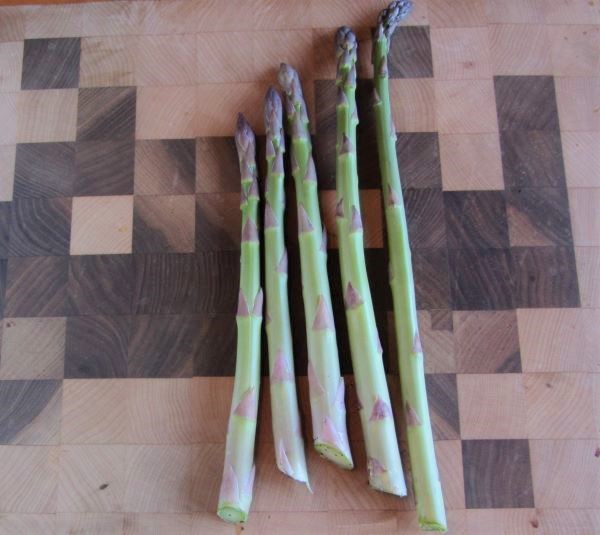
Three years in, we can now begin to harvest asparagus. For reference, the Space Invader cutting board is 12″ high:
The asparagus we started in 2016 ultimately didn’t work out due to poor planning and a bad location, so we tried again in 2018. This time around we have a much sunnier spot and raised beds to help the drainage and soil temperature.
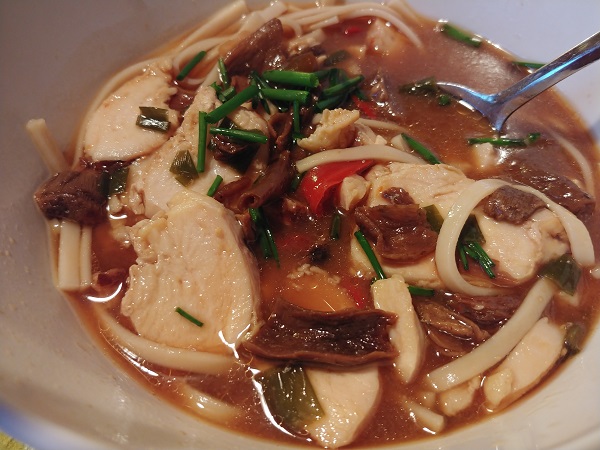
Asian Chicken Soup From Things We Have In The House:
The soup after I’d eaten a spoonful.
From the Freezer:
Chicken Stock, about 4 cups
Chicken Breasts (2)
Chopped Red Peppers from last year’s garden
From the Pantry:
Soba Noodles, about 4 oz
Dried Porcini mushrooms
From the Refrigerator:
Shiro (White) Miso, about 2-3 TBP
Sesame Oil, about 1 tsp
Hondashi, about 20 granules (optional, but good)
Teriyaki Sauce (optional)
From the Garden:
The green parts of Green Onions, cut into 1/4″ lengths
Garlic Chives, cut into 1/4″ lengths
The “Recipe”:
Sprinkle teriyaki sauce over the frozen chicken breasts, bake at 325F for around 20-40 minutes, until the interior is 165F. Set aside to cool. Slice thinly when cool.
Bring a pot of water to a boil and cook the Soba noodles per the package directions, about 12 minutes. When the noodles are cooked, drain, remove to a bowl and toss with the Sesame Oil, set aside.
Place the dried Porcini mushrooms in hot water for a few minutes to rehydrate.
The frozen chicken stock and Red Peppers go into a pot over low heat. Fish the Porcini mushrooms out of their water and add to the pot. Maintain a low simmer.
When you’re 15 minutes from ready to eat, add the Hondashi and Green Onions to the pot, reduce the heat to low.
5 minutes before serving set the heat to very low/off. Add the Chicken, Noodles, and Miso to heat through.
Serve warm, garnish with the Garlic Chives.
I really enjoyed this one, and we literally had everything on hand. It was also an excuse to get out of the house and go to the back yard for the alliums.
The whole recipe is a guideline really. Add/subtract almost anything and it’ll still be tasty.
My preference lately has been for cracker-style pizzas. From a technique and ingredients standpoint that generally means:
AP Flour – To limit gluten strength
Limited Kneading – To limit gluten formation
Low Hydration – This is what works for me. It’s possible to make crackers and crackery flatbreads with a wide range of water input. I’ve had the most success with smaller amounts of water.
The Addition of Fat/Shortening – Limiting gluten by interfering with the chains.
Docking The Dough – May be optional. I mostly use it when there are few or no toppings. It helps prevent the dough from poofing up like a pita.
Baking Longer At Lower Temperatures – To drive out moisture without over-browning.
The toppings pictured above were all basically extras or leftovers: Pesto, sauteed mushrooms, and salami.