The Peas, Nine Days Later

-A.J.

The peas nine days later:

170224 peas

Crazy, huh? They’ve spouted and grown between 6 and 10 inches tall in just over a week. If you look closely you can see the roots poking out of the bottom of the rolls. (The empty looking pots have recently planted dill and cilantro seeds. They should make an appearance sometime in the next week or so.)

Today was their first day with time outside. I left them outside for a couple of hours after work. The temperature was in the mid-forty degree range, and I didn’t think it’d whack the peas.

Hopefully the weather will be decent enough in the next few days to plant them outside. The forecast calls for night-time temperatures in the 20’s tonight and in the 30’s until Wednesday, possibly with some snow mixed in. We may just have to take our chances, since I don’t think the peas will fit in the current setup for another week — they’ve already grown almost to the top of the lighting rig.

That, and the toilet paper rolls are really beginning to show some mold. My inclination right now is not to use toilet paper rolls the next time around and instead use some of the reusable plastic “pots” we’ve gotten from nurseries over the years.

Previous “toilet paper pots” post here.


Starting Seeds In Toilet Paper Roll “Pots”, And The Improved Lighting Rig

-A.J.

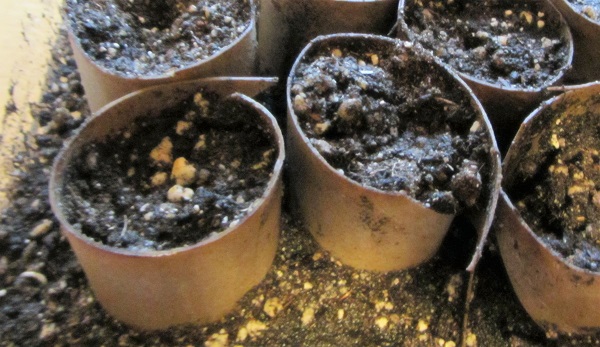
Over the winter I came across a blog post that recommended using emptied toilet paper rolls as mini pots for starting seeds. It looked neat, clean, and easy, and it seemed like a great way to use up a free resource. The author simply cut the tubes in half, placed the smooth (uncut) side down in a baking dish, and filled the tubes to 1″ from the top with damp soil. Seeds were placed on the soil and buried to the appropriate depth.

I could have been neater about it — here’s what I wound up with when I planted peas:

170215 rolls

When I added a little water many of the rolls immediately  began to unravel. Right now I think they have enough integrity that when the seeds sprout I’ll still be able to plant the plugs without too much drama. As it is, added water needs to go on the bottom of the dish, otherwise all the soil would wash out of the tubes.

I also did some tweaking on the lighting rig. It’s now smaller, at about 20″ x 8″:

170215 seed rig

The lights are now nearly touching each other, and the light is much more concentrated. The lights themselves are around 1-1/2″ above the soil. It’s very bright, if only in a small space of 16″ x 8″. That’s enough room for direct light on about 15 paper roll tubes. The dish could probably hold 25 tubes or so. It seems like a good compromise that doesn’t totally dominate the counter top.

The first time I tried the lighting rig (version 1.0) most of the plants wound up leggy, partly because the lights were a ways apart, and (I think) partly because I needed to leave the lights on for more hours than I did. This time I’m targeting ~16 hours a day. 16-18 hours seems to be the consensus on the interweb. We’ll see. Assuming this works we’ll start beans and Brussel Sprouts the same way in a couple of months.

New Seeds For 2017

-A.J.

Last year’s post was titled “Too Many Seeds, Probably“. While we did manage to use up some of the inventory, not everything was consumed. Still, I wanted to try some new things. The list:

SP783/L Escalade Spinach Organic – Escalade
HR1114/L Garlic Chives-Nira Organic – Nira Garlic Chives Organic 1/2 gram
ON557/S Guardsman Onion – Guardsman Onion Seeds
OV580/S Joi Choi Pac Choi – Joi Choi Pac Choi Seeds
BN039/S Maxibel Bean – Maxibel Bean Seeds
BN062/L Midori Giant Bean Organic – Midori Giant Bean Seeds Organic

The left column is the Territorial Seed catalog number. The thinking behind the “new stuff” –

Escalade Spinach Organic:  We used up the last of the spinach packets, so it was time for more.

Garlic Chives-Nira Organic:  Rick Bayless loves garlic chives, and it sounds like something we’ll love too. As an added bonus, slugs don’t mess with alliums. We should be able to seed them about “wherever” and have success. (Rick grills them. He then dices the garlic chives and adds them to many different dishes.)

Guardsman Onion:  Replenishing the scallion supply. We planted the last of these seeds in the fall.

Joi Choi Pac Choi:  A Chinese Cabbage variety that’s supposed to grow faster and be more bolt resistant than regular Bok Choi. We’ll see. Because it’s a Brassica the cabbage moths and aphids will come after them. We’ll likely grow the Joi Choi with Brussels Sprouts, cover all of it with tulle, and dose with Neem Oil (wikipedia link). In theory that should work to keep the bug population down. In theory.

Maxibel Bean:  A french/filet bean. Think Haricot Vert. The slugs may like these too much to be worthwhile. I figure we can try them in a few locations and see what shakes out. No trellising required. So long as the slugs don’t decimate the plants we should get something. Super fresh Haricot Verts have the potential to be awesome.

Territorial Seed Company picture.

Midori Giant Bean:  An extra-early maturing Edamame. I love Edamame. No trellising(!)

————–

I see now that everything that’s really “new” is either indestructible or potential slug/pest bait. So it goes. We’ll know how effective Neem Oil is by the end of the season.


Final Summer EarthBox 2016 Recap — The Tomatoes, Tomatillos, and Basil

A.J.

The final “summer garden 2016” recap — Tomatoes, Tomatillos, and Basil

The 2013 recap is here. 2014 here. 2015 here.

160905 tomatoes

The Tomatoes:

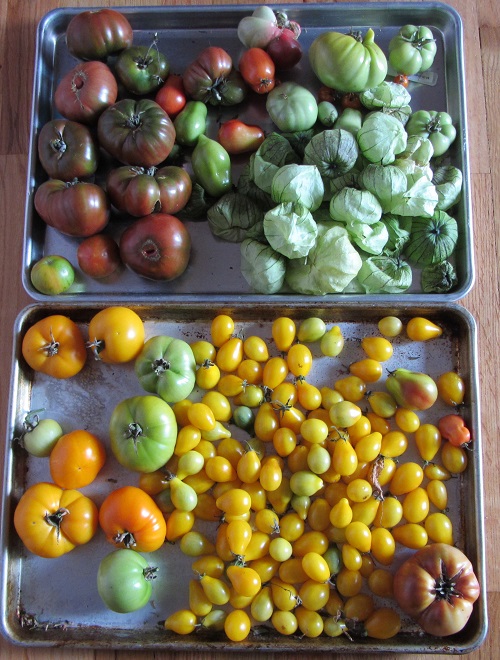
Black Krim – 10.9 pounds. [75 day indeterminate heirloom.]  Relatively poor yield in 2016, which was true of everything else too. In the two previous years the yield was around 23 pounds each year. Keep that in mind as we go down the list. Always a favorite at the tomato tastings with its rich, earthy flavor. Black Krim also makes a great sauce. Keeper.

(Purple) Cherokee – 14.1 pounds. [80 day indeterminate heirloom.]  Produced earlier than 80 days and continued late — it wound up with the 2nd highest yield of the eight tomato plants. Cherokee did well in the tastings. Definite winner that we’ll grow again assuming we have the space. (Pictured above on the back sheet tray, right side. Probably.)

Oregon Spring – 10.5 pounds. [60 day determinate.]  An early and abundant producer that tastes good and makes good sauce. It’s a small determinate, which is another point in its favor. (Smaller determinates don’t require some of the pruning and maintenance that the indeterminate varieties do. And they take less space. And everything else gets more sun by association. I can see us trying for a higher ratio of determinate tomatoes going forward.)

Valencia – 10.6 pounds. [55-60 day indeterminate.]  New to us, these were supposed to taste of pineapple, which no-one could detect in the tastings. Still, the plant did well, the fruits had a “full” tomato taste and ripened to a cheery bright orange.

Sun Gold – 6.6 pounds. [65 day indeterminate]  Very poor yield from a very sweet tasting and popular tomato. Most years we’d see around 16 pounds from this variety. We’ll get ’em next year.

Yellow Pear – 8.5 pounds. [78 day indeterminate.]  I thought it would be a good idea to put another indeterminate cherry tomato with the Sun Golds. We weren’t impressed. The Yellow Pears didn’t really taste of anything, the skins were thick, the yield was “meh”… Last year we didn’t love the Sweet Millions, this year it was the Yellow Pear. Not a keeper. We’re still searching for a complimentary cherry tomato and are open to recommendations.

Roma – 3.0 pounds. [75 determinate.]   Terrible. We’d averaged 22 pounds per year over the last three years. Smothered by indeterminates, the Romas need a better location in 2017. Most likely the “correct” answer is a dedicated box (two plants) of Romas.

Paul Robeson – 8.5 pounds. [85 day indeterminate.] Another purple/black variety. Late, but tasty. We may not have room for three purple/black varieties next year. Keeper if we have room.

Taxi – 22.7 pounds. [65 day determinate.] Taxi is a top producer- Every. Single. Year.  25.9 pounds in 2014.  24.6 pounds in 2015.  The marginal weather didn’t effect the Taxi plant in the least. We have a lot of yellow tomato sauce.

Tigerella – 12.1 pounds. [65 indeterminate heirloom.] The Tigerella got a little squished in the middle of the garden. Still, the yield was good (relatively), and the plant was one of the last hangers-on of the season.

————————-

The Tomatillos:

“Verde” – 19.7 pounds from two plants. This was a new variety to us, and it’s my new favorite. The yield was good, and the fruits grew to be larger than the other two varieties we’ve previously done. (“De Mipa” and “Mexican Strain”.) That means less work and less processing. Winner.

160724 tomatillo

————————

The Basil:

We’re done weighing basil because I find it too tedious. We’ll get around 3 pounds of leaves per box per year. Good enough. We waited too long to harvest this year — the plants sort of yellowed before we got to them and a lot got wasted. The plan next year is to harvest 1/2 of the basil on August 1 and half of what’s left each successive week until the plants yellow. (Or something like that.)

————————

2016 Summary:

The total yield was 194.3 pounds, though we didn’t count the garlic, scallions, or other cool-season greens that we’ve counted in other years. Not including the basil it comes to 17.7 pounds per box, or about 6.0 pounds per square foot of growing medium. It could have gone better but nature had other ideas. I’m not going to argue.


—————–

Visit Dave at Ourhappyacres, host of Harvest Monday.

Winter Container Mini Update — November 4, 2016

-A.J.

Last night was cool and clear, so it’s time to shoehorn in a quick “Winter Garden” update before the cold really sets in:

The salad table, which sees sun until about 2pm:

161103-salad-table

[The top tier is mostly romaine (Winter Density(?)), arugula, cilantro, Mache, and spinach. Middle tier is Miner’s Lettuce and New Zealand Spinach in the front with parsley in the back and poking out the sides. The bottom tier is mostly arugula with a few interspersed cilantro.]

I’ve found the biggest challenge with this salad table arrangement is that the top tier dries out in the August sun, which makes it hard to direct seed and have the little things survive. Going forward, I’m guessing we’ll want to start in July/August with seedlings in pots, placing those in the partially shaded and cooler back yard. Then in early September move some of those plants to the salad table and spread the rest around the summer EarthBoxes as they’re emptied of tomatoes and such.

The previous paragraph was a mouthful, though it’s way better than the pile of sand I started with.

The backyard EarthBoxes have a collection of garlic, shallots, bunch onions, radishes, chard, mache, and carrots. All the greens will need to be harvested in March or April before they bolt. I’ve learned that one. Everything else will need to make room in May for the summer vegetables.

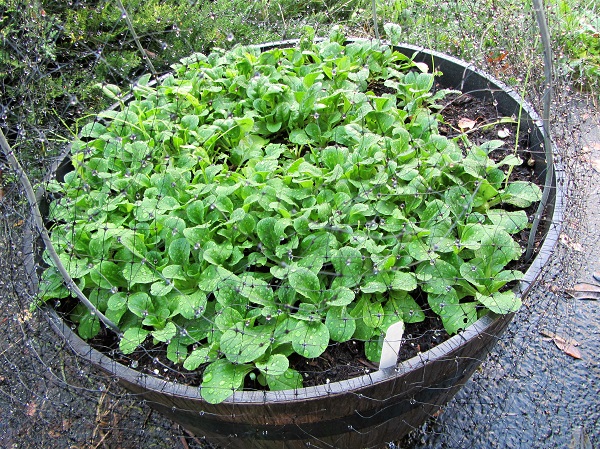
This whiskey barrel was available in mid-late summer after the bugs decimated the nasturtiums. We planted a mix of Mache, spinach, and scallions:

161103-salad-greens

The neat thing about this barrel is that it doesn’t get much direct hot summer sun, but as the sun moves lower on the horizon it gets more sunlight. It’s perfect for stuff that might bolt in August. We’ve been harvesting salads for the last couple of months — it’s been a continuous supply of micro-greens.

That’s it for this update, and now that I look at the weather report it calls for mild temperatures and rain in the coming days..

EarthBox 2016 Recap — The Cucumbers And Zucchini

A.J.

2013 Cucumbers and Zucchini recap here. 2014 here. 2015 here.

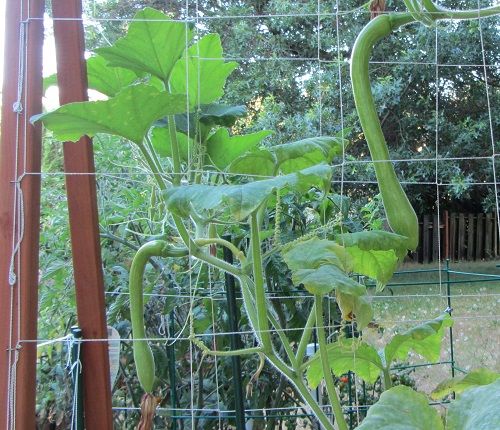
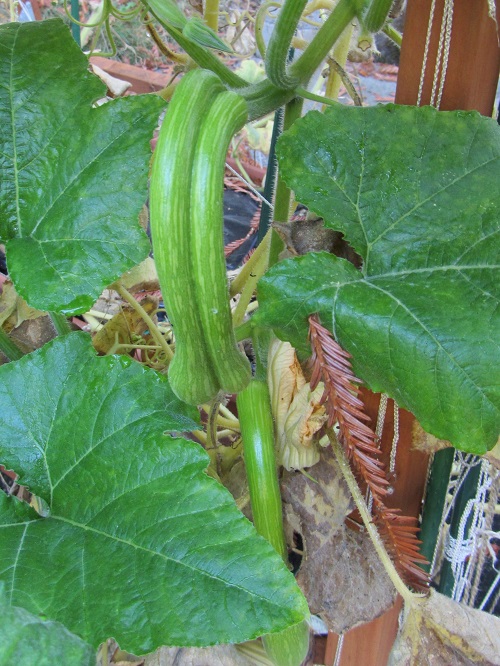
The single Tromboncino plant produced 10.9 pounds this year. That’s basically the same (per plant) as in 2014. 2015 was better, but then 2015 was better for everything. Either way, we now have lots of frozen shredded zucchini.

160814 tromboncino

I think we’ve gotten better at “tending” for the Tromboncino:  We’re quicker to remove “loser” fruits. We also harvested a lot of smaller/shorter fruits this year due to the less than ideal weather.

The Tromboncino shared a box with a Lemon cucumber, due to the lack of availability of a 2nd Tromboncino plant. The spreadsheet says that we only harvested 1.6 pounds of Lemon cucumbers. I can believe that weight, as they were out-competed by the Tromboncino. This will be another argument for not mixing different plants in the same box.

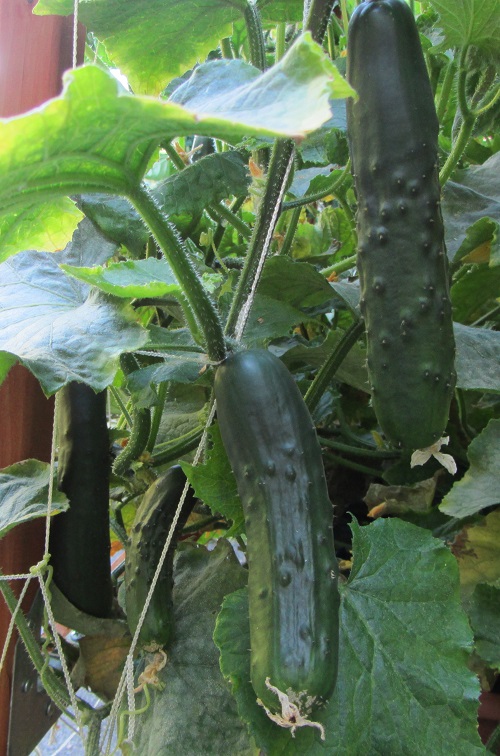
The Marketmore cucumbers yielded 28.0 pounds — almost identical to last year’s output. Last year was sort of too hot for the cucumbers. 2016 was sort of too cool. Overall the fruits were much more attractive in 2016, and I think the actual harvest was of better quality.

160724 cucumber

Even as late as August 21 the cucumber plants still looked presentable:

Basil foreground left. Peppers background left. Cucucmbers center. Tomatillos background right.
Basil foreground left. Peppers background left. Cucumbers center. Tomatillos background right.

Next up:  The Tomatoes, Tomatillos, and Basil recap.

EarthBox 2016 Recap — The Peppers

by A.J. Coltrane

Chalk one up for maintaining the blog as a gardening journal. I haven’t been able to find the scribbled notes of which peppers we grew, but this post has a list!

2013 Peppers recap here.  2014 Peppers recap here. 2015 Peppers recap here.

160918-harvest

The totals:

Variety Count Weight Ave. Weight
Anaheim 3 8.6 2.9
Serrano 3 4.5 1.5
Carmen 2 3.3 1.7
Gypsy 2 1.3 0.7
Orange Bell 1 1.0 0.3
Red Bell 1 1.1 1.1
Melrose 1 0.4 0.4
Red Beauty 1 1.0 1.0
Baron 1 1.0 1.0
Ace 1 0.2 0.2
Orange Sun 1 0.3 0.3
Jalapeno 1 1.5 1.5
2016 Total 18 24.2 1.3
2013 10 22.3 2.2
2014 18 31.0 1.7
2015 18 32.5 1.8

The yield this year wasn’t very good relative to previous years, though the overall decline was in line with the tomatoes and everything else, so no real cause for alarm. It’s likely that if the peppers were allowed a little more space the results could have been better — some of the “interior” plants basically got squished. The cool summer didn’t help either.

On the flip side, we didn’t lose many peppers to bugs. On a couple of different occasions I added two or three grains of Sluggo Plus around the base of the plants and I’d like to think that whacked the earwigs.

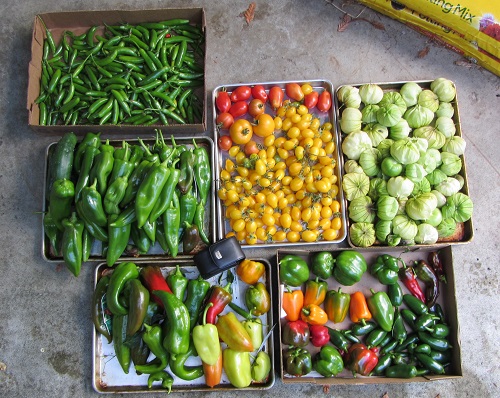
160820 pepper2


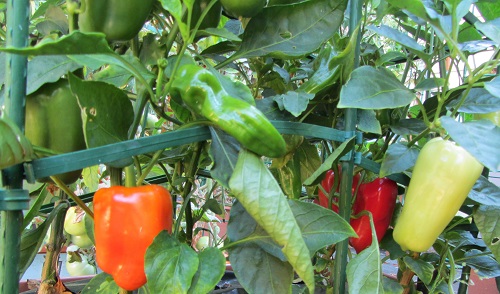
Really, for all the varieties, it broke out into “Bell Peppers”, “Pointy Peppers”, and “Hot Peppers”. No surprises, despite the “excitement” involved in obtaining the plants. The Anaheims in particular did very well (again). The Serranos are hotter than I’d visualized, but we’ll throw them into everything that might benefit from some heat over the next few months.

As an added bonus:  The pepper plants were essentially zero work — No trellising. No pruning. Gotta love it.

—————

Visit Dave at Ourhappyacres, host of Harvest Monday.
Container Garden Mini Update — October 2, 2016

by A.J. Coltrane

Previous post here.

October 4, 2015 post here. October 4, 2014 post here. October 7, 2013 post here.

This post is a follow-up on last week’s harvest post. For reference, here’s last week’s harvest:

005

Look how much most everything ripened:

161002-ripening

Historically, at least for us, the final harvest hasn’t really ripened after coming inside. This feels like a lot of ripening to happen in a week.

So what changed?

  1.  It could be that the final harvest has always been done later in the year, meaning that the house was cooler, which slowed ripening. (See the Note below – this idea may be at least partly right.)
  2.  This year we left them on a counter in the kitchen next to a window that faces partly south. The little bit of sun getting through the blinds provided some good warmth and encouraged ripening.

There may be something that impacted ripening, though the two explanations above probably cover most of it.

Note:

Final 2013 harvest — October 7.

Final 2014 harvest — September 28.

Final 2015 harvest  — October 4.

Final 2016 harvest  — September 26.


Container Garden Update — September 26, 2016

by A.J. Coltrane

Previous post here.

September 27, 2015 here. September 29, 2014 post here.  September 30, 2013 post here.

The last of it:

005

That brings us to 194.3 pounds — well short of 2015:

2013 total:  228.0 pounds

2014 total:  269.4 pounds

2015 total:  282.5 pounds

2016 total:  194.3 pounds

To be fair, we didn’t weigh any of the salad greens, garlic, or scallions that weren’t part of the “main season” harvest. I’d estimate that would amount to around 10-15 pounds.

Overall the summer was too cloudy and cool for the garden to really go gangbusters. Certain plants, such as the Sun Gold tomato and Tromboncino were way off their previous levels. Most of the other plants were “off” at least somewhat. I’ll go into the details in upcoming “Recap” posts.

As for the “Winter Garden”:  Five of the EarthBoxes now have garlic that I planted last week. Another whiskey barrel has shallots and mache. All of those are securely covered with bird netting to keep out the squirrels. The salad table is status is shown in the previous post here. I’m pretty certain it’s too late now to consider starting anything else — October is next week. Still, I think we did a better job this year of timing the salad table with the onset of cold weather.

Both freezers are completely jammed full of veggies, and today’s harvest is still on the counter. I’m going to declare this season a low-maintenance non-failure, despite the sub-par productivity.

—————————

Visit Dave at Ourhappyacres, host of Harvest Monday.


Container Garden Update — September 18, 2016

by A.J. Coltrane

Previous post here.

September 20, 2015 here. September 21, 2014 post here.  September 22, 2013 post here.

In the coming week it’s supposed to be getting into the 40’s at night — that meant that it was time to harvest in earnest, and we pulled 73 pounds of stuff in the last seven days.

It would be fun to watch the harvest in time-lapse, but photos will have to do.

September 15th, “before”:

160915-overview-before

September 15th, “after”:

160915-overview-after

The harvest for the 15th:

160915-harvest

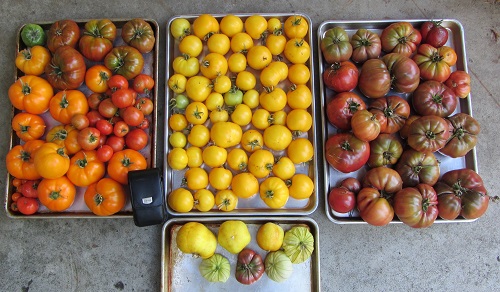
[Left sheet tray – Paul Robeson, Valencia, Tigerella, other assorted tomtatoes.  Taxis in the center. Cherokee Purple on the right.]

We did another big harvest on the 18th:

160918-harvest

[Around a dozen different types of peppers, including Serrano on the top left, Anaheim center left, tomatoes on the top center, and tomatillos on the top right.]

The “after” picture:

160918-overview-after

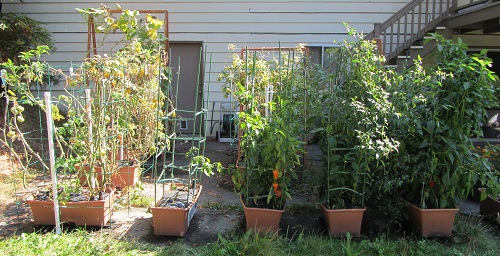
[Back Left – Tromboncino and Lemon cucumber. Front Left – the last of the tomatoes. Back Center – Tomatillo, Right – Cucumber.]

You can tell it’s late in the year because tired plants do weird things, such as this “double” Tromboncino. There’s a normal fruit below it:

160918-tromboncino

I sort of rebooted the salad table:

160918-salad-table

[Arugula on the bottom. Parsley left side, 2nd shelf. New Zealand spinach and Miner’s Lettuce on the right side of the 2nd shelf. The top shelf has lettuces, cilantro, and a bunch of other little things that I hope size up before the weather turns ugly.]

—————————

Visit Dave at Ourhappyacres, host of Harvest Monday.