2024 Container Garden Recap

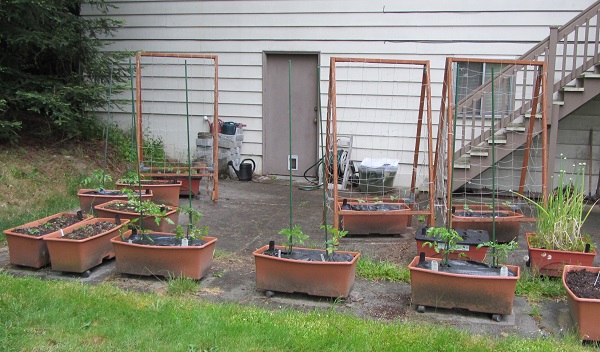
2024 was our worst year ever by total yield or by EarthBox by quite a bit. This year we grew four boxes of tomatoes (8 plants), one box of cucumbers (4 plants), one split box of zucchini and tomatillos (one of each), and one box of basil (4 plants).

Typically we get around 20 pounds per tomato plant — around 40 pounds per EarthBox. Not this year:

One box (four plants) Cucumbers: 27.9 pounds. Not a terrible year for cucumbers. They maintained good shape and taste deep into the harvest season.

One box (two plants) Black Krim Tomatoes: 14.6 pounds

One box (two plants) Oregon Spring Tomatoes: 12.6 pounds

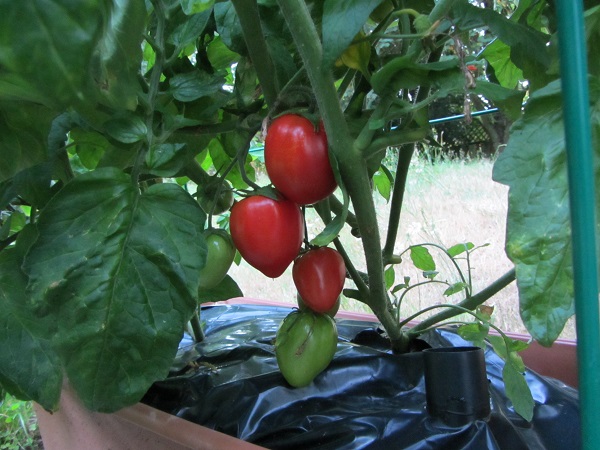
Two boxes (four plants) Roma Tomatoes: 22.2 pounds

1/2 box (1 plant) Zucchini: 6.7 pounds

1/2 box (1 plant) Tomatillo: 3.3 pounds

87.3 pounds total.

We also grew one box of basil, and as usual the box produced way more than we could consume. At the end of every season it gets distributed around the neighborhood before the cold damages it too much.

We’re in the Seattle area. Almost everyone I talked to said they were having a bad year for tomatoes, so I don’t think it was just us. We did have one Roma die outright, which is the first tomato plant we’ve had die in over ten years of gardening. On average the yield this year was about 1/3rd of what we’ve seen historically.

The other “problem” was that we bought the last zucchini plant labeled as Tromboncino from the nursery. It turned out it was a “regular” zucchini plant, so it flopped all over the Tomatillo, rather than vining and staying out of the way like it was supposed to. There were no winners in that competition for space and light.

The flip side is 80 pounds of produce is a lot of stuff. We processed the tomatoes into sauce and froze dinner-sized portions. Both the downstairs chest freezer and the upstairs freezer are packed solid with vegetables.

Going forward, it may be we need to cycle out potting soil and replace it with fresh. It may also be that 2024 is closer to the new normal as the large trees around our lot continue to encroach on good sun for the garden.

I think overall it was a combination of relative lack of attention, bad weather, and bad luck (mislabeled pant and the dead tomato plant).

We’ll try again next year.

2023 Container Garden Recap

Our patio container garden had a “solid” year all-around: 173.1 pounds of produce from 9 EarthBoxes. Which comes to about 6 pounds per square foot of container space. The trees in and around the garden continue to expand, at some point soon we may need to go to fewer boxes and smaller (determinate) plants.

Here’s how everything did:

Cucumbers: 1 box, 4 plants, 34.6 pounds. We grew “Marketmore” cucumber plants. The cucumbers started early and stayed productive until late. This was a relatively good year for “attractive and straight” fruit too.

Carmen Peppers: 2 boxes, 12 plants, 16.0 pounds. We located the peppers in a relatively sunny/premium location. The plants grew taller than usual and we had fewer problems with bugs and most everything ripened. The basil is not getting its spot back.

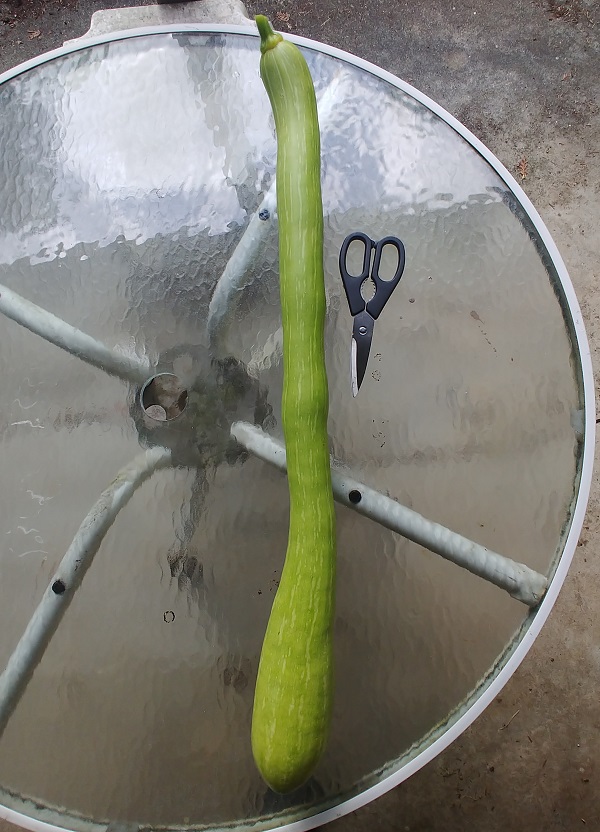
Tromboncino Zucchini: 1 box, 2 plants, 18.6 pounds. It was a solid year for the zucchini as well. Mid-season we got this:

I think the hand pollinating helped (again). An old toothbrush is now a permanent part of the gardening tool kit.

Black Krim / Carbon Tomatoes: 1.5 boxes, 3 plants, 28.5 pounds. The three plants mostly intermingled and it wasn’t worth figuring out which was which. We grew two Black Krim but one of them didn’t do well at all and was dead by mid-September. I have no idea what caused it so hopefully it was just rough handling. Ten pounds per plant is fine, and the Black Krims tasted amazing, as usual.

Tigeralla Tomato: .5 box, 1 plant, 12.2 pounds. The Tigerally did “fine”. They ripened fairly late. It’s fun to have colorful tomatoes though this year they were pretty “meh”.

Oregon Spring Tomato: 1 box, 2 plants, 20.7 pounds. The Oregon Springs were a top performer again. They started early and the taste and yield were both very good. Highly recommended.

Roma Tomato: 2 boxes, 4 plants, 42.5 pounds. Romas always yield well for us, and even the unripe fruits all ripened after harvest.

We also grew four basil plants in one box in the middle of the garden. They produced way more than we could consume so the neighbors got a lot of our excess basil. The EarthBox directions call for six plants per box, but I think the yield winds up being about the same with a little more space per plant.

Finally, we had one box of 20 Fortex (pole) beans, yielding fistfuls of pods all summer.

Considering we didn’t pay a ton of attention to the garden it went pretty well.

Container Garden Recap 2020

2020 was not kind to the garden. The weather was marginal for much of the summer and the wildfire smoke finished off a prime part of the growing season.

To quote the 2019 Recap

20-25 pounds of produce per box is pretty normal. (“Normal” is around 30 pounds of tomatoes per box, 10 pounds of peppers, and 25 pounds of tomatillos.)

This year we grew fewer boxes overall, and the yield per box was way down as well:

“Slicing” Cucumber (2 boxes, 6 plants):  22.5 pounds

Taxi Tomato (1/2 box, 1 plant):  9.4 pounds

Black Krim Tomato (1 box, 2 plants):  8.1 pounds

Oregon Spring Tomato (1-1/2 boxes, 3 plants):  23.0 pounds

Roma Tomato (1 box, 2 plants):  8.6 pounds

Continue reading “Container Garden Recap 2020”

Container Garden Update — August 4, 2019

We’re finally stringing together a few days around 80 degrees, which gives us The First Real Harvest Of The Year!

190804 tomatoes

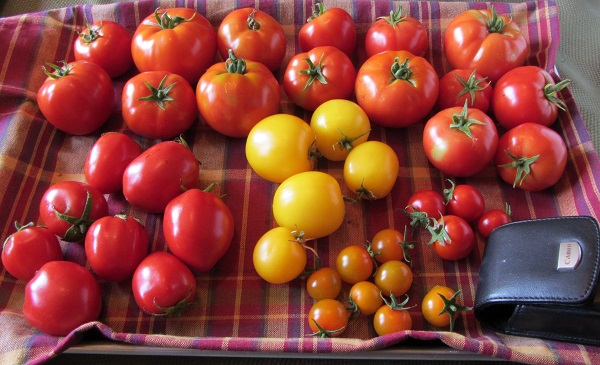
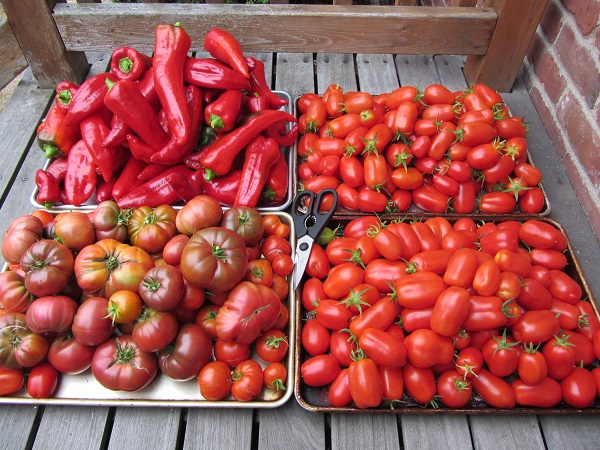
Tomatoes — Front L-R:  Roma, Taxi, Sun Gold, Oregon Cherry.  Back:  Oregon Spring

190804 cucumbers

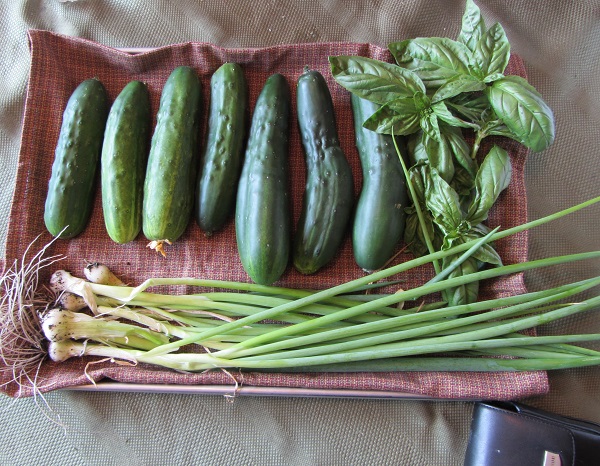
Marketmore cucumbers, basil, and (I think) Guardsman bunch onions.

190804 fortex beans

No Fortex bean harvests since Thursday means 2.5 pounds on Sunday.

Hopefully more warm weather means that the nice harvests are just beginning.

—————————

Visit Dave at Ourhappyacres, host of Harvest Monday.

Award Winning Caprese Salad

By Iron Chef Leftovers

Mrs. Iron Chef needed a dish for a work pot luck recently and of course she turned to me to ask if I would make something. I debated making my Mac and Cheese, but we weren’t sure if there was any way to heat it up and it has been too bloody warm to make Mac anyway. I figured that since the event was outside and during the heatwave we have been going through that a nice Caprese Salad would be a good choice and I would do it with a twist. Tomatoes are just about in season, watermelon is in season and I have more basil right now than I know what to do with so it seemed like a good candidate with easily accessible ingredients. It would be quick to make and easy to transport also. So I went with it. At the event there was a contest for best dish and guess what took home the top prize?


The Software

1 ¼ lbs. ripe, in season, tomatoes, cut into ½ in pieces

8 oz. Fresh Mozzarella, preferably Ciliegine size, drained, patted dry and halved

8 oz. Watermelon, cut into ½ inch pieces

1 ½ tablespoons coarsely minced fresh basil

1 tablespoon balsamic vinegar (or red wine vinegar)

2 table spoons extra virgin olive oil

½ teaspoon salt


The Recipe

In a large bowl combine the tomatoes, mozzarella and watermelon and toss gently to combine. Add basil, oil vinegar and salt and toss gently to combine. Taste and adjust salt and add fresh ground pepper as desired. Let sit at least an hour to combine (don’t refrigerate it) and toss just before serving. That is it, there is nothing else to do but enjoy.


What fresh mozzarella looks like. The ones you want to buy are in the lower right of the board and yes, I do recommend the Belgioioso brand.

Notes

The key to this is to use in-season tomatoes. The riper they are, the sweeter they are so if you grow your own, this dish will be much sweeter than if you use store bought ones. I prefer roma or cherry tomatoes for this dish, but just about any tomato will work except for the ones that you will find in the supermarket labeled as “slicing tomatoes”. The mozzarella should be available in the deli section of most mega marts and the ciliegine size are about the size of the tip of your thumb. You can use just about any size mozzarella balls (don’t use the slicing mozzarella, it doesn’t have enough moisture), you just want to cut the pieces into roughly the same size as the tomatoes and watermelon. If you are using home grown tomatoes that are really sweet, I would recommend using red wine vinegar rather than balsamic – otherwise you risk a very sweet salad. A nice trick for mixing the oil and vinegar – put them into a small container with a lid and shake vigorously a couple of times until combined. I usually have a small container of the two handy so I just need to shake it up and pour over a salad. Adjust the recipe to taste – if you want more tomatoes, or basil or mozzarella, or watermelon, add it. You may need more oil and vinegar, if you do increase the other ingredients – just do it slowly. This salad is also great with some raw sweet onions sliced thinly added to the mix and served over grilled bread.

Mythcrushers – The NJ Edition

By Iron Chef Leftovers

A friend recently posted a link to an article titled “11 Things Only People from New Jersey Understand.” Being a long-removed Jersey boy myself, I thought it was an interesting list, but one, alas that definitely had some misconceptions, even if it was written by a Jerseyite. What does this have to do with a blog on food, sports and games, you might ask? Well indulge me a minute.

2. There Are Certain Foods You Can Only Eat When You’re In New Jersey

The list of things I have to eat when I’m in New Jersey, and try not to eat anywhere else are:

  • Bagels
  • Pizza
  • Corn
  • Tomatoes
  • Salt Water Taffy

I’m a total Jersey food snob because the rest of the country just doesn’t make them the same. And then there’s the ultimate NJ dish that doesn’t even exist anywhere else…

Ok. I want to bust this myth completely since I have heard it all of my life and it is simply not true. First off, corn and tomatoes make no sense. Yes, NJ is called the Garden State for a reason, but you can get stellar corn and tomatoes IN SEASON just about anywhere these days. The in season label applies to NJ also. Let’s face it, unless you spend half your year in the southern hemisphere, there is about a 2 month window for getting good tomatoes, and rarely they are from the local meagmart. Any farmer’s market will carry great produce in season, or just do what Coltrane and I do – grow them yourself.

Anyone that says you can’t get great pizza or bagels outside of NY/NJ is just being a snob. I actually know people who would laugh at the idea of eating pizza and bagels outside of NYC as a silly concept, so there are levels of snobbery here. Everyone who grows up in NJ has their favorite pizza place, most likely one that is currently being run by the 4th or 5th generation of an Italian family. I can think of at least a half-dozen excellent, non-Neapolitan pizza places in Seattle that make a pretty good version of a NY/NJ pizza.  I have had some truly terrible pizza also, but that is another story. Is it exactly the same, no, but I never expect that someone is going to make a pizza exactly like Pompeii Pizza in Bayonne, NJ. Heck, none of the other pizza places in Bayonne (and there are a ton of them) make a pizza exactly like Pompeii. I guess what I am trying to say here is that, while pizza in NJ may be the best on the planet, there are plenty of excellent versions of it in other cities, you just need to spend time looking.  The same thing applies to bagels.

I will just skip salt water taffy – it isn’t something I particularly love to begin with and I have had equally uninspiring versions of it elsewhere.

3. The Mere Mention Of Taylor Ham, Egg, And Cheese On A Roll Activates Four Different Regions Of Your Brain

Taylor Ham is the single best brand of pork roll available on the market. Taylor literally invented it. For this reason, it is not appropriate to call it pork roll–you must call it Taylor Ham in homage to John Taylor. Calling it anything else is disrespectful to the master.

Taylor Ham is definitely something that you will not find at a restaurant/deli anywhere else in the country. Heck, you are hard pressed to find anyone outside of the NYC/NJ/Philly area that even has any idea what Taylor Ham is. It is, for lack of a better description, a bastardized version of Canadian Bacon (the meat, not the movie). Strangely, while I can’t remember seeing it on any menu anywhere I have ever been outside of NJ, I can occasionally get it and scrapple (a hyper-local Philly specialty) at Ballard Market in Seattle. I have no idea why, but I can if I want to make it at home.

9. The Best Time To Eat At A Diner Is 2 a.m. When You’re Drunk With Your Best Friends

There’s only one type of non-chain eatery that has consistently good food at any time of the day and that’s a New Jersey diner. I remember going to the Chester Diner at 2 a.m. after working the late shift at the Chester Movie Theater and meeting friends for a gyro and pancakes. And you know what, they would taste exactly (amazingly) the same if I went at 2 p.m. on a Sunday after church. It’s a marvel of modern Americanized Greek technology.

Diners are just the best. Period

I grew up a half block from a diner and yes, there were many drunken late nights with friends eating really crappy food at 2 AM. Diners don’t seem to exist much outside of the east coast and are pretty much non-existent on the west coast and I do miss them, especially when I want breakfast for dinner. Like pizza places, everyone in NJ has their favorite place that has been there forever and still probably has the 40 year old personal juke boxes mounted to the wall in the booths.

10. Worshiping Bruce Springsteen And Bon Jovi Is Just A Natural Part Of Growing Up

Ok, this has nothing to do with food and maybe things have changed in the 25 years since I moved from NJ, but Bon Jovi was always considered to be a bad joke, not an idol. The Boss however, that is a different story. Springsteen is just about as close to a god as you can get in the state. I have seen The Boss play in 7 different cities, and none of those concerts came close to the energy of the 4 hour marathon he played in 1993 in NJ on the Human Touch/Better Days tour in front of the home crowd. Did I mention that the show I went to happened to be the 8th of 10 shows in 12 days he played in NJ, and he played for 4 hours? Yep, it was the most energized concert I have ever seen. Either way, it should tell you where Springsteen ranks in the NJ idol list – he is The Boss. When you say The Boss in NJ, everyone knows who you are talking about. I can honestly say that I have never had a conversation with anyone in NJ about how great Bon Jovi is.
Braised Pork Sugo

By Iron Chef Leftovers

One of the nice things about making pasta sauce is that it is a fairly simple process and can be used in a variety of ways. One of the things I tend to do with my tomatoes is to make a really simple sauce and freezing it so that I can use it as a base for a more robust pasta sauce later in the year. One of my favorite sauces is a sugo – a hearty sauce that I love in the cold of winter. It was part of one of my courses at a recent dinner party and it is a nice sauce to feed a crowd.


The Software

3 lb. pork shoulder, cut into 1 inch cubes

2 medium onions, finely sliced (about 2 cups)

3 carrots, peeled and cut into 1 inch lengths

3 celery stalks cut into 1 inch lengths

1 tablespoon tomato paste

1 can diced tomatoes (16 oz)

1 1/4 cup chicken stock

1 ¼ cup red wine

1 teaspoon minced garlic

5 cups tomato sauce

1 teaspoon dried oregano

1 teaspoon minced sage

1 teaspoon minced rosemary

2 teaspoons olive oil


The Recipe

Preheat oven to 275 degrees. In a dutch oven, heat one teaspoon of olive oil over medium high heat until just smoking. Add 1/3 of the pork and brown on all sides (about 4 minutes per side). Remove from the pot to a plate and reduce heat to medium and add 1 teaspoon of olive oil. Add onions and cook for 8 minutes until they start to become translucent, stirring occasionally. Add the tomato paste and cook for 3 minutes, stirring occasionally. Add garlic and cook for 30 seconds. Add celery and carrots and cook for about 10 minutes stirring occasionally. Add stock, tomatoes and red wine and increase heat to medium high until liquid comes to a boil. Add the pork and cook until the liquid returns to a boil. Cover and put in the oven. Cook for about 2 hours or until the pork is fork tender. Remove from the oven. Pull the pork from the liquid and set aside to shred. Take the vegetables and add them to a blender. Strain the liquid to remove the fat and then add to the blender with the vegetables. Puree until smooth (you may need to do this in a couple of batches). Add the puree and the pork back to the pot and combine with the tomato sauce, oregano, rosemary and sage. Heat over medium heat for 15 minutes, add salt and pepper as needed and serve over pasta.


Notes

This recipe is better if you make it a day ahead of when you want to use it. I use an even split of marsala wine and dry red wine, but just about any red wine will work in this recipe. You can adjust the amount of tomato sauce depending on how much sauce you like. If it is too thick when you serve it, add a bit of pasta water to it to loosen it up. This would also be nice with a bit of red pepper flakes added to the initial braise.

Farfalle with Cherry Tomatoes and Goat Cheese

By Iron Chef Leftovers

Since it is tomato season and I am currently pulling more tomatoes than I can eat, I needed to do something creative with them that allows me to highlight their sweetness without completely overpowering the flavor. I also wanted something that was easy and I could pull most of the ingredients from the garden or what I usually have on hand. Here is what I came up with:

The Software
8 oz. pasta, preferably farfalle
8 oz. cherry tomatoes, halved
1 oz. goat cheese
1/2 cup heavy cream
1/4 cup dry vermouth
1/3 cup sweet onion, finely diced
1 clove garlic, crushed
5 basil leaves, chiffonade
1 tablespoon olive oil
1/4 cup pasta water, reserved
Salt and pepper


The Recipe
Cook the pasta until al dente, reserve 1/4 cup of the pasta water when done. In a large skillet, heat the olive oil over medium heat until shimmering. Add the onions and a pinch of salt and cook until the onions are translucent, about 5 minutes. Add the garlic and stir for 30 seconds. Add the vermouth and cook for 1 minute. Add the cream and cook until the sauce coats the back of a spoon, about 5 minutes. Add the pasta and goat cheese and toss until the pasta is coated and the cheese is melted, about 1 minute. Add the tomatoes and cook until the tomatoes are warmed through, about 3-4 minutes. If the sauce is too thick at this point, add a bit of the pasta water to thin it out (There shouldn’t be big puddles of it in the pot, you are really just creating enough sauce to coat everything). Check seasonings, remove from heat, add the basil and serve.


Notes
The recipe should serve 4 easily but can be easily scaled. I used Sun Gold tomatoes since that is what I had in the garden, but just about any tomato would work – just cut them small enough to be one bite. Some chives would also be a nice finish to this if you don’t have any basil and this could also work with the addition of some hot pepper flakes – just add them in when you put the vermouth in. If you don’t have vermouth, you can use any white wine that you would like.

Enchilada Sauce – Another Use for Green Tomatoes

By Iron Chef Leftovers

If you have green tomatoes, one of the best things to use them for is enchiladas. You can easily use the tomatoes to replace tomatillos in the sauce and get something that tastes about 100 times better than anything that will come out of a can.

The Software
3 lbs. green tomatoes, cut into 1 inch pieces, woody parts removed
¼ cup minced onion
3 cloves garlic, peeled
1 tablespoon olive oil
1 jalapeno pepper, diced, seeds removed
2 cups stock or water
Salt

The Recipe
In a sauce pan over medium-high heat, heat the olive oil until shimmering. Add onion and cook for 3-4 minutes, stirring constantly, until they begin to become translucent. Add garlic and cook for additional 30 seconds until the garlic becomes fragrant. Add the tomatoes, pepper and liquid and bring to a boil. Reduce heat to medium and cook for 10-15 minutes until the tomatoes are tender. In several batches, take the contents of the pot and puree until smooth. Return the puree to the pot over medium heat and bring to a boil. Once the sauce begins to boil, continue to cook until it thickens (5-10 minutes), stirring about every minute. Once the sauce has reached the desired consistency, add salt to taste and it is ready to use.

Notes
You can pretty much put this over anything – pasta, chicken, pork, veggies or enchiladas. If you like it hotter, add more peppers, or better yet, add some serrano peppers. If you like it less spicy, remove the pepper or reduce the amount. If you want a super kicked up version of this sauce, when you add the garlic, add 1 ½ teaspoons of the following: cumin, dried oregano, smoked paprika, adobo, garlic powder and black pepper. Follow the recipe as is otherwise.

Quick Chicken Parm

By Iron Chef Leftovers

Chicken Parm is one of my favorite things – how could it not be, breaded chicken, sauce and cheese. Recently, I had a family member have a health scare and it got me thinking, is there a healthier way to make chicken parm and still have it taste great. This is particularly useful if you don’t have any sauce on hand (and you would never buy sauce from a jar, right?) This is what I came up with.

The Software
3 chicken cutlets, 3 oz. each, about 1/8 to 1/4 inch thick, patted dry
2 tablespoons, herb infused olive oil (see note below)
2 oz. mozzarella cheese, either sliced very thin or shredded
1 oz Parmigiano reggiano grated
1 tomato, sliced into 1/8 inch rounds (enough to cover the surface of your chicken)

The Recipe
In a large skillet, heat 2 tablespoons of oil on medium-high heat until just starting to smoke. Add chicken and cook on the first side for 2 minutes and the second for 1-2 minutes until done. Remove excess oil with a paper towel. Heat your broiler. On a baking sheet covered with a sheet of foil, place the chicken, top with tomatoes and then top with cheese. Place under the broiler until the cheese is melted and bubbling, about 2 minutes. Serve to happy guests.

Notes
Start to finish, you can have this on the table in 10 minutes. Notice I did not use salt – there is plenty in the cheese that you won’t need it. Check on your chicken constantly when under the broiler – it can go from bubbly to burn in a hurry. There is no need to preheat the broiler – you are just melting the cheese, not cooking the chicken. If using an electric oven, keep the door slightly ajar, the broiler will cycle off and on if you don’t and it will take a lot longer to melt the cheese. The recipe can be easily scaled and obviously you can add more tomato or cheese if you want. The key to this being a quick recipe is pounding the cutlets thin. If you don’t want to do it, buy your chicken at a butcher shop or megamart with a butcher counter and ask them to do it for you. They should have no problem with doing that.

Notes on Infused oil
To make the herb oil, you can either buy it or make it yourself. I like to throw a sprig of sage, rosemary, tarragon and thyme into about 1 cup of oil with 2 garlic cloves. Heat over medium heat for 15 minutes. Store in an airtight container in the fridge for up to 1 month. If you are feeling really lazy, just toss the herbs and garlic in the oil you are cooking the chicken in and leave them in the pot, following the directions for cooking the chicken in the recipe.