Calzones Of Unusual Size

by A.J. Coltrane

I may have slightly overestimated how much dough was required for two largish calzones.

I used 600 grams of bread flour (300 grams for each calzone). That may have been at least 100 grams more than necessary.

The Recipe:  600g bread flour, 348g water (58% hydration), 30g olive oil (5%), 12g sugar (2%), 15g kosher salt (2.5%), 1 tsp instant yeast. Knead on low speed for 10 minutes. Let rise 1.5 hours. Divide, shape into balls, and let rise another 30 minutes. Roll out. Preheat oven to 375F. Bake for 30 minutes on a sheet tray, turning halfway through.

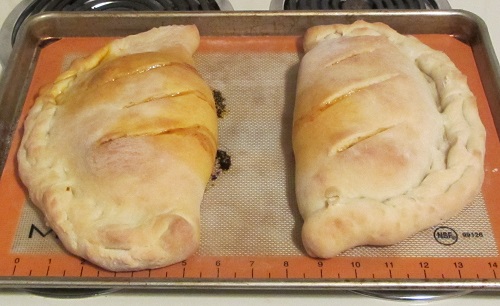
A picture right out of the oven:

151205 two calzones

The filling included pepperoni, meatballs, minced (and sauteed) onion, diced (and sauteed) crimini mushrooms, an aged gruyere grated on the small holes of a box grater, and a roma tomato sauce with diced red peppers, garlic, and herbs.

Here’s one of the two calzones dominating a regular-sized dinner plate:

151205 calzone one

The filling was well received. The calzone “bread” was fairly light — for as massive as the calzones were, they didn’t “eat” like a giant meal.

Still, add a salad and they’d easily feed a family of four.

I thought they were the best calzones I’ve made so far. I think going light on the oil, adding sugar, and being patient with the rise combined to give better results than in the past. (And just like in this grilled calzone post from 2012 — red sauce on the side would have been welcome. Oh well.)


Beranbaum’s Bread Bible Basic Brioche

by A.J. Coltrane

For Thanksgiving I thought I’d try baking Beranbaum’s Bread Bible Basic Brioche.

The recipe is here on Epicurious. The process involves many steps, and I had to re-read it multiple times to parse what she really meant and to make sure that I had the timing right. (For the “loaf”, use Steps 1-6, then skip down to Step 7 in “variations”. Plan to start 1-2 days ahead of when you intend to bake the bread.)

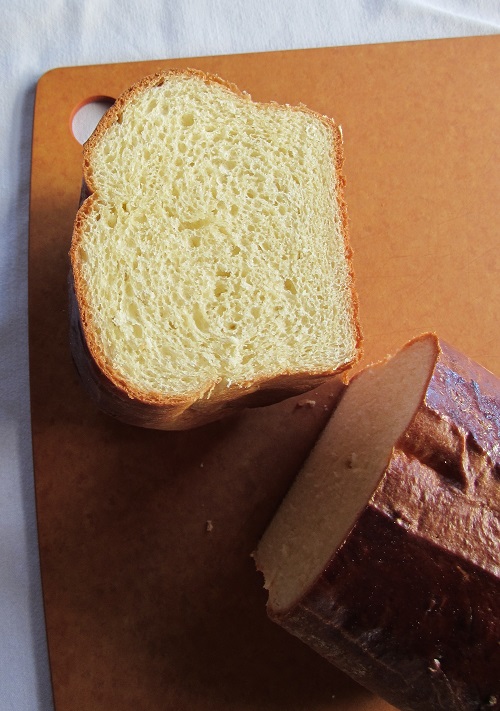
I thought it came out well. Here’s the crumb. (Note the white tablecloth… it was a “nice” dinner):

151126 brioche crumb

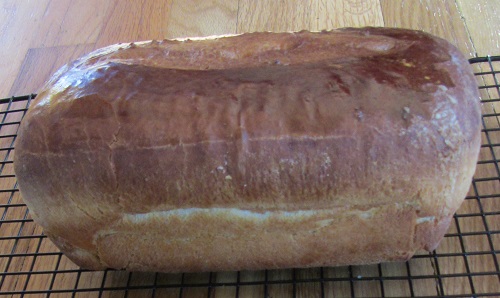
The loaf prior to slicing. The far side didn’t rise quite as much as the near side:

151126 brioche

I used the “optional” eggwash, which is why the top is so shiny.

The recipe makes one 8-1/2″ x 4-1/2″ x 4-1/2″ loaf. That gave me a chance to use a smallish loaf pan that I’ve had forever, but only ever used for marinading or mixing things:

151126 pan

I’ve had that pan so long that I have no idea where it came from. I think I might have inherited it from one of a zillion previous roommates.

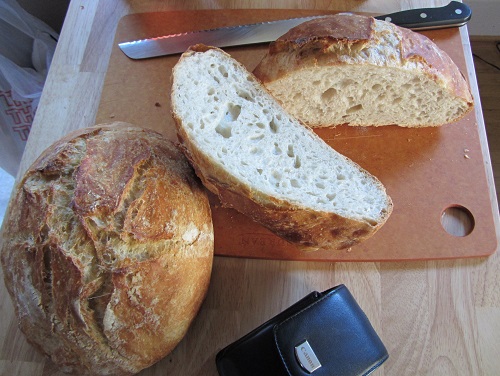
As a bonus, the No Knead breads decided to be cooperative too. I used half AP flour, and half Bread flour. One of the breads split along the slashes, the other was very craggy… rustic!

151126 no knead


Thanks for Iron Chef Leftovers for the invite and the terrific dinner, and to everyone for the great Thanksgiving company.

A Tale Of Three Pizzas

by A.J. Coltrane

I recently received a Baking Steel as an early holiday gift. The Steel is 16″ x 14″. It *just* fits in our undersized oven:

151119 baking steel

It’s pretty tight against the top of the oven too — the directions call for placing the Steel on the 2nd rack from the top.

I wanted to start with some small, simple, and very manageable pizzas to get a feel for how everything was going to behave, and to ideally introduce as few variables as possible. I was targeting pizzas 8-10″ in diameter to keep things from getting too interesting.

The Recipe:  450 grams AP Flour, 270g water (60%), 11g kosher salt (2.4%), 9g olive oil (2%), 1 TBP of “Italian Seasoning”, and 1 tsp instant yeast. Combine all ingredients and mix on low speed for 10 minutes. Lightly oil the bowl and dough ball, cover and let rise 1.5 hours. Divide the dough into 3 roughly equal pieces, shape into balls, cover with a towel, and let rise 30-45 minutes or until “poofy”.

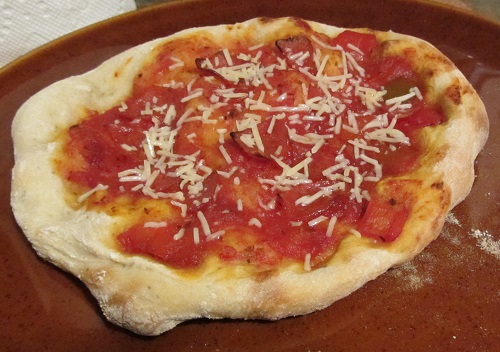
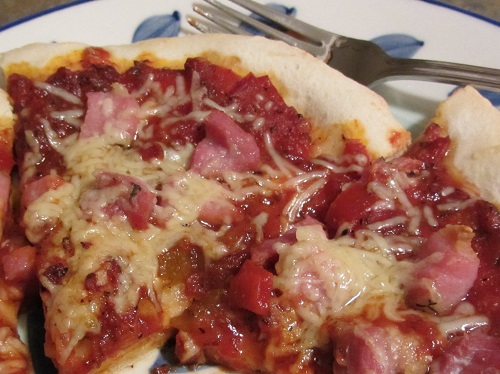
I stretched each dough out by hand, trying to take care to preserve the gas bubbles around the edges. (The remaining doughs hid under the towel until it was their turn for shaping and baking.) The pizzas were topped with pepperoni and a Roma tomato sauce from the garden that was doctored up with garlic, onions, “Italian Seasoning”, diced bell peppers (from the garden again), and kosher salt. I used a floured peel to slide the pizza onto the Baking Steel, in an oven heated to 500F. The Baking Steel instructions call for a 9-minute bake. I went 9 minutes on the first pizza, 10 minutes on the 2nd, and I-don’t-know-because-I-failed-to-set-the-timer on the 3rd.

Some cheap pre-shredded parmesan was tossed on top of the pizzas shortly after they came out of the oven.

The Results:

Pizza One:

151119 pizza1

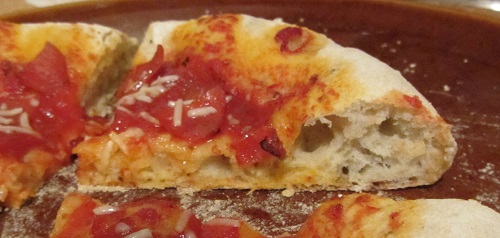
Pizza One Crumb:

151119 pizza1 crumb

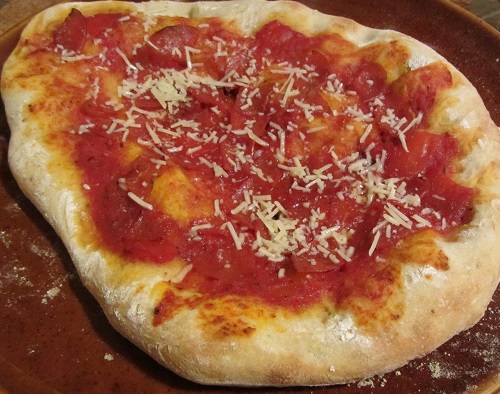
Pizza Two:

151119 pizza2

Pizza Two Crumb:

151119 pizza2 crumb

Pizza Three:

151119 pizza3

Pizza Three’s crumb wasn’t “all that”, so I didn’t bother with a picture.

———-

I selected AP Flour because I wanted to use some up. I think the color and structure would have been better had I used Bread Flour instead. Alternately a little bit of sugar might have been a good addition.

Even so, the pizzas were all fairly airy, especially so considering the AP Flour. They were really easy to eat without realizing how much had been eaten — the small, savory slices went away fast.

Conclusion: The Baking Steel seems to perform as advertised. It’s definitely an improvement over the pizza stone, and as an added bonus it’s basically indestructible. At $80, it’s not a cheap toy, but I’ll think we’ll get years of value out of it. It might be the right answer would have been to spend $100 and get the unit that’s 3/8″ thick, rather than the 1/4″ of the regular version, but $100 seemed like too much to throw at something that I wasn’t totally sure about.

Still, I’m happy with it.

(I think Pizza Two was the most attractive.)

Salad Table Update — November 15, 2015

by A.J. Coltrane

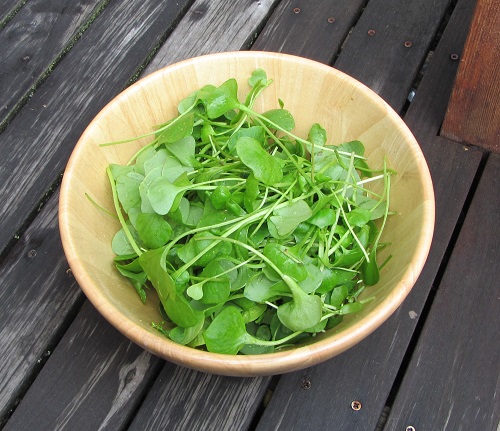
No frost yet, though though the forecast yesterday called for ‘up to 3″ of rain’. It doesn’t often dump that much rain here. The salad table took it in stride. The excellent drainage is a big bonus — the front lawn is totally squishy. We harvested a big bowl of greens today:

151115 salad bowl

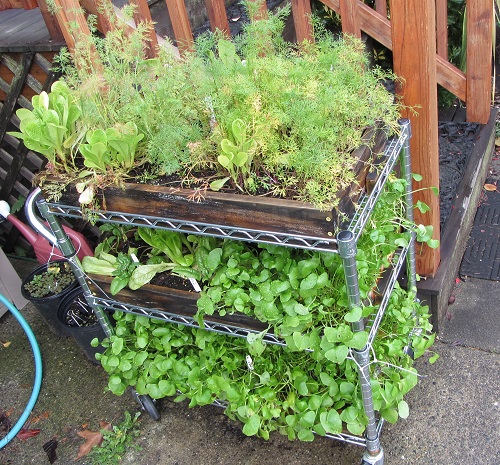
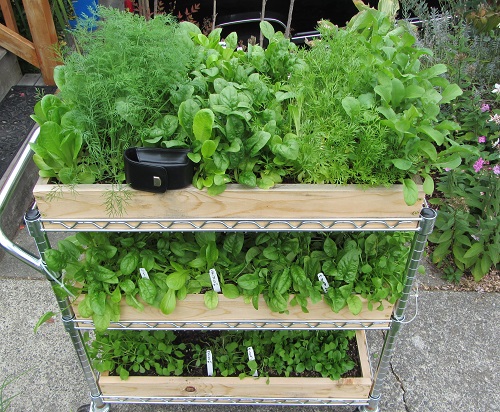
Which didn’t really make much of a dent in the contents of the salad table. The romaine lettuces and spinach are doing “ok”, the dill and cilantro are starting to look tired:

151115 salad table


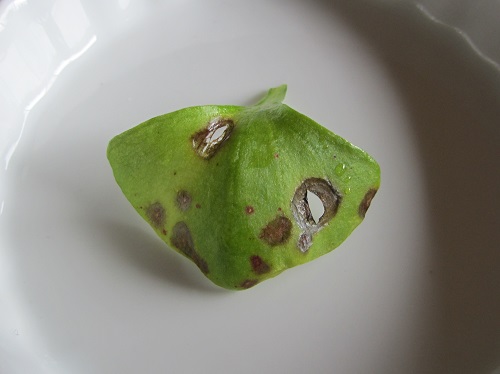
A few of the Miner’s lettuce leaves don’t look so good. Does anyone recognize this as a sign of something specific? I’m assuming it’s most likely bugs:

151115 leaf

If I’d have known it was this easy to have fresh greens during the winter I would have done a salad table years ago..

—————–

Visit Dave at Ourhappyacres, host of Harvest Monday.

GNOIF: What GNOIF Does In The Shadows

by A.J. Coltrane

GNOIF #20 recap — GNOIF:  What GNOIF Does In The Shadows (Death/ Horror/ Zombie/ Vampire themes.) The title is a reference to this silly (and highly recommended) vampire mockumentary.

Games That Got Played:  Bang!, Zombie Fluxx, Get Dr. Lucky, Guillotine, Ultimate Werewolf

Games That Didn’t Get Played:  Betrayal At House On The Hill, Dead Fellas, Dead Money, Dracula, Last Night On Earth, Mr. Jack NY, Mystery of the Abbey, Small World.

GNOIF #20 actually fell on Halloween. That meant record attendance. It also meant more of a “party/casual” atmosphere than usual. Basically everything that got played could be considered a “light and social” game.

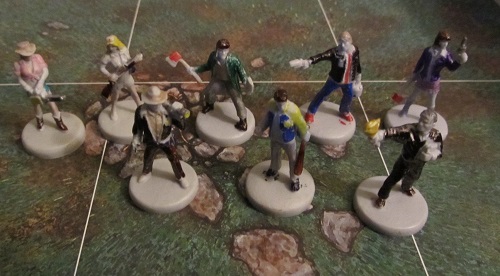
That meant that we didn’t play Last Night On Earth, though prior to game night we’d made a point to buy a 24-pack of Sharpies to give the figures some color.

151031 last night figures

I’d like to think the “painting” helps make the game a little more immersive — at the very least it’s definitely easier to tell the heroes apart. (Note that we could have painted them, but I’ve seen lots of stories on BoardGameGeek about how paint “bubbles over time” on the figures from this particular game.)

I played Zombie Fluxx for the first time with the Creepers. Maybe I’m an old school Fluxx curmudgeon, but I’ve never felt like Creepers add anything to the regular “Fluxx” game. I do feel like they add something to Zombie Fluxx — I think the zombie creepers make more thematic sense than the creepers the other Fluxx variations. Also, it’s fun shooting zombies, and redirecting their attention to the other players.

Thanks to everyone who played and made it a fun evening!

Container Garden Update — November 8, 2015

by A.J. Coltrane

Squirrels have been digging in any “unclaimed” dirt in the containers. I thought I could stop the digging by laying bird netting over the dirt. That seemed to work for a while, until a really determined squirrel pulled on the netting. The netting dragged across the seedlings, uprooting a few and damaging a few more. So:

back yard 151108

It’s what I should have done in the first place — I added galvanized hoops that we had left over from last year’s Row Cover Experiment. The pictured seedlings are tiny – they were all planted way too late for a winter harvest.

The boxes pictured below were planted early/mid September, which is still too late for a winter harvest (L-R – Dragon radish, mache, carrots, mache again with bunch onions scattered through all the boxes):back yard2 151108


Next year we need to start seeds in mid-August at the latest, even if it means transplanting things that aren’t traditionally transplanted. we’ll also use bird netting and hoops over everything — I’d guess the squirrels destroyed up to 20% of the seedlings, and that’s just not cool.

—————–

Visit Dave at Ourhappyacres, host of Harvest Monday.

Two “00” Pancetta Pizzas

by A.J. Coltrane

Pizza #1

A “00” pizza using SeattleAuthor‘s pancetta and a little goat cheese:

151101 pizza

This started out as a 60% hydration pizza. (250g “00” flour, 150g water, 6g salt (2.4%), 1/2 tsp instant yeast.) I kneaded it on low speed for 10 minutes. At that point it was obvious that the dough was going to be unmanageable (again), so I kneaded it by hand while adding a small amount of flour until it became more cooperative.

The dough (with the pancetta) was baked on a pizza stone at 500F for 10 minutes. The goat cheese and herbs were combined, then added to the pizza and allowed to bake for another 4 minutes. (Herbs:  Chives, rosemary, garlic, sage, and lemon thyme, all finely minced together with a little olive oil — flavors I thought would complement the pancetta. I was sort of shooting for a “pistou” type of idea, though there’s likely a better term for whatever it was.)

A significant amount of the pancetta fat rendered out and soaked into the dough. I’m guessing the pools of fat didn’t do much for the appearance, though after the fat permeated the dough it looked fine again.

Overall it came out about like I’d visualized. The shape and thickness were good, and the crust puffed up around the edges well. I was hoping for something closer to little matchsticks for the pancetta, but the larger size was fine anyway. I liked the finished pizza, though others in the crowd weren’t so sure about the concept.

Pizza #2

SeattleAuthor’s pancetta with red sauce and parmesan:

151102 pizza

This time I used 250g “00” flour, 142g water (57% hydration), 7g kosher salt (2.8%), and 1/2 tsp instant yeast, all mixed for 10 minutes on low speed in the KitchenAid. The dough was immediately cooperative (the extra salt may have helped), and it shaped more easily too. It’s hard to tell by the photo, but there’s a nice lip around the outside. The pizza was baked on a pizza stone at 500F for 10 minutes with everything except the cheese, then the cheese was added and it went back into the oven for another 3-4 minutes.

The red sauce was made with roma tomatoes and sweet bell peppers from the garden, flavored with salt, pepper, garlic, dried oregano, and some “Italian herb mix”. (How we came into the possession of a bottle of “Italian herb mix” I have no idea.)

There was less fat in finished product #2 — I’d trimmed away some of the really fatty bits before baking. I think the 2nd (red) pizza was the better of the two, though I learned a little something about handling “00” flour from each.

I think I still have enough “00” flour for ~20 more of these pizzas… thank you Iron Chef Leftovers.

————–

Late edit: It was pancetta, not prosciutto. I knew that..

A Salad Table Update

by A.J. Coltrane

The salad table peaked a little earlier than I had intended. Here’s September 19:

150919 salad table

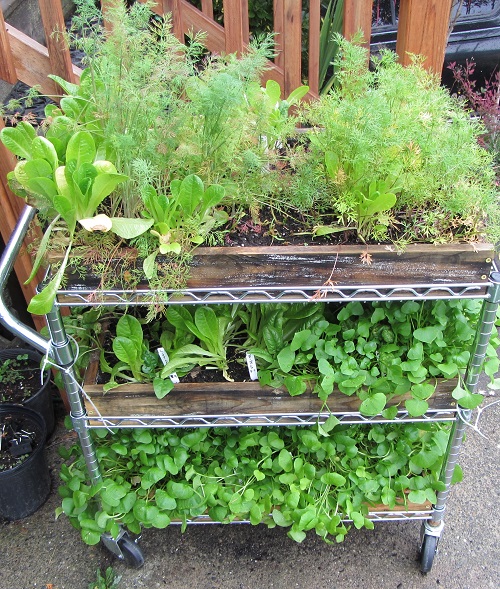
And today (top shelf, L-R:  romaine, dill, blank space where the spinach was, more romaine, frilly cilantro):

151031 salad table

I clearly got overeager — most all of the seeds were planted at once. When October turned out to be warmer than usual it meant that the spinach was done before the cool weather kicked in. I replanted it in the top center of the box on October 10th, but the current growth is still less than 2″ tall — basically invisible in the photo above.

I think I need to get better about succession planting. At the very least, succession planting would ensure that not everything bolted before the short days and permanent cold.

The flip side is the Miner’s Lettuce(!) It’s native to around here, and it’s loving the cool wet weather. I doesn’t even seem to mind the shade in the back of the table. It basically out-competed the mache on the lowest shelf, though we may find some mache buried in the thicket if we “weed” enough:

151031 salad table2

I’ll be interested to see how the Miner’s Lettuce holds up over the winter. I figure we’ll let this combination of plants run until late spring, then try New Zealand spinach and whatever else looks especially bolt-resistant. I’m open to plant-variety suggestions — No reason to fight the hot if the salad greens won’t tolerate it regardless.

Bonus pic of the scary front yard. The “gravestones” are concrete blocks wrapped in foil. The blocks themselves are flat on one end and rounded on two corners. The rounded corners became the “tops”:

151031 front yard

—————–

Visit Dave at Ourhappyacres, host of Harvest Monday.


“00” Chili Pizza

by A.J. Coltrane

I think it’s fair to say that the results I’ve had when using “00” flour have been… uneven. Each time the dough has been stretchy to the point of barely manageable, at best.

I did a little looking around online — it sounds like “00” flour is supposed to be really stretchy, and it doesn’t absorb much water… I’ve been using too much water in the dough. Evidently “Official” VPN pizzas use either 58% or 58.7% hydration. (The actual quantity quoted varies by source. I didn’t look that hard.) (That, and in Reinhart’s “American Pie” he says that in Italy, Bread Flour may be included at 25% of the total amount of flour. Sneaky.)

Also, oil isn’t used in a VPN pizza. However, while searching for the “proper” hydration I found sources that recommend 1-2% oil for home bakers using “00” flour, due to the temperature differences between a home oven and a professional or wood-fire oven. So…

This time I kept it as simple as possible:  240 grams “00” flour, 57% hydration, 1/2 tsp salt, 1/2 tsp instant yeast. Knead on low speed for 10 minutes. I gave it a stretch and fold after an hour, then let it rise for another 45 minutes before shaping. A baking stone was preheated to 500F in the oven, the dough was formed on a pizza peel, and:

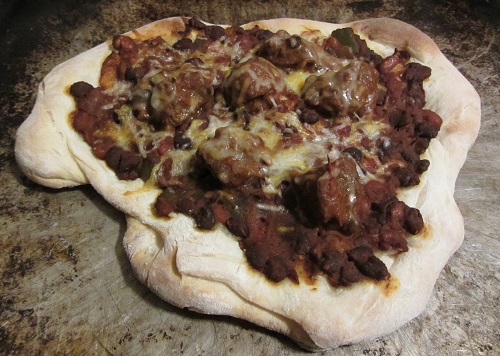
151022 Chili Pizza

The chili carmelized and sweetened somewhat in the oven, but it was still tasty and not too dry. The crust had a nice snap that in places was almost reminiscent of tortilla chips. I thought it worked. I know my mouth was watering before I dug in.

(The rest of the recipe:  10 minutes in the oven with the non-meat component of the leftover chili, then the reserved meat pieces and a “Mexican” cheese blend were added and allowed to heat through for three minutes.)

Other notes:

1.  57% hydration seems to be a good starting point for getting the hang of “00” flour. It behaved in a fairly similar fashion to a higher hydration bread flour.

2.  My shaping needs work. The dough was too thick in the center, and the seams from the stretch and fold are clearly visible in the finished product.

3.  I may try adding 1% oil next time, or brushing the rim of the pizza with oil, or both. A little more color would have been nice.

4.  240 grams is plenty for a small diameter pizza. 200 grams might be more appropriate next time.

—–

Overall all it was a good learning experience, and I used up leftover chili in the process. I enjoyed eating it, so win-win-win.

It might be just me, but I think maybe chili is a less “weird” topping on pizza than some other things are.. Like pineapple.

Final EarthBox 2015 Recap — The Tomatoes, Tomatillos, and Basil

by A.J. Coltrane

The 2013 Tomatoes and Tomatillos recap is here. 2014 here.

(Note that this won’t be the last gardening post of the year. It’s the final recap of how the summer went.)

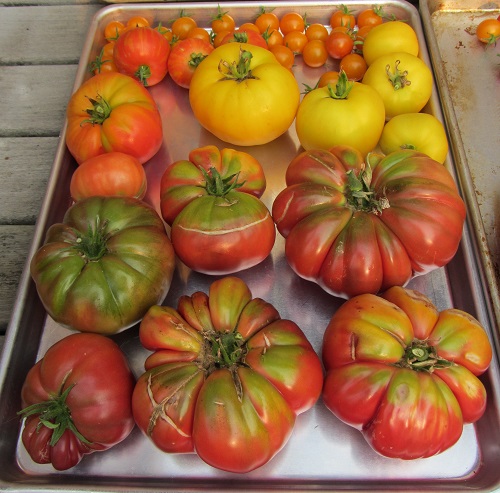
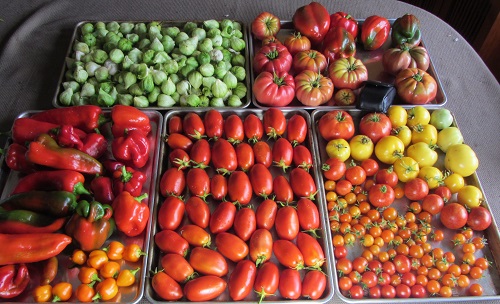
2015 saw a total yield of 145.2 pounds for the eight tomato plants.  That’s an average of 18.2 pounds per tomato plant, or 12.1 pounds of produce per square foot of growing medium.

(For reference:  The 2013 total was 15.3 pounds per tomato plant.  The 2014 total was 17.2 pounds per plant.)
150822 harvest1

The Tomato Varieties:

Black Krim – 22.5 pounds. [75 day, Indeterminate. OP Heirloom. 23.5 pound two-year average.]  Excellent yield, attractive purple appearance, and a wonderful deep tomato taste. Winner.

Cosmonaut Volkov – 18.7 pounds. [68 day, semi-Determinate. OP Heirloom.]  The Seattle Tilth description said the Volkov would be early, and ready by mid-August. We harvested 1.5 pounds before August 29, and the other 17.2 pounds in September or later. The light red fruits were pleasant enough.. I’m not attached to these for 2016.

Oregon Spring – 18.0 pounds.  [60 day, Determinate.  15.7 pound two-year average.]  Starts early and produces all summer. Takes up very little space. The yield could have been better, but we lost at least a pound or two to bugs. One of our favorites.

Sweet Million – 9.9 pounds.  [65-75 day, Indeterminate.]  We chose these as a red cherry tomato to compliment the Sun Golds. The yield was poor, and they tasted more or less like supermarket cherry tomatoes. I thought they were a letdown all around. Not a keeper. We’re open to suggestions for a different cherry variety.

Roma – 22.8 pounds.  [75 day, Determinate. 22.0 pound three-year average.]  The Romas ripened really well this year. We did see a little more blossom end rot than in past years. I’m hoping that pairing them with a smaller determinate next year may help limit the stress. We’ll see. Keeper.
150906 harvest

Sun Golds – 16.2 pounds.  [65 day, Indeterminate. 17.9 pound three-year average.]  Productive and trouble free, and they taste like candy. Keeper.

Taxi – 25.9 pounds.  [65 day, Determinate. 25.3 pound two-year average.]  We’ve paired a Taxi with an Oregon Spring each of the last two years. They’re both early and they reach a similar compact size. No reason to mess with success. The bright yellow fruit and light taste makes for a nice contrast with the other varieties we’re growing. Keeper.

Tigerella – 12.4 pounds.  [65 day, Indeterminate. Heirloom. 14.3 two-year average.]  Here are the comments from last year:  “Average yield, average taste, but they are interesting to look at. Late to ripen. I’d be fine with trying another variety instead.”  I think all of those points held true again, but the yield went from average to fringe-poor. Not a keeper.

—-

The Tomatillos:

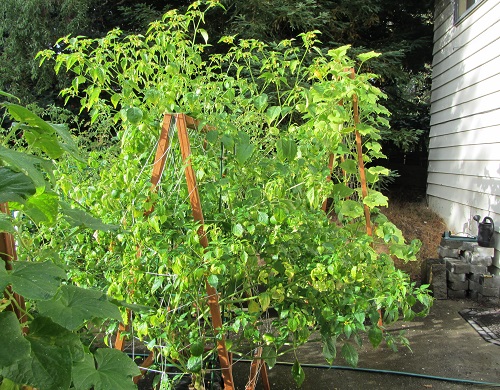
This year was a repeat of what we grew in 2014.  The tomatillo box contained contained the “Mexican Strain” and “De Mipa” varieties. The “Mexican Strain” has a vertical habit, and the “De Mipa” sprawls a little more. It seems to be a good combo in the box. Our 2015 yield was 15.1 pounds, the three-year average is 17.0 pounds. I think the “Mexican Strain” plant was a little weaker this year, as compared to last year. Still, I’m happy with a yield anywhere in the 15-20 pound range.
150726 cucumber, tomatillo, tromboncino

—-

The Basil:

2015 yield – 3.1 pounds.  2014 yield – 2.9 pounds. It doesn’t weigh much, but 3.1 pounds of basil is still over $200 worth at retail. Due to a lack of time, we mostly didn’t due the usual upkeep that basil likes, but the yield was fine anyway.

—-

2015 Summary:

We harvested 280.5 pounds of “summer vegetables” out of the twelve EarthBoxes between June 24 and October 4. That’s 23.4 pounds per EarthBox, or 7.9 pounds per square foot of growing medium.

The only really significant thing that we changed was that we built three new trellises and used them with the cucumbers and tomatillos. I think the trellises helped the tomatillos in particular. The cucumbers burned up to some degree in the 90 degree days — one thing we may want to try is shading the root area of the cucumber boxes to see if that helps. The flip side is that it felt like we had a smaller proportion of green tomatoes and peppers at the final harvest.

Overall though, we really didn’t have time to do the pruning that the tomatoes and basil appreciate. It didn’t seem to matter that much. It could be that the weather was so crazy nice that it overcame whatever “user error” we provided.

We’re learning a little bit more every year.

—————–

Visit Dave at Ourhappyacres, host of Harvest Monday.