Container Garden Update — August 29,2023

We’ve had a long series of days mostly in the 70’s punctuated by a fairly warm weekend in the 80’s. The cucumbers and zucchini are basically “done”. The tomatoes plants got a big thinning and haircut — the indeterminants got topped, and the centers (side-branches) of all of the tomato plants were aggressively pruned. Any blooms or non-mature tomato fruits were trimmed off, there’s not enough time left in the growing season for those.

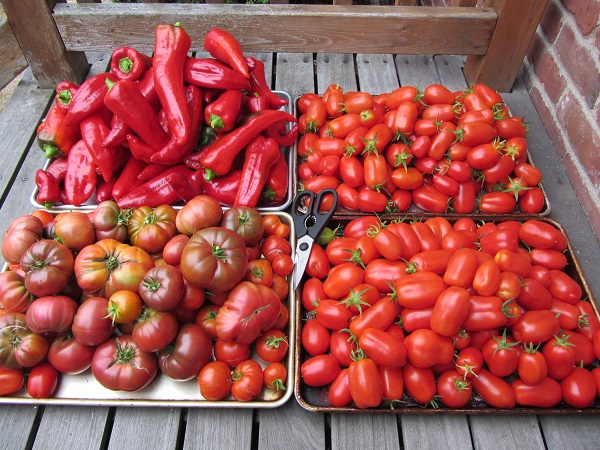
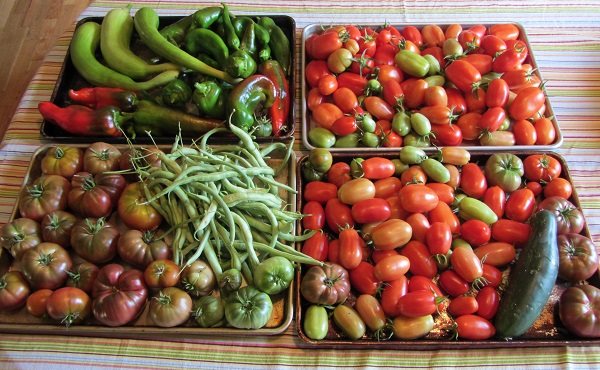
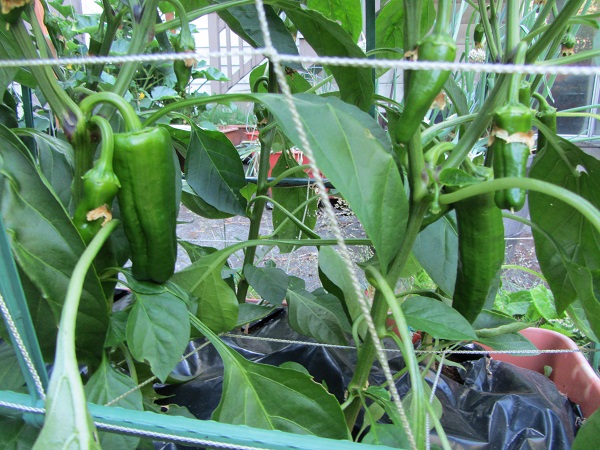
We gave the peppers the prime spot in the garden this year. It feels like the plants grew bigger than in most years, the yield will be greater and more peppers ripened, and we lost almost none to bugs and critters. Usually it’s much more “congested” than this, which may related to the bug attacks. We harvested around a third of the peppers after this picture:

The harvest:

The basil was kicked from the prime spot and moved to the center of the garden, where it’s done great. One of the six plants flopped over and was gifted around the neighborhood a few weeks ago. The other plants just filled in the space:

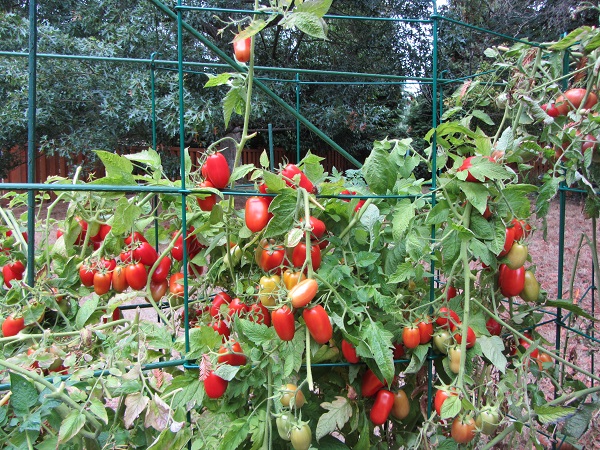
A “before” picture from inside the garden looking at the Krims and Tigerella:

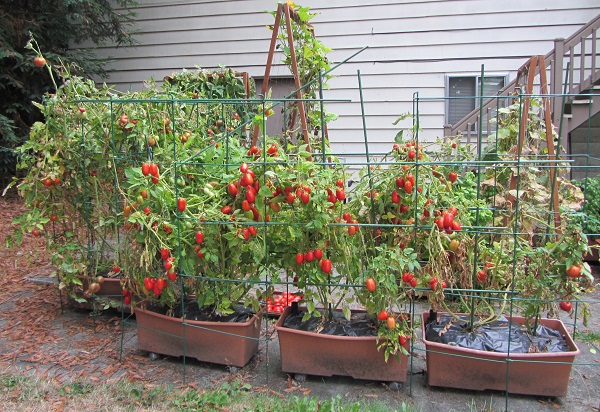
Another “before” picture. (front L-R) – Roma, Roma, Oregon Spring tomato, 2 boxes of Carmen peppers:

After the haircut:

Starting this week is when we’ll see the tomato harvest really ramp up. We can use the upcoming long weekend partly for making tomato sauce for the freezer.

The weather has gone from sunny and 80 degrees to now a hard rain and 65 degrees. I’m guessing when the rain passes we’ll have some tomatoes to pick up off the ground, but still, it’s good we got the bulk of the pruning out of the way.

Container Garden Update — August 2, 2023. The Zucchini

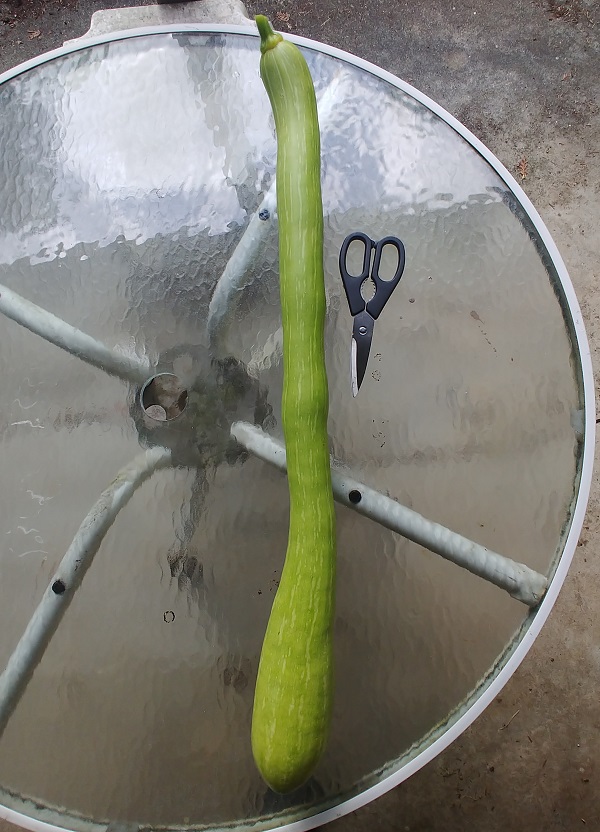
Here in the Seattle area It’s been a dry summer and it’s also been relatively mild. The garden is doing fine, maybe developing a little more slowly than usual. We’ve harvested around 15 pounds of cucumbers, some early Oregon Spring tomatoes, Fortex (haricot vert / pole) beans, basil, and a few Tromboncino zucchini, including this one:

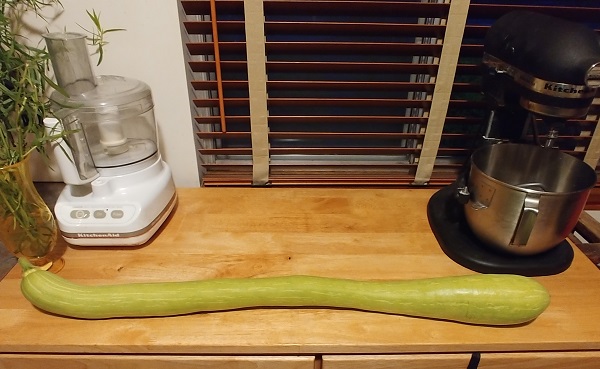
For reference, the table is 36″ in diameter. The fruit is 33″ long and weighs 4.3 pounds. I’m pretty sure this is a record for us. It may be that if left on the vine it would have gotten even larger, but it also might have started the transition to “yellow winter” squash, and that’s not what we had in mind.

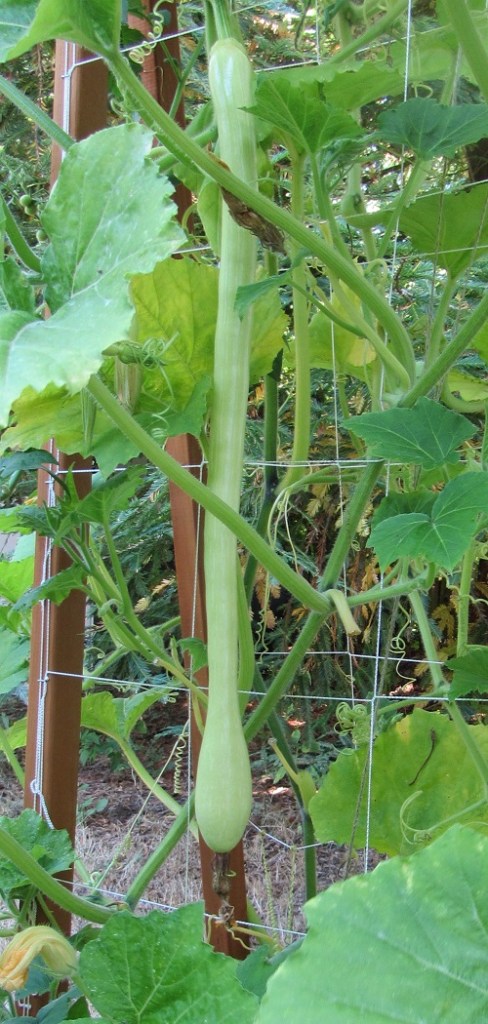
I wasn’t able to get a photogenic picture of it on the vine. The next picture shows what that looks like. (2014 photograph):

We like to grow the Tromboncino variety for a few reasons: We like the firm texture of the flesh. The seeds are all in the ball at the end, the rest of the zucchini is totally usable. The plants themselves are relatively mildew resistant, and because they can be trellised they work well with the fact that we’re gardening on a concrete patio.

Another picture of the “new” zucchini for fun, this time posing on a 4′ long table with the kitchen appliances and a vase full of tarragon:

The next post will have pictures things besides Tromboncino. By mid-August The Ripening should be in full swing.

Container Garden Update — July 2, 2023

It’s been a very mild summer. When I compare notes with people it feels like our garden is behind most everyone. The flip side to that is it’s the start of July and the lettuces and cool season herbs are still doing well.

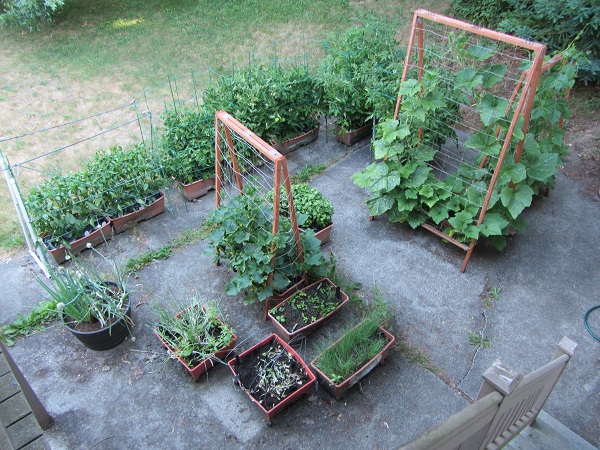
A picture with a different angle, from the deck:

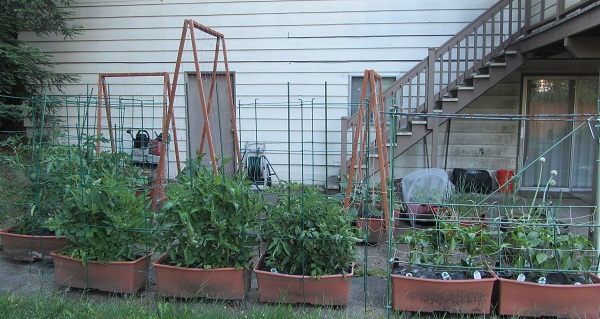
An overview from the front:

Something happened to the asparagus between last year and this year. About a third of the crowns either died off or (optimistically but unlikely) refused to come up. I don’t have an explanation for it — I’ve been adding compost every year and I didn’t do anything differently that I can think of. I may leave it alone next year and see what happens.

Instead of sad asparagus, here’s the first cucumber. Or the second, I didn’t see the one hiding on the right when I took the picture:

Romaine lettuce – “Slow Bolt Mix” from Territorial seed. I had the date that I seeded these written on a white board. The white board has since been erased by someone being helpful. I think it’s been 3-4 weeks? Bird netting to keep the squirrels from digging:

The basil. We originally started with one EarthBox and the basil did so well that it turned into this garden post many years later:

The Fortex beans:

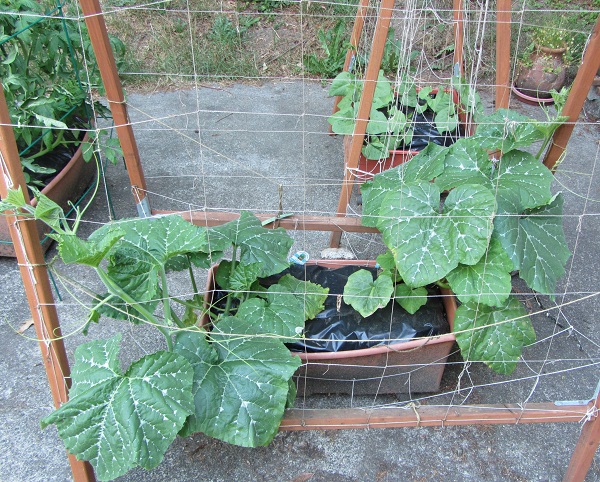
The Tromboncino zucchini. We’ve harvested two decent-sized specimens so far. Pollinating the flowers with a toothbrush may be helping:

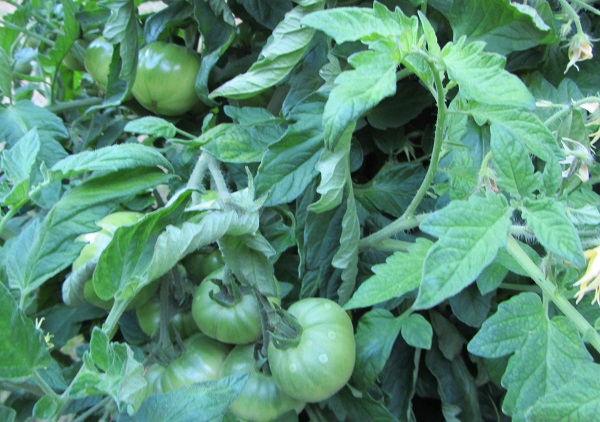
The indeterminant tomatoes (Black Krim and others) and the determinates to the left (Oregon Spring and Roma):

A closeup of the Oregon Spring tomatoes, which are always the earliest and most prolific. There are more than a few hiding:

The Carmen peppers:

Looking ahead – hopefully the weather does historically normal July / August things around here and the garden picks up. The trees around the property have grown to the point that we’re never going to see the harvests that when we first started gardening, but we should still be able to freeze plenty of veg to carry us through the winter months.

Container Garden Update — June 4, 2023

A few pictures of the garden in early June. North of Seattle that means that we’re still a month or more away from the first real harvests.

The first picture is an overview from the “front” , facing east.

Front Left – tomatoes (indeterminates are on the north/left, determinates in the front).

Front Right – Carmen peppers.

Back Left – Fortex beans and Tromboncino zuchinni.

Back Center – basil (hiding) and cucumber trellis.

Facing north:

Close-up of the Tromboncino zucchini. The Fortex beans are in the background:

The Marketmore cucumbers:

The Joi Choi. Planted on April 6, the bigger plants are ready to harvest. The tulle over the wire hoops seems to have kept the bugs out this time:

The frilly cilantro and dill that was planted on March 20. They’re sitting in a place where they get morning sun, then dappled sun after that. I think they’re going to bolt within the next two weeks regardless of care:

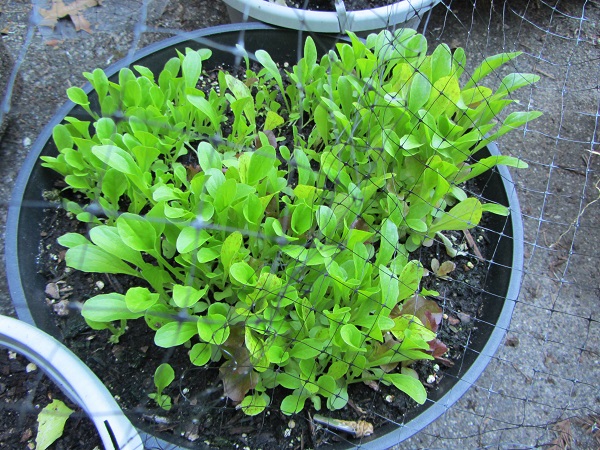
One nice thing about planting in pots is that they can be moved around depending upon the season and the demands of what’s been planted. The next picture has young leaf lettuce that is covered by bird netting. We have lots of squirrels and they’ll destroy any seedlings that aren’t protected from digging:

I’m still getting the hang of succession planting. I think I’m always waiting too long between plantings, and I try to start outdoors when it’s still cold and the cold nearly stops any growth or germination. This year I tried planting lettuce outside in early March and the it didn’t germinate at all, though that could have been because the seeds were a few years old. I think that I may need to start in February/March indoors, then move that group out into the cold frame in a “warm” spot, then continue with a new group every two weeks through April.

It sounds good in theory anyway.

Pigs In A Blanket

Pigs In A Blanket, using a slightly modified pizza dough recipe for the blanket:

The dough:  250 grams AP flour, 150 grams water (60% hydration by flour weight), 5 grams honey (2%), 30 grams olive oil (10%), 5 grams kosher salt (2%), 1 teaspoon instant yeast.

Mix for 8 minutes on low speed.

Cover and let rise one hour.

My four hot dogs were 6″ long, so I rolled the dough into a rectangle 24″ long. Lay the hotdogs lengthwise into the rectangle, roll them up, then cut the hot dogs into quarters. I used a serrated knife and a light touch.

Set the Pigs In A Blanket on end in a Silpat-lined baking sheet, cover with an inverted baking sheet, and let rise one hour.

Note:  I set them on end because I thought it would allow the dough to rise more evenly around the hot dogs. What wound up happening in reality is that the dough slumped down around the hot dogs and only part of that height was regained with baking oven spring. For more traditional Pigs In A Blanket the hot dogs should be laid on their sides. (However, the rise was nice and even around the hot dogs, so that was good.)

Preheat the oven and bake at 375F for 15-20 minutes or until lightly golden and the dough gives resistance when poked.

Thoughts:

Basically every recipe online calls for opening a can of dough, cutting the dough into triangles, wrapping that around the protein, then baking for 12-15 minutes. And that’s fine. I think comparing the total hands-on time between “the can” and “from scratch” it’s not dramatically different. Assembling the ingredients from scratch takes an extra few minutes but by the time we’ve fiddled around with wrapping hot dogs in dough — what’s an extra five minutes or so?

As with all Pigs In A Blanket, these were devoured in short order.

Previous Pigs In A Blanket post here.

An Italian Tomato Pie – Pizza – Focaccia Made With Fresh Milled Wheat

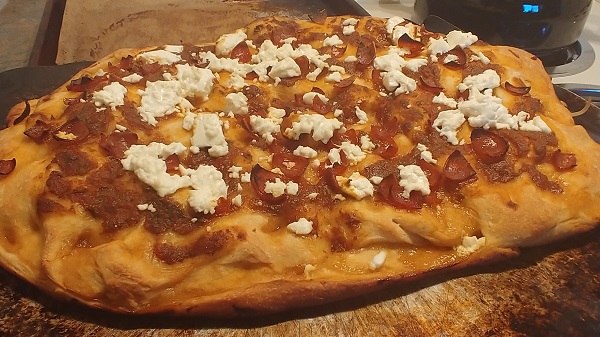
A weeknight dinner pizza loosely in the style of an Italian Tomato Pie / Focaccia:

Topped with cupping pepperoni, goat cheese, and a red sauce made from our garden’s tomato sauce, basil, and oregano. The dough was very airy and light with mostly small holes in the crumb. It was baked on a sheet tray with lightly oiled parchment paper, so the bottom got a nice crispiness. The top had just a little crunch too. It was definitely rustic.

The Ingredients:

400 grams AP flour. 100 grams Hard White Winter Wheat flour (milled in our Mockmill). 500 grams flour total.

315 grams room temperature water (baker’s percentage 63% hydration)

15 grams honey (3%)

15 grams extra virgin olive oil (3%)

10 grams kosher salt (2%)

2 teaspoons instant yeast (not rapid rise)

The Handling:

Combine all ingredients and mix on low speed for 6 minutes.

Briefly finish kneading and shaping the dough into a ball.

Lightly coat a bowl with oil, cover and let rise 45 minutes.

Stretch and fold the dough, re-form into a ball, cover and let rise another 45 minutes.

Line a sheet tray with parchment and lightly oil the surface of the parchment. Transfer the dough to the parchment and lightly stretch it out, leaving it 1/2 inch to 1 inch thick. 500 grams of flour won’t stretch all the way to the edges of the sheet tray and that’s ok.

Dimple the dough all over with your fingertips. Turn on the the oven to 450F. Cover and let rise one hour.

Top with the tomato sauce and pepperoni. Bake at 450F for 15-18 minutes, or until the top begins to brown and the dough feels like it’s near baked when tapped. It will feel somewhat rigid and hollow. Top with the goat cheese and cook another 3-5 minutes.

Let the pizza rest, then cut into squares.

Thoughts:

If the bottom had cooked any further than it did it would have been overcooked. Adding an extra sheet tray to the bottom half-way through the bake likely would have created a slightly less “done” result. It’s something to keep an eye out for next time.

For an improvised dough, the finished product came out pretty much like what I’d visualized, so I was happy with that. It was very rustic but light at the same time. There were just enough toppings to make it interesting but not so many that the dough didn’t shine through.

One nice thing about using white wheat berries is that they don’t announce themselves like red wheat berries do. It’s more of a subtle backstory that adds depth and “what is that flavor?”

At some point I’ll need to try a 2-3 day cold ferment instead of the weeknight-gotta-get-dinner-on-the-table room temperature approach.

Overall it was somewhat unusual and definitely enjoyable. Win.

The Hellebore

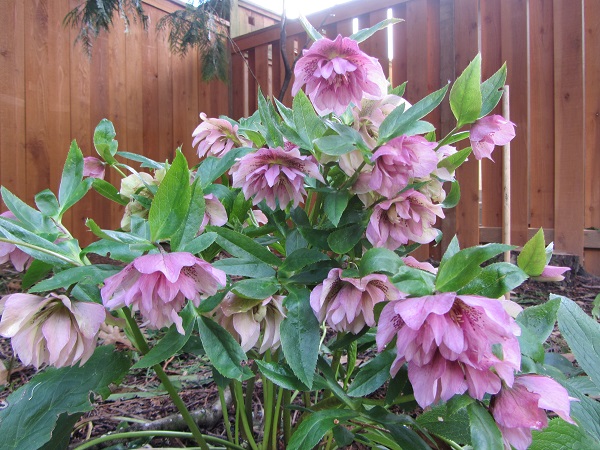
Today was going to be a few pictures of the lettuces and their new setup. The weather has had other ideas — it’s been cool or cold most of the last two weeks and the lettuces are refusing to germinate. Instead, a few pictures of the hellebores that live in the southwest corner of the backyard.

While I was buying potting soil at the big box store I saw these on the clearance rack at about 1/4 the normal retail price. I picked up three. It’s been wet but not super-duper cold. They’re recovering well from the neglect:

The biggest and longest-established:

I’m always a fan of “droopy” flowers:

Finally, one of the relatively newer plants that we’re really fond of. It’s the one variety where I know the name — “Silver Prince”:

The evergreen trees above and and around the hellebores mostly live not in our yard. The neighbors decided to clean up some of the low-hanging branches, so the hellebores should see more sun and (rain) water going forward. They’ve been slow to grow but I’m hopeful they’ll start doing better with a little attention in the form of compost or fertilizer and possibly some mulch to help retain water in July and August.

New Seeds For The Garden

The new seeds for 2023:
JOI CHOI × 1
SEED / 1 gram
RED BARON × 1
SEED / 1/2 gram
SIMPSON ELITE LETTUCE × 1
ORGANIC SEED / 1/2 gram
ITALIENISCHER LETTUCE × 1
ORGANIC SEED / 1/2 gram
HEAT TOLERANT LETTUCE MIX × 1
ORGANIC SEED / 4 grams
SWEET BASIL × 1
SEED / 1/2 gram
DILL, DUKAT × 1
SEED / 2 grams
CONFETTI CORIANDER × 1
SEED / 1 gram
CRUISER CORIANDER× 1
SEED / 1 gram

It’s mostly fill-in for what’s been used up over the last few years. Looking at the weights, it’s a lot smaller quantities per variety than we’ve historically purchased. In retrospect it might have been better to buy some larger amounts.

For some other things, we’ve been setting a few aside and drying the pods — Fortex beans, Rattlesnake beans, and Super Sugar Snap peas, and replanting with “seeds” from the previous year. We also let some cross-section of the Guardsman bunch onions (scallions) go to seed so those are self-sustaining as well. We used to have Red Barons but I must have failed to propagate those, so more are on the way.

We’ve tried Bok Choi and Pak Choi in the past and those always got wiped out by bugs. We’ve tried row covers and organic pest solutions and neither really helped. I see other people succeeding so it must be possible. It’s worth a cheap try.

I’m going to hang some of the heat-averse herbs and lettuces in planters under the west-facing edge of the 2nd story deck, both to avoid the worst of the sun, and to keep squirrels from digging everything up. If at the end of the summer I feel smarter than the squirrels then it’ll be a win. I may add shade cloth around or over the hanging planters, though that might be too much shade in total. I’m always trying to increase our yield on lettuces and “under the edge of the deck” is one more thing to try.

Now that I think about it — Maybe under the north-facing side of the deck would work better. No direct hot sun during the day.

A “Sampler” Heirloom Wheat Loaf

We had company over last night for board games. I baked a loaf of heirloom wheats so that everyone could try and compare the varieties side by side:

(L-R) Red Fife, Rogue de Bordeaux, Turkey Red, Sonora White

I decided on a combination loaf because I thought that would be easy to bake into a reasonably good and consistent result and it would eliminate variables that could happen if I baked all four little breads individually. The sections tasted distinctive, which was my one concern going in.

I started by milling 150 grams of each wheat berry. (Each process repeats four times, once for each variety.) I then combined in a tupperware 100 grams of a flour variety with 100 grams of cold water and a faint pinch of yeast as a poolish. I put the “extra” 50 grams of flour into another tupperware. I refrigerated both overnight then pulled them out in the morning to warm up.

In the morning I added the reserved 50 grams of flour to the poolish along with 3 grams of kosher salt (2% salt as a percentage of flour weight) and 1/2 teaspoon of Instant (not Rapid-Rise) yeast. Mix all to combine thoroughly, cover, and let sit one hour. Form the doughs into oblong disks so that all four will fit side-by-side in a 9″ x 5″ baking pan. Cover. Let rise another 90 minutes, then bake at 450F for 30-35 minutes.

They were definitely distinctive. The Rougue de Bordeaux tastes of cinnamon and spices. The Red Fife is less spicy but also sweeter. The Turkey Red was described as “meaty” or “bold”. The Sonora White is mild by comparison and it’s really intended more for tortillas, but it was a good contrast to the other red wheats.

It was fun introducing people to bread like they’d never experienced. I think next time it’ll be four (or just two) full-sized loaves — two loaves would be way less fiddly and people could literally stick their nose in to smell the aromas.

Herbed Focaccia With Poolish

One of our holiday traditions is attending a pot luck / lasagna party hosted by a good friend of ours. I’ll typically make some sort of bread. (Search the bottom of the webpage for “epi”, “focaccia” or “fougasse” for some examples.) This year it was a festive herbed focaccia created using a room-temperature overnight poolish as the base:

One day ahead I started the poolish: 800 grams of bread flour. 800 grams cool water. A few grains of Instant (not fast-acting) Dry Yeast, about 1/16 teaspoon. Mix thoroughly, cover tightly, and let sit on the counter overnight.

The next steps need to start at least 6-8 hours before consumption. Most of it is hands-off, but all up it comes out to over four hours of preparation + cooling.

In the bowl of a stand mixer combine 200 grams of bread flour, 2 teaspoons of Instant Dry Yeast, 30 grams olive oil, 20 grams kosher salt. Mix that briefly then add the poolish and mix on low speed for 8 minutes. Cover.

The total baker’s percentage formula comes out to 1000g flour, 800 grams water (80% hydration), 30 grams olive oil (3% of the flour weight), 20 grams kosher salt (2% of the flour weight), yeast.

Bulk rise until doubled in volume – this will take 1 – 2+ hours depending upon the temperature of the house.

Once doubled transfer the dough to a parchment-lined-and-oiled 18 x 13 sheet tray.

Lightly coat the top of the dough with olive oil.

Using your fingers, poke the dough all over down to the base.

Sprinkle on fresh herbs of your choice. I used rosemary and thyme from our raised garden beds. Which were buried under snow, so that took a couple of extra minutes to pick through for good stuff.

Cover the dough and start the oven preheating to 450F.

Let rise one hour. Sprinkle the dough with flakey (Maldon’s) salt.

Bake for 25-35 minutes or until the internal temperature is at least 200F and the bread is pleasantly browned.

Another cell phone pic taken at the event. I cut it into squares to make self-serving easy.

Notes:

I accidently let the bulk rise much more than double. Between that and the starter poolish the dough was extremely loose and extensible. I sort of had to wrestle it into shape using a generous amount of oil to keep it from sticking to everything. Given a more correct rise time the dough should have been much more manageable.

I liked the festive appearance and the focaccia got nice feedback. I can see making this one again, though I think I may use a biga next time with the idea that it may make the dough more manageable in the shaping stage.

Bonus No Knead pic: