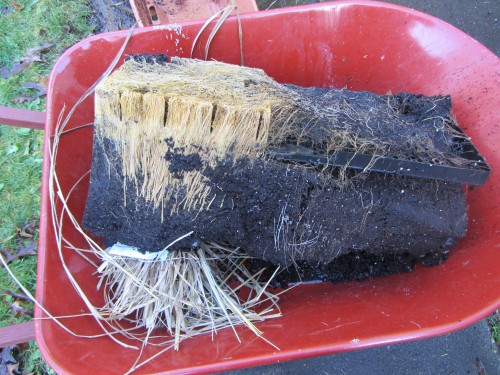
Yesterday was “Ready The EarthBoxes For Planting Day”. The EarthBox holding the lemongrass needed to be dumped upside down into a wheelbarrow because the roots had grown down through the base aeration screen and into the reservoir. The plant had to be cut off of the screen to get it out of the box:
Upside down in the wheelbarrow.
If you look closely, the roots have perfectly formed to the molded shapes on the bottom of the container. The circle (bottom right) is the fill tube, which was almost completely blocked. That explains why it *seemed* to be blocked in late summer:
Lemongrass isn’t supposed to winter over, but I think that it might have lived, at least so far. It’s been transplanted into a planter box along the back fence.
The lesson: Super invasive root systems won’t work well in the EarthBox, or more accurately — the lemongrass went gangbusters, but the box isn’t designed for *that*.
My ideal gardening book would have a title similar to: Four-Season Urban Container Gardening In The Pacific Northwest, Seattle Edition.
That book doesn’t seem to exist, and for good reason. It’d sell about four copies. Digging around the internet gives a hodge-podge of information, but nothing concise and organized.
I was looking through the book options at the local nursery and came across Food Grown Right, In Your Backyard. It’s written by the co-founders of the Seattle Urban Farm Company, published in 2012. The book has an emphasis on small-scale organic urban gardening. It includes sections on designing the garden space, general gardening knowledge, detailed profiles of popular vegetables and herbs, and (my favorite) tables indicating the appropriate schedule for starting seeds indoors, transplanting, or direct seeding outside. (I loves me some tables and charts, y’know.) It doesn’t talk much about winter gardening, but other than that it’s an excellent all-around resource.
Amazon link here. To date it has received 5 stars out of 5 stars for all 35 Amazon customer reviews.
In a related note, I think I’ll be checking this out in 2014 — Bastille Cafe & Bar has a 4,500 square foot rooftop garden installed and maintained by one of the authors. Bastille offers tours on Mondays, April through September. The cost is $10, which includes a cocktail.
Now if I just need to figure out the best way to succession-plant an EarthBox.. I’ve got some ideas, but searching “succession planting” on the EB forums doesn’t turn up much. Time for a new thread..
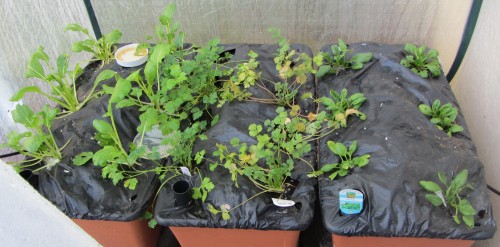
It’s been in the 20’s basically every other night over the last ten days or so. Yesterday we had snow. Life goes on in the plant house:
New growth in December. [L-R – Pac Choi, Parsley, Cilantro, Spinanch]. The new leaves look happier than the leaves that were on the plants at the time of transplanting.For comparison, November 2:
(L-R) Pak Choi, Parsley, Cilantro, Spinach
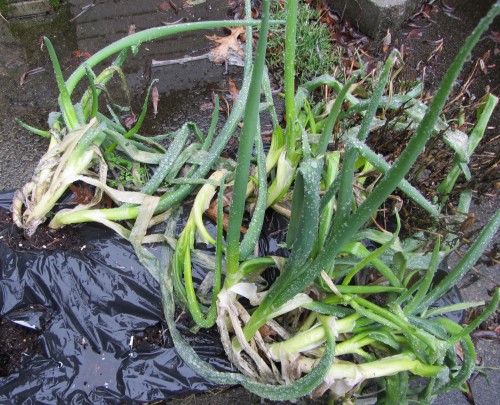
The bunch onions didn’t seem to mind the snow too much:
A few thoughts about the plant house:
1. Mid-late October is too late to move the cool weather plants into the plant house. Closer to the truth would have be sometime in August, or starting the plants from seeds even earlier. I’m still in the process of figuring out what the “correct” dates will need to be, accounting for the fact that it’s cooler here than in Seattle, though we’re still very near Puget Sound.
2. During the winter months there’s not enough sun to drive the current plant house location. Tucked up against the west side of the Real House, the plant house *might* get about a 1.5 hours of sunlight on a good day. It’s situated in a location that’s among the hottest during June and July. I’ve been surpised at just how far down the horizon the sun rotates during the winter. A permanent greenhouse installation would likely either need to go in the front yard, or the center of the back yard, or somewhere nearer the south end of the west side of the Real House.
In a related aside, I’m now seeing why ancient peoples would build structures to accurately track the stars, and by extension the seasons and the position of the sun. If your life actually depended upon forecasting the upcoming weather you’d do everything you could to try to be accurate about it. As for me, thank you NOAA weather service.
3. The 4′ x 4′ dimension of the plant house is small enough that the pac choi are tending to lay up against the walls. It seems everything touching the walls is perpetually too wet and too cold and generally rotting away. Two EarthBoxes is probably closer to the correct amount in a 4′ x 4′ space.
4. If the goal is winter greens, it might be that the right answer is some form of protected [raised bed/ whiskey barrel/ cold frame] in the front yard. It may be that the EarthBoxes could be adapted by removing the plastic cover… maybe.
I think a four-season harvest is possible, it’s just a matter of figuring out the location, technique, and the appropriate greens.
The tomatoes and tomatillos drew most of the attention whenever people would check out the garden, so it makes sense to me to save them for the last recap.
Tomatillos — 14.6 pounds. The bees looooved these. There was one strong plant and one weaker plant. The weaker plant needed additional support by the time it was a couple of feet tall, and by September 5 it was completely done. The overall yield was still very good, and we’ll have roasted tomatillo salsa into next year. Rick Bayless’ Roasted Tomatillo Salsa Recipe is here.
Tomatoes — The total yield was 91 pounds, out of 3 boxes. The indeterminate varieties got well over eight feet tall and flopped over the top of the cages. The Sun Golds in particular were crazy vigorous.
Here’s the May 18 summary of the types of tomato and tomatillo plants:
The varieties — back to front, starting with the leftmost box. Descriptions from the Seattle Tilth plant sale:
Two Mexican Strain tomatillos. 65 day maturity.
Glacier. 56 day determinate. Grows to 2-1/2 feet high by 3-1/2 feet wide. “Great for containers”.
Siletz. 70-75 day determinate. “One of the most reliable slicing tomatoes you can grow.”
Stupice. 60 day indeterminate. Red, 2″ fruit on 6′ vines.
Sungold. 65 day indeterminate. Apricot-orange 1-1/4″ cherry-tomato fruit on grape like trusses.
Brandywine. 85 day indeterminate. Fruits up 1 pound and 7″ in diameter. (The Brandywines are near the house to try to get some reflected sun off of the house.)
Roma. 75 day determinate.
And the results:
Glacier — 13.9 pounds. The Glaciers were early, consistent, and tasty… excellent all the way around. A definite keeper for 2014.
Siletz — 12.9 pounds. The Siletz were the most compact of all of the varieties. They were a nice halfway point — not as big and slow maturing as the Brandywines, but they still had some good size and taste. It felt like we got *way* more Glaciers than Siletz, but the numbers don’t back that up at all. These might benefit from being planted with something else equally compact. Most likely a keeper for 2014.
Stupice — 9.4 pounds. The Stupice suffered a little bit from being in the “back center” of the stack of tomatoes. That, and the Sun Golds went nuts. These were probably the most unremarkable of all of the tomatoes, that is, they weren’t especially big or tasty or prolific… they were “fine”. That means that they may get another try in 2014.
Sun Gold — 19.2 pounds. Craaaaazy prolific orange-colored cherry tomato. As sweet as candy. Winner.
Brandywine — 10.1 pounds. Slow to mature. The Brandywine had the longest theoretical maturity, which is what actually came to pass. These all split into craggy “rustic” fruits. I’d be fine with passing on these next year in favor of an early variety.
Roma — 26.o pounds. The biggest output by weight, the Romas were very late. Ultimately the tail end had to be rescued off of the vines before they were completely ripe. If we do these again they’re going to need a sunnier spot — they were sort of behind and under the Sun Golds *and* crowded by the Brandywines.
We intentionally mixed earlier and later varieties of tomatoes, and it worked out about as expected. The early ones did great, and the later plants had to race to ripen before calling it a year. Given that this summer was supposed to have been especially nice, we might have seen the best case scenario for the really long maturity types. Overall though, the tomatoes were relatively cramped, so it could go better next year just by giving them the appropriate amount of space.
All in all, 230 pounds of herbs and vegetables out of 12 EarthBoxes, and the yield should have been greater than that. We’ll get ’em next year.
I’m saving the tomatillos and tomatoes for the last 2013 recap. As a group, the following plants could have done better had they been planted earlier. With the exception of the basil, most everything else likes cool weather. The end of April/early May was too late to get started. It never occurred to me that some vegetables and herbs wouldn’t dig themselves some nice, hot, sun…
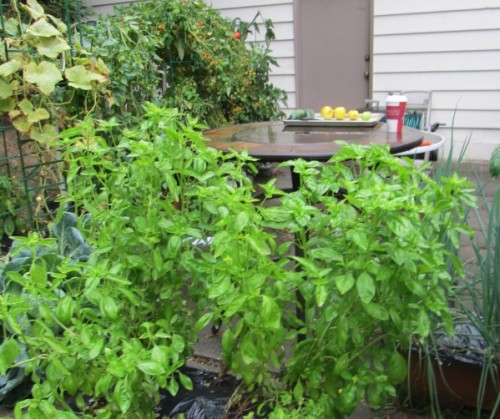
Basil – 6.3 pounds. As mentioned in a previous post, basil is the reason that two EarthBoxes became twelve. We’d had great success with no effort on a fresh herb that we love. The QFC price in September was .66 oz for $2.79. That’s $4.22 per ounce – 6.3 pounds would cost $425. If you’re thinking about doing EarthBoxes, do basil. Just make sure it gets lots of sun, remember to water, and prune it when it wants to flower. That’s it.
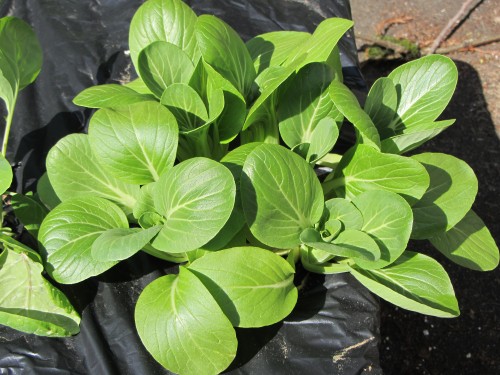
Bok Choi — 0.7 pounds. A cool weather vegetable that was started too late in the spring (April 20), then got buried under the brussels sprouts, then went to seed when it got warmish. What we thought was one plant was actually multiple plants, so they wound up cramping each other as well. Total user error start to finish. We’ll try again in 2014.
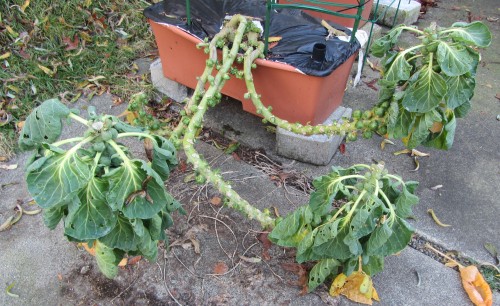
Brussels Sprouts — 1.0 pounds and counting. What we thought was one plant was really four. (again) These weren’t planted until April 20. (again) In retrospect, the correct way to do them is to start earlier and make sure to cover them with tulle to protect against cabbage moths. The sprouts were super slow to mature, and the final yield won’t be very much, but they’re a favorite at dinner around here, so they’ll get another shot in 2014. As a flat guess, the maximum yield could be about 1-2 pounds per plant — six plants per box would equal maybe 10 pounds total(?) Twelve pounds of brussels sprouts would be a *lot*.
Cilantro — 0.8 pounds. Planted on May 5, which was way too late, and it bolted before producing a whole bunch. There is now some cilantro in the plant house. I don’t know that it’s loving the cool weather, but it’s not bolting either, so we’ll see. The parsley is definitely the happier plant house resident right now.
Dill — N/A. Planted with the cilantro and parsley in the spring, it bolted before we got a whole lot out of it. On the other hand, it did make for one delicious salmon dinner. Needs another shot in 2014.
Spinach — zero pounds. Planted too late (April 20), it bolted instantly when we had two or three warm days in early May. There’s now spinach growing (slowly) in the plant house.
Bibb Lettuce — 2.0 pounds. Planted on April 20. Too late. Harvested using the cut and come again technique, two pounds is more than it sounds like, and we got some nice salads out of these plants. Still, this is another plant that might have had a dramatically better yield if it had been handled correctly. The slugs didn’t help out either.
Romaine Lettuce — 2.3 pounds. Same story as the Bibb. I’d like to think we could get 7-10 pounds of lettuce out of one box next spring. I think the “right answer” is succession planting three or four boxes in the early spring, then replacing the lettuce with summer vegetables as it warms up.
Bok choi.
Parsley — 0.3 pounds. That number doesn’t look right, but maybe it is. Planted too late…yadda. yadda. yadda. There’s currently some in the plant house that’s looking pretty happy. In theory it’ll last through until the spring. Fresh herbs in December and January would be nice.
Scallion, Bunch Onion — ~2 pounds and counting. They’re still out there. It was scallions in the spring, and now bunch onions in the fall and winter– nice placeholders.
Lemongrass and Shiso — N/A. The lemongrass is doing well. It needs to be divided and replanted, assuming that it survives the winter. The shiso was a cool idea in theory, but in reality we couldn’t use the huge bush that it evolved into. The lemongrass and shiso also squished the hot pepper plants. The lemongrass may just get a standard pot next year.
There was a whole lot of living and learning going on this year. Hopefully the 2014 yields will be dramatically better with more experienced humans.
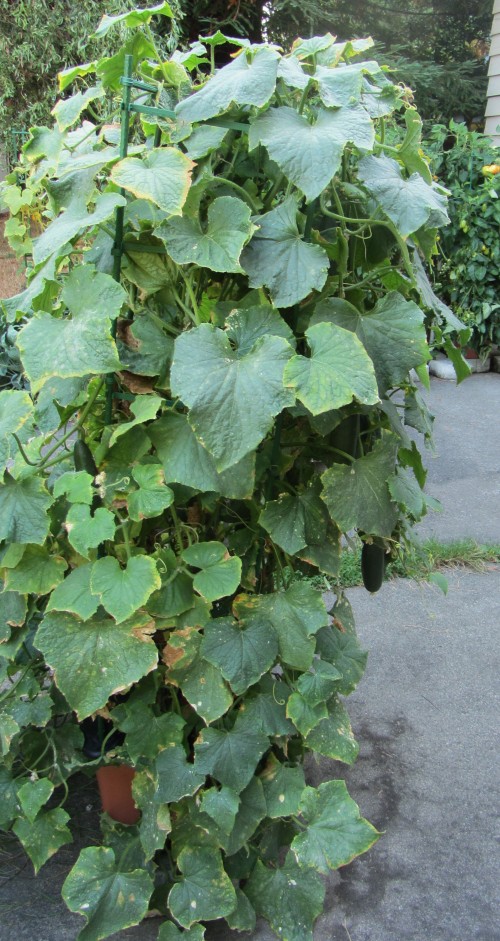
The cucumbers and zucchini were some of the best, and some of the most disappointing plants of 2013. The disappointing portion was due to a good dose of “user error” of course. Onward:
June 30.
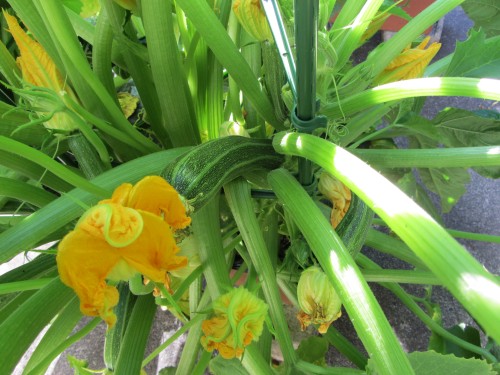
Patty-pan squash — 1.7 pounds. In terms of expected output vs received output, the patty-pans were at or near the bottom of the 2013 list. About the time that they swung into gear the issues with mold started, and it was all downhill from there. These were trained vertically in an Ultomato cage, which may not have helped. More on that in the next paragraph.
Cocozelle zucchini — 12 pounds. The cocozelle zucchini shared a box with the patty-pans. I think that both plants would have benefited from trellising, rather than the Ultomato cages. I had read somewhere that the cocozelle could be trained up a cage, and it didn’t work out well. There wasn’t adequate support all the time, and there was some critical vine breakage right when the plant should have been cranking out fruit. I’m of the suspicion that the cramped cage also contributed to the start of the mold.
The patty-pans won’t be seeing a return visit in 2014. The cocozelle will likely get tried again, with a trellis this time. I’m also inclined to try the Trombocino (rampicante) variety. They’re supposed to be relatively mold resistant and pretty low-maintenance overall.
August 4.
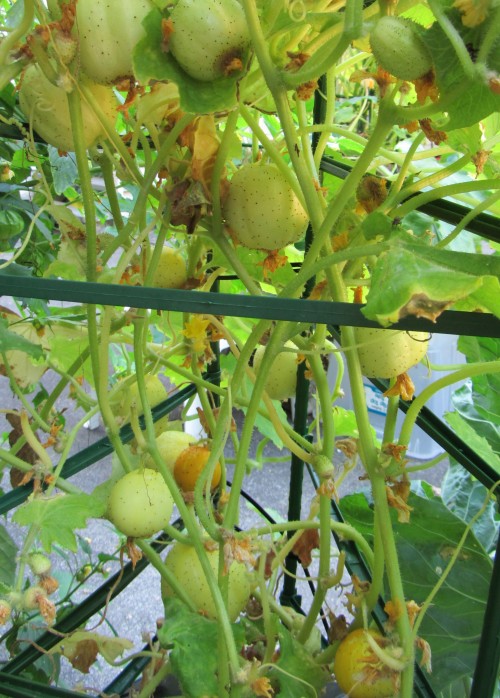
Lemon cucumbers — 15.3 pounds. One plant that was purchased by accident, it was actually very productive. It was tolerant of the Ultomato cage and was easy to train. We may not do them next year, simply because of how productive the Marketmore cucumbers were. We had *way* more cucumbers than we could eat.
The whole box is listing to the right a little bit. September 2.
Marketmore 76 cucumbers — 56 pounds. The most productive single EarthBox. Four plants that were trained into two squares of Ultomato cages. This is something like the weight that I expected to see from the zucchini box. A no-brainer winner for next year.
The 2013 harvest came to a little over 230 pounds, not counting the shiso and lemongrass. Of that, eleven pepper plants produced just over 22 pounds of fruit.
The quantity of peppers could have been a lot higher had I actually followed the EarthBox directions and not mixed plant varieties within the boxes. That’s a recurring theme below:
The October 7 harvest.
The Hot Pepper Box:
The three pepper plants in this box were buried behind the lemongrass and shiso, and I think it dramatically impacted the output.
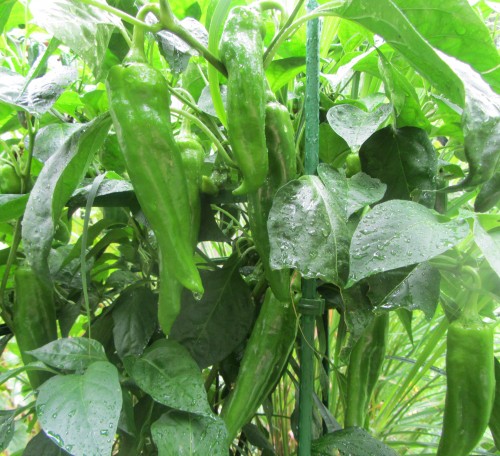
Anaheim — 2.9 pounds. The Anaheims basically filled a one gallon freezer bag. We’ll be planting these again next year.
Banana — 0.4 pounds. Just a few peppers. This plant was the most buried of the three, and it showed. Needs a fair trial in 2014.
Jalapeno — 2.2 pounds. This again is way more peppers than it sounds like. Visually it’s a couple of freezer bags worth in a single layer, about 50 Jalapenos or so. A few got a tinge of red, but that was about it as far as ripe Jalapenos. A 2014 keeper.
That’s 5.5 pounds of sun-demanding peppers out of the shady, cramped side of 1/2 of an EarthBox. –*facepalm*– On the bright side, it’s still enough peppers to easily last into next spring. We’ll be throwing Anaheims and Jalapenos into everything.
The Anaheim peppers on September 15.
The Sweet Pepper Box:
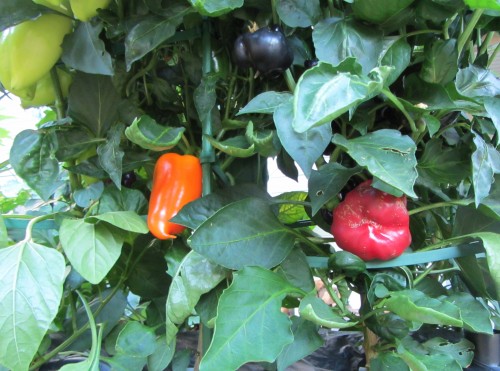
18.2 pounds from the six peppers in this box. No competition for sun = the output per plant was 65% greater — 3 pounds per plant vs 1.8 pounds per plant for the hot peppers. Not mixing plant types is the “right” way to do it:
Cute Stuff — 1.5 pounds. They weren’t cute; they were actually fringe-deformed in appearance. They weren’t particularly productive. (SW corner of the box, which should be about the best spot.) The interior was a little pithy. I think it’s fair to say that we weren’t in love with these. They may not make the cut for 2014.
Gourmet — 1.5 pounds. The yellow ones that eventually turned a little orange. Definitely photogenic. Moderate output, but then they were in the middle-front (middle-west side) of the box. Probably a keeper for next year.
Gypsy — 3.2 pounds. Good production from the NW corner of the box. Probably a keeper.
King of the North — 5.3 pounds. Excellent production from the SE corner of the box. It’s basically a standard bell pepper. Winner.
Lipstick — 1.7 pounds. Another photogenic pepper that ripened to red. Decent production from the East-center part of the box. Fairly thin walled. Probably a keeper, though I’d be fine with something else.
Tequila — 3.3 pounds. Purple peppers that turned white when we grilled them. They’re more of a crudite pepper, and even then they don’t taste like much. Not making the 2014 cut.
The sweet peppers on August 25.
The Straggler:
Even though we tried to pre-plan the garden layout, the piecemeal approach to purchasing things meant that we wound up with one “extra” pepper plant that had to be shoehorned in somewhere. That somewhere was behind the brussels sprouts and the lemon cucumbers:
Bell — 0.3 pounds. One pepper from this plant. It never really had a chance. I’m actually inclined to do a mono-box of these next year to see how much it would produce in favorable conditions.
This year we budgeted 1.5 boxes for peppers. Next year I think it will be either 2 or 3 boxes. I’m leaning towards three. No sharing space next time though.
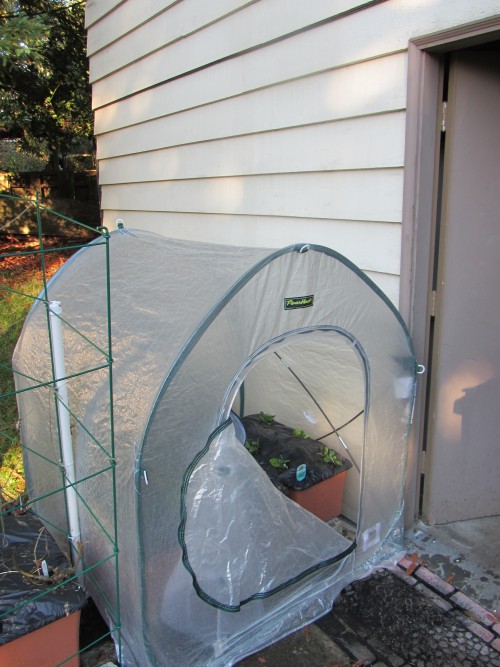
Here’s the latest. It’s a 48″ x 48″ x 56″ plant house. I had been shopping for either a tall cold frame or a small greenhouse. This one is right in between those two things. It cost ~$60 which is about as much as I wanted to spend on an experiment. The Amazon reviews are pretty ok, though it really is strung up tight. Note the support poles that are bending from the strain. Maybe the plastic will loosen over time.
It snugly holds three EarthBoxes. In theory a 4th could be squeezed in along the back if the the other three boxes were pulled all the way to the front of the house. There’s no bottom to the unit, so it just drops right over the boxes.
(L-R) Pak Choy, very small romaine, and spinach.
Hopefully we’ll get some fresh greens over the next couple of months. At the very least it should allow for some earlier planting in the spring.


![New growth in December. [L-R - Pac Choi, Parsley, Cilantro, Spinanch]. The new leaves look happier than the leaves that were on the plants at the time of transplanting.](https://flatbreadgarden.com/wp-content/uploads/2013/12/31be0-122113-plant-house-e1387665861495.jpg)







 FlatbreadGarden