Grilled Cheese and Tomato Soup – Iron Chef Leftovers Style

By Iron Chef Leftovers

A happy grilled cheese with some gazpacho on the side. The green in the middle of the gazpacho is some minced green zebra tomatoes.

With an overabundance of tomatoes right now, I have to get creative in what I do with them; frankly, I am a little tired of eating tomatoes right now, no matter how good they are. Being in summer, I don’t know that I really want a hot meal all of the time and during one recent stretch of hot weather, I decided it was gazpacho time, and what pairs better than a grilled cheese sandwich with tomato soup. I figured that since I had some great tomatoes, I would take the sandwich up a few notches too. You can get the gazpacho recipe that I used here.


The Software

4 slices of brioche sandwich loaf, ¼ to ½ inch thick.

3 oz. of cheese of your choice

2 slices of prosciutto


The Recipe

In a 275 degree oven, put the brioche on a baking sheet and bake until just slightly dry (the consistency of barely toasted bread), about 15 minutes.  Remove from the oven. Prepare the bread by putting ¼ of the cheese on each slice of bread. In a griddle pan large enough to hold the 4 slices of bread, cook the prosciutto until crispy on both sides over medium heat, about 2-3 minutes a side. Raise the heat to medium high and add the butter to the pan. When the butter stops foaming and beings to brown slightly, add the bread with the cheese side facing you and reduce heat to medium. When the cheese begins to melt, add the prosciutto and make a 2 sandwiches, pressing the bread together. Reduce heat to medium low and put a heavy, flat pot lid on the sandwiches. Cook for about 2 minutes on each side, checking to make sure the bread is not burning, or until the cheese is completely melted. Remove from heat, cut and server immediately with the gazpacho.


Notes

I really like doing this with brioche as it adds a really deep flavor to the grilled cheese. I would recommend buying cheese in a block and shredding it yourself, shredding the cheese, rather than using slices, causes the cheese to melt faster. I used a combination of Manchego, Aged Cheddar, Emmenteller and Beecher’s Flagship, but you can use whatever cheese you would like.

Farfalle with Cherry Tomatoes and Goat Cheese

By Iron Chef Leftovers

Since it is tomato season and I am currently pulling more tomatoes than I can eat, I needed to do something creative with them that allows me to highlight their sweetness without completely overpowering the flavor. I also wanted something that was easy and I could pull most of the ingredients from the garden or what I usually have on hand. Here is what I came up with:

The Software
8 oz. pasta, preferably farfalle
8 oz. cherry tomatoes, halved
1 oz. goat cheese
1/2 cup heavy cream
1/4 cup dry vermouth
1/3 cup sweet onion, finely diced
1 clove garlic, crushed
5 basil leaves, chiffonade
1 tablespoon olive oil
1/4 cup pasta water, reserved
Salt and pepper


The Recipe
Cook the pasta until al dente, reserve 1/4 cup of the pasta water when done. In a large skillet, heat the olive oil over medium heat until shimmering. Add the onions and a pinch of salt and cook until the onions are translucent, about 5 minutes. Add the garlic and stir for 30 seconds. Add the vermouth and cook for 1 minute. Add the cream and cook until the sauce coats the back of a spoon, about 5 minutes. Add the pasta and goat cheese and toss until the pasta is coated and the cheese is melted, about 1 minute. Add the tomatoes and cook until the tomatoes are warmed through, about 3-4 minutes. If the sauce is too thick at this point, add a bit of the pasta water to thin it out (There shouldn’t be big puddles of it in the pot, you are really just creating enough sauce to coat everything). Check seasonings, remove from heat, add the basil and serve.


Notes
The recipe should serve 4 easily but can be easily scaled. I used Sun Gold tomatoes since that is what I had in the garden, but just about any tomato would work – just cut them small enough to be one bite. Some chives would also be a nice finish to this if you don’t have any basil and this could also work with the addition of some hot pepper flakes – just add them in when you put the vermouth in. If you don’t have vermouth, you can use any white wine that you would like.

Chicken Burgers with Apple, Sage, Rosemary and Oregano

By Iron Chef Leftovers

If you are making burgers, meatloaf, sloppy joes, etc., there is something to be said for grinding your own meat. When you buy pre-ground meat, you never know exactly what it is composed of. Grinding it yourself eliminates the guesswork and makes for a better product. It is also much easier than you think it is – if you own a kitchen aid stand mixer, the grinder attachment runs about $50 and works really well. If you don’t, go to your local butcher (or even your local megamart if they have a butcher counter), buy the cut of meat that you want to grind and then ask them to do it for you. Trust me, it makes a difference.

Recently PW and her husband came over to the Iron Chef abode for dinner. I asked what protein they would like and I was told chicken burgers. I thought back to some chicken burgers I have had in the past – they were bland and dry and I wasn’t going to serve that. I then remembered back to a really good house-made chicken sausage that I had at a restaurant years’ ago and decided that would be the base for my recipe. I wanted something that was moist and flavorful but easy to make. This is what I came up with.

The key to this recipe is using freshly ground chicken thighs. You can probably use pre-ground chicken but you run the risk of the burgers drying out and will probably pay more per pound for the pre-ground meat than you will for the thighs. This recipe will make 4 good sized burgers, but can easily be scaled.

The Software
1 lb. boneless, skinless chicken thighs; ground
1 teaspoon minced sage
1 teaspoon minced rosemary
1 teaspoon minced oregano
1 teaspoon salt
1 teaspoon ground black pepper
1/3 cup apple, peel removed and diced into 1/8 inch pieces
½ large egg, lightly beaten

The Recipe
If grinding your own chicken, cut into 1 inch cubes and freeze for 10 minutes to firm up the meat before putting it into the grinder. Add all of the ingredients to a bowl and gently toss to combine. Divide the mixture into 4 equal parts and gently form into patties (you could make sliders and probably get 8 out of this recipe). Set on a plate, cover with plastic wrap and refrigerate for at least an hour (the burgers can be made in advance and kept in the fridge for 24 hour until ready to use). Preheat a skillet over medium-high heat and add a tablespoon of olive oil. When the oil is shimmering, add the burgers. Cook on the first side until a crust forms (about 4 minutes) and carefully flip. Reduce heat to medium and cook until the internal temperature reaches about 175 degrees (7-10 minutes, depending on your stove). Remove and serve to a hungry public.

Notes
The recipe can also be made on the grill. I would highly recommend starting these out on a cast iron skillet to form a bit of a crust before putting them on the grill surface – the burgers will seem loose and gravity will pull them through the grates of the grill initially. To check your seasonings, cook a very small amount of the mixture and cook it in a pre-heated skillet – it should cook in about a minute and this will tell you if you need to add anything seasoning wise. I used a Fuji apple for this, but you can use just about any apple you would like. It is important to use the apple – it helps to keep the chicken very moist. I suppose that you could use chicken breast for this, but you would run the risk of the meat drying out before it is done. I used fresh herbs when I made this dish, if you use dried, cut the amounts in half and test the seasonings – you can always add more but you can never take any away. This is a pretty mild tasting dish – if you want to ramp it up, some jalapeños or crushed red pepper would be really nice. Letting the formed patties sit in the fridge is important. If you don’t do it, they will fall apart when you cook them. You could freeze them and cook them later if you aren’t going to use the entire batch.

Skillet Fried Potatoes

By Iron Chef Leftovers

This type of steamer basket works best. You can get them at Amazon.com for about $8.

I do entirely too much reading of cookbooks. These days, I am not really looking for recipe ideas, more just to learn techniques. One thing that I hate to cook, but Mrs. Iron Chef loves to eat are potatoes. For me, they really are just a vehicle for adding stuff to it, much like chicken breast, so you go from healthy to unhealthy in a hurry since potatoes don’t inherently have much taste. For my End of the World meal, I was making beef stew served in a can, which I thought about it, and what goes better with beef stew than potatoes (well, celery root puree, sun choke puree…just humor me here). I took a hybrid technique from Modernist Cuisine and Cook’s Illustrated to come up with this recipe. This really isn’t much more difficult to do than making regular potatoes, but you will get better texture on them and you can actually do stage one in advance and finish them when you are ready to serve. When you are done, you should end up with potatoes that are creamy on the inside and crispy on the outside. The only special equipment you really need is a steamer basket.

The Software
1 large Yukon Gold potato, cut into ¼ inch slices
2 tablespoons fat (bacon fat, duck fat, butter or olive oil all work well. See note below)
Salt and pepper

The Recipe

Stage 1 – Fill a large pot with water to just below the surface of the steamer basket. Heat water over high heat until steam is visible. Add the potatoes to the basket in a single layer. Cover the pot and steam for 13 minutes. Check the potatoes for doneness – you are aiming for them to be slightly al dente and they should have leached their starch to the surface, so they will feel tacky. Remove them to a plate lined with a couple of paper towels and dry. It is important that the potatoes are dry before starting stage 2.

Stage 2 – Heat a large (12 inch) skillet over medium-high heat for 5 minutes (don’t use non-stick here). Add the fat and heat over medium-high heat until it just begins to smoke. Test the heat of the fat by dipping the edge of one potato slice in the fat. If it sizzles immediately, the fat is hot enough and you can add the potatoes in a single layer. If they all won’t fit in the skillet, you can do stage 2 in multiple batches. If the fat is not hot enough, continue heating it until you can get your test to sizzle. You are really just browning/reheating the potatoes and looking to get a golden crust on each side, so you probably won’t need more than about 2 minutes of cooking time on each side, checking after 1 minute to see the progress. After both sides are browned, remove to a cooking rack or a plate with a paper towel, season with salt and pepper to taste and serve right away. It pairs nicely with this Beef Carbonnade recipe.

Your end result should look something like this. You can also get really classy and serve it in a can, like I did.

Notes
You really want the potatoes dry before putting them in the fat since hot fat + water = bad news. Your cooking time will really depend on what type of fat you use. Animal fats (butter, bacon fat, duck fat) have a lower smoke point than vegetable fats (olive oil, vegetable oil), so they will reach that stage quicker and take longer to brown the potatoes, which is why you really want to check them after about the first minute. You can actually skip stage 2 if you want and just serve the potatoes steamed. Just increase the cooking time to about 16 minutes in the steamer. This dish would also benefit from the addition of some fresh rosemary, sage or thyme.

Toasted Quinoa Hash

By Iron Chef Leftovers

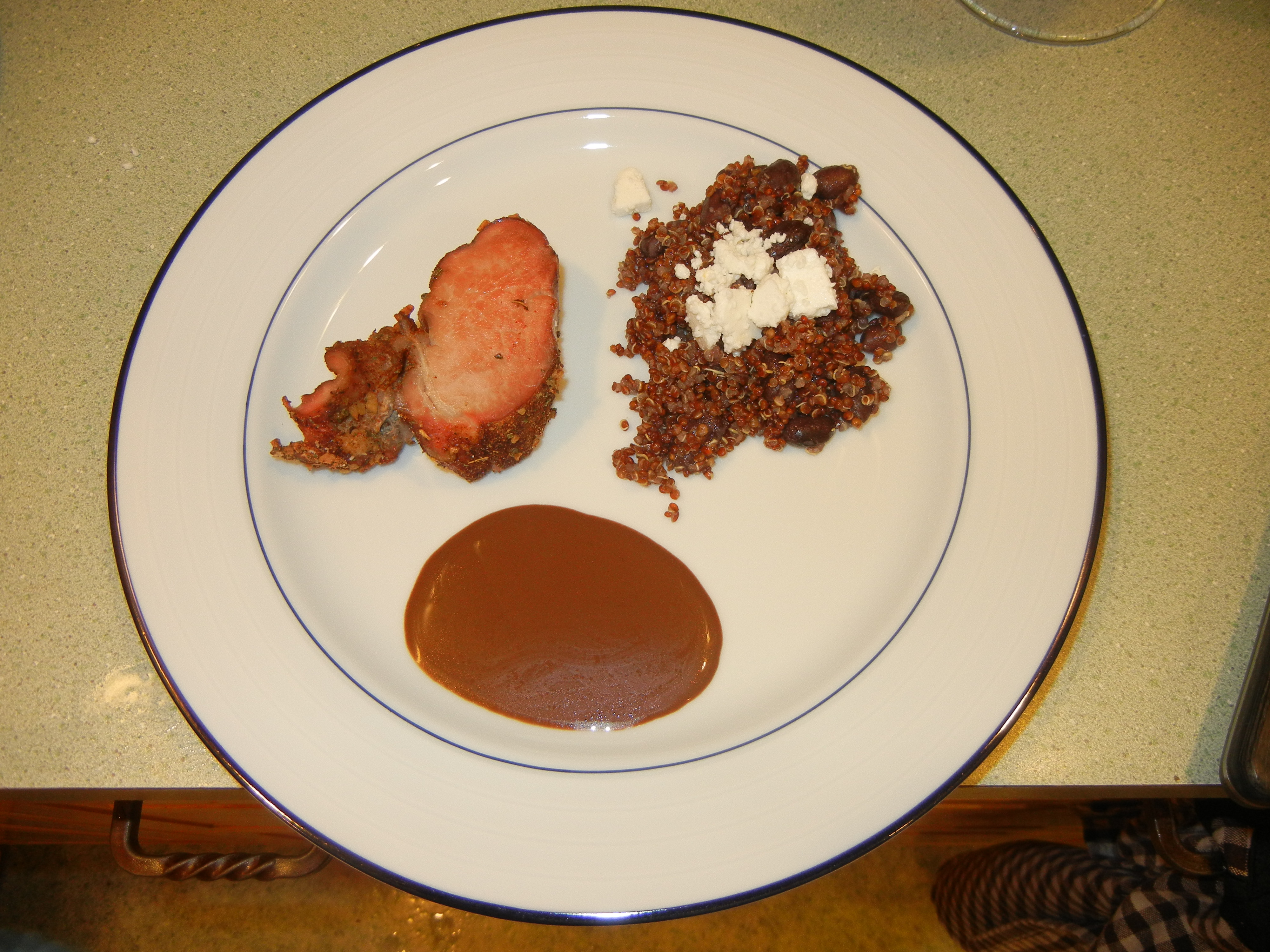
Too bad the Mayans hadn’t actually invented this dish, they might be remembered for something other than they amazing grasp of astronomy and a faulty calendar.

I like quinoa – it is nutty, easy to cook and really healthy for you since it is a whole grain and does not contain gluten. It is also one of the oldest cultivated agricultural products on the planet. I recently served a quinoa hash as a side dish for my End of the World meal. If you need a hearty side dish or something that can be expanded to a meal and cooked in really short time, this is one for you. I got the idea from this recipe from both Modernist Cuisine at Home and Cooks Illustrated, but the recipe is pretty much my version.

The Software
½ cup red (or any type) quinoa
2 teaspoons olive oil
¾ cup stock (chicken of veggie) or water
½ can black beans (preferably low or no sodium)
2 oz. queso fresco

The Recipe
Rinse the quinoa and drain. In a medium sauce pan, heat olive oil over medium high heat until it begins to shimmer. Add the quinoa and toss to coat with the oil. Sautee the quinoa for 3-5 minutes, stirring occasionally, until golden and fragrant. If it starts to brown deeply, lower the heat to medium. Add stock to the pot and bring to a simmer. Reduce heat to low and simmer uncovered until the quinoa begins to unfurl, about 15 minutes. Drain the beans and fluff the quinoa with a fork when it is finished. Add the beans to the quinoa, taste (add salt as necessary) and let sit covered for 10 minutes. Plate and sprinkle queso fresco on top. A sprinkle of chopped cilantro would also be nice.

Notes
The quinoa can be made in advanced and reheated with the beans prior to serving. This serves as a nice base for chicken, fish, veggies, or pretty much anything that you would want to put with it. Make sure you rinse the quinoa first and drain most of the water before putting it in the oil. Rinsing it removes a naturally occurring chemical on the grain that produces bitter flavors if you make it without washing it first. Quinoa can be found at most supermarkets either in the bulk food section, the rice isle, organic section or the ethnic foods section.

Enchilada Sauce – Another Use for Green Tomatoes

By Iron Chef Leftovers

If you have green tomatoes, one of the best things to use them for is enchiladas. You can easily use the tomatoes to replace tomatillos in the sauce and get something that tastes about 100 times better than anything that will come out of a can.

The Software
3 lbs. green tomatoes, cut into 1 inch pieces, woody parts removed
¼ cup minced onion
3 cloves garlic, peeled
1 tablespoon olive oil
1 jalapeno pepper, diced, seeds removed
2 cups stock or water
Salt

The Recipe
In a sauce pan over medium-high heat, heat the olive oil until shimmering. Add onion and cook for 3-4 minutes, stirring constantly, until they begin to become translucent. Add garlic and cook for additional 30 seconds until the garlic becomes fragrant. Add the tomatoes, pepper and liquid and bring to a boil. Reduce heat to medium and cook for 10-15 minutes until the tomatoes are tender. In several batches, take the contents of the pot and puree until smooth. Return the puree to the pot over medium heat and bring to a boil. Once the sauce begins to boil, continue to cook until it thickens (5-10 minutes), stirring about every minute. Once the sauce has reached the desired consistency, add salt to taste and it is ready to use.

Notes
You can pretty much put this over anything – pasta, chicken, pork, veggies or enchiladas. If you like it hotter, add more peppers, or better yet, add some serrano peppers. If you like it less spicy, remove the pepper or reduce the amount. If you want a super kicked up version of this sauce, when you add the garlic, add 1 ½ teaspoons of the following: cumin, dried oregano, smoked paprika, adobo, garlic powder and black pepper. Follow the recipe as is otherwise.

Quick Chicken Parm

By Iron Chef Leftovers

Chicken Parm is one of my favorite things – how could it not be, breaded chicken, sauce and cheese. Recently, I had a family member have a health scare and it got me thinking, is there a healthier way to make chicken parm and still have it taste great. This is particularly useful if you don’t have any sauce on hand (and you would never buy sauce from a jar, right?) This is what I came up with.

The Software
3 chicken cutlets, 3 oz. each, about 1/8 to 1/4 inch thick, patted dry
2 tablespoons, herb infused olive oil (see note below)
2 oz. mozzarella cheese, either sliced very thin or shredded
1 oz Parmigiano reggiano grated
1 tomato, sliced into 1/8 inch rounds (enough to cover the surface of your chicken)

The Recipe
In a large skillet, heat 2 tablespoons of oil on medium-high heat until just starting to smoke. Add chicken and cook on the first side for 2 minutes and the second for 1-2 minutes until done. Remove excess oil with a paper towel. Heat your broiler. On a baking sheet covered with a sheet of foil, place the chicken, top with tomatoes and then top with cheese. Place under the broiler until the cheese is melted and bubbling, about 2 minutes. Serve to happy guests.

Notes
Start to finish, you can have this on the table in 10 minutes. Notice I did not use salt – there is plenty in the cheese that you won’t need it. Check on your chicken constantly when under the broiler – it can go from bubbly to burn in a hurry. There is no need to preheat the broiler – you are just melting the cheese, not cooking the chicken. If using an electric oven, keep the door slightly ajar, the broiler will cycle off and on if you don’t and it will take a lot longer to melt the cheese. The recipe can be easily scaled and obviously you can add more tomato or cheese if you want. The key to this being a quick recipe is pounding the cutlets thin. If you don’t want to do it, buy your chicken at a butcher shop or megamart with a butcher counter and ask them to do it for you. They should have no problem with doing that.

Notes on Infused oil
To make the herb oil, you can either buy it or make it yourself. I like to throw a sprig of sage, rosemary, tarragon and thyme into about 1 cup of oil with 2 garlic cloves. Heat over medium heat for 15 minutes. Store in an airtight container in the fridge for up to 1 month. If you are feeling really lazy, just toss the herbs and garlic in the oil you are cooking the chicken in and leave them in the pot, following the directions for cooking the chicken in the recipe.

Farro – The Other Brown Grain

By Iron Chef Leftovers

Farro, or emmer as it is also known, is an ancient grain that is popular in Italian cooking and is starting to gain acceptance in the US because of its high nutritional value and diabetic friendly properties. I tend to use is as a substitute for rice and I love its nutty flavor and tend to cook it to an al dente consistency to give it some toothiness. It is a simple grain to cook and it is pretty much like cooking rice.

The Software
½ cup farro
2 cups chicken stock
1 tablespoon olive oil
Kosher salt

The Recipe
In a medium sauce pan, heat the olive oil over medium-high heat until shimmering. Add the farro and toss in the olive oil until coated. Cook over medium-high heat for about 2 minutes, stirring every 30 seconds. Add the stock and a pinch of salt and bring to a boil. Once at a boil, reduce heat to medium low and simmer covered for 30-40 minutes. Check the grain after about 25 minutes – you are looking for a consistency that is slightly chewy, but not crunchy. The farro may be cooked before it absorbs all of the liquid. If it is, drain the liquid and season as needed (a little salt and pepper usually are nice, maybe a couple of teaspoons of nice olive oil). This can be served either hot or cold.

Notes
You can replace the stock with water if you want – the stock adds flavor, but isn’t necessary. Use farro in place of brown rice as a side dish or put it cold on a salad for a nice, nutty crunch. It is also really good with some slivered almonds and dried cranberries as a side dish – just add those in once the liquid is drained and toss.

Grill Roasted Beef Tenderloin

By Iron Chef Leftovers

Mrs. Iron Chef and I recently entertained her aunt, uncle and a couple of cousins, who had been on a whirlwind tour of the Pacific Northwest, and I decided that they needed a good, home cooked meal. Since there were 6 of us and the weather was nice, I thought that the meal called for a nice grill-roasted beef tenderloin. It is easy to cook, always a crowd favorite and doesn’t require a ton of prep. The below recipe and technique was taken from Cook’s Illustrated magazine and modified a bit by yours truly.

The Software
1 – 2 ½ lb. beef tenderloin, silver skin removed
1 tablespoon + 1 teaspoon kosher salt
1 tablespoon granulated garlic
1 teaspoon of olive oil
1 teaspoon ground black pepper
Soaked wood chips for smoking (optional)

The Prep
Remove any silver skin that may be on the roast. Pat dry and sprinkle1 tablespoon of salt on all sides of the roast. Wrap tightly in plastic wrap and return to the fridge for at least 4 hours (you can let it sit overnight if you want, it won’t hurt anything). When you are ready to fire up the grill, pull the meat out of the fridge and pat dry with paper towels. Rub with the oil and then sprinkle with garlic, salt and pepper to get even distribution. Tie the roast with 5 pieces of butcher’s twine spaced at even intervals to make the roast as uniform as possible. Let rest until you are ready to put on the grill.


A whole beef tenderloin – the two “wings” are called the chain meat. You want to get your roast from that end of the muscle and remove the chain meat before cooking.

The Grill
Gas grill – turn all burners on high for 15 minutes to preheat the grill. Add wood chips to your smoking box at this time. Once grill is heated, clean the grill grates. Turn off all of your burners except for your primary burner. Leave that on – you are looking to maintain about 300-325 degrees in the grill. For my grill it means leaving the primary burner just above medium high.

Charcoal grill – prep 6 quarts of charcoal and heat until covered in ash. Add the charcoal to the far side of the grill, not exposing more than half of the grill grate to direct heat (you are going to cook the meat off of direct heat). Add wood for smoking directly to the charcoal. Heat the grate for 10 minutes with the grill covered.

The Roast
Gas grill – put the meat on the grill about 8” from the edge of the primary burner (you don’t want to put in directly on the heat from the primary burner). Roast for 25 minutes, and then flip the meat over. Continue roasting until the meat reaches 125 degrees on a meat thermometer (that is medium rare). Remove from the heat to a plate and cover with foil. Let rest 15-20 minutes before cutting.

Charcoal Grill – Put the meat over the direct heat of the charcoal for about 2 minutes on each side to get a crust to form. Move the meat to be about 8” from the direct heat and cook on the first side for about 15 – 20 minutes. Turn over and continue cooking until the meat reaches an internal temperature of 125 degrees. Remove from the heat to a plate and cover with foil. Let rest 15-20 minutes before cutting.

Notes
If your fire starts to die down on a charcoal grill, add more charcoal. This recipe is easier on a gas grill (better temperature control), but tastes a ton better on a charcoal grill. I used a simple salt, garlic and pepper rub for this, but you can use any type of spice rub you would like. If you opt for tenderloin, you want to get a roast that is as uniform as possible and ask your butcher to remove the silver skin for you, it will save you 10 minutes of prep time. If you don’t want to use tenderloin, eye round also works in about the same amount of time. You could also easily substitute a boneless leg of lamb roast or a pork loin roast (not the tenderloin, it is too thin) and they will all cook in about the same amount of time. Tying the roast is essential to making it a uniform as possible – it will prevent some pieces from being more cooked than others. Serve with some roasted veggies and a nice chimichurri sauce.

A Burger with Heart

By Iron Chef Leftovers

I have been accused of being a food snob over the years because I tend to shun crappy, mass produced foods in favor of items that are freshly prepared on a small scale and because I will eat things that most Americans won’t, despite, in most of those cases, most of the rest of the world does eat it.

One case in point – beef heart. Before you go “yuck”, understand this – heart is a muscle that is no different from the steaks that you eat and it actually contains significantly less fat than most other cuts of beef. It also has an incredibly beefy flavor (not the metallic flavor that most people would assume it has since it is considered “organ meat”), much more so than just about any other cut off the cow. If you haven’t tried it, you should – it is cheaper than a steak and cooks incredibly quickly so it can be prepared for a weeknight meal.

All of this lead author Jennifer McLaglan to include a recipe for a heart burger in her Odd Bits cookbook. Before you say “yuck” again, be aware that if you are eating any commercially produced burger or using commercially produced ground beef, you probably have had heart already without knowing it. As she writes:

This is a great way to try heart for the first time…

I took this recipe and made it at home without telling Mrs. Iron Chef Leftovers what was in the burgers and she loved them. I suggest you try it for yourself before saying “yuck.”

The Software
¾ lbs. brisket, fat cap on, ground
¾ lbs. heart, fat on, cleaned and ground
1 ¼ teaspoons salt
Freshly ground black pepper
1 tablespoon olive oil, beef drippings or bacon fat

The Recipe
In a large bowl, combine all ingredients, except the oil, mixing gently until combined. Divide into 4 portions and form into patties about 1 inch thick. Place the patties on a large plate or sheet pan, cover with plastic wrap and refrigerate for at least 1 hour. Pre-heat a pan or grill over medium high heat and add oil. When the oil begins to smoke, add the burgers. Cook for 4-5 minutes until a nice brown crust forms and flip, reducing the heat to medium. Cook for another 4-5 minutes until the burgers reach your desired doneness, Server with your favorite burger toppings.

Notes
I would highly recommend sourcing your heart from a small grower and preferably from a grass fed animal. You will get a better quality product with better flavor. I usually get mine from Skagit River Ranch. You probably won’t be able to find either ground heart or ground brisket easily, so you can see if you purveyor will grind it for you, or better yet, grind it at home yourself. I also added about 2 strips of uncooked bacon to my meat mix before I formed the patties and it took these burgers over the top. This comes in especially handy if the brisket you use does not have much fat. I would not recommend cooking these burgers all the way to well-done; they will dry out as a result and won’t be particularly tasty. If you are grinding the meat yourself and you have a good source, you shouldn’t need to cook these beyond medium-rare to medium. If you don’t like beef, pork belly or lamb shoulder can be subsituted for the brisket and the heart of those respective animals can be used.