Skillet Fried Potatoes

By Iron Chef Leftovers

This type of steamer basket works best. You can get them at Amazon.com for about $8.

I do entirely too much reading of cookbooks. These days, I am not really looking for recipe ideas, more just to learn techniques. One thing that I hate to cook, but Mrs. Iron Chef loves to eat are potatoes. For me, they really are just a vehicle for adding stuff to it, much like chicken breast, so you go from healthy to unhealthy in a hurry since potatoes don’t inherently have much taste. For my End of the World meal, I was making beef stew served in a can, which I thought about it, and what goes better with beef stew than potatoes (well, celery root puree, sun choke puree…just humor me here). I took a hybrid technique from Modernist Cuisine and Cook’s Illustrated to come up with this recipe. This really isn’t much more difficult to do than making regular potatoes, but you will get better texture on them and you can actually do stage one in advance and finish them when you are ready to serve. When you are done, you should end up with potatoes that are creamy on the inside and crispy on the outside. The only special equipment you really need is a steamer basket.

The Software
1 large Yukon Gold potato, cut into ¼ inch slices
2 tablespoons fat (bacon fat, duck fat, butter or olive oil all work well. See note below)
Salt and pepper

The Recipe

Stage 1 – Fill a large pot with water to just below the surface of the steamer basket. Heat water over high heat until steam is visible. Add the potatoes to the basket in a single layer. Cover the pot and steam for 13 minutes. Check the potatoes for doneness – you are aiming for them to be slightly al dente and they should have leached their starch to the surface, so they will feel tacky. Remove them to a plate lined with a couple of paper towels and dry. It is important that the potatoes are dry before starting stage 2.

Stage 2 – Heat a large (12 inch) skillet over medium-high heat for 5 minutes (don’t use non-stick here). Add the fat and heat over medium-high heat until it just begins to smoke. Test the heat of the fat by dipping the edge of one potato slice in the fat. If it sizzles immediately, the fat is hot enough and you can add the potatoes in a single layer. If they all won’t fit in the skillet, you can do stage 2 in multiple batches. If the fat is not hot enough, continue heating it until you can get your test to sizzle. You are really just browning/reheating the potatoes and looking to get a golden crust on each side, so you probably won’t need more than about 2 minutes of cooking time on each side, checking after 1 minute to see the progress. After both sides are browned, remove to a cooking rack or a plate with a paper towel, season with salt and pepper to taste and serve right away. It pairs nicely with this Beef Carbonnade recipe.

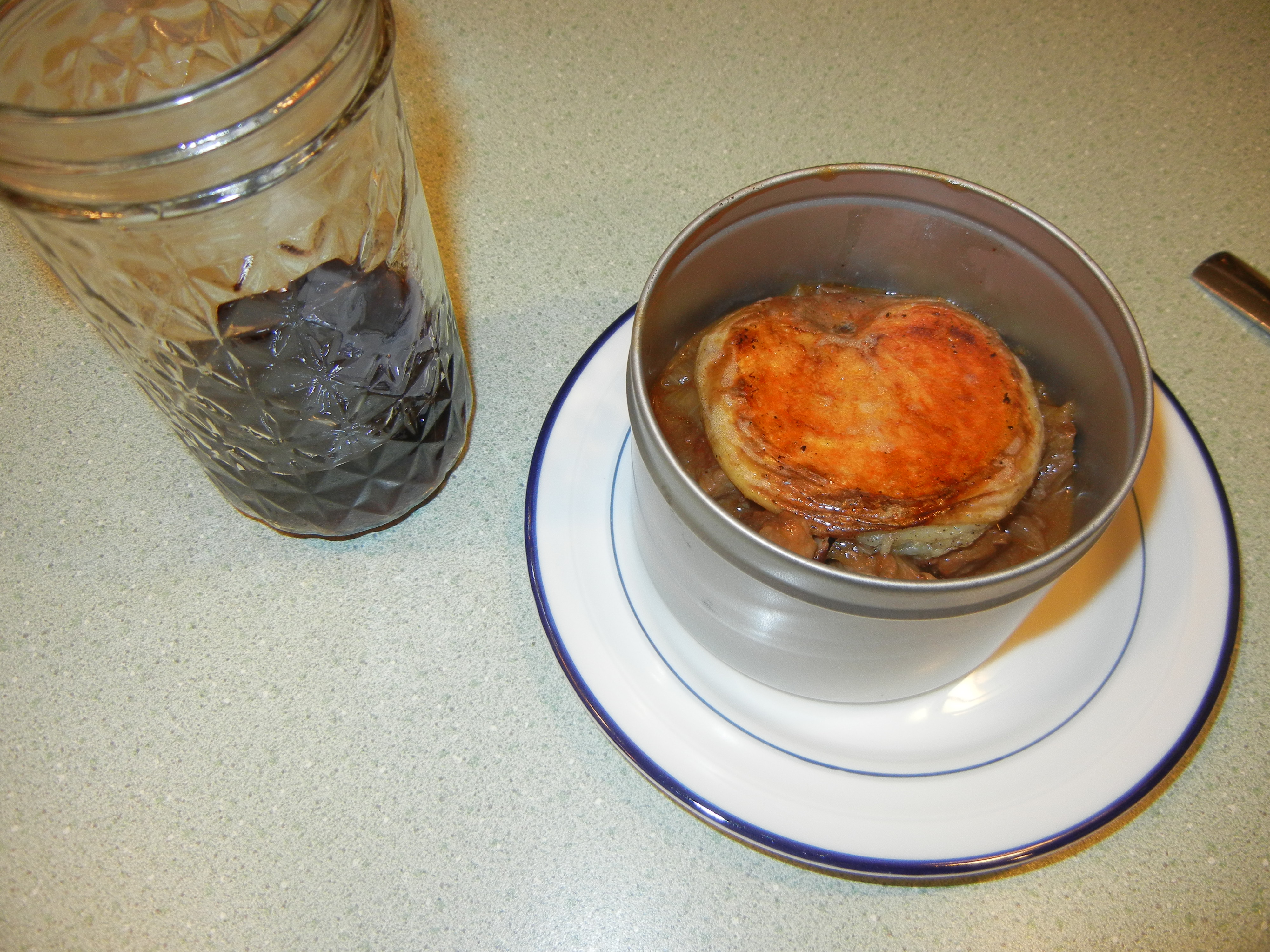
Your end result should look something like this. You can also get really classy and serve it in a can, like I did.

Notes
You really want the potatoes dry before putting them in the fat since hot fat + water = bad news. Your cooking time will really depend on what type of fat you use. Animal fats (butter, bacon fat, duck fat) have a lower smoke point than vegetable fats (olive oil, vegetable oil), so they will reach that stage quicker and take longer to brown the potatoes, which is why you really want to check them after about the first minute. You can actually skip stage 2 if you want and just serve the potatoes steamed. Just increase the cooking time to about 16 minutes in the steamer. This dish would also benefit from the addition of some fresh rosemary, sage or thyme.
Toasted Quinoa Hash

By Iron Chef Leftovers

Too bad the Mayans hadn’t actually invented this dish, they might be remembered for something other than they amazing grasp of astronomy and a faulty calendar.

I like quinoa – it is nutty, easy to cook and really healthy for you since it is a whole grain and does not contain gluten. It is also one of the oldest cultivated agricultural products on the planet. I recently served a quinoa hash as a side dish for my End of the World meal. If you need a hearty side dish or something that can be expanded to a meal and cooked in really short time, this is one for you. I got the idea from this recipe from both Modernist Cuisine at Home and Cooks Illustrated, but the recipe is pretty much my version.

The Software
½ cup red (or any type) quinoa
2 teaspoons olive oil
¾ cup stock (chicken of veggie) or water
½ can black beans (preferably low or no sodium)
2 oz. queso fresco

The Recipe
Rinse the quinoa and drain. In a medium sauce pan, heat olive oil over medium high heat until it begins to shimmer. Add the quinoa and toss to coat with the oil. Sautee the quinoa for 3-5 minutes, stirring occasionally, until golden and fragrant. If it starts to brown deeply, lower the heat to medium. Add stock to the pot and bring to a simmer. Reduce heat to low and simmer uncovered until the quinoa begins to unfurl, about 15 minutes. Drain the beans and fluff the quinoa with a fork when it is finished. Add the beans to the quinoa, taste (add salt as necessary) and let sit covered for 10 minutes. Plate and sprinkle queso fresco on top. A sprinkle of chopped cilantro would also be nice.

Notes
The quinoa can be made in advanced and reheated with the beans prior to serving. This serves as a nice base for chicken, fish, veggies, or pretty much anything that you would want to put with it. Make sure you rinse the quinoa first and drain most of the water before putting it in the oil. Rinsing it removes a naturally occurring chemical on the grain that produces bitter flavors if you make it without washing it first. Quinoa can be found at most supermarkets either in the bulk food section, the rice isle, organic section or the ethnic foods section.

Meal of the Apocalypse

By Iron Chef Leftovers

Well, the Mayans were wrong and what a better way to celebrate the fact than throwing a hedonistic feast in their honor. I will do this post in a couple of parts – this one with the menu, descriptions and any links to existing recipes that I used to make them (along with any tweaks) and a second set of posts with the remaining recipes (some of these are a pain to write out, so it will take a bit to get them out there). I really wanted to have fun with the meal, so I opted for simple preparations with fun plating and names. So, without further delay, I present to you “Meal of the Apocalypse”!

Cocktail: Heart of Darkness
I am pretty sure that I didn’t make this one up, but I have absolutely no idea where I would have come across it either. It is a champagne based cocktail, which are always delicious and refreshing and this takes about 1 minute to make.

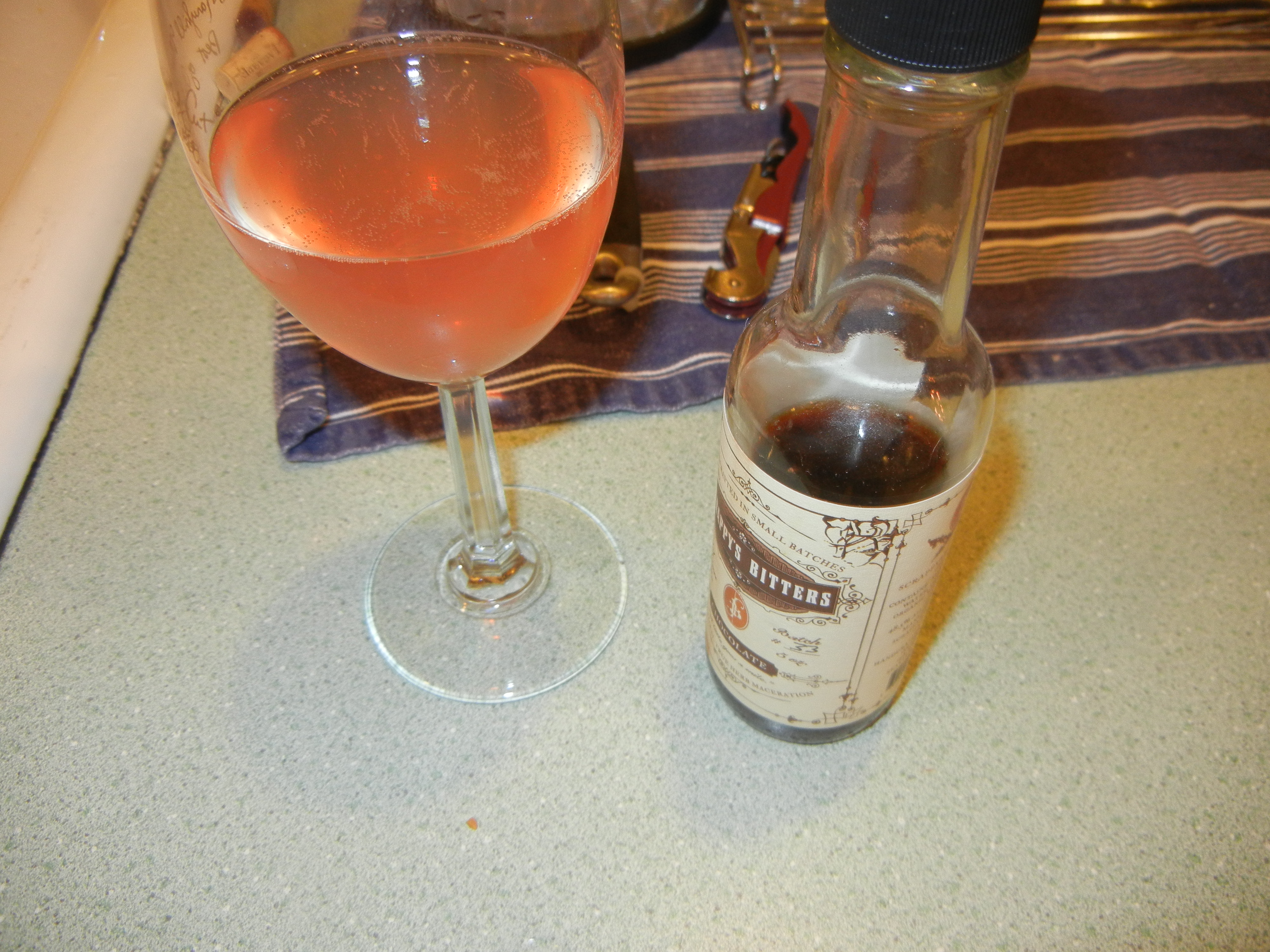
The Heart of Darkness is looking a little lighter and more refreshing these days.

Here is what I wrote about the drink on my menu:
The story Heart of Darkness by Joseph Conrad is the inspiration for one of my favorite movies, Apocalypse Now. It seemed appropriate to make a drink based on that, given the theme of the night.

Since I like you, I will give you the recipe here.
The drink is 1.5 oz. blood orange juice or soda, 4 oz. sparkling wine, 3 drops Scrappy’s Chocolate Bitters and a frozen strawberry, served in a wine glass.

I would recommend using a drier sparkling wine for this so that you don’t get overloaded with sweetness. I personally used Washington produced Treveri Pinot Gris sparkling wine in this version.

First Course: My Last Meal
Being Italian, it seemed logical to start off the meal with pasta. I did a meat ravioli with a taleggio, shallot and sous vide egg cream sauce and topped it with a sprinkle of guanciale, just because I could. It was decadent and over the top, but it pared nicely with the 2010 Wilridge Pinot Grigio, which has a bit of sharpness to it that cut the richness of the dish.

Since it seems I didn’t actually take a picture of the pasta, I give you one of the cats sunning himself on the couch. This was the general happy response to the pasta, so let’s just call this the after picture.

My notes on the dish:
One of the components of my last meal on earth, if I got to choose it, would be something that my dad made for me when I was growing up. This is my adult version of the meal that I enjoyed as a kid.

Second Course: The Mayan Slaughter
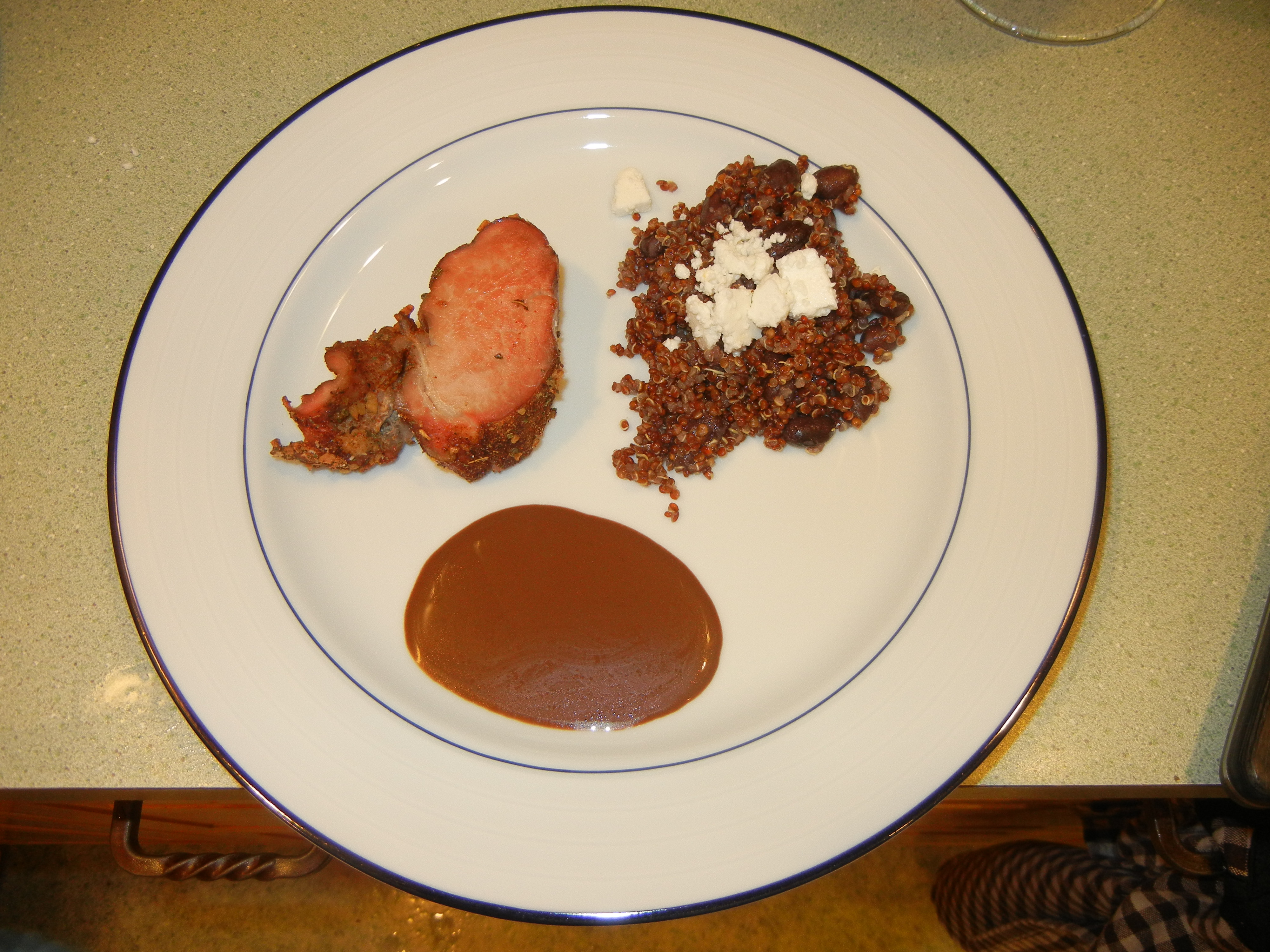
I wanted to make mole without making mole, so I basically took a bunch of the spices that are used in mole and made a spice rub for some pork tenderloins. Then to get the chocolate component of the dish, I made a chocolate gastrique as a side sauce that was meant to be eaten with the pork. I really felt like I nailed this one as the combination of the spices and the chocolate really reminded me of a mole, although a more complex one than you might expect since the fruit notes in the chocolate really came out. I served it with a toasted quinoa hash (quinoa, black beans, queso fresco) that I got the basic idea from Modernist Cuisine at Home. I pared this with a completely killer Argentinian Malbec from my cellar that a friend brought me back from Argentina – 2006 LaGarde Riserva Malbec.

Too bad the Mayans hadn’t actually invented this dish, they might be remembered for something other than they amazing grasp of astronomy and a faulty calendar.

There was one problem with calling this dish the Mayan Slaughter:
The Spanish brought pigs to the new world and they became a main protein of Mexican cooking well after the Mayans. A deconstructed mole sauce is a tribute to the Mayans, although the Mayans didn’t really invent it and quinoa is actually from South America. We will just ignore those little details.

Third Course: Side of the Road Salad
Just a simple salad of wild arugula, dandelion greens, truffle oil, 30 year old balsamic vinegar and alder smoked sea salt. I wanted to add some sun chokes to this, but my attempt at making a sun choke crouton didn’t work. I served this with a 2009 NHV Rose which wasn’t a fan favorite by itself, but worked well with the salad.

No picture of this since: A) salads are boring and B) I forgot to take a picture of it before I started eating.

My story about the salad:
You could, in theory, survive in Seattle eating nothing but foraged food (there are people who do this willingly), if you know where to look. This just proves that you can do it and still eat well.

Fourth Course: Raid the Emergency Supplies
This was one that I went really creative with the presentation. What better to celebrate the world not ending then with eating your stockpiles of emergency supplies? I made my Belgian Beef Carbonnade recipe, topped it with a potato slice and served it in a tin can. Of course, since I went with the really classy presentation in a can, I had to serve a great bottle of wine, in this case the 2001 Conti Sertoli Sforsato in a mason jar.

Here are my thoughts on this:
You should have a stockpile of emergency supplies including canned goods in the event of a natural disaster. If Dinty Moore beef stew tasted this good, I probably would be eating it every night. When serving stellar food in a can, it is only appropriate to serve a killer wine in a mason jar, just to keep it classy.

Dessert: Last in Line for the Human Sacrifice
I really needed to have a human sacrifice as part of this meal; it just seemed fitting and, after much debate, decided that it would be at the end of the meal. So how do you have a human sacrifice without killing an actual human? Well, you first take an altar made out of chocolate pudding. You then take a human made of a sugar cookie and place him on the altar. Then you take some raspberry blood and dot that on the plate. Then you take a spoon and kill your cookie man and enjoy. Just for the hell of it, you pair this with a Maison de Pagett Pillow Talk Vanilla Port. Human sacrifice has never been as fun or delicious as this one.

Our vicitm just before he meets his untimely end. In an interview just before the sacrifice, he was quoted as saying, “No thanks, I would rather be lost.”

The gory details:
A line from a George Carlin bit about being lost. No proper post-apocalyptic meal would be complete without a sacrifice at the end. There was also much debate among my friends about where in the meal the sacrifice belonged. We will try it here.

In case you were wondering, here is the actual Carlin bit.

AB’s Instant Chocolate Pudding

By Iron Chef Leftovers

So I am going to show you want to do with the instant pudding recipe. I have modified the original recipe and that change will be described in the notes. This is fairly quick to make and tastes so good when it is done.

The Software
1 ¾ cups of pudding mix
4 cups of whole milk
1 teaspoon vanilla extract

The Recipe
Combine the mix and milk in a medium sauce pan. Whisk together until combined. Heat over medium heat until mixture begins to boil (7-10 minutes) constantly whisking gently. When boil is reached, reduce heat to low and simmer for 4 minutes, whisking constantly. Remove heat and whisk in vanilla. Transfer mixture to a single bowl or individual serving bowls. Cover with plastic wrap directly on the surface of the pudding if you don’t want a skin to form. Refrigerate or just eat it warm. Using your finger or a spatula, remove any chocolate pudding still in the pot and consume.

Notes
The original recipe called for 2 cups of heavy cream and 2 cups of milk. I replaced the cream with the milk and did not really notice much difference in the texture or flavor. I need to try it with replacing some of the whole milk with skim milk to see how that affects the product. I also tried doubling the recipe. It increased the cooking time from 10 minutes to almost 30 since there was much more cold milk to bring up to temperature.

Stuff You Should Have In Your Pantry: Instant Chocolate Pudding Mix

By Iron Chef Leftovers

I like simple desserts. I am not a baker and I don’t like spending a ton of time putting things together if I don’t have to, but I do like chocolate and specifically chocolate pudding. Yes, you can buy it premade (which tastes like crap) or the instant pudding mix in the store but really, do you want all of the chemicals and stabilizers in it? Here is the ingredients list for Jell-O Chocolate Pudding:

SUGAR, MODIFIED CORNSTARCH, COCOA PROCESSED WITH ALKALI, DISODIUM PHOSPHATE (FOR THICKENING), CONTAINS LESS THAN 2% OF NATURAL AND ARTIFICIAL FLAVOR, SALT, TETRASODIUM PYROPHOSPHATE (FOR THICKENING), MONO- AND DIGLYCERIDES (PREVENT FOAMING), RED 40, YELLOW 5, BLUE 1, ARTIFICIAL COLOR, BHA (PRESERVATIVE).

They actually add food dye to chocolate pudding? Sheesh. What if I told you that you could make your own instant pudding mix at home with a handful of ingredients and have it taste about 100 times better than any box mix that you can get? Well, thanks to the culinary genius that is Alton Brown, you can.

The Software
4 oz. Dutch Processed Cocoa Powder
2 oz. Cornstarch
6 oz. Powdered Sugar
1 ½ oz. Non-Fat Dry Milk Powder
1 teaspoon kosher salt

The Recipe
Take all the ingredients and combine them in a large bowl or container with a lid. Cover and shake until completely combined. That is it. You are done. That took about 2 minutes. Store covered in the fridge for 3 months.

Notes
I actually increased the amount of cocoa in this recipe by 1 oz. (it originally called for 3 oz.) because I wanted to. A teaspoon of espresso powder added to this mix would throw this totally over the top. Use a really good cocoa powder, it is your dominant flavor and you want the best you can get. I suppose you want the recipe for making pudding, huh? Well, you will just have to wait a few days for my next post to get that one.

Last Night’s Pizza

by A.J. Coltrane

Not the world’s most awesome title for a post. I’d guess most people would just “twitter” their pictures of the pizza.

First off though, a piece about Marv Albert at Grantland. Marv finally got to broadcast an NBA game from Brooklyn, which is where he grew up. As kids, Marv and his brothers would turn down the volume on the TV and do play-by-play of the baseball games. He’d lug a tape recorder to almost any sporting event and “call” the game. There’s this bit too:

“Kenny Sears’s stale jokes put the other players to sleep,” Marv wrote in the Lincoln Log in 1957. Now, fast-forward three decades. Remember when Michael Jordan hit six first-half 3-pointers in the ’92 Finals and gave that I-can’t-believe-it-either shrug? It’s often forgotten that the guy he was shrugging at — his co-conspirator, you might say — was the NBC announcer whom he liked so much that he’d feel hurt if he didn’t get asked for an interview. The guy MJ was shrugging at was Marv.

There’s more. It’s an interesting piece.

Onto the pizza. Before:

After:


Sopressata, sausage, red onion, mozz, goat cheese.


Long Cold Fermentation Baguettes

by A.J. Coltrane

Baguettes inspired by Rose Levy Beranbaum’s The Bread Bible. One of her recommendations for rustic loaves calls for combining all of the water with an equal weight of flour, then letting that marinate in the refrigerator for up to three days. (A poolish.) I targeted 63% hydration for the baguettes, and I wanted two loaves as an end product. 600 grams of flour is about right for two shortish baguettes, so:

Poolish:  378 grams refrigerator water, 378 grams AP flour, 1/16 teaspoon Instant Dry Yeast. Mix with a spatula, cover the bowl, and let rest in the refrigerator for 3 days.

The poolish after three days.

One hour before you are ready to combine the rest of the ingredients with the Poolish, remove it from the refrigerator.  Note the fabulous shower cap. Another idea that I picked up from interweb forums. It should help cut down on the plastic wrap use.

Fashionably coiffed. Note the Space Invaders cutting board lurking in the background.


Add 222 grams of AP flour to the Poolish, as well as 12 grams of salt (2% of the total flour weight) and 1 teaspoon of Instant Dry Yeast. Knead in the mixer for 6-8 minutes at low speed until the dough is smooth. Cover and let rise one hour. Divide the dough into two pieces and let rest 15 minutes.

Post-shape and pre-rise.

Shape into baguettes, cover, and let rise 1.5 hours. Slash the loaves.

Slashed. I really need to get better at that technique.


Place a baking stone on the middle rack and a sheet tray on a lower rack. Put three ice cubes in the sheet tray and set the oven to 425F.

They came out a little paler than I would have liked. I think the flavor suffered a little bit as a result.

Load the loaves into the oven and add a couple of ice cubes to the sheet tray. (I’m still working on figuring out how many ice cubes to use and the timing, though this combination got high remarks on the finished bread crusts the first time I tried it, and it’s about what the guy at the Restaurant Supply Store recommended. It seems like a good place to start.)

The crumb. I was visualizing a more open hole structure. To get there I may need to increase the hydration, or use bread flour, or just work the dough a little more. Probably all three.

I think the end result was fine but not exceptional. I need more practice. Fortunately this is one of those things where nobody minds eating the experiments, and even the less than ideal loaves still taste pretty good.


A Pizza And A Pizza(?)

by A.J. Coltrane

Two “pizzas” using the same basic recipe. Both received a 20-minute autolyse prior to combining all of the ingredients. (In other words, I mixed together only the flour and water and let that rest for 20 minutes before continuing with the process.)

This one was hand stretched then baked on a perforated pizza pan. During the stretching I intentionally left some “lip” around the edge. The center got quite thin.

Red sauce, sausage, and sopressata.
With mozz.


The “pizza” pictured below was evenly spread in a lightly oiled pan and allowed a 45-minute rise. Even though I made a point to dimple the middle of the dough it still had a focaccia feel to it — the center of the dough rose quite a bit.

Mushrooms, a fair amount of olive oil, and (I think) a bit of very thinly sliced onion. Fresh basil and parm went on late so that they’d just heat through.

Again, it’s basically the same “recipe”, handled somewhat differently but producing two very different results. This stuff fascinates me.

Enchilada Sauce – Another Use for Green Tomatoes

By Iron Chef Leftovers

If you have green tomatoes, one of the best things to use them for is enchiladas. You can easily use the tomatoes to replace tomatillos in the sauce and get something that tastes about 100 times better than anything that will come out of a can.

The Software
3 lbs. green tomatoes, cut into 1 inch pieces, woody parts removed
¼ cup minced onion
3 cloves garlic, peeled
1 tablespoon olive oil
1 jalapeno pepper, diced, seeds removed
2 cups stock or water
Salt

The Recipe
In a sauce pan over medium-high heat, heat the olive oil until shimmering. Add onion and cook for 3-4 minutes, stirring constantly, until they begin to become translucent. Add garlic and cook for additional 30 seconds until the garlic becomes fragrant. Add the tomatoes, pepper and liquid and bring to a boil. Reduce heat to medium and cook for 10-15 minutes until the tomatoes are tender. In several batches, take the contents of the pot and puree until smooth. Return the puree to the pot over medium heat and bring to a boil. Once the sauce begins to boil, continue to cook until it thickens (5-10 minutes), stirring about every minute. Once the sauce has reached the desired consistency, add salt to taste and it is ready to use.

Notes
You can pretty much put this over anything – pasta, chicken, pork, veggies or enchiladas. If you like it hotter, add more peppers, or better yet, add some serrano peppers. If you like it less spicy, remove the pepper or reduce the amount. If you want a super kicked up version of this sauce, when you add the garlic, add 1 ½ teaspoons of the following: cumin, dried oregano, smoked paprika, adobo, garlic powder and black pepper. Follow the recipe as is otherwise.

Yeast, Bacteria, Temperature, And Taste

by A.J. Coltrane

While browsing pizzamaking.com I’d been noticing a bunch of references concerning the effect that temperature has on flavor during fermentation, though I hadn’t been able to find real, concrete specifics.

While looking for that information and re-reading Rose Levy Beranbaum’s The Bread Bible, I came across this [pg 30]:

…When chilled, the yeast goes into dormancy, slowing its activity and producing more alcohol. The decreased activity gives the bacteria a chance to feed on the sugar, develop more, and produce more acetic acid. Temperatures of 40F to 50F are ideal for the formation of acetic acid; 55F to 90F results in the formation of blander lactic acid. Acetic acid imparts a far more sour quality to bread than lactic acid. As an added benefit, acetic acid also strengthens the dough’s structure, although too much of this acidity would ultimately weaken it. Some bakers prefer the milder flavor provided by lactic acid.

Emphasis mine. The angels weren’t singing or anything, though right now I’m thinking it’s a key component of flavor development that I’d initially overlooked/undersold.

On a not-unrelated point, within the last year Iron Chef Leftovers and I attended a bread-baking class taught by a local professional baker. The guy kind of wrinkled his nose when one of the students expressed a high opinion of Peter Reinhart’s level of knowledge and contribution to the craft. (I don’t think it was one of us, though we had previously attended a class taught by Reinhart and learned quite a bit.)

Anyway:  a quote from Reinhart’s Artisan Breads Everyday [pg 52].

Pain a l’Ancienne Rustic Bread

I first introduced the concept of cold-fermented wet dough in The Bread Baker’s Apprentice. While the idea isn’t new or original, it has blossomed during the past few years into various no-knead, overnight rise permutations…

Maybe it’s just me, but it feels to me like Reinhart is taking credit in a backhanded kind of way for the no-knead idea and the general increase in popularity in the use of the refrigerator to retard fermentation. “it has blossomed the last few years into… (these other guy’s come-lately stuff)”. It’s a fairly common thread that runs through his writing — I can see now why the guy might have wrinkled his nose.

It’s just me, right?

—–

Note: The Bread Baker’s Apprentice is still highly recommended.