Pizza Shaping

by A.J. Coltrane

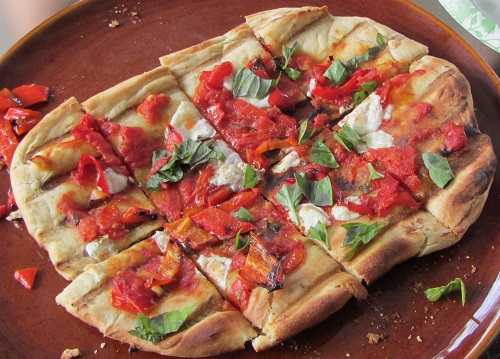
I think the weakest part of my pizza-making process is the last part — shaping the final dough. Here’s the last one:

141213 pizza

It’s a 62% hydration bread flour dough with peppers from the garden, onions, goat cheese, and a jarred marinara. (300g bread flour. 62% water, 4% oil, 2.3% salt. Baked on a perforated pizza pan.)

In this case I floured the counter and patted/stretched out the dough, never lifting it from the surface. The crust came out crisp and crusty. The cornicione (edge) was only slightly poofier than the rest of the crust.

My suspicion is that after patting the dough out on the counter it might benefit from being picked up and stretched.

Which is a good excuse to make another pizza.

No Knead Bread — AP vs Bread Flour

by A.J. Coltrane

Last week I had an excuse to make two loaves of No Knead Bread at the same time. I thought it would be interesting to try one loaf using all AP flour, and one loaf using all Bread flour. Furthermore, I’d bake the AP loaf in a smallish dutch oven (4-1/2 quarts), and the Bread loaf in a somewhat oversized dutch oven (7 quarts). In theory the Bread flour loaf would have a stronger gluten network, have more room to expand, and end up as the bigger loaf while possessing a more open crumb.

That’s not what happened. But I did learn a couple of things along the way.

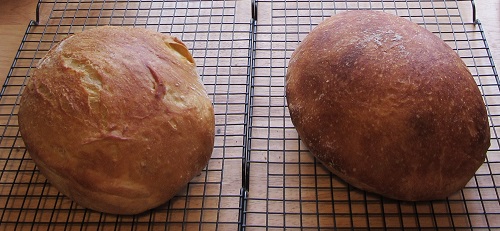
The AP flour is on the left in each photo.

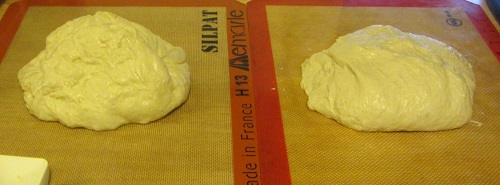
Here they are after an overnight rise, the stretch and fold, and the 15 minutes of rest before they’re to go into the bowls for the final rise. Note how much shaggier the left-hand (AP) loaf looks:

AP Bread Flour 141128

I’ve read that bread flour absorbs more water than AP flour. In this case it meant that the AP dough was stickier and that handling it meant more tearing and abuse. Ultimately it led to the shaggier appearance on the left.

I think it’s pretty neat seeing the difference in absorption illustrated like that — it had always been a somewhat abstract concept to me, but there it is in practice.

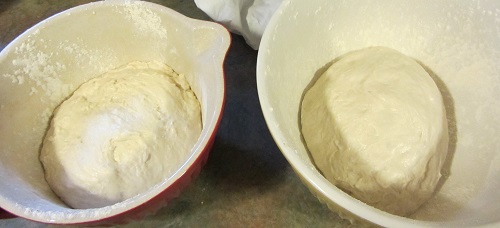
That shagginess stuck around after the two-hour rise in the bowls. It looks like the Bread flour dough just wants to be more organized — it’s almost like the increased gluten in Bread flour means that it’s naturally more structured:

AP Bread Flour2 141128

The bowls were then inverted into preheated dutch ovens. I was surprised by the end result:
AP Bread Flour3 141128

The Bread flour loaf wound up much darker. That’s because it spent the uncovered part of the baking time in the hotter part of the oven. In the future I’ll want to rotate the loaves half-way through the uncovered portion of the process (instead of right after removing the lids.)

The finished loaves wound up more or less the same size. The irregularties in the AP dough manifested themselves in the final bread, allowing the loaf to expand in the oven. The Bread flour loaf was *too* regular — the crust never split on its own. In retrospect, it should have been slashed. I thought about it, but didn’t because I wanted a completely equal trial.

I’d gone to a fair amount of care to have two distinct end products. It didn’t work out that way at all, but that’s ok because I learned more in one shot than I’ve learned in a while.

[Recipe link. Or just click on the No Knead tab at the top of this page.]


The Best Zucchini Bread

by A.J. Coltrane

A recipe we got from a former co-worker of mine. It came with the title: The Best Zucchini Bread. I’ve never had better, so I’m fine with calling it that.

The software:

Bread Ingredient Measure
AP Flour 3 cup
Eggs 3
Canola/Vegetable Oil 1 cup
Brown Sugar 2 cup
Zucchini (grated) 3 cup
Chopped Nuts (optional) ½ cup
Salt 1 tsp
Baking Soda 1 tsp
Baking Powder ½ tsp
Cinnamon 3 tsp
Nutmeg ½ tsp
Vanilla 3 tsp
Topping Ingredient Measure
AP Flour 1/3 cup
Sugar 2 TBP
Brown Sugar 2 TBP
Cinnamon ½ tsp
Butter (softened) ¼ cup

The Steps:

1.  Preheat oven to 325F.

2.  Butter and flour two loaf pans.

3.  Mix the bread ingredients. Divide into the pans.

4.  Using your fingers, combine the topping ingredients. Sprinkle on the batter. Try to cover as much of the surface as possible.

5.  Bake 1 hour. The bread is done when a toothpick comes out clean.

zucchini bread

The First Pass At Crispy Breadsticks

by A.J. Coltrane

Crispy Breadsticks:

Ingredient Measure Baker’s %
Bread Flour 300g
Water 180g 60
Salt 7g 2.3
Instant Yeast ¼ tsp
Olive Oil 12g 4

1.  Mix all ingredients at low speed for 10 minutes.

2.  Let rise overnight.  (This was intended for an overnight rise on the kitchen counter. It rose too quickly for that, so after 6 hours it got a light workout and went into the refrigerator to hang out until after work the next day.)

3.  Roll out the dough into a loose square about 1/4″ thick.

4.  Cut long thin strips with a pizza cutter or dough scraper. Twist the strips and place on a Silpat lined sheet tray.

5.  Bake 1 hour at 300F, turning halfway through.

6.  I sprinkled these with parmesan after they came out of the oven. It wasn’t sticking well, so I put the sheet tray back into the oven for 3-5 minutes, which sort of helped.

7.  Cool on a wire rack.

Notes:

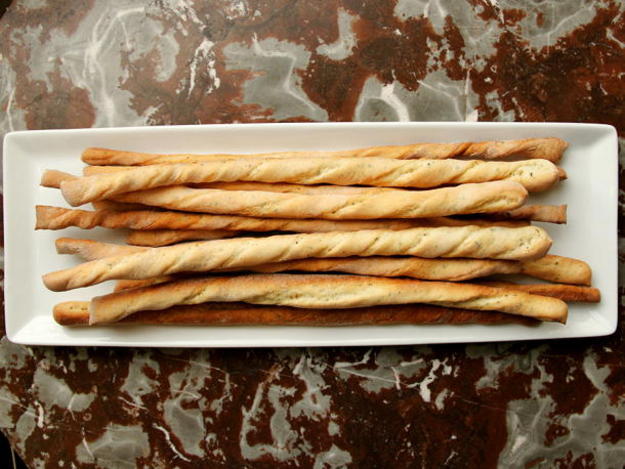
This recipe is an aggregate of a few online recipes, combined with the overnight rise idea for better flavor. (This one was one of the big jumping off points, pictured below.)

141120 breadstick

The result wasn’t as brown as the picture, but the taste and texture were good. I’d guess the fact that I baked two sheet trays at the same time contributed to the light color. Also, they could have been 20% crunchier to be closer to what I’d visualized — both issues possibly sharing the same root cause.

All in all though, a good start, a tasty result, and a very easy recipe.

Tomato Focaccia

by A.J. Coltrane

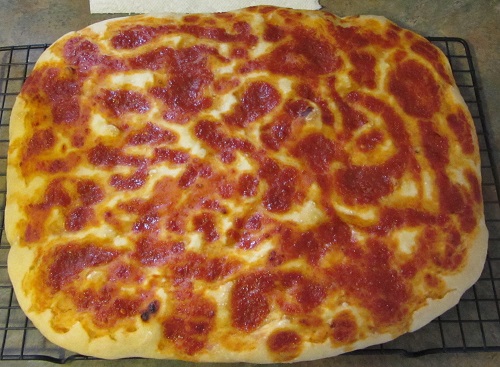
I’ve read about a Roman bread that has tomato “painted” into the surface. (Thanks for the perfect word to describe it, Kurt.) I spent a little time looking for a picture of what I’m visualizing… I don’t know that I’ve found a “right” picture. Most of the recipes seem to include a tomato puree and/or paste within the dough. Some rub a finished bread with a cut tomato after it comes out of the oven, which I’m thinking is what I had in mind when starting this bread:

tomato focaccia 141101

The bloody end result was based around what’s become my default focaccia recipe:  300g AP Flour, 300g Bread Flour, 420g water, 36g olive oil, 14g kosher salt.  (That’s 70% hydration, 6% oil, and 2.33% salt by weight.) This time I omitted the honey, reduced the instant yeast to 3/8 teaspoon, and allowed for a 18 hour rise.

Note that it’s the same rise time, and ratio of yeast as goes into the No Knead Bread — the No Knead Bread uses 400g flour and 1/4 teaspoon of yeast.

The Tigerella tomato sauce was simmered with three smashed cloves of garlic and two thai bird chilis until fairly thick but still “drizzleable”. (We’d recently been to a cooking class where the chef used a little bit of heat to “focus” things. I think that it worked — there was just a faint hint of heat at the finish.)

The Rest Of The Recipe:

1.  Combine dough ingredients, mix on low speed for 10 minutes, and let rise 18 hours.

2.  Transfer the dough to a lightly oiled baking sheet let rise one hour. (I went with a one hour rise instead of two or three because I was looking for a denser finished product, and so that the dough would support the weight of the sauce.)

3.  Preheat oven to 425F.

4.  Drizzle on the cooled sauce. Note that a focaccia typically has olive oil on the surface. I didn’t use any oil this time.

5.  Bake for 15 minutes, turn the tray, and bake for another 12-15 minutes.

—–

I think the Reinhart book American Pie has the application I’m looking for. Maybe I’ll dig through it for the recipe. Maybe.

The GNOIF Big Sandwich Bread

by A.J. Coltrane

I’ve been making a sheet-tray sized sandwich for every GNOIF over at least the last two or three years. The bread components of those sandwiches have all been riffs on focaccia.

The most recent ratios:

Ingredient Measure Baker’s %
Flour 600g
Water 420g 70
Salt 14g 2.33
Honey 1 TBP
Instant Yeast 1.5 tsp
Olive Oil 36g 6

The “Flour” for the pictured bread is 50% Gold Medal unbleached AP flour and 50% King Arthur bread flour. I added a small amount of honey to try to improve the browning, which seemed to work ok. It’s largely the same process as “Potluck Focaccia” — I’ve settled into a preferred routine for focaccia it seems:

1.  Combine all ingredients in a mixer and combine on low speed for 10 minutes. Lightly oil a parchment lined sheet tray.
2.  Pour the dough into the sheet tray, gently coaxing the dough towards the edges of the pan. Cover and let rest 2 hours.
3.  Preheat oven to 425F.
4.  When the oven is hot, drizzle a small amount of oil on the dough. Gently coax the oil over the surface.
5.  Bake for 15 minutes, turn the tray 180 degrees and bake for another 10 minutes.

141004 focaccia

This one is roast beef and ham with swiss. The flavored mayo (which one guest mistook for mustard) included olive oil, salt, “Montreal Steak Seasoning”, and a healthy dose of horseradish. (The pungency of the horseradish is likely what crossed him up.)

There are now 14 posts that reference focaccia on CheapSeatEats. It still trails pizza, which gets at least a mention in 55 posts (though I’m sure there’s some overlap)… We clearly love us some flattish breads.


Rick Bayless’ Tomato “Carpaccio” Salad

by A.J. Coltrane

The Actual Title is much longer than that — Heirloom Tomato “Carpaccio” With Tomatillo Salad, Avacado and Fresh Herbs. LWN recipe link here.

The recipe:

INGREDIENTS

  • DRESSING
  • 3 garlic cloves, unpeeled
  • 1/4cup (lightly packed) cilantro leaves
  • 2 1/2tablespoons light vinegar (like cava or rice wine vinegar)
  • 1/4cup good-quality olive oil (or unrefined corn or peanut oil)
  • Freshly ground black pepper, usually about 1/4 teaspoon, plus addition for the sliced tomatoes
  • Salt
  • SALAD
  • About 1cup Thinly sliced red onion (preferably the long, skinny
  • About 6ouncestomatillos, (preferably the small purple tomatillos – about 6 of them), cut into eighths (about 1 cup)
  • About 6ounces cherry tomatoes (preferably a mixture of red and yellow – about a dozen), cut in halves or quarters
  • 4 to 6medium-size ripe heirloom tomatoes, cored and sliced 1/4-inch thick
  • medium-sized avocado, pitted, flesh scooped from the skin and diced into 1/2-inch pieces
  • generous tablespoon roughly chopped fresh herb (cilantro is an easy choice, but don’t overlook basil, lemon balm, or anise hyssop – even arugula – or mixture of your favorites)

INSTRUCTIONS

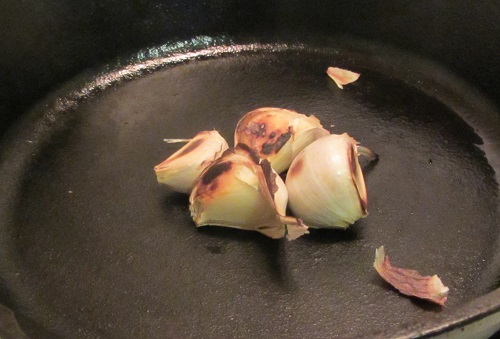
In a small, ungreased skillet over medium heat, roast the unpeeled garlic, turning regularly, until soft and blotchy black in spots, 10 to 15 minutes. Cool until handleable, then peel off the paper skin. In a blender or food processor, combine the garlic, cilantro, vinegar, oil and pepper. Process until smooth, then taste and season with salt, usually about 1/2 teaspoon.

In a medium bowl, combine the onion, tomatillos and cherry tomatoes with 3 tablespoons of dressing. Let stand while finishing the salad, stirring from time to time.

On a very large platter, lay out the sliced tomatoes in as close to a single layer as possible.

Just before serving, dot the tomatoes with the avocado and sprinkle with the herbs and fresh-ground pepper (I like the pepper pretty coarse for the tomatoes). Drizzle with the dressing, then pile the tomatillo salad in the center, and your impressive tomato salad is ready to serve.

Some pictures:

Roasting the garlic. This is my new go-to way to roast garlic cloves. Turning on the oven to roast garlic seems so wasteful:

140919 roasted garlic

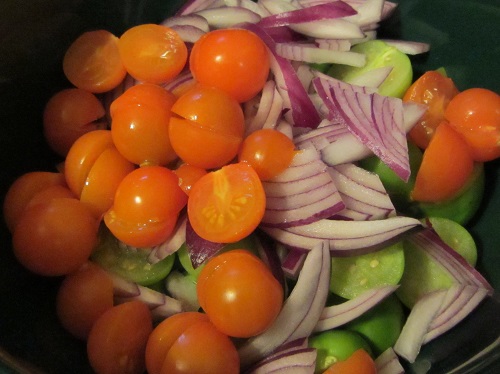
The tomatillo salad, before dressing. We used Sun Gold tomatoes because that’s what we had. (And Apple Cider vinegar as a best substitute for the recommended Rice Wine vinegar.) On the attempt that we served to company we scaled back the quantity of tomatillos a bit. Also, we decided that smaller tomatillos = better:

140919 salad

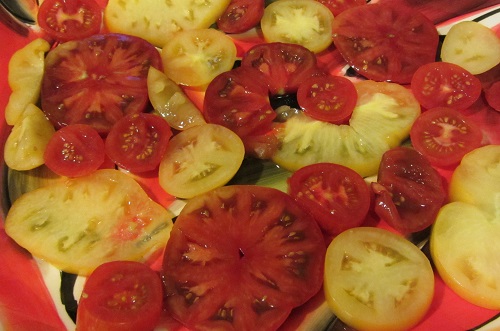
The “Carpaccio” element. Black Krim, Taxi, and Tigerella:

140919 carpaccio

The finished salad:

140919 combined salad

It’s a really nice recipe. As I mentioned, we scaled back the tomatillos a little bit for company. There’s a nice balance of sweet, fat, acid and salt. Every bite allows the opportunity to mix and match textures and flavors. We especially liked combining Sun Golds with tomatillos. Two thumbs up.

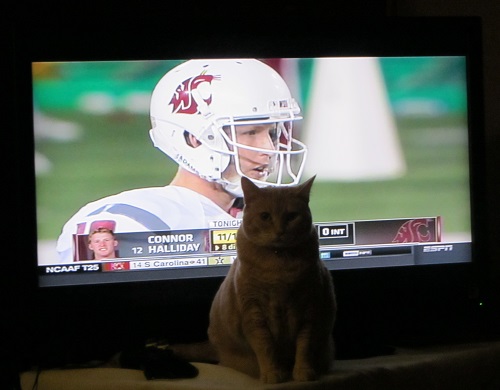
And since we’re overdue for a girl cat pic:

140920 girl cat

WSU couldn’t quite pull it off against Oregon.

A Quick Weeknight Pizza

by A.J. Coltrane

A big disadvantage of preparing a two-hour dough is that it’s not enough time for enzymes to liberate natural sugars from the flour. The flavor suffers as a result, and the color is rarely as nicely carmelized as seen on longer-rise doughs.

Last week’s Batali dough got me thinking about adding sugar, or honey, to a quick mid-week pizza. The formula below is influenced by that last recipe, omitting the wine but increasing the water content:

Ingredient Measure Baker’s %
AP Flour 400g
Water 260g 65
Salt 9g 2.25
Honey 1 TBP
Instant Yeast 1.5 tsp
Olive Oil 1 TBP

That’s a lot of flour — the same amount as goes in the No-Knead breads, or even two medium size pizzas. For a single pizza I’ll more often use 200 or 300 grams of flour, scaling back the other ingredients as needed. This was a thick pizza:

140909 pizza

Chopped fresh tomatoes, mozz, basil. The crust was finished with an herbed olive oil. (A post on that later, it’s a nice local producer. We purchased the oil at the farmer’s market.)

The recipe:

1.  Knead all ingredients at low speed for 10 minutes. Let rise two hours. Preheat oven to 500F.

2.  While the oven is preheating, halve the tomatoes across the equator and squeeze out the worst of the juice. Chop the tomatoes, basil, and mozz.

3.  Very lightly oil a pizza pan, apply the stretched dough. Top the dough with the chopped tomatoes.

4.  Bake for 10 minutes. At the 10 minute mark sprinkle on the mozz.

5.  Bake for 6 minutes. Remove from the oven and strew on the basil. Lightly brush the crust with olive oil.

The pizza would have been improved by using somewhat less flour, and possibly by swapping out the AP flour for Bread flour. Marinating the tomatoes in garlic would have been good too.

I was fairly happy with it overall. I think it’s the “right track” for quick weeknight dinners.


Batali’s Pizza Dough, Again

by A.J. Coltrane

I thought I’d try Batali’s pizza dough recipe from “Italian Grill”. As it turns out, I’ve already blogged about his Food Network recipe here, and here. I compared it to other recipes I was familiar with here.

First off, the two recipes — “IG” is from his book “Italian Grill”.  “FN” is from the Food Network website.

Ingredient Batali (IG) Batali (FN)
AP Flour 3-1/4 cups 3-1/2 cups
Water 1 cup ¾ cup
Wine ¼ cup white ¼ cup white
Salt 1 TBP 1 tsp
Sugar 1 TBP 1 TBP honey
Instant Yeast 2 tsp 2 TBP
Olive Oil 2 TBP + 1 tsp 1 TBP + 1 tsp

There’s one striking difference. Doing the math — the “IG” formula comes out to ~18 grams of salt, somewhere in the range of 4-5% of the weight of the flour. That *has* to be a typo, as the finished product would be borderline inedible.

Next — Converting the “IG” formula to weights and comparing it to the pizza pictured below:

Ingredient Batali (IG) This One
AP Flour 390g 400g
Water 236 200g
Wine 59g white 40g rose
Salt 18g 9g
Sugar 1 TBP 1 TBP
Instant Yeast 2 tsp 2 tsp
Olive Oil 2 TBP + 1 tsp 2 TBP + 1 tsp

The table above assumes 4-1/2 ounces of flour per cup measurement. (The King Arthur Flour website was used for that conversion.)

This is one instance that I’m super glad I used a scale for measuring the salt, rather than following the recipe.

As a matter of fact, unless I’ve completely screwed up the conversions, the Batali “IG” formula is effectively a 75% hydration dough. (236+59)/390 = 75.6%. It’s possible to get a dough that wet on to a grill without mishap, but I’ve tried it. It’s really tricky. I used a 60% hydration at least in part to avoid a circus.

Tomatoes marinated in garlic, oil, and red wine vinegar, then grilled and mashed into a paste. (Roma and Glacier tomatoes.) Finished with mozz and Basil.

The Verdict:  Batali’s Food Network recipe is a winner. The “Italian Grill” recipe needs… help. Plus the editors not to screw it up.

I feel like I’m dissing the X-Man. (Unfortunately I couldn’t find that “Singles” scene on YouTube.)