Beer of the Week: Driftwood Brewery White Bark Ale

By Iron Chef Leftovers

Driftwood Brewery is a small brewery out of Victoria BC, founded in 2008. A couple of years ago, they started bottling their beers and they were showing up in the Seattle area.  Always looking to try something new and local, I picked up a 22 oz. bottle of the Driftwood White Bark Ale at Chuck’s for $7.50. The Driftwood website is a little vague in its description of White Bark:

This traditional Belgian-style wheat ale is brewed with the addition of freshly ground coriander and curacao orange peel. Hops are outshone by the wonderful floral aromas that dominate the nose of this dry and quaffable beer.

White Bark comes in at 5% ABV and is light straw in color. The beer hits the olfactory senses with lots of spice, coriander and orange peel; a very classic Belgian white nose and reminded me of one of my all-time favorite wits – Celis White. White Bark is very light on the palate with some spice that slowly builds, an increasing background of orange peel and notes of coriander and yeast at the very end of a long finish. I did not find much hop character, but it really was not necessary. A very solid and easily drinkable either on its own or with food, becoming ever so slightly sweet as it warms, enhancing the orange flavor without becoming overly bitter. I pared this with a pesto risotto and halibut cheeks and the beer stood out even with the food.

I really liked this beer and the price point, while a little high, is certainly affordable for something that drinks so well. Considering that it reminded me of the long departed Celis White, I will certainly be heading back for another few White Bark Ales.

Driftwood Brewery White Bark Ale gets 4 Betula papyrifera out of 5.

Farro – The Other Brown Grain

By Iron Chef Leftovers

Farro, or emmer as it is also known, is an ancient grain that is popular in Italian cooking and is starting to gain acceptance in the US because of its high nutritional value and diabetic friendly properties. I tend to use is as a substitute for rice and I love its nutty flavor and tend to cook it to an al dente consistency to give it some toothiness. It is a simple grain to cook and it is pretty much like cooking rice.

The Software
½ cup farro
2 cups chicken stock
1 tablespoon olive oil
Kosher salt

The Recipe
In a medium sauce pan, heat the olive oil over medium-high heat until shimmering. Add the farro and toss in the olive oil until coated. Cook over medium-high heat for about 2 minutes, stirring every 30 seconds. Add the stock and a pinch of salt and bring to a boil. Once at a boil, reduce heat to medium low and simmer covered for 30-40 minutes. Check the grain after about 25 minutes – you are looking for a consistency that is slightly chewy, but not crunchy. The farro may be cooked before it absorbs all of the liquid. If it is, drain the liquid and season as needed (a little salt and pepper usually are nice, maybe a couple of teaspoons of nice olive oil). This can be served either hot or cold.

Notes
You can replace the stock with water if you want – the stock adds flavor, but isn’t necessary. Use farro in place of brown rice as a side dish or put it cold on a salad for a nice, nutty crunch. It is also really good with some slivered almonds and dried cranberries as a side dish – just add those in once the liquid is drained and toss.

Beer of the Week: Reuben’s Brews Pumpkin Ale

By Iron Chef Leftovers

I love the fall when it comes to beers – you get the return of fresh hop beers, and you get the return of pumpkin beers, probably my favorite seasonal style. The newish Ballard brewery, Reuben’s Brews, tossed their hat in the ring with their pumpkin offering – a pumpkin rye. This beer comes in at 5.4% ABV and 32 IBU and is their rye beer brewed with the inclusion of pumpkin puree, toasted pumpkin seeds, spices, sugar and bourbon.

The beer pours a hazy yellow, almost golden hue. There are definite notes of pumpkin with hints of spice and rye hiding in the background. The palate is initially dominated by pumpkin pie spice, but not overpoweringly so, and it gives way to pumpkin puree, toasted pumpkin seeds and light notes of rye. The finish is short, with the pumpkin seeds fading after a short stay, but the flavor does stick around longer the further into the glass you dive – it reminded me of eating fresh roasted pumpkin seeds on a cool fall day and had me looking for a bucket to spit out the shells into. The beer is remarkably balanced with enough use of spice to remind you it is a fall beer, complimented with a dominant pumpkin flavor that stands out and reminds you that this is a pumpkin beer. The hints of rye add a little something that you can’t quite put your finger on, but server to enhance the finish product in a good way. This beer is definitely not the one you want if you are looking to drink something that is liquid pumpkin pie, but is one to order if you want to enjoy the flavor of pumpkin complimented by the inclusion of spice.

The rye base makes this a very different beer than many of the pumpkins out on the market and I would classify this one in my top 5 pumpkin beers.

Reuben’s did a fantastic job with the Pumpkin Ale, which is why they are getting an outstanding 5 Cucurbita maxima out of 5.

Food as Nostalgia

By Iron Chef Leftovers

A while back, I wrote a post about my lack of understanding about the fascination with Dick’s and why do people consider it great. Regular reader, SeattleAuthor, wrote a response here. I am really not writing this to debate who is right or who is wrong; this is a post more about emotions that food evokes. When we talk about food or wine or beer that brings up strong emotions, we can usually pinpoint the time and the place and all of the details that surround that event. When we describe something to someone and call it “great” or the “best that I ever had,” we do need to ask ourselves, “Was it the food/wine/beer itself that was truly great, or was it the context of when I had it that made it great?”

I would place the mantel of calling something great or the best when I take a step back and look at the context. The first question that I would ask myself is “If I had the meal/wine/beer outside of the context that I had it in, would I still feel the same way?” Then I ask myself, “Would someone who did not know my feelings about the food/wine/beer but had a similar taste for those items feel the same way I do?” It is possible for something to be great without invoking the nostalgic memories of the event and it is also possible to be nostalgic without being great. It might also be both.

I think of examples in my own life – a dinner at Au Pied de Cochon in Montreal a few years ago, shared with the two people who stood with me at my wedding was both amazing and nostalgic. Seven years later, we still can recount the details of what we had at that meal and I still consider it one of the three best I ever had. Those details were enhanced by the company and my feelings for those two people. I also realize that had I had that meal by myself, I would have still considered it to be one of the three best meals I ever had. I didn’t need the context of who I was with to frame that. I have many similar experiences, all of which seem to be as fresh in my mind as the day they happened.

A Bud Light was one of the best beers I ever had, not because it was a good beer (yes, I still think it is complete swill), but because of the circumstances surrounding when I had it. It was the first time my dad came to visit me in Seattle, it was just him and me, sitting down the third base line in Safeco field, on a warm April day. It also happened to be the first baseball game I ever attended with my dad. Framing that beer in that moment made it probably the most enjoyable beer I ever had. I can still picture the scene in my head and I can tell you exactly what that beer tasted like and, in my mind, it was the greatest tasting beer I ever had. We tend to have these types of experiences growing up – a favorite pizza or Chinese place; the ice cream truck that used to stop in front of the house; the diner at the end of the block that my mom and I would go to get cheesecake or where my grandmother and I would go when I would come back home to visit; a bottle of wine shared with a special someone. Were these places great, no. Would I recommend them to anyone, probably not – they are not great, but they are special to me.

I have had many great meals, beers, wines in my life also that there was no emotional attachment to. I would recommend these without hesitation to anyone, it is just the context in which I enjoyed them was not particularly memorable. I probably could tell you why they were such great experiences, but I doubt that I would be able to recount every detail of them.

This article has sat for over a month unfinished because I couldn’t figure out how to bring it to its conclusion. I found that inspiration a few weeks ago with something a friend of mine wrote on her blog. She recently lost a close friend in a senseless act of violence and wrote a very moving tribute on her blog. It made me realize that I saw the evolution of how food/wine/beer can be both great and nostalgic at the same time. An excerpt from what she wrote:

…would come to me on a regular basis proclaiming “OMG, Jen, you’ve got to get this wine. This shit is amazing!”

One day he had come to me with the same old story and I replied with something to the effect of “Zip it! I’m not falling for this Yancy. I need to save money”. His retort was “you’re making the biggest mistake of your life. You WILL regret not buying this wine and I won’t share any if you don’t get at least one bottle.” We both laughed and laughed because I finally stepped into the big leagues this time and purchased three bottles. Weeks later, like ‘em or not, the Wine Spectator came out and named this one of the top three wines in the world.

Well as luck would have it, I still have a bottle in the cellar. In the coming weeks a friend has organized a few industry colleagues to gather for a little tribute and bring a special bottle to honor our dear friend. I know what I’ll be pouring. You can bet your bottom dollar that I will toast my spirited cohort and recall many fond stories as I relish in how precious our time really is.

So often we realize after the fact, the significance of an event, like the simple act of buying a bottle of wine. Later on, that event takes on a different context and memories, maybe even more powerful than the original experience. We are lucky when we can attach those two separate events together to create something lasting, both “great” and “nostalgic.”

I would like to thank my friend Jen for allowing me to use her words and feelings in this post. I definitely owe her a beer since this piece probably would have never gotten finished if it wasn’t for what she wrote.

Mexican Chicken Cacciatore

By Iron Chef Leftovers

Ok, I promise this is the last of the tomato recipes I will post for a while. I just have about 25 lbs. or so of tomatoes that I have been trying to make my way through, so I have been coming up with new and creative ways to use them. The other night, I thought chicken cacciatore, but I had a bunch of other ingredients I wanted to use and I had a hankering for some black beans, so I decided to do a Mexican version of the classic Italian dish.

The Software
8 oz. chicken breast, cut into ½ inch pieces
2 tablespoon olive oil
1 teaspoon cumin
1 teaspoon garlic powder
1 teaspoon salt
1 teaspoon ground adobe or paprika
1 teaspoon dried oregano
½ cup onions, sliced thin
1 large bell pepper, cut into ½ inch pieces
1 tablespoon chile pepper
¾ lb. tomatoes, cut into ½ inch pieces
2 cloves garlic, minced
¼ cup minced cilantro


Mecican Chicken Caccitore – All part of a well balanced meal

The Recipe
Heat a 12 inch skillet over medium high heat. Add 1 tablespoon of oil when hot. Pat dry the chicken and combine in a bowl with the cumin, garlic, salt and paprika. Toss to coat. When the oil is just beginning to smoke, add the chicken to the pan. Sear for 2 minutes until just beginning to brown (you are not trying to cook it, just brown it). Transfer to a bowl. Add one table spoon of oil. Reduce heat to medium and heat the oil for one minute. Add the onions and sauté until they become translucent – about 4 minutes. Add the garlic and stir for 30 seconds. Add the tomatoes and oregano and cook until the tomatoes have just begun to fall apart. Add the peppers and cook for about 8-10 minutes until the tomatoes have completed broken down into a smooth sauce. Add the chicken and cilantro and reduce heat to medium low. Simmer until the chicken is cooked but still tender – 5-7 minutes. Check seasonings, adjust as necessary and serve.

Notes
I served this over yellow rice and black beans, but you could serve this over whatever you would like. I used a pablano pepper, but if you like hotter, use any you would like. If the sauce is too thick, add a little water, white wine or stock. You want it to be moderately thick before you add the chicken. If it is too thin, keep cooking it before you add the chicken until it reaches the thickness you want. I didn’t bother seeding or peeling the tomatoes, but you could do that if you desire. The recipe serves 2 easily – we actually had leftovers.

Beer of the Week: Ninkasi Imperiale Stout

By Iron Chef Leftovers

Ninkasi Brewing is located in lovely Eugene, Oregon and makes a wide range of beers, including a couple of pretty stellar IPA’s. The Imperiale Stout is a special release available in 22 oz. bottles and on tap; we consumed the beer in a bottle, and, as I didn’t purchase the bottle, I am not sure what the beer ran price wise. According to Ninkasi’s website, Imperiale is:


Strong, dark and brooding, Imperial Stouts were originally crafted by the British to survive the long journey to Russia through rain, sleet, and snow. Full bodied and surprisingly smooth, Imperiale Stout has a big roast hit up front, and rich, dark malt flavors balanced by ample hop bitterness.

  • Statistics
  • First      Brewed: 2011
  • Starting      Gravity: 1090
  • Bitterness:      70 IBUs
  • Alcohol      %: 9.1
  • Malt:      2 Row Pale Malt, Munich Malt, Crystal Malt, Carapils Malt, Flaked Barley,      Roasted Barley, Black Malt, Carafa Malt
  • Hops:      Nugget


This is a big beer, perfectly suited for a cold winter’s day. The beer pours jet black with a brown head. As you would expect, there are tons of roasted malt and chocolate on the nose. The initial taste yielded a beer that was more subtle than the nose suggested – very dry with hints of chocolate and roasted malt on the front of the palate, fading quickly into a smooth, milk chocolate like finish, that unfortunately disappeared more quickly than I would have liked. The beer stayed pretty consistent as it warmed, with some notes of toffee starting to show up at around 50 degrees. The beer lacked any real alcohol burn for being over 9% and lacked any real hop personality despite its 70 IBU. I actually had no idea the IBU was that high until I looked up the stats for this review; they are just about completely lost in roasted chocolate depths of this beer.

Impreiale was not an unpleasant experience – if you are looking for something dark and roasted, I would definitely give this one a shot. If you are looking for dark and hoppy, look elsewhere.

Imperiale generates a rating of 3 Sumerians out of 5.


Quick Tomato Salad

By Iron Chef Leftovers

Since I now need to harvest all of my tomatoes before the cool nights cause them to split (not to mention the basil, tarragon and Vietnamese coriander), dinner pretty much every night in the Iron Chef household is going to consist of something tomatoish. A nice, quick and easy recipe is a tomato salad. It is cool and refreshing for those remaining few warm evenings and it is quick and simple if you don’t want to think about putting together something elaborate.

The Software
½ cucumber, seeds removed, cut into ¼ inch pieces
¼ cup onion, sliced thin or cut into ¼ inch pieces
¾ lb. tomatoes, cut into ½ inch pieces
1 tbsp. basil, minced
1 tbsp. extra virgin olive oil
1 ½ tsp. red wine vinegar
Salt
Pepper


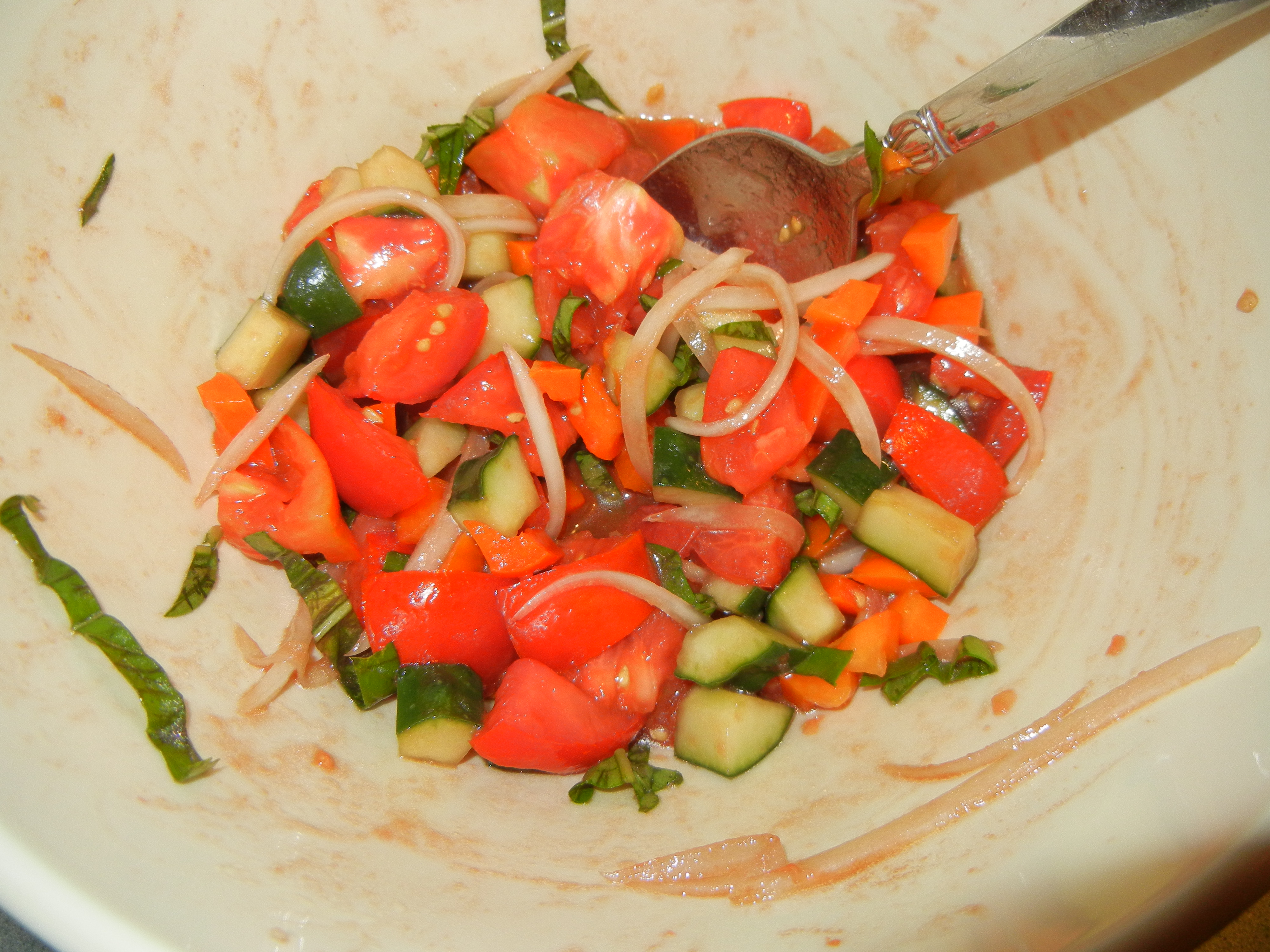
The finished product in all its tomato happiness.

The Salad
Combine cucumbers, onion, tomatoes, olive oil and vinegar into a bowl. Toss to combine and let stand for 7 minutes on the counter. Add basil and salt and pepper to taste. Serve with a crusty piece of bread to soak up the juices.

Notes
That is it, quick and easy. You can skip the sitting for 7 minutes piece and serve right away, but that will mean your onions will be stronger in flavor and you won’t get the really tasty juice to soak up. You can really add anything you want to this, but in season tomatoes bring much more flavor to the party. If you are using out of season tomatoes, use balsamic vinegar instead of red wine to account for the lack of sweetness in the tomatoes. If you tomatoes are like mine, super sweet, don’t use balsamic – it will be too sweet. The recipe feeds two easily and can be scaled as much as you want.

Baked Potato Bread

by A.J. Coltrane

I thought it would be fun to try combining instant mashed potato into a bread, inspired by this Onion-Potato Focaccia.  The catch was, I had two hours from the initial mixing until the bread needed to be out of the oven. Two hours isn’t remotely enough time to naturally develop flavors in the bread, so I loaded the dough with a couple of flavors that go great with a baked potato — sour cream and onion soup mix. The time limit wasn’t going to allow for a focaccia either, so I went with a baguette shape to reduce the process time.

The ingredients:

Ingredient Weight in Grams
Bread Flour 320
Instant Garlic Mashed Potato 80
Water 220
Sour Cream 80
Lipton Onion Soup Mix 1 package
Active Dry Yeast 2 tsp

The sour cream is about 75% water; the total hydration works out to about 70%.  After some staring at the box of onion mix and trying to figure out what a “serving” was and multiplying that by the sodium information I decided the total sodium looked close enough to skip actual “salt” and I’d just see what happened. I did a little “research”, some popular recipes online were using similar ratios of flour to onion soup mix, so I figured it wouldn’t be a total disaster.

I kneaded the dough at low speed for 6 minutes, then covered it and allowed it to rest for 40 minutes. I then shaped it into a baguette and allowed a final proof of 45 minutes. Looking at the surface, I may have vaguely undermixed it.

The baguette then went into a 450F oven for 30 minutes. (In a related note, the silpat is supposed to be rated to 482F, so it was cutting it close.) I removed it from the oven when an instant read thermometer read 200 degrees.

Below is a picture of what happens when you don’t seal the seam very well. It was a fairly wet dough, and once it got on the silpat I didn’t want to degas it too much, so I decided the bit of seam that I saw running down the side of the dough was “good enough”. I shoulda coulda done a better job of tucking the seam on the underside. Oh well.

Three people besides myself ate the bread. I didn’t tell them what was in it. Two correctly guessed the onion, the other correctly guessed the garlic and potato. Nobody got the sour cream, which was hiding behind and the onion and the other stuff. Eating the bread with butter brought out some of the dairy elements of the sour cream; the bread tasted much better with butter — the butter was kind of like the rug that ties the room together.

Note the poor expansion on the top. That’s because the side blew out instead.

That makes sense though, doesn’t it? Butter goes great on baked potatoes too. We were just missing the bacon bits.

Beer of the Week: Ommegang Seduction

By Iron Chef Leftovers

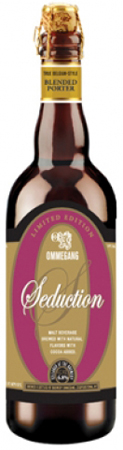
Ommegang is a Belgian style brewery nestled in the hills of Cooperstown, NY. They make some pretty fantastic beers, my favorite being Three Philosophers. On this occasion, we cracked a bottle of Seduction, which the Ommegang website describes as:

…is lovingly brewed with six dark malts. Chocolatier Callebut provides the chocolate, while Liefmans brings the cherries. This international romance is consummated with a full body, alluring aromas and flavors of Belgian chocolate, and tart cherries. Seduction is an ale to be lovingly embraced.

Beautiful, rich and smooth, roasty and malty throughout, Seduction offers balanced chocolate-cherry notes, a bit of caramel sweetness, and a long, slow finish. Seduction is welcoming and warm-hearted, gently hopped and harbors no bitterness, leaving only a lingering glow.

6.8% AB

This beer pours jet black with a cream colored head. The nose is dominated by coffee, caramel and toffee, and there is a hit of cocoa there if you look for it. The initial taste yields flavors of chicory, licorice, cloves and spices (predominately cinnamon) with overtones of dark chocolate providing a long, lingering finish (think hot cocoa) and some slight bitterness. There are supposed to be some cherries in the beer, but I didn’t really get any until half way through the glass before hints of cherries started appearing on the finish. We started this beer out at 55 degrees, so I am not sure if there would have been a big difference at 45 degrees on this one.

Seduction will definitely put you under its spell if you like heavily roasted or chocolaty beers. I really enjoyed seduction, but my one issue with it is its price – it runs about $13 for a 750 ml bottle, so it is more of a special occasion beer rather than something to enjoy regularly. I did factor that into my scoring decision. While I enjoyed the beer, I don’t know that it was significantly better than a number of other chocolate beers I enjoy to justify the added cost.

That being said, Ommegang Seduction gets 3 romantic rendezvous out of 5.