Are the schedule makers for MLB really that stupid? Here is a partial list of where opening day is going to take place in 2013:
LA Angels @ Cincy
Boston @ NY Yankees
San Diego @ NY Mets
KC @ Chicago
Detroit @ Minnesota
Seattle @ Oakland
St Louis @ Arizona
Philly @ Atlanta
SF @ LA Dodgers
Colorado @ Milwaukee
Chicago @ Pittsburgh
Miami @ Washington
Baltimore @ TB
Cleveland @ Toronto
For some reason the article did not mention where Texas vs. Houston is going to take place, not that it really matters. My point is the location of some of the openers. What do you want to bet at least half of the games taking place on April 1 & 2 in New York, Chicago, Minnesota, Cincinnati and Pittsburgh get cancelled due to bad weather (or at least get delayed).
I hate the new divisional alignment, I hate seeing interleague play every day and I hate the “unbalanced” balanced schedule. I really think that baseball is about 2 years off from adding the DH to the National League, which might be the only good thing to come of this – I really hate seeing pitchers flail at the ball, or worse yet, not even swing at an incoming pitch.
Don’t even get me started on the Mariners bizarre schedule, that is for a separate post.
…on committing the 500,000th (or so) error in MLB history. The great guys over at baseball-reference.com noticed that their tracker was on approach for 500,000 errors this season and Jose Reyes seems to be the lucky soul to be the one to bring the total to that nice, round number.
I say 500,000 or so because, due to the vague nature of some of the statistics, especially in the late 1800’s/early 1900’s, that number may not be entirely accurate. Also, as the blog on baseball-reference states:
One other issue that may affect things is that some errors are overturned at a later date, so even on the night we deign an error the 500,000th it may actually move up or down the last next week when mlb reviews borderline scoring calls.
Either way, let’s celebrate both a milestone error and the tremendous amount of research that BR.com has done to make looking up odd stats so much easier for people like us.
If you are like me and decided to grow tomatoes in the Seattle area, you are just beginning to enjoy the fruits of your labor, although you are probably hoping that the 80% of the tomatoes on your plant that are still green will ever ripen. (Quick hint – cut back on watering them, it will cause them to stop producing fruit and try to ripen what is there). That being said, I tend to get more tomatoes than I know what to do with in one sitting, so I get creative with them. Since the ones that I grow at home taste about 100 times better than anything you can get in the store, I use them in just about everything. One of my favorite applications is with eggs. You don’t need to cook them and they add a ton of flavor and brightness to any egg dish. Below is a recent breakfast I made for Mrs. Iron Chef Leftovers with some of the tomatoes and basil from the garden. The recipe feeds one but can be easily scaled.
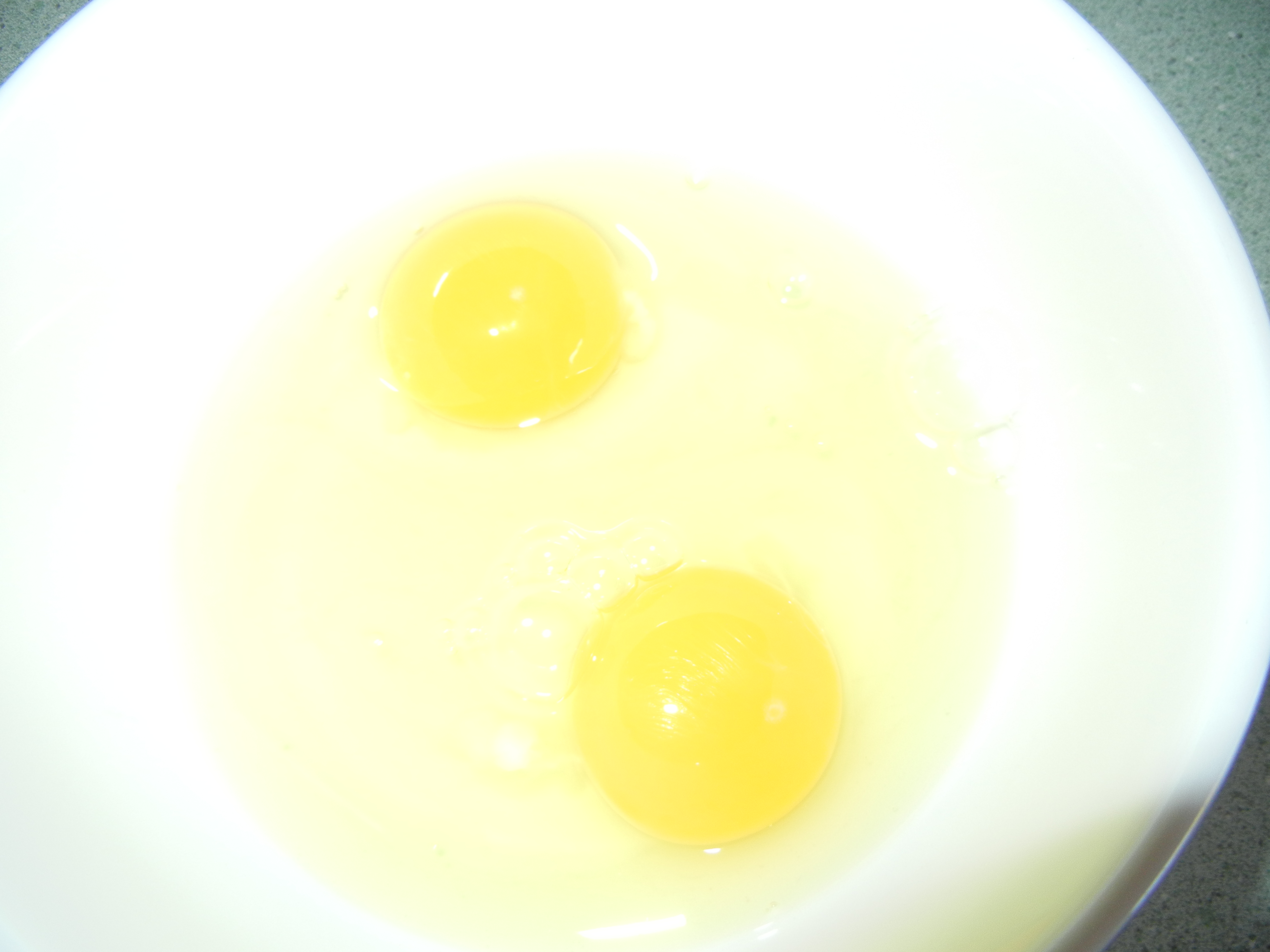
The lovely raw ingredients. It is making me hungry just looking at them
The Software
2 Large eggs
1 tablespoon diced or minced onion
¼ cup tomatoes, diced
2 tablespoons milk
1 teaspoon basil, chiffanade (probably about 1 large leaf)
1 oz. goat cheese, crumbled
1 teaspoon olive oil
Salt
Pepper
The Scramble
In a medium, non-stick skillet, heat the olive oil over medium heat until shimmering. Add the onion and cook until it starts to become translucent, about 5 minutes. While the oil is heating, combine eggs and milk and beat with a fork until combined, let sit. Add the eggs to the pan when the onions are cooked and turn heat to medium low. When the eggs begin to start to form a curd (i.e. begin to become solid) gently break apart with a silicone spatula into smaller pieces; this will happen quickly, so keep an eye on it. Add the goat cheese and stir until incorporated; maybe 1-2 minutes. Once everything is incorporated, remove from heat and add the tomatoes and basil. Toss to combine and let sit for one minute. Add salt and pepper to taste, plate and serve to a happy wife.
The finished product. You may commence your drooling now.
Notes
You can leave out the cheese or substitute it with just about any kind you want. I happen to love the combination of goat cheese, tomato and basil, but cheddar works well also. The key to this dish is the low heat – it will allow the curds to be fluffy and light. Also, the more liquid you add to the eggs before cooking them, the fluffier they become. If you have particularly juicy tomatoes, remove some of the liquid before adding to the pan, otherwise you will have watery scrambled eggs. I tend to not cook the tomatoes because I like their raw flavor better. If you want to cook them, add them to the onions after they have been cooking for about 3 minutes. This recipe also works as an omelet too, but that is for another show.
Lakefront Brewery is a brewery out of Milwaukee, Wisconsin that has been around since 1987, but their beers are just starting to show up in Seattle. The Lakefront website describes Bridge Burner as:
The assertive aroma is dominated by dry, earthy American hops: citrus, floral and pine tree notes all make a showing. The hops dominate, lending a hefty bitterness to the palate, but are backed up by the caramel malts, which lend a substantial body without any extra sweetness. A warm alcohol burn finishes it off with a nod to its considerable 8.0% ABV. 2009 Los Angeles County Fair gold medal barley wine winner.
This brew needs a big, rich, flavorful meal to stand up to its intensity. Try it with the traditional German fare our Milwaukee ancestors would have loved, or serve it with BBQ or hamburgers.
Let me be honest about this beer, I am pretty sure what the good folks in Milwaukee consider dominating hops, barely registered to the group of beer drinkers in Seattle I tasted this beer with. I really found this beer to be thin, flaccid and not even close to anything resembling a barley wine.
The beer poured dark amber, like an iced tea. Lots of malt with a hint of hops on the nose, but a bit flat on the initial sip. There is a big malt hit on the palate with some sweetness, followed by a small amount of hoppiness which faded quickly – there was no real note of citrus, floral or resin in this beer. After a few sips, there is a bit of lingering hoppiness at the end, but it is barely noticeable and not something I would describe as a pleasant finish of hops. The hops begin to disappear as the beer warms and it is just a single note of sweet malt with no other dimensions – it made me think this is what scotch ale might taste like if the brewer did not know what they were doing. On the bright side, there was no excessive alcohol on either the nose or the palate despite the beer’s 8% ABV.
Overall it was a forgettable drinking experience, easily one of the less memorable beers that I have had in a long time.
Lakefront Brewery’s Bridge Burner garners a rickety 1 foot bridge out of 5.
Imagine that, I actually wrote a hockey related post.
The NHL is in line to shoot itself in the foot yet again with another labor dispute. If the players and owners can’t come up with a revenue sharing plan by September 15th, the NHL will be headed for its second lockout in less than 10 years. The last one resulted in an entire season being missed and it hurt the league badly, such that hockey’s attendance was just starting to get back to its pre-2004 levels in the last couple of years.
The central issue, like every labor dispute in sports is money. The players currently get 57% of the revenue, the owners want to drop that to 48%. In the middle, the fans are the only ones who get hurt with no games to watch and higher ticket and concession prices in the stadia.
You want to know what the problem with the NHL is? This statement sums it up:
The NHLPA believes it can play a part in bolstering small-market franchises such as Phoenix, Florida, and Dallas.
Even Eeyore smiled when Winnepeg got back an NHL team. Why doesn’t the league move a few more teams around to where they will see actual fan support.
Ok, for those of you who don’t follow hockey, Florida’s team is located in Miami. Do you want to know how small those markets actually are? According to Wikipedia, Phoenix is the 14th largest metro area in the country, Miami is 8th and Dallas is 4th . On what planet are those “small market” teams? Heck, the NHL couldn’t sustain a team in Atlanta, which is the #7 metro area in the country. Support was so bad that the team in Atlanta moved to Winnipeg, Manitoba, a metro area roughly 1/8 the size of Atlanta and a city probably most famous for lending its name to a cartoon bear.
It is simple – the NHL needs to get out of most of those southern cities. The teams get no support from a huge population base and if you can’t survive in markets with 5 million potential customers, you should be out of the business. The smart thing to do would be to contract a few teams, but the owners and the players would never go for that. Plan B would be to move the floundering franchises to cities where they would be supported. Montreal and Toronto could both easily support a second team. Quebec City is building a new arena with the hopes of attracting another team to replace the long departed Nordiques. Heck, Seattle would be a great place for a relocated franchise, and you have a built in rivalry with Vancouver. Dallas, Phoenix and Miami are not hockey towns, no matter how much the NHL wants them to be.
Of course, none of this really resolved the core issue – millionaires fighting with billionaires over how to split the money they earned from sucking dry the wallets of the average fan.
Mrs. Iron Chef and I recently entertained her aunt, uncle and a couple of cousins, who had been on a whirlwind tour of the Pacific Northwest, and I decided that they needed a good, home cooked meal. Since there were 6 of us and the weather was nice, I thought that the meal called for a nice grill-roasted beef tenderloin. It is easy to cook, always a crowd favorite and doesn’t require a ton of prep. The below recipe and technique was taken from Cook’s Illustrated magazine and modified a bit by yours truly.
The Software
1 – 2 ½ lb. beef tenderloin, silver skin removed
1 tablespoon + 1 teaspoon kosher salt
1 tablespoon granulated garlic
1 teaspoon of olive oil
1 teaspoon ground black pepper
Soaked wood chips for smoking (optional)
The Prep
Remove any silver skin that may be on the roast. Pat dry and sprinkle1 tablespoon of salt on all sides of the roast. Wrap tightly in plastic wrap and return to the fridge for at least 4 hours (you can let it sit overnight if you want, it won’t hurt anything). When you are ready to fire up the grill, pull the meat out of the fridge and pat dry with paper towels. Rub with the oil and then sprinkle with garlic, salt and pepper to get even distribution. Tie the roast with 5 pieces of butcher’s twine spaced at even intervals to make the roast as uniform as possible. Let rest until you are ready to put on the grill.
A whole beef tenderloin – the two “wings” are called the chain meat. You want to get your roast from that end of the muscle and remove the chain meat before cooking.
The Grill Gas grill – turn all burners on high for 15 minutes to preheat the grill. Add wood chips to your smoking box at this time. Once grill is heated, clean the grill grates. Turn off all of your burners except for your primary burner. Leave that on – you are looking to maintain about 300-325 degrees in the grill. For my grill it means leaving the primary burner just above medium high.
Charcoal grill – prep 6 quarts of charcoal and heat until covered in ash. Add the charcoal to the far side of the grill, not exposing more than half of the grill grate to direct heat (you are going to cook the meat off of direct heat). Add wood for smoking directly to the charcoal. Heat the grate for 10 minutes with the grill covered.
The Roast Gas grill – put the meat on the grill about 8” from the edge of the primary burner (you don’t want to put in directly on the heat from the primary burner). Roast for 25 minutes, and then flip the meat over. Continue roasting until the meat reaches 125 degrees on a meat thermometer (that is medium rare). Remove from the heat to a plate and cover with foil. Let rest 15-20 minutes before cutting.
Charcoal Grill – Put the meat over the direct heat of the charcoal for about 2 minutes on each side to get a crust to form. Move the meat to be about 8” from the direct heat and cook on the first side for about 15 – 20 minutes. Turn over and continue cooking until the meat reaches an internal temperature of 125 degrees. Remove from the heat to a plate and cover with foil. Let rest 15-20 minutes before cutting.
Notes
If your fire starts to die down on a charcoal grill, add more charcoal. This recipe is easier on a gas grill (better temperature control), but tastes a ton better on a charcoal grill. I used a simple salt, garlic and pepper rub for this, but you can use any type of spice rub you would like. If you opt for tenderloin, you want to get a roast that is as uniform as possible and ask your butcher to remove the silver skin for you, it will save you 10 minutes of prep time. If you don’t want to use tenderloin, eye round also works in about the same amount of time. You could also easily substitute a boneless leg of lamb roast or a pork loin roast (not the tenderloin, it is too thin) and they will all cook in about the same amount of time. Tying the roast is essential to making it a uniform as possible – it will prevent some pieces from being more cooked than others. Serve with some roasted veggies and a nice chimichurri sauce.
Blog friend Annie S. asked me about fresh hop beer recently while we were knocking back a few malt beverages. I mentioned that they are generally only available in the spring and fall, right around harvest time for hops.
In case you are not familiar with fresh hop beers, they tend to have a very robust and green hop flavor and need to be consumed within about 6 weeks of production before the hop flavor starts to fade. Most beers use a dried form of hops and do not suffer from this issue.
I happened to be surfing the interweb recently and noticed that our friends at Seattle Met magazine had a story about fresh hop beers.
So for Annie and any other readers out there (all 5 of you) who care, here is some info on fresh hop beer s and where/when they will be available:
Once again, Two Beers is the first out of the gate on this; the brewery’s Fresh Hop 2012 started flowing in the SoDo taproom over the weekend, and is now surfacing outside the brewery. It’s the earliest release yet for its beer. Big Al Brewing also does a fresh hop brew each fall; the Santiam hops are being picked this very morning, and are destined for a batch of Big Al Brewing Harvest Ale, a malty amber, later this afternoon.
Fremont Brewing gets its hops from a one-acre plot in Yakima Valley’s Cowiche Canyon, half of which is dedicated to its Cowiche Canyon Fresh Hop ale. The brewery is hoping to release this year’s version the first week of October, but like a restaurant opening, such matters are moving targets. Schooner Exact, 7 Seas, Big Time, and Iron Horse have also done fresh hop brews in past years.
Not surprisingly, Oregon breweries like them some fresh hop, too. Geoff Kaiser of Seattle Beer News and the excellent Noble Fir bar in Ballard put on an annual Oregon vs. Washington fresh hop throwdown, where 15 versions battle for crowd supremacy. This year’s hop bonanza happens Saturday, September 29. Get there early, brace yourself for a line, and be assured that what awaits inside is completely worth the wait. Not surprisingly, Yakima is also home to a Fresh Hop Ale Festival happening October 6.
One that I would love to get my hands on – Laughing Dog Brewing’s Fresh Hop. They picked 150 lbs. of hops by hand this past week to go into the beer. Hopefully it shows up in Washington
Lantern Brewing is a small brewery located in the Greenwood neighborhood of Seattle. They are relatively new to the game and their beers have a somewhat limited availability (check Chuck’s Hop Shop, they usually carry a couple). Lantern doesn’t have a website (I hate that trend), but they do have a Facebook Page. It also means I can’t give you any stats on the beer.
I was in the mood for Belgian style ale recently and this one was sitting in the fridge, so I cracked it open.
The beer pours brown, like a dark brewed tea, with a dark cream head. Malt and yeast are prevalent in this been from the second you open the bottle, even before it hits the glass. The initial sip is also dominated by malt and yeast, giving way to caramel and sugar, with a short finish of bananas; exactly what you would expect from a Belgian style beer. There is a hint of hop bitterness, but it is not present on every sip; sometimes it is there and you can taste it for a few seconds, other times it is not there at all, but this is only when the beer is cold (there were no detectable hops as the beer warmed). As the beer warms, caramel and burnt sugar flavors dominate and a longer, smoother finish appears, with notes of banana and yeast. This beer reminded me of a liquid banana crème caramel – I kept thinking that I needed a burnt sugar wafer while drinking it.
This beer was delicious and a somewhat unusual style for a Seattle brewery, there are a handful making abbey style beers, but very few are doing Belgian browns. If you are in the mood for a Belgian brown, give this one a try instead of your regular one from Belgium. I think you will find that this beer holds its own against the ones made by guys in robes.
Lantern Brewing Dubbel Abbey Style Brown gets 4 beacons out of 5.




 FlatbreadGarden