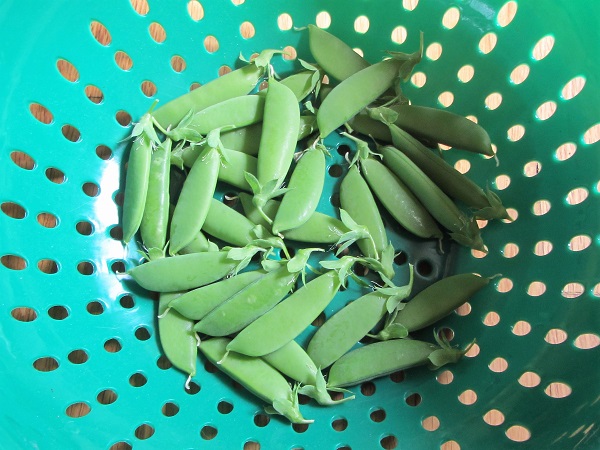
It’s almost June and the garden is rolling again. The Super Sugar Snap peas we planted indoors in February are now producing:
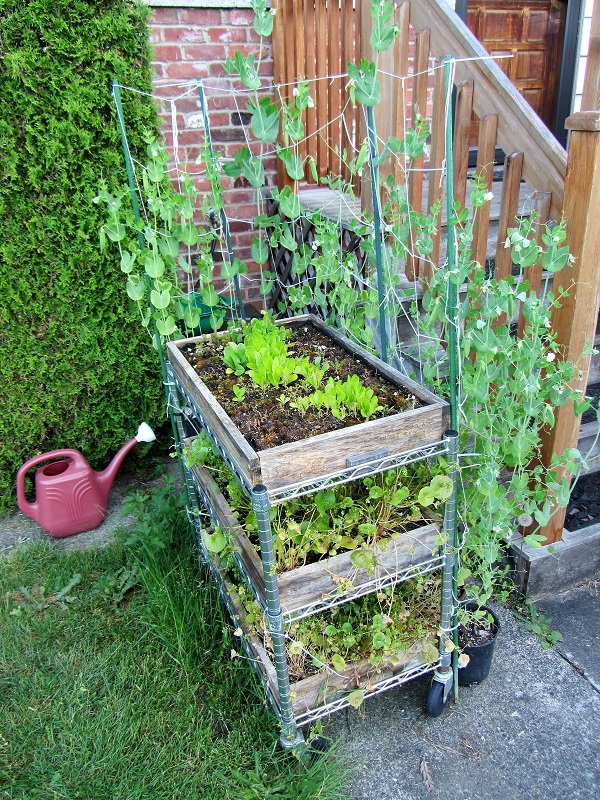
Attaching the trellis netting to the salad table seems to have worked very well:
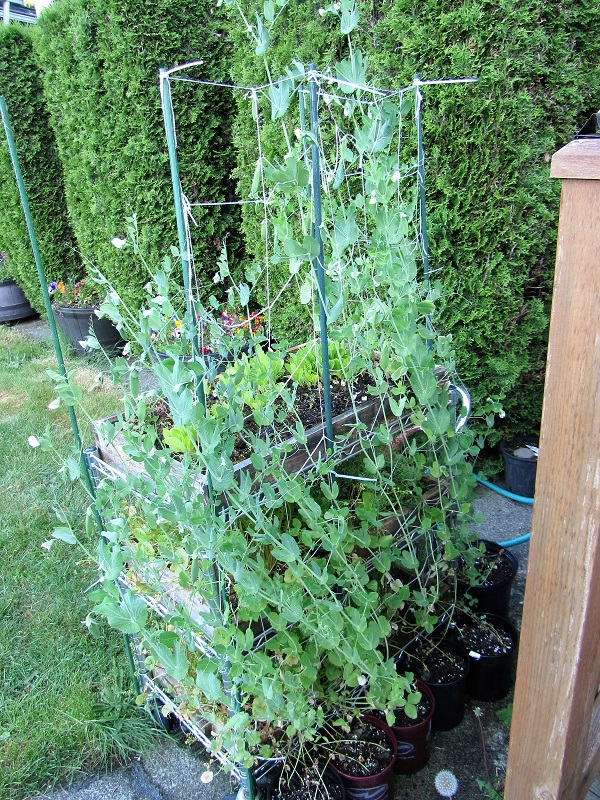
The view from the other side:
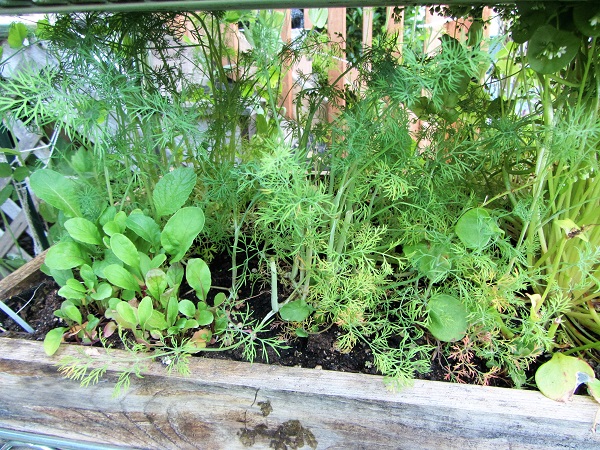
The Miner’s Lettuce is looking a little cooked, but the Arugula and Dill are happy in the back of the middle level:
Shortly after those photos were taken I draped some shade cloth over the salad table to try to discourage bolting. The lettuces on the top level are especially vulnerable on sunny days. (As an added bonus, the pea vines shade everything as well.)
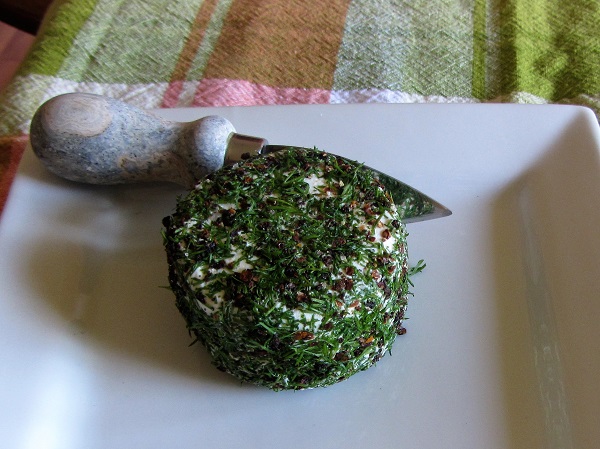
One nice use for the Dill — Goat Cheese Coated With Minced Dill, Fire Roasted Tomato Flakes, and Sea Salt:
Moving to the backyard — we’re going to get a lot of rasperberries this year:
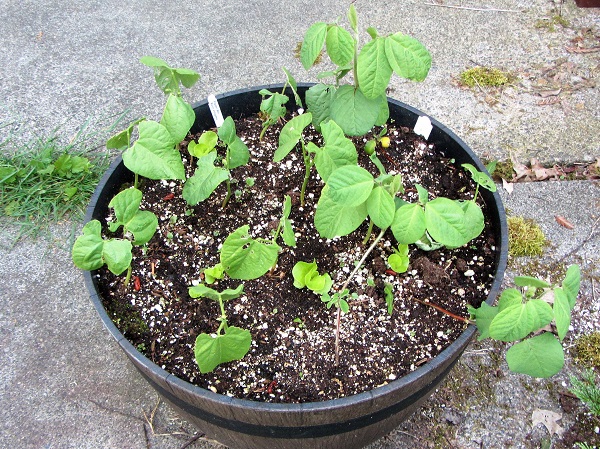
The beans we started in indoors in March(?) are coming along too. The Midori Giant Edamame seem to be more bug-resistant than the Maxibel Filet beans. The Edamame have the rounder leaves:
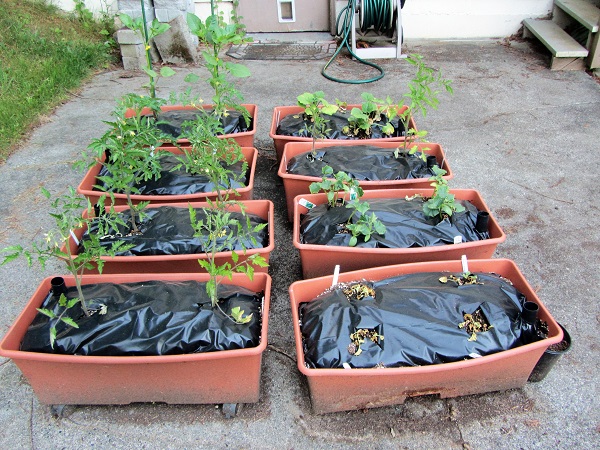
An overview of the non-pepper plants. The Minnesota Midget Melons (foreground, right) are limping along. We’ll get at least one survivor, but they all shocked due to either transplanting or the few nights we had in the low 40’s:
All of the squash/cucumbers/melons shocked to some degree this year, the melons just got the worst of it.
On the brighter side, the Oregon Springs are already bearing fruit:
—————————
Visit Dave at Ourhappyacres, host of Harvest Monday.
We chose to simplify a little bit this year and go more with things we know “work”, are easy to process, and will see quick use if they make it as far as the freezer. We added a few new things too, including melons. The descriptions below are copied from the Tilth Plant Sale PDF.
The boy cat checking out the non-pepper group of boxes.
Melons –
4 of- Minnesota Midget Cantaloupe: 65 days. Open pollinated heirloom from 1948 when it was introduced in Minnesota. Measures 4 inches across at maturity, when the rind is a soft yellow and slightly soft at the stem end. Sweet orange flesh with a good muskmelon flavor. The compact vines produce decent yields. Slice into thin delectable servings with an herb infused soft cheese and salted pistachios for a fantastic summer appetizer.
We were going to try these melons last year, but we missed the Tilth plant sale. This will be our first attempt at growing these. From what I’ve read the vines are supposed to get about 4′ long, and the fruits will likely need a pantyhose or sock support or something similar. Hopefully it’s a warm summer, otherwise we may be underwhelmed. 4 plants is one full box.
Sweet Peppers –
6 of- Carmen: 60 – 80 days. Lusciously sweet when left to fully ripen to a deep red, this pepper is perfect for chopping and tossing straight into a salad. A great container plant and a good addition to a sunny veggie bed. 6 inch fruits on an upright plant.
6 of- King of the North: 76 days. Open Pollinated. Here is a sweet bell pepper that will mature in short season climates. Its crisp, blocky fruit will turn from medium green to red if left on plant longer. Excellent raw in salads or dips. Great to use as stuffed pepper or in tempura recipes.
Jimmy Nardello: 76 days. Open pollinated heirloom. Thin-walled 8″ long curved tapering pointed fruits turn deep red when ripe with shiny wrinkled skin. Great eaten raw and super tasty when fried–very prolific! This seed variety is considered by Slow Food USA to be an endangered member of their “Ark of Taste.”
Sweet Chocolate: 60 days. Open pollinated. Early sweet, lobed, thick-walled fruits. Ripen from dark green to a rich chocolate color. Cold tolerant.
The Carmen and King of the North do well every year. They’re versatile in the kitchen, they’re easy to process, and they’re relatively work-free. One box of each.
The Jimmy Nardello is a pepper I’ve been reading about for years. Tilth finally had them in stock this year. I have high expectations.
Sweet Chocolate is another pepper we’ve been meaning to try and represents a little more variety in the pepper boxes.
Hot Peppers –
2 of- Anaheim College 64: 74 days. Open pollinated. Medium hot flavor make these short season peppers a hit for dips, sauces, stuffing with cheese or roasting. They are just like the anaheims you find in the store but without having traveled all those miles to get to you!
Anaheims are very mild hot pepper — we still have bags of Jalapenos and Serranos in the freezer, as well as dried Thai Chiles. We have no shortage of hot stuff, so we took a pass on the lava and went mellower.
We have two open slots for peppers, to be filled in the near future.
Tomatillos –
2 of- Verde: 70 days. Open pollinated. A classic deep green tomatillo with high yields, ‘Verde’ is ready when the husks have split and are drying. Very intense rich flavor which pairs well with sweet summer tomatoes and makes a fantastic salsa. The high yields will allow you to freeze them as you pick, saving some for winter sauces and stew ingredients. Give tomatillos room to spread and they will favor you with their riches.
Our favorite type of Tomatillo. Larger fruits = less handling. We grow these in an A-frame trellis and run extra twine for support for the branches. 2 plants fills one box.
Zucchini –
4 of- Tromboncino (aka Zucchini Rampincante): 60-80 days. Open pollinated heirloom. A Tilth favorite, the flesh of this variety has a smooth buttery texture and a mild flavor—the taste of summer! The 12 to 18” long fruits are “trombone”- shaped and can grow in curly cues or hang like bells on a trellised vine. Harvest when they are a pale, grass green or leave a few fruits at the end of the season to mature to a buff color and enjoy them as you would a winter squash.
Historically we’ve done two Tromboncino plants in one box. I sort of screwed up when I picked up four. This variety is relatively mildew resistant and they grow vertically up a trellis, so I’m hoping that four plants will work anyway. We’re partial to the taste and texture of Tromboncinos. We’re unlikely to ever grow “standard” zucchini again.
Tomatoes (2 tomato plants go in one box) –
2 of- Oregon Spring: 60 days. Determinate. An extra-early variety that sets loads of meaty fruits weighing 3 to 5 oz., with excellent flavor. Compact plants set fruits even in cool weather and continue to yield all season long. Nearly seedless. A perfect choice for ketchup and sauces.
2 of- Roma: 75 days. Determinant. Premium canning tomato, ideal for sauce and paste. Pear-shaped scarlet fruits are thick and meaty with few seeds.
2 of- Black Krim: 75 days. Open pollinated heirloom. Indeterminate. From the Black Sea region of Russia, these 10-12oz beefsteak type tomatoes have a strong, rich flavor that is common with black tomatoes. One seed catalog noted that the fruit is best when half green and still firm. Very productive. Reportedly is a consistent favorite at tastings, so why not give it a shot?
Old German: 75-85 days. Indeterminate. Fruits are golden with reddish streaks. Produces large, rich and full bodied tomatoes. Great for fresh eating tomato, salads, and salsa.
Cherokee Purple: 85 days. Open pollinated heirloom.Indeterminate. Slightly flattened, 6-8 ounce tomatoes with a purple cast. Shoulders will remain green when ripe. Deep, rich, smoky flavor that’s not too acidic. For fans of the black/purple tomatoes, Cherokee Purple is one of the best This seed variety is considered by Slow Food USA to be an endangered member of their “Ark of Taste.”
We chose not to do eight different tomato plants this year. We passed on Taxis because their yellow sauce is very sweet and requires cutting with other red sauces. We also passed on Sungold (or “Sun Gold”). The small fruits of Sun Gold require a lot of fiddly work and the orange sauce is very very sweet.
The Oregon Spring are early and dependable. They taste good and they’re high-yielding. Normally we’d pair these with a Taxi.
The Black Krim win basically every taste test we do, and the deep purple fruits make great sauces.
The Romas were selected specifically for sauces. I thought we’d have more success this year if we did a mono-box and they didn’t have to compete with anything bigger or unruly.
We wanted one more “black/purple” tomato. We’ve grown Cherokee Purple in the past and enjoyed them, so that was the selection. Looking at the PDF, we may want to try “Carbon” next year.
The Old German sound like a great fit due to their size, versatility, and color. We’ve never grown these, but on paper they’re a winner.
That leaves one box left over, which will contain six sweet basil plants once the weather warms up.
EarthBox covers are sort of necessary evil. The covers that the company sells are of marginal quality, and they run around $2, each.
Instead we go to Home Depot and buy a roll 10′ x 25′ x 3.5 mil black plastic. Right now a roll is $12. The finished cost per cover is 20 cents, each.
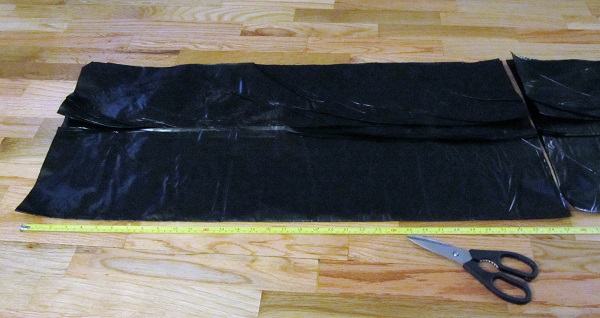
To create the covers, unfurl the roll. The folded, short dimension is the 10′ length. Without unfolding it, cut it into 3′ pieces. You’ll get 8 pieces with 1′ left over at the end:
Then unfold each 3′ x 10′ section. Cut those every 24″, making five covers at 2′ long apiece.
As it turns out, the folds happen at about 8″ intervals and it makes measuring easy. They’re straight too, which is good if your scissors tend to wander.
To “attach” a cover to an EarthBox get a putty knife and tuck the plastic between the sides of the EarthBox and the dirt.
It’s easy to do, and we now spend $2.40 on covers per year instead of $20+.




 FlatbreadGarden