The Salad Table And Peas – May 2, 2016

by A.J. Coltrane

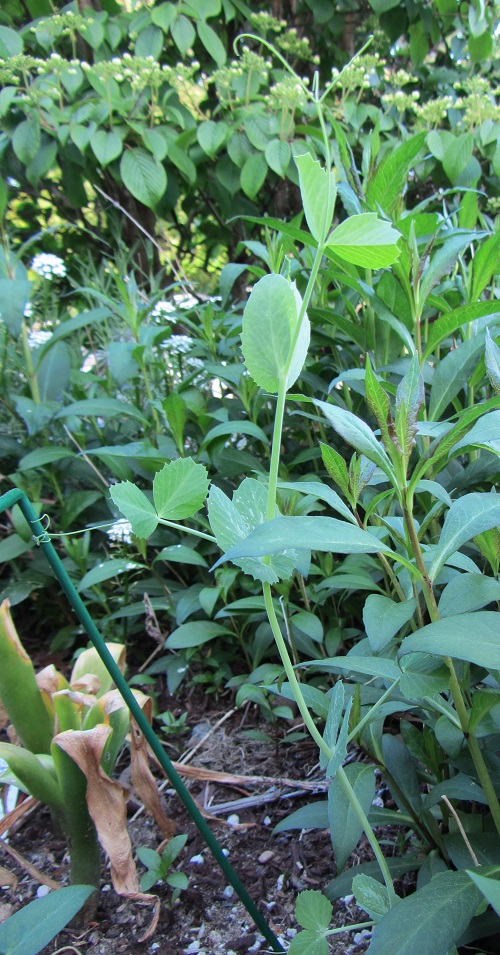
The temperature was in the 80’s today. The peas responded by busting out:

160502 peas

I thought they were getting close to flowering.

Though I didn’t get a picture of it, the “rogue pea” is blooming too.

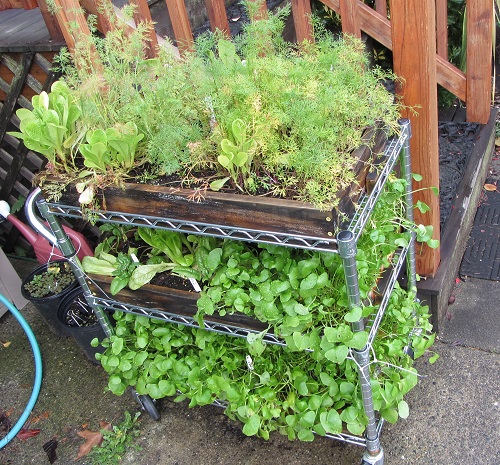
The salad table continues its slow progress:

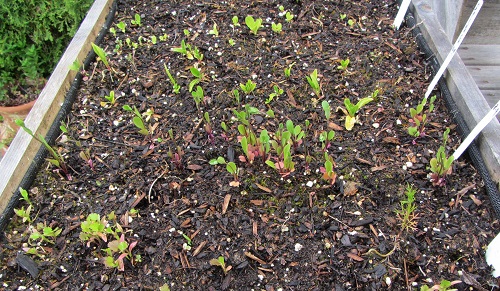
160502 salad table

Some of the arugula has already bolted. The dill is having issues germinating, as is most everything else — I’m thinking that the setup needs some fresher, looser soil. The surface seems relatively compact and it wouldn’t surprise me if the seedlings are having trouble wedging their way free. The right answer may be to mix in a combination of potting soil and compost. Maybe. Either that or it just hasn’t been warm enough yet for most of the seeds to sprout.

———————-

March 9 Update here.

Visit Dave at Ourhappyacres, host of Harvest Monday.

The Winter Garden In April

by A.J. Coltrane

The backyard garden hasn’t yet fully transitioned to “summer”. Maybe next week. The whiskey barrels have some energetic flower starts — Territorial Seed’s Bee Mix, Bug Mix, and Nasturtiums (Jewel Mix).

As of March 2nd, these containers only had gravel in the bottom. They’re in the coldest, shadiest part of the yard that will eventually see good sun as the season progresses:

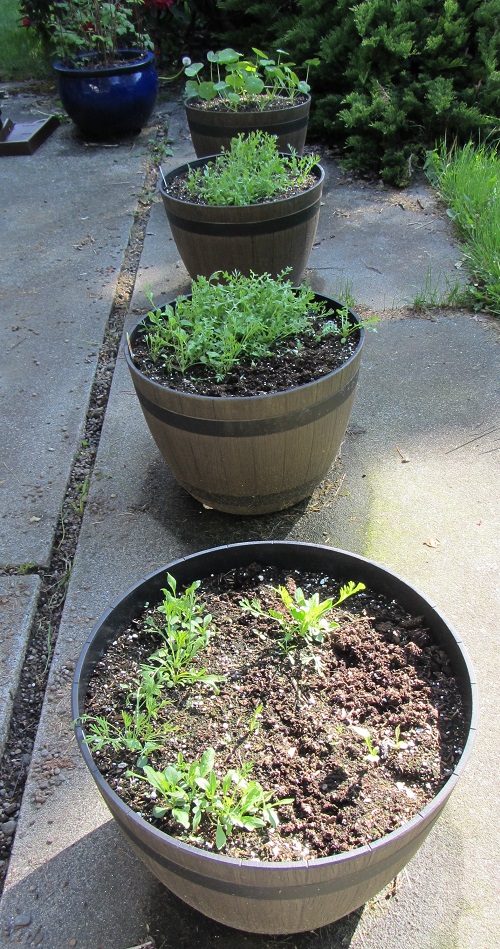
160425 whiskey barrel

(Front to back — a container of Bee Mix, a container of Bug Mix, a container of 1/2 Bee Mix and 1/2 Bug Mix, a container of Nasturtiums. We’re now planted Marigolds – “Brocade Mix” in the spots that haven’t germinated.)

Next, a close-up picture of the Nasturtiums. We planted about nine seeds. Seven of those germinated. It looks like seven plants is going to be plenty:

160425 nasturtium

The raspberry plant (with a blooming rhododendron behind it):

160425 raspberry

The raspberry plant needs some pruning. I’m holding off until I’m dead certain nothing is going to grow out of the older stems.

As far as everything else:  The mache and chard bolted at the first sign of warm weather. I’m hoping we can harvest mache seed at some point — they’re blooming now. The carrots continue to size up, and it looks like we should be able to harvest those in the next 30 days.

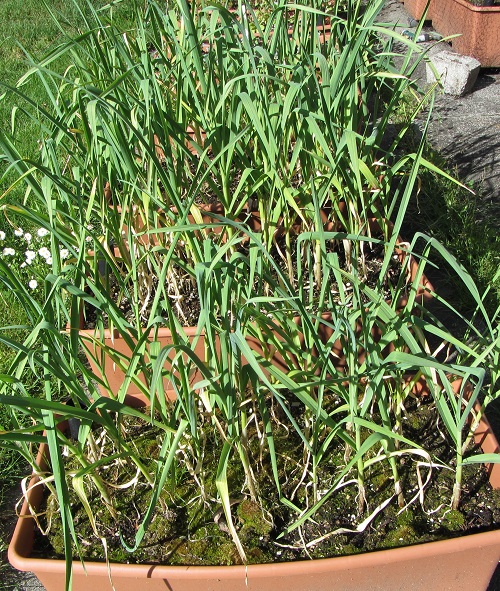
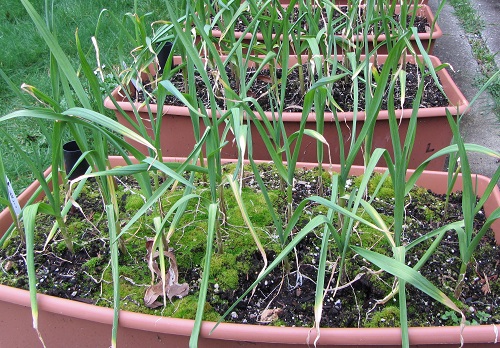
The garlic will need to be harvested in the next 30 days to make room for the summer vegetables as well:

160425 garlic


The actual work on the backyard garden starts soon.

Container Garden Update — April 17, 2016

by A.J. Coltrane

This weekend it was time to harvest the rest of the bunch onions that were planted last fall. It turned out to be just over four pounds:

160417 bunch onion

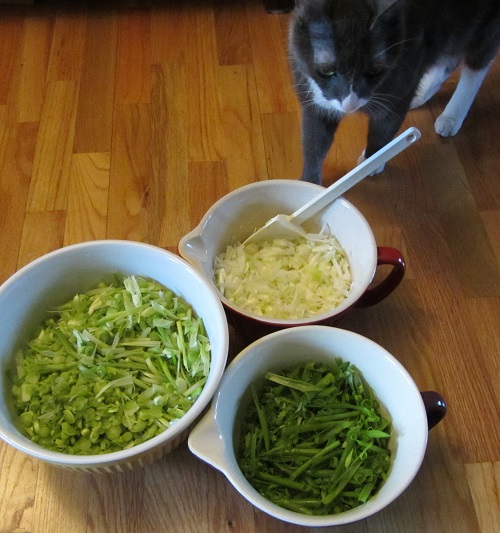
We separated the onions into whites, stems, and greens and ran them through the slicing disk of the food processor. It wasn’t perfect, but it was a huge time savings. The boy cat had to check it out:

160417 processed bunch onion

I think the processor actually did a better job than the photo implies. The bigger pieces mostly wound up on top.

All in all, it turned into about fifty bags at one-half cup per bag.

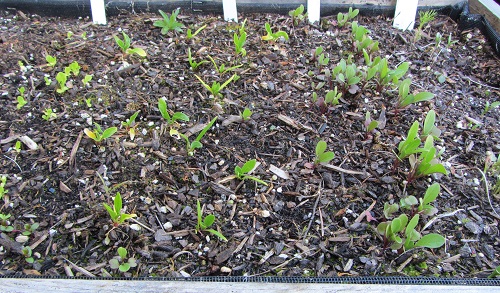
The salad table is finally moving forward. Direct seeding is slow in the spring. It seems the better idea would be to start the seedlings inside and transplant. The “tall” stuff towards the right side is arugula:

160417 salad table

The peas were planted on February 8. They’ve now getting grabby with the netting:

160417 peas

Sometime in February a critter came through and dug in the pots. Look what has popped up on the other side of the walkway:

160417 rogue pea

Can’t stop ’em.


The Winter Garden In March

by A.J. Coltrane

The winter (backyard) garden… I’m going to call it a success. Not a smashing success though. There’s definitely a theme to what worked and what didn’t.

The garlic is doing well. It still has another couple of months to size up before it needs to make way for the summer vegetables:

160302 garlic

Mache (left) and Dragon Radishes (right). Bunch Onions were interplanted in most of the containers because slugs are supposed to dislike alliums:

160302 mache radish

Mache again. It grew bigger with less competition:

160302 mache

The carrots are still small (and they may be too crowded):

160302 carrot

The last four EarthBoxes to be planted. An assortment of Mache, Chard, Arugula, and Spinach. Squirrels were digging in them so bird netting was draped over everything… I see Mache and a little Chard:

160302 assorted


I think if I’m really going to “winter garden” I need to start seeds no later than sometime in August. (Which is the same thing I said in the November post.) As it is, the backyard gets zero sun all winter. Not much growth happened until the last couple of weeks.

In summary:  The Mache did well. All of the alliums did well. The carrots and radishes did ok. Maybe other stuff with do better with a bigger head start..

The newly acquired “whiskey barrels” are pictured below. Purchased at a big box store, they were somewhat smaller than our existing barrels. I’ve gotten as far as drilling drainage holes and filling the bottom with gravel. They will house “Bee & Beneficial Bug” flowers this summer. And Nasturtiums:

160302 new barrels

————————————–

For reference, here’s the backyard on November 8.


Too Many Seeds, Probably

by A.J. Coltrane

As usual, I may have gotten a little too enthusiastic about shopping for seeds. The new batch from Territorial Seed:

Basil-Sweet 2016
Bee Feed Flower Mix 2016
Bright Lights Swiss Chard 2016
Conservor Shallots 2016
Coriander-Confetti 2016
Dill-Dukat 2016
Flower Mix-Beneficial Bug 2016
French Breakfast Radish 2016
Garden Cress 2016
Giant Musselburgh Leek 2016
Giants Of Colmar Carrots 2016
Miners Lettuce 2016
Nasturtium-Jewel Mix 2016
New Zealand Spinach 2016
Red Baron Onion 2016
Roodnerf Brussels Sprouts 2016
Roquette Salad Arugula 2016

It’s a mix of things that have worked well in the past and some new things I’m eager to try out-

  1.  Basil plants seem to reach a point in age where the leaves just don’t taste as good. I’d like to try “succession planting” basil this year to see if we can harvest nothing but optimum leaves.
  2.  We purchased four more, somewhat smaller “whiskey barrels” over the weekend. This summer they’re going to house a combination of Bright Lights Chard, Bee Feed Flower Mix, Beneficial Bug Mix, Nasturtiums (which are edible as well as attractive), and a hodge-podge of whatever else might fit.
  3.  The Garden Cress, Arugula, Miner’s Lettuce, Confetti Coriander (cilantro, this variety is supposed to be slow to bolt), Dill-Dukat (ditto), and New Zealand Spinach (which likes hot weather) will go into the salad table with the existing Miner’s Lettuce. The Garden Cress and New Zealand Spinach are new. I have high hopes for the New Zealand Spinach in particular. We’ll see how the Garden Cress does, it may want more consistent water than will be provided.

Of course, we still have little bits of packages to use up. I have them rubber banded together in groups, this first group is “Salad Table” (the “year” is the year the seed was packed for.)

Dill–Dukat 2014
Coriander-Confetti 2014
Romaine Jericho 2014
Romaine Little Gem 2014
Romaine Winter Density 2014
Roquette Salad Arugula 2014
Spinach-Savoy 2014

And a “Spring 2016?” group of packages:

Radicchio 2014
Parsley 2014
French Breakfast Radish 2014
Cherry Bell Radish 2014
Flower-Brocade Mix 2014

“Fall 2015”:

Romaine Winter Density 2015
Super Sugar Snap Peas 2015
Roquette Salad Arugula 2015
Coriander – Santo 2015
Dill – Fernleaf 2015

Finally, “Winter Backyard 2015”:

Five Color Chard 2016
Mache 2015
Dragon Radish 2014
Mache 2014
Conservor Shallots 2015
Red Baron Onion 2015
Conservor Shallots 2014
Napa Hybrid Carrot 2014

The “Winter Backyard 2015” group is currently growing in the whiskey barrels and EarthBoxes, as well as around 50ish heads of garlic. The mild spring means that the growth rate of the overwintering survivors is really starting pick up.

The transition from winter things to summer things may be “interesting”.

Salad Table Update — November 15, 2015

by A.J. Coltrane

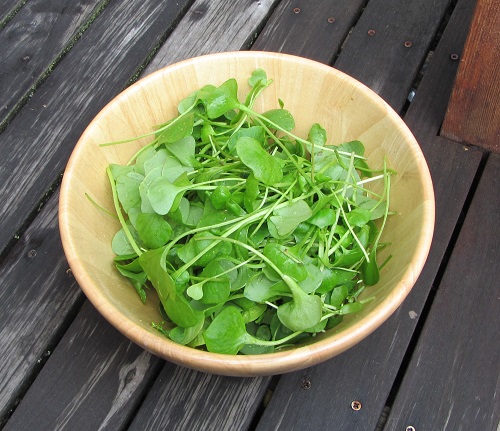
No frost yet, though though the forecast yesterday called for ‘up to 3″ of rain’. It doesn’t often dump that much rain here. The salad table took it in stride. The excellent drainage is a big bonus — the front lawn is totally squishy. We harvested a big bowl of greens today:

151115 salad bowl

Which didn’t really make much of a dent in the contents of the salad table. The romaine lettuces and spinach are doing “ok”, the dill and cilantro are starting to look tired:

151115 salad table


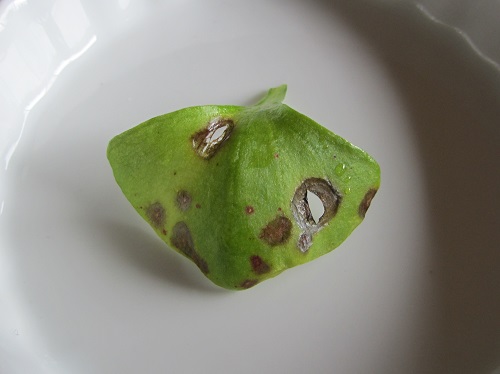
A few of the Miner’s lettuce leaves don’t look so good. Does anyone recognize this as a sign of something specific? I’m assuming it’s most likely bugs:

151115 leaf

If I’d have known it was this easy to have fresh greens during the winter I would have done a salad table years ago..

—————–

Visit Dave at Ourhappyacres, host of Harvest Monday.

Container Garden Update — November 8, 2015

by A.J. Coltrane

Squirrels have been digging in any “unclaimed” dirt in the containers. I thought I could stop the digging by laying bird netting over the dirt. That seemed to work for a while, until a really determined squirrel pulled on the netting. The netting dragged across the seedlings, uprooting a few and damaging a few more. So:

back yard 151108

It’s what I should have done in the first place — I added galvanized hoops that we had left over from last year’s Row Cover Experiment. The pictured seedlings are tiny – they were all planted way too late for a winter harvest.

The boxes pictured below were planted early/mid September, which is still too late for a winter harvest (L-R – Dragon radish, mache, carrots, mache again with bunch onions scattered through all the boxes):back yard2 151108


Next year we need to start seeds in mid-August at the latest, even if it means transplanting things that aren’t traditionally transplanted. we’ll also use bird netting and hoops over everything — I’d guess the squirrels destroyed up to 20% of the seedlings, and that’s just not cool.

—————–

Visit Dave at Ourhappyacres, host of Harvest Monday.

Final EarthBox 2015 Recap — The Tomatoes, Tomatillos, and Basil

by A.J. Coltrane

The 2013 Tomatoes and Tomatillos recap is here. 2014 here.

(Note that this won’t be the last gardening post of the year. It’s the final recap of how the summer went.)

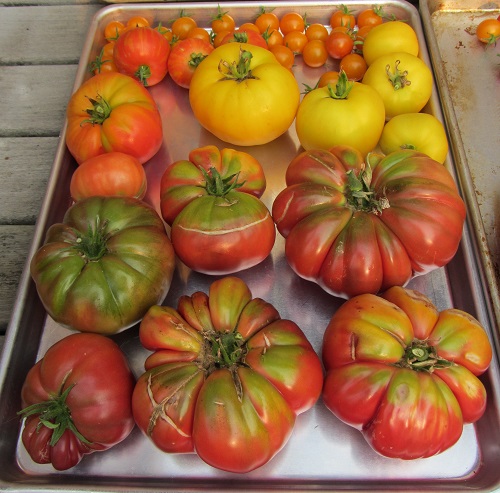
2015 saw a total yield of 145.2 pounds for the eight tomato plants.  That’s an average of 18.2 pounds per tomato plant, or 12.1 pounds of produce per square foot of growing medium.

(For reference:  The 2013 total was 15.3 pounds per tomato plant.  The 2014 total was 17.2 pounds per plant.)
150822 harvest1

The Tomato Varieties:

Black Krim – 22.5 pounds. [75 day, Indeterminate. OP Heirloom. 23.5 pound two-year average.]  Excellent yield, attractive purple appearance, and a wonderful deep tomato taste. Winner.

Cosmonaut Volkov – 18.7 pounds. [68 day, semi-Determinate. OP Heirloom.]  The Seattle Tilth description said the Volkov would be early, and ready by mid-August. We harvested 1.5 pounds before August 29, and the other 17.2 pounds in September or later. The light red fruits were pleasant enough.. I’m not attached to these for 2016.

Oregon Spring – 18.0 pounds.  [60 day, Determinate.  15.7 pound two-year average.]  Starts early and produces all summer. Takes up very little space. The yield could have been better, but we lost at least a pound or two to bugs. One of our favorites.

Sweet Million – 9.9 pounds.  [65-75 day, Indeterminate.]  We chose these as a red cherry tomato to compliment the Sun Golds. The yield was poor, and they tasted more or less like supermarket cherry tomatoes. I thought they were a letdown all around. Not a keeper. We’re open to suggestions for a different cherry variety.

Roma – 22.8 pounds.  [75 day, Determinate. 22.0 pound three-year average.]  The Romas ripened really well this year. We did see a little more blossom end rot than in past years. I’m hoping that pairing them with a smaller determinate next year may help limit the stress. We’ll see. Keeper.
150906 harvest

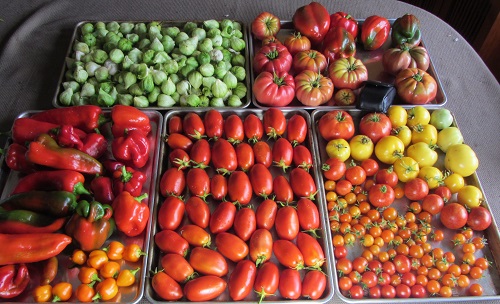
Sun Golds – 16.2 pounds.  [65 day, Indeterminate. 17.9 pound three-year average.]  Productive and trouble free, and they taste like candy. Keeper.

Taxi – 25.9 pounds.  [65 day, Determinate. 25.3 pound two-year average.]  We’ve paired a Taxi with an Oregon Spring each of the last two years. They’re both early and they reach a similar compact size. No reason to mess with success. The bright yellow fruit and light taste makes for a nice contrast with the other varieties we’re growing. Keeper.

Tigerella – 12.4 pounds.  [65 day, Indeterminate. Heirloom. 14.3 two-year average.]  Here are the comments from last year:  “Average yield, average taste, but they are interesting to look at. Late to ripen. I’d be fine with trying another variety instead.”  I think all of those points held true again, but the yield went from average to fringe-poor. Not a keeper.

—-

The Tomatillos:

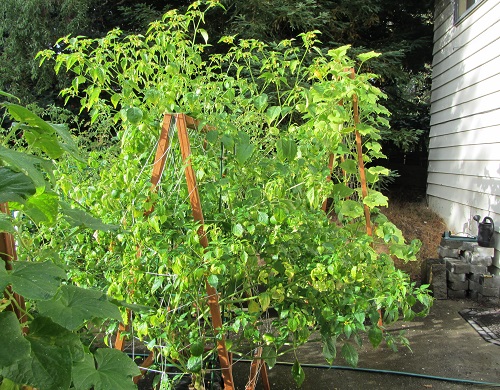
This year was a repeat of what we grew in 2014.  The tomatillo box contained contained the “Mexican Strain” and “De Mipa” varieties. The “Mexican Strain” has a vertical habit, and the “De Mipa” sprawls a little more. It seems to be a good combo in the box. Our 2015 yield was 15.1 pounds, the three-year average is 17.0 pounds. I think the “Mexican Strain” plant was a little weaker this year, as compared to last year. Still, I’m happy with a yield anywhere in the 15-20 pound range.
150726 cucumber, tomatillo, tromboncino

—-

The Basil:

2015 yield – 3.1 pounds.  2014 yield – 2.9 pounds. It doesn’t weigh much, but 3.1 pounds of basil is still over $200 worth at retail. Due to a lack of time, we mostly didn’t due the usual upkeep that basil likes, but the yield was fine anyway.

—-

2015 Summary:

We harvested 280.5 pounds of “summer vegetables” out of the twelve EarthBoxes between June 24 and October 4. That’s 23.4 pounds per EarthBox, or 7.9 pounds per square foot of growing medium.

The only really significant thing that we changed was that we built three new trellises and used them with the cucumbers and tomatillos. I think the trellises helped the tomatillos in particular. The cucumbers burned up to some degree in the 90 degree days — one thing we may want to try is shading the root area of the cucumber boxes to see if that helps. The flip side is that it felt like we had a smaller proportion of green tomatoes and peppers at the final harvest.

Overall though, we really didn’t have time to do the pruning that the tomatoes and basil appreciate. It didn’t seem to matter that much. It could be that the weather was so crazy nice that it overcame whatever “user error” we provided.

We’re learning a little bit more every year.

—————–

Visit Dave at Ourhappyacres, host of Harvest Monday.


EarthBox 2015 Recap — The Cucumbers And Zucchini

by A.J. Coltrane

2013 Cucumbers and Zucchini recap here. 2014 here.

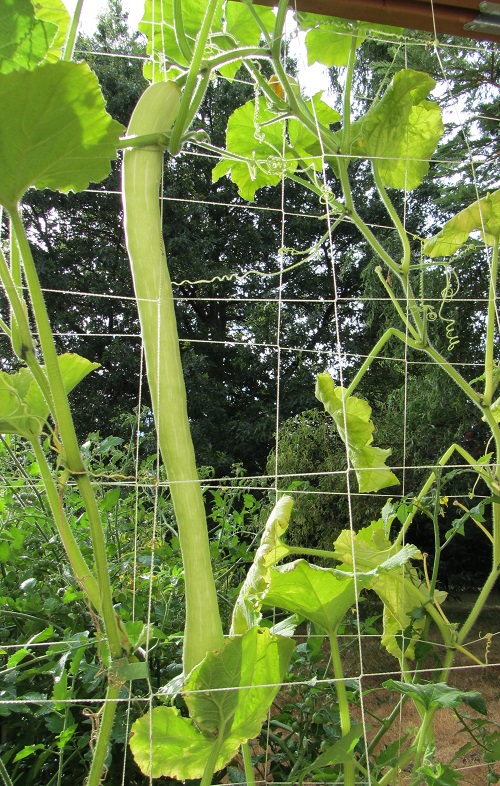
The Tromboncino produced 26.0 pounds this year. The 2014 total was 20.5 pounds. A 27% improvement!

150726 tromboncino1

(For reference – the trellis squares are 8″ x 8″. The fruit is 28″ long.)

Being the closest container to the west side of the house, the Tromboncino have been getting 1-2 hours less sun per day than some of the other, more favorable locations on the patio. Next year we may move them to the northwest corner of patio (the photo below was taken facing west, the northwest corner is at the the top right of the picture – that’s where the late morning sun hits first each day). If we do move the box then we’d turn the trellis 90 degrees so that it would run along the north edge of the patio. The difference in sun might help both the yield and with powdery mildew.

150809 overview

We grew two boxes of cucumbers this year — 8 plants total. I don’t think they liked the unusually hot weather. The cucumbers peaked early and disintegrated rapidly after that. In addition, they all became blocky, instead of long and pretty and straight. Bummer.

EarthBox #1 contained four Marketmore 76 cucumbers — the same thing as each of the last two years:

2013 yield – 56.0 pounds

2014 yield – 44.4 pounds

2015 yield – 28.6 pounds

Hopefully in a “normal” year we’ll see 40-50 pounds or so. That seems reasonable, and it would still be about 15 pounds per square foot of growing medium. I won’t complain if that’s the case.

Interestingly, I didn’t think the Marketmores were very photogenic this year. The last photo happened on June 15:

150607 cucumbers

EarthBox #2 hosted two varieties of pickling cucumber (Calypso and National Pickling), and two Lemon cucumber plants.

Mixing two types of pickling cucumbers with very different maturity sizes was a bad idea. It was basically impossible to tell if we were looking a small National Pickling cucumber (which grow to a 6″ maximum) or a full-sized Calypso (3″ maximum). Together they produced 10.6 pounds. Not great.

The Lemon cucumbers did much better — 20.0 pounds from the two plants. I wish they were a little easier to process after harvesting; it’s way easier to peel a regular cucumber, in contrast to a slippery orb:

150802 lemon cucumber

All up, box #2 yielded 30.6 pounds.  Between the two boxes we got 59.2 pounds of cucumbers(!) It’s too much, really. We’ll likely return to doing one box of cucumbers next year.

Now we just need to figure out what we’ll do with the “extra” box..

—————–

Visit Dave at Ourhappyacres, host of Harvest Monday.
 

EarthBox 2015 Recap — The Peppers

by A.J. Coltrane

2013 Peppers recap here.  2014 Peppers recap here. There’s a spreadsheet at the bottom of this post showing the total for all three years combined.

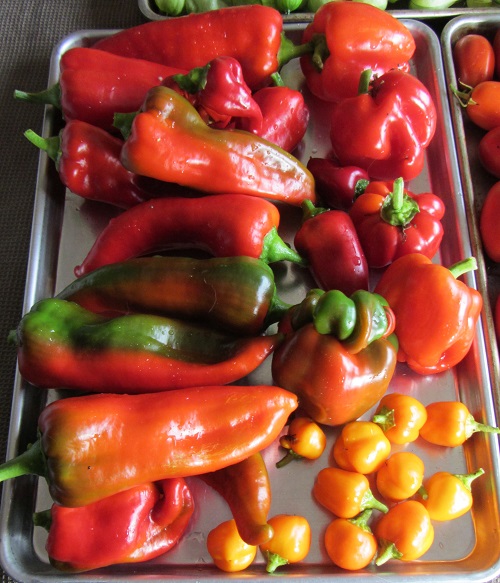
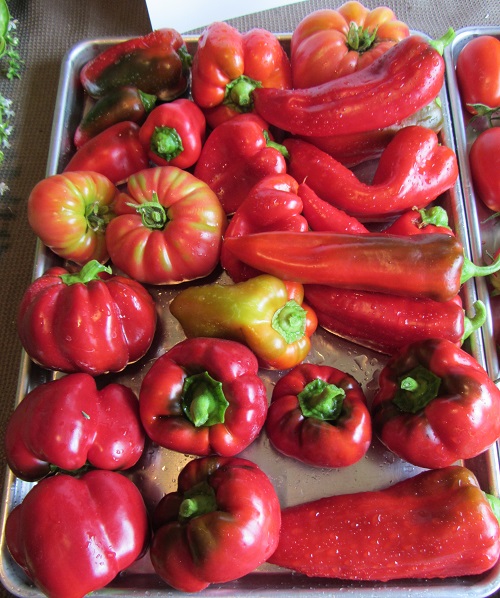
150906 harvest3

The 2013 harvest was 22.3 pounds from 11 plants — 2.0 pounds per plant.

The 2014 harvest was 31.0 pounds from 18 plants — 1.7 pounds per plant.

The 2015 harvest was 32.5 pounds from 18 plants — 1.8 pounds per plant. That comes out to 10.8 pounds per box, or 3.6 pounds per square foot of growing medium.

I think it’s pretty safe to say that in the future we can expect the yield to be 1.7-2.2 pounds on average per plant.

The 2015 lineup:

Anaheim College 64 — 1 plant.  1.0 pounds:  That’s less than half of what we got from this variety each of the last two years. We’ll plant these again anyway, I think we just got an uncooperative plant.

Bullnose Bell — 2 plants.  2.3 pounds total. (1.15 pounds per plant):  Basically a really squat bell pepper. Their shape made them relatively time consuming to break down. The yield wasn’t very good, and that’s before accounting for the pithy interior. Not a keeper for 2016.

NuMex — 1 plant.  2.6 pounds:  The NuMex were long and straight and produced a good yield. Keeper.

150829 harvest6

Iko Iko — 2 plants.  4.5 pounds total.  (2.25 pounds per plant):  A bell type. These ripened well and were generally trouble-free.  Keeper.

Early Jalapeno — 1 plant.  0.9 pounds:  Another poor yield from a pepper that usually does well for us. Still, we’re not going to bail on Jalapenos due to one bad year. Keeper.

Carmen — 2 plants. 8.0 pounds.  (4.0 pounds per plant):  Outstanding yield. Super easy to handle and process —  the seeds of each fruit were in a little pod right at the stem. A new favorite! Keeper.

150919 closeup2

King of the North — 6 plants.  9.1 pounds.  (1.5 pounds per plant):  Somewhat below average yield for what is basically a standard “bell pepper”. The bugs got to these a little bit. They usually do better for us. Keeper.

Lipstick — 2 plants.  2.5 pounds.  (1.25 pounds per plant):  We had one “good” plant, and one plant that made deformed fruit. The only other time we’ve grown Lipstick it produced 1.7 pounds. We’ll see if something else grabs us in 2016.

“Yellow Bell” — 1 plant.  1.5 pounds:  Teeny tiny bell peppers that ripened to orange. The interiors were solid seeds — we used a spoon or a melon baller to empty them out. Not a keeper.

150919 jalapeno

One thing we “discovered” this year is that long, straight peppers are far faster and easier to clean — when compared to the bell types. I can definitely see that characteristic being a tie-breaker when we choose what to grow next year.

Here’s the 2013-2015 spreadsheet, sorted by average weight per plant:

Variety Count Weight Ave. Weight
Carmen 2 8.0 4.0
Tequila 1 3.3 3.3
Gypsy 3 7.9 2.6
NuMex 1 2.6 2.6
Iko Iko 2 4.5 2.3
Tequila Sunrise 1 2.2 2.2
Anaheim College 64 3 6.3 2.1
King of the North 12 24.3 2.0
Jalapeno 3 5.9 2.0
Pasilla Bajio 1 1.9 1.9
Karma 1 1.6 1.6
Cute Stuff 2 3.1 1.6
Yellow Bell 1 1.5 1.5
Lipstick 3 4.2 1.4
Gourmet 3 3.7 1.2
Bullnose Bell 2 2.3 1.2
Hungarian Hot Wax 1 0.9 0.9
Thai Hot 1 0.5 0.5
Alma Paprika 1 0.4 0.4
Banana 1 0.4 0.4
“Bell” 1 0.3 0.3
Total 46 85.8 1.9
2013 10 22.3 2.2
2014 18 31.0 1.7
2015 18 32.5 1.8

—————–

Visit Dave at Ourhappyacres, host of Harvest Monday.