Pullman Pan 50/50 Sandwich Loaf: Getting Closer

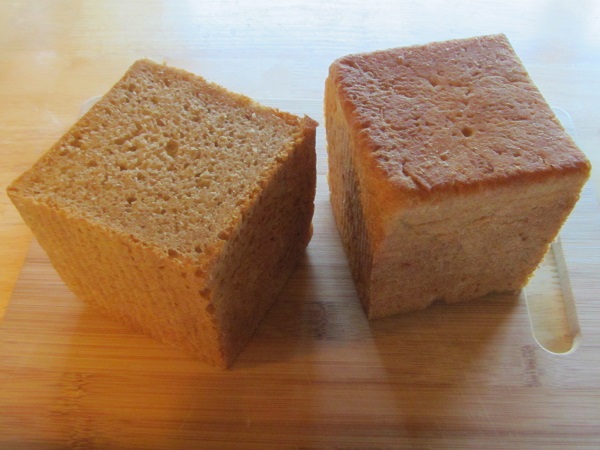
The newest formula is getting closer. The mouthfeel and taste are good. The crumb is still just a bit more crumbly than I’d prefer. An early morning picture of the top of today’s turkey sandwich:

It’s 250g AP flour and 250g fresh-milled whole wheat flour (heritage Turkey Red berries), (500g flour weight total). 375g water (75% hydration). 25g honey (5%), 15g olive oil (3%), and 50g (10%) powdered milk. 10g kosher salt (2% of the flour weight), 2 tsp instant (not rapid-rise) yeast.

Knead on low speed for 10 minutes. Cover and bulk rise until doubled. Flour the bench, the dough will be sticky. Pre-shape the loaf then move it to the Pullman pan. Cover and let rise until 1/2″ from the top of the pan. Bake at 350F, covered for 30 minutes then remove the cover and bake for another 25 minutes or until the loaf reaches 195-200F.

As for changes relative to the first attempts — I upped the milk powder and yeast and decreased the olive oil and honey. The increased milk powder is giving a better mouthfeel. The yeast is making the process a lot faster. The decreased honey is softening the crust, which is an improvement. I’ve decreased the oil and I haven’t missed it, so I left the quantity lower than the original 8% of flour weight.

I think the final piece of the puzzle may be either:

  1. Combining the ingredients briefly, then letting the dough rest before mixing again — letting the fresh milled wheat hydrate before the actual kneading.
  2. Kneading for a shorter time, about 4 minutes, then doing a series of folds in the bowl to promote gluten formation more gently than the mixer will do it.

I think the recipe part of the equation is very close. Now it’s the handling technique that needs to be better. That’s part of the fun of bread baking though — figuring out solutions. Which of course never ends.

Happy baking

A No Knead Bread And Seasoning A Banneton

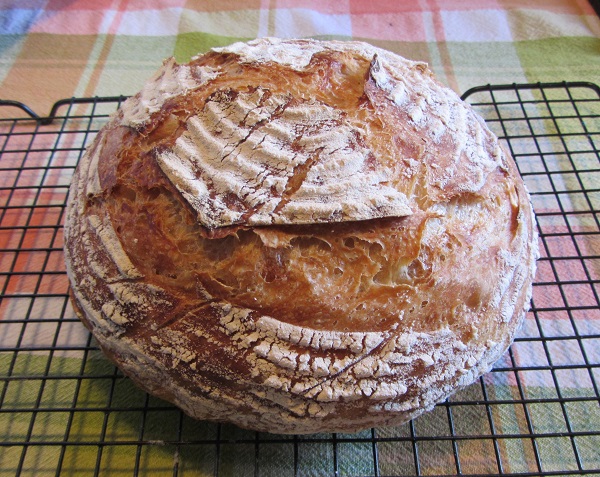
First a picture of Sunday’s No Knead bread then a little background.

I’ve owned a banneton for at least eight years. I know that because I have a blog post from 2016 that talks about me baking with two of them. Somehow I never got the message that they’re supposed to be seasoned to prevent sticking. The ones I purchased didn’t come with instructions. I just happened to be reading about a banneton related topic and a very small light bulb went off in my head. So I thought I’d see what banneton care and feeding was supposed to be.

Bannetons are supposed to be seasoned. The method is:

  1. Spritz the banneton with oil or water. (I lightly rinsed mine in water then shook it out well — I didn’t want oil going rancid at some point.)
  2. Sprinkle some AP flour or rice flour or a combo of the two into the banneton and angle it around until the flour coats the inside. Shake out the excess flour.
  3. Use a little more flour with every bake.
  4. Air dry the banneton after every use, preferably in the sun to prevent any unwanted molds from populating the flour.
  5. Store the banneton in an airtight bag or container to keep bugs from taking up residence.
  6. If too much flour builds up then sweep it out with a stiff brush.

That’s it. Any crevices or tiny cracks in the banneton are now basically non-stick.

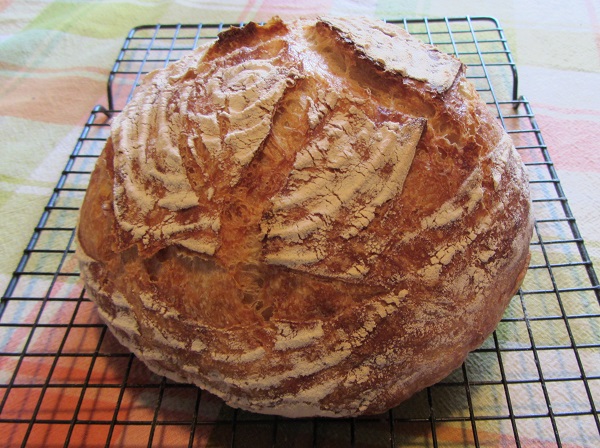
Below is another picture of that same bread because I couldn’t decide which I liked better. The light is from the back rather than the side.

The bread is 75% hydration with no additional “handling flour” added to the dough itself and it didn’t stick at all. (Recipe here. Or use the Menu above to go to the No Knead page.)

Other notes — I’ve stopped using bench flour or a Silpat when preparing a No Knead — I use a tablespoon or two of oil on the counter and spread it around with a paper towel. If the dough tries to stick to the counter I just lift the dough with a bench scraper, though generally it doesn’t stick.

The other advantage of using oil on the counter is that I can then used the oiled paper towel to rub a bit of sheen on any other tools that are coming into contact with the dough. I rub a little on a spatula to help remove the dough from the mixing bowl to the counter. I rub a little on a serrated bread knife for any slashes that I want to make on the dough prior to baking. In the picture above I used five slashes around the “waist” of the dough, the splits on top were caused the dough naturally expanding where the seams were gathered up as the dough was placed into the banneton. I also used a Le Creuset bread oven rather than a traditional dutch oven for this bake — that made it so I could easily get to the sides of the dough after it was removed from the banneton.

I’ve gone years of using bannetons with some trepidation and drama for no real reason. Here’s celebrating finally learning something, even if it was mostly by chance.

A Pullman Pan 50/50 Sandwich Loaf: Searching For Goldilocks.

600 grams of flour was too much. 400 grams of flour was not enough. This bake uses 500 grams of flour and adjusts the other secondary ratios somewhat.

The recipe uses 250g AP flour and 250g fresh-milled whole wheat flour, (500g flour weight total). 375g water (75% hydration). This time around I cut back on the “other stuff”: it uses 30g each of honey, olive oil, and powdered milk (all are 6% of the total flour weight, the old amounts had been 8%). 10g kosher salt (2% of the flour weight), 1 tsp instant (not rapid-rise) yeast. Bulk rise until doubled then move to the Pullman pan, cover and let rise until 1/2″ from the top of the pan. Bake at 350F, covered for 30 minutes then remove the cover and bake for another 25 minutes or until the loaf reaches 195-200F.

It’s sort of based on King Arthur’s A Smaller Pain De Mie. Or at least it was at the beginning of tinkering.

The newest version uses relatively less honey, olive oil, milk powder, and yeast. This is intended to make the end of the rise a little more predictable and controllable — with the earlier versions there wasn’t a ton of activity for the first 60 to 90 minutes, then things started to happen fast after that.

It should be more manageable but we’ll see how it tastes and ages after a few days. It may be the correct answer will be to restore “other stuff” to the original 8% and just cut back on the yeast and expect the whole pre-bake process to go slower and longer. I feel like it’s getting close to where it should be.

Happy baking

A Smaller 50/50 Sandwich Loaf

This time I used a total of 400 grams of flour and let the bread continue to proof to see how high it would rise. It never made it near the top of the Pullman pan and the bread wound up overproofed. It was otherwise tasty and fine, just not pretty. I’m still adjusting the quantity of flour and proofing time.

The formula is (again) based on King Arthur’s A Smaller Pain De Mie. (With some extensive modifications.) 200g AP flour, 200g whole wheat flour, (400g flour weight total). 300g water (75% hydration). 32g each honey, olive oil, and powdered milk (all are 8% of the total flour weight). 8g kosher salt (2% of the flour weight), 1 tsp instant (not rapid-rise) yeast. Bulk rise until doubled then move to the Pullman pan, cover and let rise until 1/2″ from the top of the pan. Bake at 350F, covered for 25 minutes then remove the cover and bake for another 22 minutes or until the loaf reaches 195-200F.

The baking times are longer than in the original recipe but that seems to be how long it takes.

The next bakes will center on 450-500 grams of flour. Hopefully that’s the “sweet spot”.


Many of years of blogging and this is my first post on a February 29th.

Happy Baking

The New Pullman Pans And A 50/50 Sandwich Loaf

I recently purchased a pair of 9 x 4 x 4 Pullman Loaf Pans with the idea that I’d make sandwich loaves for lunches at work. The Pullman pans are good for other breads too but sandwich loaves were the main impetus for the purchase. Coincidentally.. on January 12 Dave at HappyAcresBlog posted about his year of bread baking and mentioned that in 2010 they’d decided to bake all of their own bread for the year and they’ve kept it up since then.

Which made me think, why not us? We have the materials and knowledge and it’s not really that time consuming. It would mean redirecting energy (or lack of energy) on Sundays but we’d gain the benefit of fresh baked healthy breads. It’d give me a reason to bake something with fresh milled wheat berries more regularly.

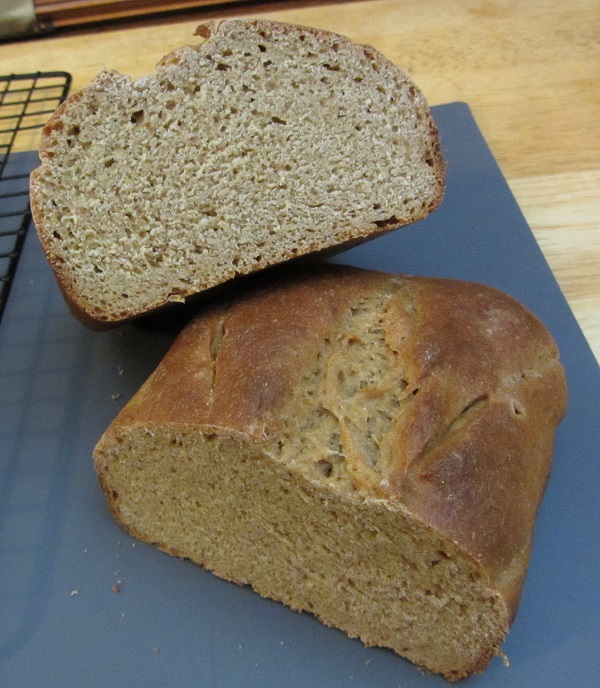
As of right now I’ve settled on a sandwich loaf with 50% AP flour and 50% fresh milled wheat. Today’s bread utilizes a Hard Red Spring wheat:

The small crack along the top is where I slashed the dough. As it turns out the bread doesn’t need a slash and won’t receive one next time.

The jumping off point for today’s formula is King Arthur’s A Smaller Pain De Mie. (With some extensive modifications.) 300g AP flour, 300g whole wheat flour, (600g flour weight total). Then to make it easy to remember: 450g water (75% hydration). 48g each honey, olive oil, and powdered milk (all are 8% of the total flour weight). 12g kosher salt (2% of the flour weight), 2 tsp instant (not rapid-rise) yeast. Bulk rise until doubled then move to the Pullman pan, cover and let rise until 1/2″ from the top of the pan. Bake at 350F, covered for 25 minutes then remove the cover and bake for another 15 minutes or until the loaf reaches 195-200F.

This is my 3rd or 4th attempt using these pans and it’s the first time the finished bread has gone all the way to the top of the lid. My feeling is that the previous attempts used too little flour, or I didn’t proof the dough long enough given that the house temperature sits in the high 60’s this time of year. This time I let the dough rise in a warm part of the kitchen near a heater vent and that seemed to help out quite a bit.

As for the upcoming iterations: It may be that closer to 500g of total flour will make a better loaf. I’ve also seen orange juice recommended for a small percentage of the water which is supposed to cut the “wheaty taste”, so that might be something to try just to see. How long to leave the bread covered in the oven will be another variable that needs to be looked at, the water needs to evaporate out, especially at the high hydration that I used on this bake.

Overall: Success with room for growth.

Late edit, February 24: 600 grams of flour is defintely too much. This week the dough rose much more than usual and it expanded in the oven so much that the dough extruded in a thin sheet about a foot long out of one end of the pullman pan. Which fortunately didn’t make a mess or catch on fire. 400-500 grams of flour is more the correct.

—-

The loaf pans are manufactured by USA Pan. They receive good reviews everywhere I’ve looked and they’re working well for us so far. The pans were sold as one for $42 or a pair for $45. We now own two pans.

An Easy And Good 100% Einkorn Sandwich Loaf

I received a bag of Bluebird Grain Farms Organic Einkorn Flour as a gift during the holidays so I thought I’d try a 100% Einkorn flour sandwich loaf. I’ve baked with Einkorn before, though it’s been a while. In addition to “regular” flour and heirloom wheats I sometimes feel the need to try baking with spelt/ rye/ einkorn/ etc — I tend to rotate through many different types of flours, as well as the using whole wheat flours from the heirloom berries we’re grinding in the kitchen. Any and all of the non “regular” flours have more character and are more interesting than the processed white stuff.

The rise and oven spring weren’t quite what I’d hoped for, but that was to be expected since I didn’t mix in any other flours. The bread was still tasty and moist, I just had to make smaller than usual sandwiches.

The recipe: 400 grams Einkorn flour, 130 grams water, 130 grams milk (65% hydration not accounting for the milk solids), 8 grams honey (2%), 8 grams kosher salt (2%), 1.5 teaspoons instant (not rapid-rise) yeast.

Mix on low speed for 6 minutes. At this point the dough will be very sticky. Cover and let rest two hours. Move the dough to a lightly oiled loaf pan. (The dough was very manageable at this point and not very sticky at all so I gave it a few stretch and folds between my hands.) Preheat the oven to 375F. Cover the pan and let rise another 30 minutes. Slash the dough. Bake ~35-40 minutes or until 195F+ internally. Cool on a rack.

Other than the lack of oven spring/height it was a good result. I still have about a pound of Einkorn to use up — Next time I’ll try a 50/50 ratio with bread flour to see if it makes a more “proper” sandwich bread. I’ll probably also bump the total flour weight to 600 grams to more completely fill out the loaf pan. I may also try a longer rise in the pan.

Added bonus: Bluebird Grain Farms is pretty near to north Seattle, and it’s always a plus to support local farms.

(I’m not affiliated with or compensated by Bluebird in any way. It’s local farmers doing good stuff with ancient and heirloom grains.)

Happy baking

A Focaccia, A Braided Challah, And Sort Of King Arthur Big Batch Quick Dinner Rolls

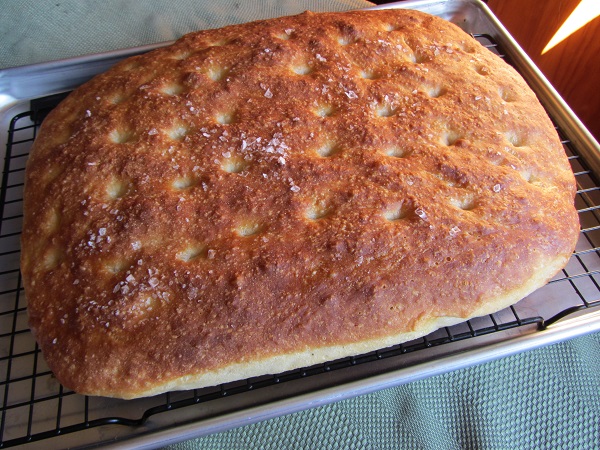
Three breads over three days. I started the day before the first bakes by making two poolishes.  One was made with AP flour, the other was bread flour. Each contained 600g flour and 600g water — 2400 grams in total. Both poolishes received a 24-hour rise on the counter. At that point I made the (below) challah and dinner rolls, but that didn’t use up all of the poolish. The remaining poolishes went into the refrigerator and three days later were used up in this focaccia:

The leftover poolishes totaled 1000 grams; right around 500g of the AP poolish and 500g of the bread flour poolish. In theory that means what remained contained 500 grams of water and 500 grams of the mixture of flours. 

To that I added 500g bread flour, 250 grams water, 20 grams kosher salt, 30 grams olive oil, and 2 teaspoons of instant (not fast acting) yeast.  The bakers percentages come out to 75% hydration, 2% salt, 2% oil. Mix everything for 8 minutes, then cover and allow to rise for two hours. De-pan to an oiled and parchment-lined sheet tray. Oil the top of the dough, poke into the dough all over with your fingers, and cover and let rise another hour. Prior to baking sprinkle on flaky salt, rosemary, or whatever topping is preferred. Bake at 450F for 25-35 minutes. I used an additional sheet tray to the bottom to prevent the bottom from getting too dark.

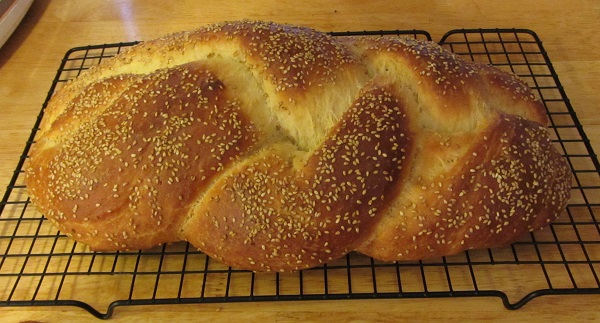
Next up, but baked first in reality is the challah.

Historically I’ve used either a Michael Ruhlman recipe or a Peter Reinhart recipe. The link to the Ruhlman recipe that I’d refer to was broken so I went with: ~800g poolish (400g bread flour, 400g water), an additional 400g bread flour, 1 egg + 1 yolk (reserve white for egg wash), 50g water, 50g room temperature butter, 14g kosher salt, 2 teaspoon instant yeast. Mix for 8 minutes on low speed. Cover and let rise 1.5 hours. Divide into three braids about 18″ long. Braid. Cover and let rise 1 hour. Make an egg wash of the egg white + 1 TBP water. Brush over the challah, sprinkle on sesame seeds. Bake 30-40 minutes at 425F. I should have used a 2nd sheet tray under this one, the bottom was vaguely overdone though nobody complained.

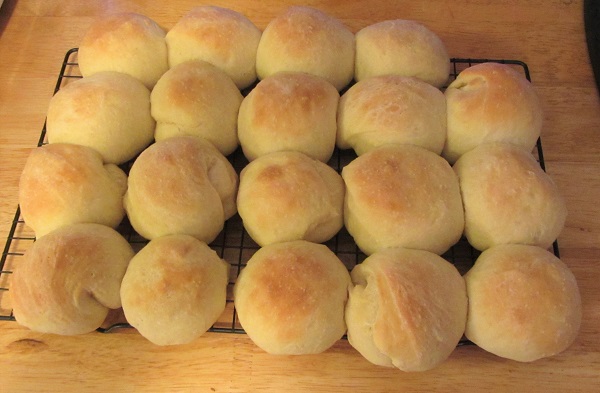
Last up are the dinner rolls, which were based on this King Arthur Big Batch Quick Dinner Rolls recipe. The differences were that I was using an AP flour poolish. And I didn’t want them quick.

  1. minutes until a soft, smooth ball of dough is formed. The dough should feel elastic and slightly tacky to the touch.
  2. Lighly oil the dough and the bowl and let rise for 1-2 hours at room temperature or until the dough is full and puffy.
  3. You can place the rolls into one Silpat lined (or parchment lined) sheet tray.
  4. After the rolls are in the tray, cover with an inverted sheet tray and let rise at room temperature for another 1-1.5 hours, or until well rounded and full looking. Preheat the oven to 350°F.
  5. Bake the rolls for 20 to 25 minutes or until golden brown and an internal thermometer reads 190°F. You can brush the baked rolls with melted butter if desired. (I chose not to, since I wasn’t serving immediately. We reheated the rolls for serving.)

Diablo 4 – Alphabetical List Of Aspects Through Season 2

An alphabetical list of all Diablo 4 Aspects through Season 2, with all of the non-relevant Aspect title removed. The list on top is intended to print and fit on one page. Below the break is a straight alphabetical list.

AspectClassAspectClassAspectClassAspectClass
Abundant Energy SorcDeflecting Barrier GeneralLethal Dusk RogueShielding Storm Necro
Accelerating GeneralDevilish BarbLightning Dancer’s DruidShockwave Druid
Aftershock DruidDire Whirlwind BarbLimitless Rage BarbSinged Extremities Sorc
Alpha DruidDire Wolf’s DruidLong Shadow NecroSiphoned Victuals Rogue
Ancestral Charge BarbDisobedience GeneralLuckbringer BarbSkinwalker’s Druid
Ancestral Echoes BarbDust Devil’s BarbMage-Lord’s SorcSkullbreaker’s Barb
Ancestral Force BarbEarthguard DruidMangled DruidSlaking Barb
Ancient Flame SorcEarthquake BarbMangler’s RogueSlaughter General
Anemia BarbEarthstriker’s BarbMending Stone DruidSmiting General
Armageddon SorcEchoing Fury BarbMetamorphic Stone DruidSnap Frozen Rogue
Arrow Storms RogueEdgemaster’s GeneralMight GeneralSnowguard’s Sorc
Artful Initiative RogueEfficiency SorcMighty Storm’s DruidSnowveiled Sorc
Assimilation GeneralElementalist’s SorcNatural Balance DruidSplintering Energy Sorc
Audacity GeneralElements GeneralNature’s Savagery DruidSplintering Necro
Balanced DruidEluding GeneralNeedleflare GeneralStable Sorc
Ballistic DruidElusive Menace RogueNighthowler’s DruidStampede Druid
Battle Caster’s SorcEmbalmer NecroNoxious Ice RogueStarlight General
Battle-Mad BarbEmpowering Reaper NecroNumbing Wrath BarbSteadfast Berserker’s Barb
Bear Clan Berserker’s BarbEncased SorcOpportunist’s RogueStolen Vigor Rogue
Berserk Fury BarbEncircling Blades RogueOsseous Gale NecroStorm Swell Sorc
Berserk Ripping BarbEncroaching Wrath BarbOvercharged DruidStormchaser’s Druid
Binding Embers SorcEnergizing RogueOverwhelming Currents SorcStormclaw’s Druid
Biting Cold SorcEngulfing Flames SorcPerpetual Stomping BarbStormshifter’s Druid
Bladedancer’s RogueEnshrouding RoguePestilent Points RogueSubterranean Druid
Blast-Trapper’s RogueEscape Artist’s RoguePiercing Cold SorcSurprise Rogue
Blighted NecroEverliving SorcPiercing Static SorcSwelling Curse Necro
Blood Getter’s NecroExpectant GeneralPlunging Darkness NecroSymbiotic Druid
Blood Seeker’s NecroExploiter’s GeneralPotent Blood NecroSynergy Rogue
Blood-bathed NecroExplosive Mist NecroProdigy’s SorcTempering Blows Barb
Blood-soaked NecroExplosive Verve RogueProtecting GeneralTempest Druid
Blurred Beast DruidExposed Flesh NecroProtector GeneralThree Curses Sorc
Bold Chieftain’s BarbFastblood NecroQuickening Fog RogueTidal Necro
Bounding Conduit SorcFlamewalker’s SorcQuicksand DruidTorment Necro
Branching Volleys RogueFlesh-Rending NecroRampaging Werebeast DruidTorturous Necro
Brawler’s BarbFortune SorcRapid GeneralToxic Alchemist’s Rogue
Bul-Kathos BarbFrenzied Dead NecroRathma’s Chosen NecroTrampled Earth Druid
Burning Rage BarbFrostbitten RogueRavager’s RogueTrickshot Rogue
Bursting Bones NecroFrostblitz SorcRavenous RogueTrickster’s Rogue
Bursting Venoms RogueFrozen Memories SorcRaw Might DruidUltimate Shadow Necro
Cadaverous NecroFrozen Orbit SorcReanimation NecroUmbral General
Calm Breeze DruidFrozen Tundra SorcRecharging SorcUmbrous Rogue
Changeling’s Debt DruidFrozen Wake SorcRelentless Armsmaster BarbUnbroken Tether Sorc
Charged SorcGhostwalker GeneralRelentless Berserker’s BarbUncanny Treachery Rogue
Cheat’s RogueGiant Strides BarbRepeating RogueUnrelenting Fury Barb
Coldbringer’s NecroGlacial SorcRequiem NecroUnsatiated Druid
Conceited GeneralGore Quills NecroRetaliation DruidUnstable Imbuements Rogue
Concentration SorcGrasping Veins NecroRetribution GeneralUntimely Death Necro
Conflagration SorcGrasping Whirlwind BarbRotting NecroUnwavering Sorc
Control SorcGravitational SorcRuneworker’s Conduit DruidUnyielding Commander’s Necro
Corruption RogueHardened Bones NecroSacrificial NecroUrsine Horror Druid
Crashstone DruidHulking NecroSearing Wards SorcVengeful Rogue
Craven GeneralHungry Blood NecroSeismic-shift DruidVeteran Brawler’s Barb
Crowded Sage GeneralIcy Alchemist’s RogueSerpentine SorcVigorous Druid
Cruel Sustenance RogueImitated Imbuement RogueSerration NecroViscous Necro
Cyclonic Force DruidIncendiary SorcShadowslicer RogueVoid Necro
Damned NecroInfiltrator’s RogueShared Misery GeneralVolatile Shadows Rogue
Dark Howl DruidInner Calm GeneralShattered Stars SorcWanton Rupture Barb
Death Wish BarbIron Blood BarbShattered SorcWeapon Master’s Barb
Decay NecroIron Warrior BarbShepherd’s DruidWildrage Druid
Wind Striker General
Windlasher Barb
Continue reading “Diablo 4 – Alphabetical List Of Aspects Through Season 2”

2023 Container Garden Recap

Our patio container garden had a “solid” year all-around: 173.1 pounds of produce from 9 EarthBoxes. Which comes to about 6 pounds per square foot of container space. The trees in and around the garden continue to expand, at some point soon we may need to go to fewer boxes and smaller (determinate) plants.

Here’s how everything did:

Cucumbers: 1 box, 4 plants, 34.6 pounds. We grew “Marketmore” cucumber plants. The cucumbers started early and stayed productive until late. This was a relatively good year for “attractive and straight” fruit too.

Carmen Peppers: 2 boxes, 12 plants, 16.0 pounds. We located the peppers in a relatively sunny/premium location. The plants grew taller than usual and we had fewer problems with bugs and most everything ripened. The basil is not getting its spot back.

Tromboncino Zucchini: 1 box, 2 plants, 18.6 pounds. It was a solid year for the zucchini as well. Mid-season we got this:

I think the hand pollinating helped (again). An old toothbrush is now a permanent part of the gardening tool kit.

Black Krim / Carbon Tomatoes: 1.5 boxes, 3 plants, 28.5 pounds. The three plants mostly intermingled and it wasn’t worth figuring out which was which. We grew two Black Krim but one of them didn’t do well at all and was dead by mid-September. I have no idea what caused it so hopefully it was just rough handling. Ten pounds per plant is fine, and the Black Krims tasted amazing, as usual.

Tigeralla Tomato: .5 box, 1 plant, 12.2 pounds. The Tigerally did “fine”. They ripened fairly late. It’s fun to have colorful tomatoes though this year they were pretty “meh”.

Oregon Spring Tomato: 1 box, 2 plants, 20.7 pounds. The Oregon Springs were a top performer again. They started early and the taste and yield were both very good. Highly recommended.

Roma Tomato: 2 boxes, 4 plants, 42.5 pounds. Romas always yield well for us, and even the unripe fruits all ripened after harvest.

We also grew four basil plants in one box in the middle of the garden. They produced way more than we could consume so the neighbors got a lot of our excess basil. The EarthBox directions call for six plants per box, but I think the yield winds up being about the same with a little more space per plant.

Finally, we had one box of 20 Fortex (pole) beans, yielding fistfuls of pods all summer.

Considering we didn’t pay a ton of attention to the garden it went pretty well.

Container Garden Update — September 24, 2023

The annual Seattle rains started yesterday afternoon. I wanted to stay relatively dry while harvesting, so I harvested all the Really Ripe Things last weekend and The Rest Of It yesterday morning.

A front view prior to last weekend’s harvest:

From the house side “back” of the garden:

The remaining peppers:

The “Ripe” harvest. It’s 9 pounds of peppers and 37 pounds of tomatoes, mostly Romas (20 pounds) and Black Krim (12 pounds):

Yesterday’s “Rest Of It Harvest”:

As for the under-ripe tomatoes — we’ve had good success the last few years by spreading them out on cooling racks near a heater vent in the kitchen and letting them ripen for 2-3 weeks. I think it’s the combination of air-flow and warmth that does the trick.

Finally, one straggler that I found doing the final clean-up:

It’s a nice discovered reward at the end of the process.