Bread experts will often recommend an autolyse step when making breads and pizza. Typically this involves combining the flour and water, and perhaps some of the yeast, then letting the flour hydrate for about 20 minutes. Quoting thefreshloaf(dot)com:
How do you use the autolyse technique? Simply combine the flour and water from your recipe in your mixing bowl. Cover the bowl with plastic or a damp towel. Walk away for 20 minutes to half an hour. That’s it.
While you were away the flour was absorbing the water and the gluten strands have begun to develop. Now you can mix in your preferment, your salt, and the remainder of your yeast and, with very little mixing, achieve a high level of development with considerably less work. The crumb of your dough is also likely to come out much whiter since it has not been highly oxidized by all the beating and whipping.
Better bread, less work. What’s to complain about?
Check out the link, it’s an excellent reference.
Historically I’ve mostly used All Purpose (lowish gluten) flour. Recently though, I bought a bag of King Arthur Bread Flour. The KA flour is very high in gluten. I figured I’d try making a pizza using the KA flour and include an autolyse step for even more gluten development.
After the autolyse the dough wasn’t kneading very well in the Kitchenaid, so I removed it partway through for some hand-kneading.
It was like kneading a pot roast, or a big knotted muscle. I now understand why people call it “strong flour”. The dough ball could have done pushups.
I liked the end result. Sopressata and shallots with mozz:
Ok, so this post is not really about baseball; I tend to leave that to my friends AJ Coltrane and Blaidd Drwg.
It must be nice to be Harvard. The school has no culinary program, but it does sponsor a lecture series on Science and Cooking. For those of us not fortunate enough to be in Boston, we can still see these lectures streaming (and they eventually get posted to youtube and itunes). Since this series is really as much about science as it is about cooking, the lineup contains some of the heavy hitters in the molecular gastronomy world. Being a fan of the processes involved, I have a ton of interest in the series.
If you are interested, here is the batting order:
• Tuesday, September 4, 2012 — Dave Arnold (Food Arts), Harold McGee (New York Times)
• Monday, September 10, 2012 — Joan Roca and Jordi Roca (El Celler de Can Roca), Salvador Brugués (Sous-Vide Cuisine)
• Monday, September 17, 2012 — Bill Yosses (White House Pastry Chef)
• Monday, September 24, 2012 — Enric Rovira (Master Chocolatier)
• Monday, October 1, 2012 — Fina Puigdevall (Les Cols), Pere Planagumà (Les Cols), Paco Perez (Miramar)
• Monday, October 8, 2012 — Raül Balam Ruscalleda (Moments)
• Monday, October 15, 2012 — José Andrés (Think Food Group, minibar, Jaleo)
• Monday, October 22, 2012 — Wylie Dufresne (wd~50)
• Monday, October 29, 2012 — Dan Barber (Blue Hill Farm)
• Monday, November 5, 2012 — Joanne Chang (Flour Bakery)
• Monday, November 12, 2012 — Jack Bishop (Editorial Director at Cook’s Illustrated and an Editor on The Science of Good Cooking), Dan Souza (Associate Editor of Cook’s Illustrated)
• Monday, November 19, 2012 — Nathan Myhrvold (former Microsoft CTO; co-founder and CEO of Intellectual Ventures; and author of Modernist Cuisine: The Art and Science of Cooking)
• Monday, November 26, 2012 — David Chang (momofuku), Carles Tejedor (Via Veneto)
• Monday, December 3, 2012 — Ferran Adrià (elBulli Foundation)
Not bad, not bad at all.
I leave you with the clip that the title of this article comes from.
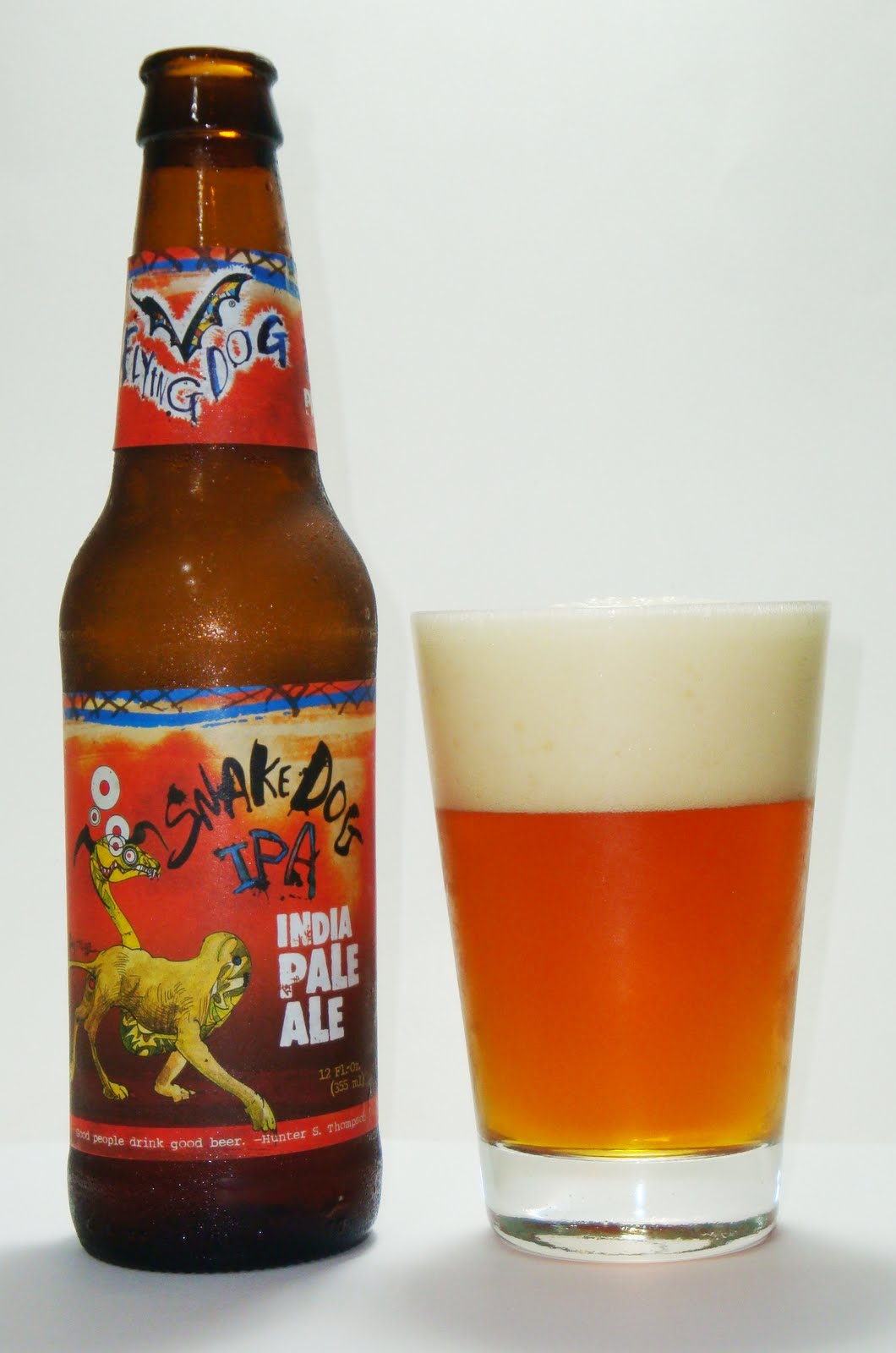
Flying Dog Brewery is a brewery out of Frederick, MD, known for their Hunter S. Thompson inspired labels and solid beer lineup. Flying Dog used to be available in Washington, but for some reason, no longer distributes here (or Oregon, or Idaho). I was lucky to see that Chuck’s Hop Shop had a keg of Snake Dog, probably forgotten somewhere, and put it out on tap.
Snake Dog clocks in at 7.1% ABV and 60 IBU and uses a combination of Warrior and Colombus hops.
Snake Dog pours almost orange with a frothy cream colored head. This beer is aromatic with hops – I can smell them while I am sitting 2 feet from the beer. Lots of citrus on the nose with a slight hint of grain. The beer is initially crisp, followed by a sweet maltiness giving way to a building bitterness from the hops. The beer finishes long and tannic with overtones of hops and resin. This 60 IBU beer is a hop bomb without actually being one – it has good balance and enough hop flavor to satisfy any hophead, but is restrained enough to be enjoyed by those who like a milder IPA. My only complaint is that the sweetness becomes more pronounced as the beer warms and lingers too long for my liking. The beer also becomes much more restrained when it warms, with fewer hops and more citrus on the palate.
Outside of the sweetness, this was a fine example of a hoppy IPA from a non-west coast brewer. Unfortunately you won’t find it in Cascadia anymore and I am not sure if it is worthy of a road trip somewhere to find it. If it happens to show up again in Seattle, I would recommend drinking one for yourself.
The new season premier has officially been announced for November 7th. Bravo also announced the contestants. It is a somewhat underwhelming lineup, especially after the firepower they brought out last season, but the real kick in the groin; not a single Seattle chef in the lineup. I know that the 3 they had last season were complete busts, but really, not one home town (or even Portland or Vancouver) chef? Makes me want to not watch the show just on that principle.
If you are like me and decided to grow tomatoes in the Seattle area, you are just beginning to enjoy the fruits of your labor, although you are probably hoping that the 80% of the tomatoes on your plant that are still green will ever ripen. (Quick hint – cut back on watering them, it will cause them to stop producing fruit and try to ripen what is there). That being said, I tend to get more tomatoes than I know what to do with in one sitting, so I get creative with them. Since the ones that I grow at home taste about 100 times better than anything you can get in the store, I use them in just about everything. One of my favorite applications is with eggs. You don’t need to cook them and they add a ton of flavor and brightness to any egg dish. Below is a recent breakfast I made for Mrs. Iron Chef Leftovers with some of the tomatoes and basil from the garden. The recipe feeds one but can be easily scaled.
The lovely raw ingredients. It is making me hungry just looking at them
The Software
2 Large eggs
1 tablespoon diced or minced onion
¼ cup tomatoes, diced
2 tablespoons milk
1 teaspoon basil, chiffanade (probably about 1 large leaf)
1 oz. goat cheese, crumbled
1 teaspoon olive oil
Salt
Pepper
The Scramble
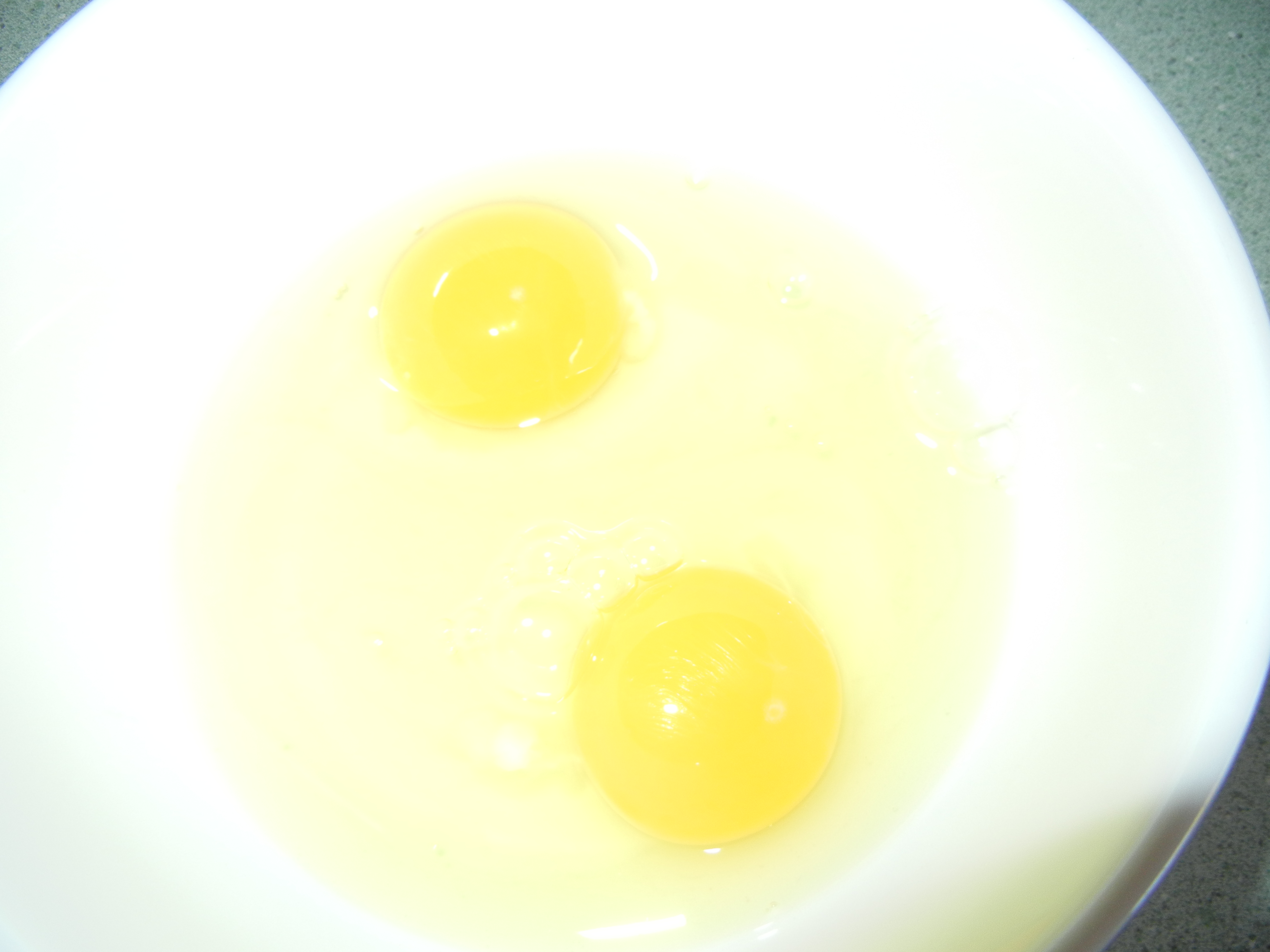
In a medium, non-stick skillet, heat the olive oil over medium heat until shimmering. Add the onion and cook until it starts to become translucent, about 5 minutes. While the oil is heating, combine eggs and milk and beat with a fork until combined, let sit. Add the eggs to the pan when the onions are cooked and turn heat to medium low. When the eggs begin to start to form a curd (i.e. begin to become solid) gently break apart with a silicone spatula into smaller pieces; this will happen quickly, so keep an eye on it. Add the goat cheese and stir until incorporated; maybe 1-2 minutes. Once everything is incorporated, remove from heat and add the tomatoes and basil. Toss to combine and let sit for one minute. Add salt and pepper to taste, plate and serve to a happy wife.
The finished product. You may commence your drooling now.
Notes
You can leave out the cheese or substitute it with just about any kind you want. I happen to love the combination of goat cheese, tomato and basil, but cheddar works well also. The key to this dish is the low heat – it will allow the curds to be fluffy and light. Also, the more liquid you add to the eggs before cooking them, the fluffier they become. If you have particularly juicy tomatoes, remove some of the liquid before adding to the pan, otherwise you will have watery scrambled eggs. I tend to not cook the tomatoes because I like their raw flavor better. If you want to cook them, add them to the onions after they have been cooking for about 3 minutes. This recipe also works as an omelet too, but that is for another show.
Lakefront Brewery is a brewery out of Milwaukee, Wisconsin that has been around since 1987, but their beers are just starting to show up in Seattle. The Lakefront website describes Bridge Burner as:
The assertive aroma is dominated by dry, earthy American hops: citrus, floral and pine tree notes all make a showing. The hops dominate, lending a hefty bitterness to the palate, but are backed up by the caramel malts, which lend a substantial body without any extra sweetness. A warm alcohol burn finishes it off with a nod to its considerable 8.0% ABV. 2009 Los Angeles County Fair gold medal barley wine winner.
This brew needs a big, rich, flavorful meal to stand up to its intensity. Try it with the traditional German fare our Milwaukee ancestors would have loved, or serve it with BBQ or hamburgers.
Let me be honest about this beer, I am pretty sure what the good folks in Milwaukee consider dominating hops, barely registered to the group of beer drinkers in Seattle I tasted this beer with. I really found this beer to be thin, flaccid and not even close to anything resembling a barley wine.
The beer poured dark amber, like an iced tea. Lots of malt with a hint of hops on the nose, but a bit flat on the initial sip. There is a big malt hit on the palate with some sweetness, followed by a small amount of hoppiness which faded quickly – there was no real note of citrus, floral or resin in this beer. After a few sips, there is a bit of lingering hoppiness at the end, but it is barely noticeable and not something I would describe as a pleasant finish of hops. The hops begin to disappear as the beer warms and it is just a single note of sweet malt with no other dimensions – it made me think this is what scotch ale might taste like if the brewer did not know what they were doing. On the bright side, there was no excessive alcohol on either the nose or the palate despite the beer’s 8% ABV.
Overall it was a forgettable drinking experience, easily one of the less memorable beers that I have had in a long time.
Lakefront Brewery’s Bridge Burner garners a rickety 1 foot bridge out of 5.
Mrs. Iron Chef and I recently entertained her aunt, uncle and a couple of cousins, who had been on a whirlwind tour of the Pacific Northwest, and I decided that they needed a good, home cooked meal. Since there were 6 of us and the weather was nice, I thought that the meal called for a nice grill-roasted beef tenderloin. It is easy to cook, always a crowd favorite and doesn’t require a ton of prep. The below recipe and technique was taken from Cook’s Illustrated magazine and modified a bit by yours truly.
The Software
1 – 2 ½ lb. beef tenderloin, silver skin removed
1 tablespoon + 1 teaspoon kosher salt
1 tablespoon granulated garlic
1 teaspoon of olive oil
1 teaspoon ground black pepper
Soaked wood chips for smoking (optional)
The Prep
Remove any silver skin that may be on the roast. Pat dry and sprinkle1 tablespoon of salt on all sides of the roast. Wrap tightly in plastic wrap and return to the fridge for at least 4 hours (you can let it sit overnight if you want, it won’t hurt anything). When you are ready to fire up the grill, pull the meat out of the fridge and pat dry with paper towels. Rub with the oil and then sprinkle with garlic, salt and pepper to get even distribution. Tie the roast with 5 pieces of butcher’s twine spaced at even intervals to make the roast as uniform as possible. Let rest until you are ready to put on the grill.
A whole beef tenderloin – the two “wings” are called the chain meat. You want to get your roast from that end of the muscle and remove the chain meat before cooking.
The Grill Gas grill – turn all burners on high for 15 minutes to preheat the grill. Add wood chips to your smoking box at this time. Once grill is heated, clean the grill grates. Turn off all of your burners except for your primary burner. Leave that on – you are looking to maintain about 300-325 degrees in the grill. For my grill it means leaving the primary burner just above medium high.
Charcoal grill – prep 6 quarts of charcoal and heat until covered in ash. Add the charcoal to the far side of the grill, not exposing more than half of the grill grate to direct heat (you are going to cook the meat off of direct heat). Add wood for smoking directly to the charcoal. Heat the grate for 10 minutes with the grill covered.
The Roast Gas grill – put the meat on the grill about 8” from the edge of the primary burner (you don’t want to put in directly on the heat from the primary burner). Roast for 25 minutes, and then flip the meat over. Continue roasting until the meat reaches 125 degrees on a meat thermometer (that is medium rare). Remove from the heat to a plate and cover with foil. Let rest 15-20 minutes before cutting.
Charcoal Grill – Put the meat over the direct heat of the charcoal for about 2 minutes on each side to get a crust to form. Move the meat to be about 8” from the direct heat and cook on the first side for about 15 – 20 minutes. Turn over and continue cooking until the meat reaches an internal temperature of 125 degrees. Remove from the heat to a plate and cover with foil. Let rest 15-20 minutes before cutting.
Notes
If your fire starts to die down on a charcoal grill, add more charcoal. This recipe is easier on a gas grill (better temperature control), but tastes a ton better on a charcoal grill. I used a simple salt, garlic and pepper rub for this, but you can use any type of spice rub you would like. If you opt for tenderloin, you want to get a roast that is as uniform as possible and ask your butcher to remove the silver skin for you, it will save you 10 minutes of prep time. If you don’t want to use tenderloin, eye round also works in about the same amount of time. You could also easily substitute a boneless leg of lamb roast or a pork loin roast (not the tenderloin, it is too thin) and they will all cook in about the same amount of time. Tying the roast is essential to making it a uniform as possible – it will prevent some pieces from being more cooked than others. Serve with some roasted veggies and a nice chimichurri sauce.
Blog friend Annie S. asked me about fresh hop beer recently while we were knocking back a few malt beverages. I mentioned that they are generally only available in the spring and fall, right around harvest time for hops.
In case you are not familiar with fresh hop beers, they tend to have a very robust and green hop flavor and need to be consumed within about 6 weeks of production before the hop flavor starts to fade. Most beers use a dried form of hops and do not suffer from this issue.
I happened to be surfing the interweb recently and noticed that our friends at Seattle Met magazine had a story about fresh hop beers.
So for Annie and any other readers out there (all 5 of you) who care, here is some info on fresh hop beer s and where/when they will be available:
Once again, Two Beers is the first out of the gate on this; the brewery’s Fresh Hop 2012 started flowing in the SoDo taproom over the weekend, and is now surfacing outside the brewery. It’s the earliest release yet for its beer. Big Al Brewing also does a fresh hop brew each fall; the Santiam hops are being picked this very morning, and are destined for a batch of Big Al Brewing Harvest Ale, a malty amber, later this afternoon.
Fremont Brewing gets its hops from a one-acre plot in Yakima Valley’s Cowiche Canyon, half of which is dedicated to its Cowiche Canyon Fresh Hop ale. The brewery is hoping to release this year’s version the first week of October, but like a restaurant opening, such matters are moving targets. Schooner Exact, 7 Seas, Big Time, and Iron Horse have also done fresh hop brews in past years.
Not surprisingly, Oregon breweries like them some fresh hop, too. Geoff Kaiser of Seattle Beer News and the excellent Noble Fir bar in Ballard put on an annual Oregon vs. Washington fresh hop throwdown, where 15 versions battle for crowd supremacy. This year’s hop bonanza happens Saturday, September 29. Get there early, brace yourself for a line, and be assured that what awaits inside is completely worth the wait. Not surprisingly, Yakima is also home to a Fresh Hop Ale Festival happening October 6.
One that I would love to get my hands on – Laughing Dog Brewing’s Fresh Hop. They picked 150 lbs. of hops by hand this past week to go into the beer. Hopefully it shows up in Washington
Lantern Brewing is a small brewery located in the Greenwood neighborhood of Seattle. They are relatively new to the game and their beers have a somewhat limited availability (check Chuck’s Hop Shop, they usually carry a couple). Lantern doesn’t have a website (I hate that trend), but they do have a Facebook Page. It also means I can’t give you any stats on the beer.
I was in the mood for Belgian style ale recently and this one was sitting in the fridge, so I cracked it open.
The beer pours brown, like a dark brewed tea, with a dark cream head. Malt and yeast are prevalent in this been from the second you open the bottle, even before it hits the glass. The initial sip is also dominated by malt and yeast, giving way to caramel and sugar, with a short finish of bananas; exactly what you would expect from a Belgian style beer. There is a hint of hop bitterness, but it is not present on every sip; sometimes it is there and you can taste it for a few seconds, other times it is not there at all, but this is only when the beer is cold (there were no detectable hops as the beer warmed). As the beer warms, caramel and burnt sugar flavors dominate and a longer, smoother finish appears, with notes of banana and yeast. This beer reminded me of a liquid banana crème caramel – I kept thinking that I needed a burnt sugar wafer while drinking it.
This beer was delicious and a somewhat unusual style for a Seattle brewery, there are a handful making abbey style beers, but very few are doing Belgian browns. If you are in the mood for a Belgian brown, give this one a try instead of your regular one from Belgium. I think you will find that this beer holds its own against the ones made by guys in robes.
Lantern Brewing Dubbel Abbey Style Brown gets 4 beacons out of 5.



 FlatbreadGarden