Beer of the Week: Big Al’s Brewing Fresh Hop Harvest Ale

By Iron Chef Leftovers

When it comes to fresh hop beers, most of the local Washington breweries tend to go with an IPA or a Pale Ale style to showcase the hops. On occasion, you get a brewery that tries to do something different. Seattle based Big Al’s Brewing did that with the release of their Fresh Hopped Harvest Ale. I couldn’t find a description of the beer online so all I can tell you is that I had it in a 22 oz. bottle which was purchased at a local bottle shop for about $5.

The beer is a reddish-amber color. The nose is dominated by lots of malt and grain, with hints of citrus and hops in the background. The initial taste brings roasted malt on the front of the palate, so roasted that it is almost chocolate like, followed by a slightly grassy hop flavor. As the beer warms, it becomes slightly more bitter, the malt becomes more restrained, and the green hops become more citrus like, but are still a secondary player to the malt in this beer.

Personally I felt like this beer lacked balance between the malt and hops. The hops flavor, which is what I am really looking for in a fresh hop beer, seemed to be lost at times and just overpowered with what is a really malty beer. I appreciated the effort that Big Al’s put into this beer to make something different, but I think it needs some additional work. I would probably buy this beer again next year to see if it has gotten any better, but I don’t think I would run out and buy more than one either.

A disappointed Big Al’s reaps 2 combines out of 5 for their Harvest Ale.

Dessert Island Cookbooks

By Iron Chef Lefotvers

I recently saw a list of the top 10 selling cookbooks for 2012 and it is a rather disappointing list, led by the Barefoot Contessa’s new tome. It got me thinking, if I were stranded on a dessert island (no that is not a typo, I really would love to be stranded on a dessert island; a desert island just doesn’t seem like it would be all that much fun) and could only have 10 cookbooks/food related books with me, what would they be? Let’s just assume that I, for some reason, have a fully stocked kitchen and pantry (just don’t ask me how).

Here is my list, in reverse order:

If you were to own just one book on cooking, this should be it.

10 – Silver Spoon – it is generally considered to be the most complete Italian cookbook ever created and didn’t exist in an English translation until about 10 years ago. If you are serious about Italian cooking, you should own this monster.

9 – Charcuterie by Michael Ruhlman. If you watch No Reservations, you know who Ruhlman is. This is a survival guide to curing meats which would come in handy in a stranded situation. It is also an in depth read about the how and why of charcuterie.

8 & 7 – I’m Just Here for the Food / I’m Just Here for More Food by Alton Brown. More useful for why and how things work with cooking than for recipes, I can pretty much assure you that if you ever had a recipe fail, you can find out exactly why here. Be careful, these books are a gateway drug into the world of molecular gastronomy.

6 – On Food and Cooking by Harold McGee. The book is incredibly long (800+ pages), very technical in parts and is not a quick read (it took me over a year to read it cover to cover), but it is probably the single most important book on food ever written. It covers pretty much every aspect of food and food science and you should have it on your bookshelf as reference even if you never read it cover to cover. I doubt there has been a food book written in the last 20 years that has not cited this one as a reference in its bibliography.

5 – Modernist Cuisine at Home. Another book that is more science than recipes, it is another one that you should own, even if you aren’t into the molecular gastronomy thing. Reading this book will make you a better cook even if you never try anything from the book.

However, if you were to own just two books on food, this should be the other one.

4 & 3 & 2 – Bones / Fat / Odd Bits – by Jennifer McLagan. These books are really essential for understanding and cooking the rest of the animal and should really be looked at as 3 parts of a single book; the ultimate in utility – you realize after reading them, everything is useable. They really fill in the gap for all of the stuff that most other cook books don’t address. It doesn’t hurt the descriptions are well written and the anecdotes are funny.

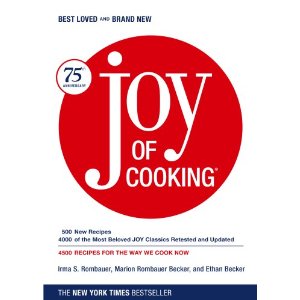
1 – Joy of Cooking – there should be a law that every home cook should have this book on their shelves since it pretty much has a recipe for everything in it. It has been updated about 14 times over its 75+ years in existence, but have some fun and get an edition that is printed before the 1960’s just to see how cooking has changed.

Beer of the Week: Elysian Brewing Split Shot Espresso Milk Stout

By Iron Chef Leftovers

Living in Seattle, which does have a slight (and justified) reputation for being an over-caffinated city, you would expect that you would see more coffee based beers, but you don’t. For the 2012 Seattle Beer Week, Elysian Brewing was selected to come up with the beer for the event and they produced Split Shot Stout – marrying the city’s love of coffee with its love of beer. I generally will try anything new that Elysian puts out and I really think that their dark beers tend to be their best work. I have tried Split Shot both on tap and in 22 oz. bottles, and the review is for the bottle release. The beer runs around $6 at your local bottle shop (although it is often on sale at mega marts with a better beer selection).

From the Elysian Press Release on the beer:

In Seattle, beer and coffee grew up together. They’re like siblings, jealously balancing the day between go-go and go-slow, dividing the hip and tattoo’d into brewers and roasters, barkeeps and baristas. Split Shot Coffee Milk Stout combines the talents of Elysian Brewing and Lighthouse Roasters, and commemorates not only Seattle Beer Week as its official beer for 2012, but the fact that it took a lot of talk and lot of Lighthouse coffee to get Elysian off the ground back in 1996. Split Shot has a radically complicated malt bill, with C-15 and C-45 dextrine malts, Franco-Belges kiln coffee malt, Black, Roasted and Chocolate malts and flaked oats. It’s bittered with Magnum and slightly sweetened with milk sugar. OG 16 (1.065); alcohol 7.25% by volume., Split Shot is the official beer for 2012 Seattle Beer Week. Available in select Seattle area restaurants, bars and stores, on draft and in 22-oz. bottles.

Split Shot pours with a tan head and a pitch black body. There is absolutely no question what this beer is from the smell – coffee and lots of roasted malt dominate and that is from a foot away from the beer. Up close, this beer smells like a coffee shop roasting its beans – heavy espresso with hints of smoke and grains, taking me back to my bachelor days when I lived near Lighthouse coffee and would smell them roasting beans in the afternoon. The beer has a creamy mouth feel, like taking a sip of espresso with a good crema. Lingering coffee dominates the palate, with a slight bitterness and just a hint of malt and milk sweetness on the back end – this beer could easily be confused for an iced espresso. The coffee is strong but not completely overpowering, but I would still not recommend this beer unless you really liked coffee. As the beer warms, the coffee becomes more restrained and notes of chocolate, sugar, barley and grain start to appear. I would recommend serving this beer between 40 and 45 degrees if you like slightly bitter coffee and 45 to 50 degrees if you want to taste the full range of flavors that this beer has to offer.

If you like coffee and beer, get your over-caffeinated self to a bottle shop and pick this one up, you won’t regret it.

Elysian Split Shot Stout shakes itself down to the local coffee shop with a delicious 4 grande, non-fat mocha with whips out of 5.

Beer of the Week: Hale’s Ales Cascade Mist Wet Hop

One of the great things about where I live is that I have 5 (and soon to be 7) breweries within walking distance of my house. It makes for a regular rotation for me to stop in to each of these places and try the new and exciting stuff that they have on tap, and, in the case of Hale’s Ales, try the beers that they don’t bottle. A recent trip to Hale’s yielded such a treasure – the very last of their fresh hop beer. I unfortunately can’t find any stats on the beer (I did find a single reference to it being 5.5% ABV), so you are just stuck with my description.

The beer is very pale yellow in color with a snow white head. I took one look at it and thought to myself that this was going to be a major letdown. It wasn’t helped when I took a whiff of the beer – faint notes of grain with very mild hops, if you did not know what you ordered, you would possible be thinking pilsner. It is a good thing that I did not judge a book by its cover. The first sip delivered a very crisp and refreshing beer with lots of hops flavor up from with notes of orange and lemon lingering for a short time before giving way to citrus peel, grain and hop resin. A slight bitterness hides in the finish on this beer, but it is not particularly pronounced and it provides a nice counterbalance to the citrus notes. It is also just enough to remind you that this is a fresh hop beer but not off-putting to the point where a non-IPA drinker would hate it. There is great balance between the citrus and grain and it is a nice change of pace from the fresh hop IPA’s that tend to dominate the market in Seattle. When this beer makes a comeback, you should belly yourself up to the bar at Hale’s and knock back a few of them.

Hale’s Cascade Mist was an unexpected surprise when I went in the brewery and it made for a very happy Iron Chef when I left.

Hale’s Cascade Mist Wet Hop wafts in with a cloaking 4 cloudy days out of 5.

I’m Sailing Away…

By Iron Chef Leftovers

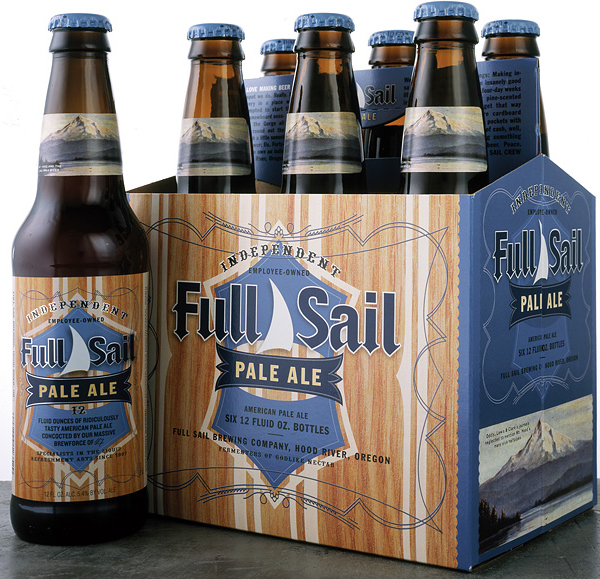
full-sail-pale-ale2I happened to catch this in passing:

PALE ALE SAILS AWAY: Full Sail Brewing has discontinued its mainstay pale ale, Scoop has learned. The Hood River-based brewery needed to free up brewing capacity for seasonal beers, and found its pale was going stale. “We’re in the business of freshness and looking at trends,” says head brewmaster Jamie Emmerson. “It’s not that the pale had volume problems, but it was the softest of our regular beers. Other people just keep those around forever. But, for us, focus matters. It’s not like we don’t have other recipes lying around.” Most of the six-packs are gone, with the final kegs soon to run out. Instead, look for six-packs of previously pub-only Full Sail brews like Nut Brown Ale and Wassail.

While I am sad to see what I consider an iconic beer go (it was the first type of Full Sail I ever tasted), it is a style with a ton of competition, so replacing it with their seasonal stuff makes much more sense. Besides, as Oregon pale ales go, my preference is Deschutes over Full Sail anyway.

The Worst Food Trends of 2013

By Iron Chef Leftovers

James Beard Award winning writer, Josh Ozersky, recently wrote a piece in Time Magazine about the 5 worst food trends for 2013. I usually just ignore these lists, but a friend of mine sent this one to me and since it was written by someone with credentials, I decided to read it. I should make the qualification that most of his books have been written around the fast food culture in the United States, so take that for what it is worth. If you read the whole piece, he does come across as a pompous ass that seems like he would only happy at Applebee’s. I will give you his list, his comments (that I generally disagree with) and my comments.

1 – Rock slime as food

We haven’t seen much of this, I’ll grant you; mostly it’s appeared in a few avant-garde restaurants. Let’s hope, for the love of God, it stays there. Born out of the intrepid, terroir-crazed cauldron of the new Scandinavian cuisine, where nearly anything on or under the ground is considered fair game for foragers, the use of lichens, moss and other primal organisms functions, I believe, largely as shock value. If lichens taste like anything, it is something bad; that’s why the stuff is more often the dinner of snails and bark lice than of people. It’s not as revolting as the equally ostentatious bug-eating movement, but I believe it’s more obnoxious for being more high-minded.

I actually copied the whole section since I had issues with all of it. Ok, I have never tried lichen but I would be willing to bet you it is super nutritious, just like another odd primal organism that is foraged out of the forest – the mushroom. He violates my first rule of eating – you can’t say anything bad about it until you have tried it. As for bug eating – it is common in most of the 3rd world since bugs are an abundant and healthy protein. I figure if a couple billion people are eating them, there has to be something to it. I have tried many species of bugs and I can tell you that they are tasty. The issue here is they are considered high cuisine in America, so he immediately labels them as ostentatious. Funny since the rest of the world sees them as low class peasant food, just like offal used to be.

2 – Pro-am charcuterie.

Here’s the thing about salumi, charcuterie and all the other forms of cured meats that we have come to know and love: they were always the province of experts. And there’s a reason they were the province of experts: they are hard to do well. Now every other restaurant has its own in-house cured-meat program, and the results are often nasty: leathery hams, moldy sausages, and industrial-strength lardo, just for starters.

Most beginners don’t aspire to any ideal, any more than do their customers. Google “bad salumi.” You won’t find a single negative review anywhere on the Internet. That’s bizarre and says something about how uncritically the stuff is eaten these days. Leave it to the pros!

Ok, so if you are not an expert, you shouldn’t make charcuterie. That is just bullshit. I have had plenty of great charcuterie from “non-experts” and I know what the good stuff tastes like. Guess what, most of those “experts” were once people who didn’t know how to make the stuff. Laurehurst Market in Portland make killer stuff and have only been doing it for a few years. Just about every French restaurant makes a good pate. Boccolone, which he sites as an “expert” was created by Chris Constentino, who, if memory serves, taught himself how to make cured meats.

3 – Fake smoke

A recent trend has been the use, or rather overuse, of artificial smoke as a flavoring agent or even as a theatrical effect.

I realize this may seem like a peevish quibble, but it bothers me nonetheless, because it is frequently used in conjunction with equally unnatural modes of cooking like sous vide. You take a piece of pork or duck, cook it for 10 hours in a tepid bath and then try to impose a sham smoke flavor at the last minute with another equally ludicrous tool.

All meat should be cooked over open fire on big spits, right? Seriously, the liquid smoke thing is exactly how BBQ potato chips are made and how most of the chain restaurants make their food taste wood grilled. Sous Vide is anything but unnatural – it is an offshoot of poaching and is actually based on a very sound scientific principal – you cook the food at the target temperature you want it to be and therefore you can’t overcook it. It is much more precise than heating a pan over a flame and guessing when it is done. There is a reason why so many Thanksgiving turkeys turn out dry. I am starting to think this guy is really out of touch with how food is actually cooked and eaten in the rest of the world.

4 – Postmodern desserts.

As David Kamp observed in The Food Snob’s Dictionary, pastry chefs are “the most perverse of food-snob subcultures,” and boy, was he right. Who in their right mind wants to eat an enormous meal, replete with bread, wine or liquor, meat, pasta, vegetables, the inevitable charcuterie and God knows what else, and then have to face a $14 plate of tiny mountains, swooping smears and little heaps of powder. What am I supposed to do with this? I’m not hungry at this point. It adds empty calories and a not-insignificant sum to the bill. And really, the only satisfaction derived from it by anyone at all is the chef who called it into being (and who never actually eats it). If I could have one wish come true for 2013, it would be dessert reform. A single scoop of sherbet is all any human being wants or needs at the conclusion of a big meal. It’s time to take a step back from our gastronomical excesses. And this is the place we ought to start.

Once again, I include the whole section. Look, no one is holding a gun to your head and making you order dessert at the end of the meal. If you don’t want the calories or aren’t hungry, DON’T FUCKING ORDER IT, DUMBASS! I can tell you that I have never wanted or needed a single scoop of sherbet at the end of a meal, hell; I don’t even like the stuff. Oh, and I am pretty sure that sherbet is empty calories since it primarily consists of milk and sugar.

5 – Optional tipping.

And when you consider how much diners spend on some of the items mentioned above, their cheaping out on the staff is one of the grossest acts of impudence in modern society. I don’t know what monster first conceived of the laws by which restaurateurs are allowed to pay sweatshop wages to their employees on the assumption that guests will do the right thing and make up the difference, but until the laws are repealed, we need to pay the people who serve us. I believe there should be a fixed percentage, a rock-bottom minimum of 15% that every diner has to pay. If we don’t want to pay it, we are all welcome to eat cold cuts at home.

Mr. Ozersky, I have news for you – tipping has always been optional. Tipping is a reward for good service, which in a good number of places, is hard to find these days. If you have an issue with wages that servers make, take it up with the state legislators, which is where that issue is coming from. The restaurant industry would die if you automatically tacked on 15% to a bill (although many places will sneak that in on the check), and it would give even less incentive for servers to do a good job. Hell, why should I have to kick in 15% if I received poor service? In most cultures, servers are paid a reasonable wage and tipping, if it does occur, is a relatively modest amount. I don’t care if it Applebee’s or French Laundry, if you want me to give you an outstanding tip, give me exceptional service in the process. I do agree about the wages (In Washington, servers are paid the state minimum wage, which is just over $9 and hour). Once again, America lags behind the rest of the world.