A Smaller 50/50 Sandwich Loaf

This time I used a total of 400 grams of flour and let the bread continue to proof to see how high it would rise. It never made it near the top of the Pullman pan and the bread wound up overproofed. It was otherwise tasty and fine, just not pretty. I’m still adjusting the quantity of flour and proofing time.

The formula is (again) based on King Arthur’s A Smaller Pain De Mie. (With some extensive modifications.) 200g AP flour, 200g whole wheat flour, (400g flour weight total). 300g water (75% hydration). 32g each honey, olive oil, and powdered milk (all are 8% of the total flour weight). 8g kosher salt (2% of the flour weight), 1 tsp instant (not rapid-rise) yeast. Bulk rise until doubled then move to the Pullman pan, cover and let rise until 1/2″ from the top of the pan. Bake at 350F, covered for 25 minutes then remove the cover and bake for another 22 minutes or until the loaf reaches 195-200F.

The baking times are longer than in the original recipe but that seems to be how long it takes.

The next bakes will center on 450-500 grams of flour. Hopefully that’s the “sweet spot”.


Many of years of blogging and this is my first post on a February 29th.

Happy Baking

The New Pullman Pans And A 50/50 Sandwich Loaf

I recently purchased a pair of 9 x 4 x 4 Pullman Loaf Pans with the idea that I’d make sandwich loaves for lunches at work. The Pullman pans are good for other breads too but sandwich loaves were the main impetus for the purchase. Coincidentally.. on January 12 Dave at HappyAcresBlog posted about his year of bread baking and mentioned that in 2010 they’d decided to bake all of their own bread for the year and they’ve kept it up since then.

Which made me think, why not us? We have the materials and knowledge and it’s not really that time consuming. It would mean redirecting energy (or lack of energy) on Sundays but we’d gain the benefit of fresh baked healthy breads. It’d give me a reason to bake something with fresh milled wheat berries more regularly.

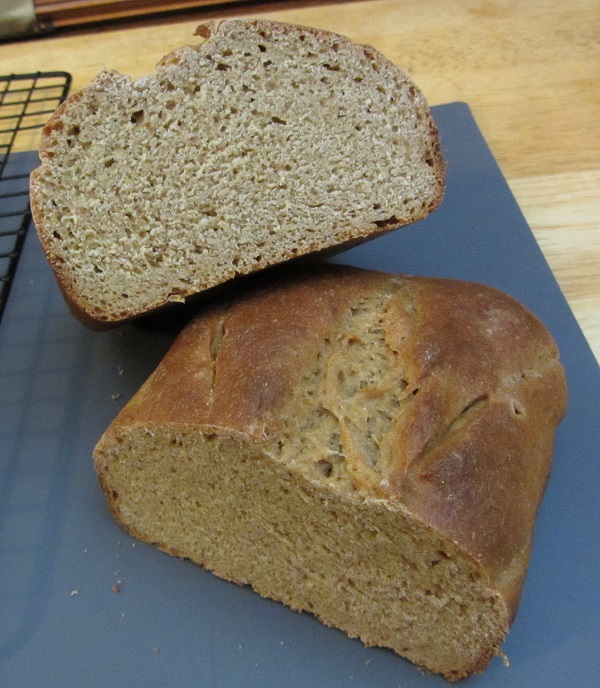
As of right now I’ve settled on a sandwich loaf with 50% AP flour and 50% fresh milled wheat. Today’s bread utilizes a Hard Red Spring wheat:

The small crack along the top is where I slashed the dough. As it turns out the bread doesn’t need a slash and won’t receive one next time.

The jumping off point for today’s formula is King Arthur’s A Smaller Pain De Mie. (With some extensive modifications.) 300g AP flour, 300g whole wheat flour, (600g flour weight total). Then to make it easy to remember: 450g water (75% hydration). 48g each honey, olive oil, and powdered milk (all are 8% of the total flour weight). 12g kosher salt (2% of the flour weight), 2 tsp instant (not rapid-rise) yeast. Bulk rise until doubled then move to the Pullman pan, cover and let rise until 1/2″ from the top of the pan. Bake at 350F, covered for 25 minutes then remove the cover and bake for another 15 minutes or until the loaf reaches 195-200F.

This is my 3rd or 4th attempt using these pans and it’s the first time the finished bread has gone all the way to the top of the lid. My feeling is that the previous attempts used too little flour, or I didn’t proof the dough long enough given that the house temperature sits in the high 60’s this time of year. This time I let the dough rise in a warm part of the kitchen near a heater vent and that seemed to help out quite a bit.

As for the upcoming iterations: It may be that closer to 500g of total flour will make a better loaf. I’ve also seen orange juice recommended for a small percentage of the water which is supposed to cut the “wheaty taste”, so that might be something to try just to see. How long to leave the bread covered in the oven will be another variable that needs to be looked at, the water needs to evaporate out, especially at the high hydration that I used on this bake.

Overall: Success with room for growth.

Late edit, February 24: 600 grams of flour is defintely too much. This week the dough rose much more than usual and it expanded in the oven so much that the dough extruded in a thin sheet about a foot long out of one end of the pullman pan. Which fortunately didn’t make a mess or catch on fire. 400-500 grams of flour is more the correct.

—-

The loaf pans are manufactured by USA Pan. They receive good reviews everywhere I’ve looked and they’re working well for us so far. The pans were sold as one for $42 or a pair for $45. We now own two pans.

An Easy And Good 100% Einkorn Sandwich Loaf

I received a bag of Bluebird Grain Farms Organic Einkorn Flour as a gift during the holidays so I thought I’d try a 100% Einkorn flour sandwich loaf. I’ve baked with Einkorn before, though it’s been a while. In addition to “regular” flour and heirloom wheats I sometimes feel the need to try baking with spelt/ rye/ einkorn/ etc — I tend to rotate through many different types of flours, as well as the using whole wheat flours from the heirloom berries we’re grinding in the kitchen. Any and all of the non “regular” flours have more character and are more interesting than the processed white stuff.

The rise and oven spring weren’t quite what I’d hoped for, but that was to be expected since I didn’t mix in any other flours. The bread was still tasty and moist, I just had to make smaller than usual sandwiches.

The recipe: 400 grams Einkorn flour, 130 grams water, 130 grams milk (65% hydration not accounting for the milk solids), 8 grams honey (2%), 8 grams kosher salt (2%), 1.5 teaspoons instant (not rapid-rise) yeast.

Mix on low speed for 6 minutes. At this point the dough will be very sticky. Cover and let rest two hours. Move the dough to a lightly oiled loaf pan. (The dough was very manageable at this point and not very sticky at all so I gave it a few stretch and folds between my hands.) Preheat the oven to 375F. Cover the pan and let rise another 30 minutes. Slash the dough. Bake ~35-40 minutes or until 195F+ internally. Cool on a rack.

Other than the lack of oven spring/height it was a good result. I still have about a pound of Einkorn to use up — Next time I’ll try a 50/50 ratio with bread flour to see if it makes a more “proper” sandwich bread. I’ll probably also bump the total flour weight to 600 grams to more completely fill out the loaf pan. I may also try a longer rise in the pan.

Added bonus: Bluebird Grain Farms is pretty near to north Seattle, and it’s always a plus to support local farms.

(I’m not affiliated with or compensated by Bluebird in any way. It’s local farmers doing good stuff with ancient and heirloom grains.)

Happy baking

A Focaccia, A Braided Challah, And Sort Of King Arthur Big Batch Quick Dinner Rolls

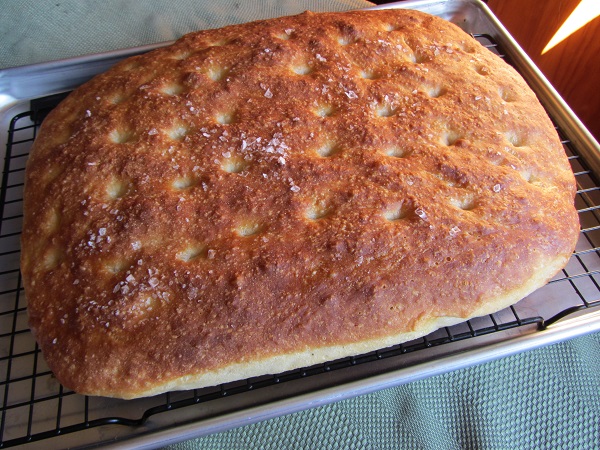
Three breads over three days. I started the day before the first bakes by making two poolishes.  One was made with AP flour, the other was bread flour. Each contained 600g flour and 600g water — 2400 grams in total. Both poolishes received a 24-hour rise on the counter. At that point I made the (below) challah and dinner rolls, but that didn’t use up all of the poolish. The remaining poolishes went into the refrigerator and three days later were used up in this focaccia:

The leftover poolishes totaled 1000 grams; right around 500g of the AP poolish and 500g of the bread flour poolish. In theory that means what remained contained 500 grams of water and 500 grams of the mixture of flours. 

To that I added 500g bread flour, 250 grams water, 20 grams kosher salt, 30 grams olive oil, and 2 teaspoons of instant (not fast acting) yeast.  The bakers percentages come out to 75% hydration, 2% salt, 2% oil. Mix everything for 8 minutes, then cover and allow to rise for two hours. De-pan to an oiled and parchment-lined sheet tray. Oil the top of the dough, poke into the dough all over with your fingers, and cover and let rise another hour. Prior to baking sprinkle on flaky salt, rosemary, or whatever topping is preferred. Bake at 450F for 25-35 minutes. I used an additional sheet tray to the bottom to prevent the bottom from getting too dark.

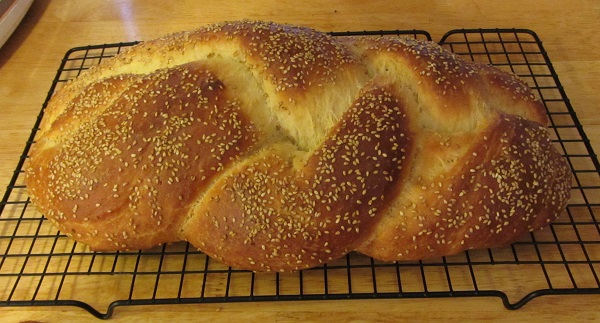
Next up, but baked first in reality is the challah.

Historically I’ve used either a Michael Ruhlman recipe or a Peter Reinhart recipe. The link to the Ruhlman recipe that I’d refer to was broken so I went with: ~800g poolish (400g bread flour, 400g water), an additional 400g bread flour, 1 egg + 1 yolk (reserve white for egg wash), 50g water, 50g room temperature butter, 14g kosher salt, 2 teaspoon instant yeast. Mix for 8 minutes on low speed. Cover and let rise 1.5 hours. Divide into three braids about 18″ long. Braid. Cover and let rise 1 hour. Make an egg wash of the egg white + 1 TBP water. Brush over the challah, sprinkle on sesame seeds. Bake 30-40 minutes at 425F. I should have used a 2nd sheet tray under this one, the bottom was vaguely overdone though nobody complained.

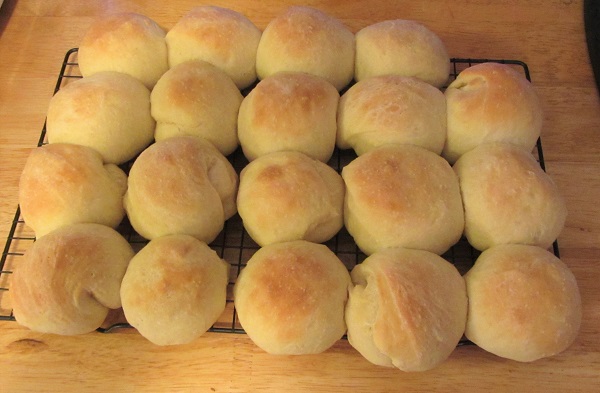
Last up are the dinner rolls, which were based on this King Arthur Big Batch Quick Dinner Rolls recipe. The differences were that I was using an AP flour poolish. And I didn’t want them quick.

  1. minutes until a soft, smooth ball of dough is formed. The dough should feel elastic and slightly tacky to the touch.
  2. Lighly oil the dough and the bowl and let rise for 1-2 hours at room temperature or until the dough is full and puffy.
  3. You can place the rolls into one Silpat lined (or parchment lined) sheet tray.
  4. After the rolls are in the tray, cover with an inverted sheet tray and let rise at room temperature for another 1-1.5 hours, or until well rounded and full looking. Preheat the oven to 350°F.
  5. Bake the rolls for 20 to 25 minutes or until golden brown and an internal thermometer reads 190°F. You can brush the baked rolls with melted butter if desired. (I chose not to, since I wasn’t serving immediately. We reheated the rolls for serving.)

2023 Container Garden Recap

Our patio container garden had a “solid” year all-around: 173.1 pounds of produce from 9 EarthBoxes. Which comes to about 6 pounds per square foot of container space. The trees in and around the garden continue to expand, at some point soon we may need to go to fewer boxes and smaller (determinate) plants.

Here’s how everything did:

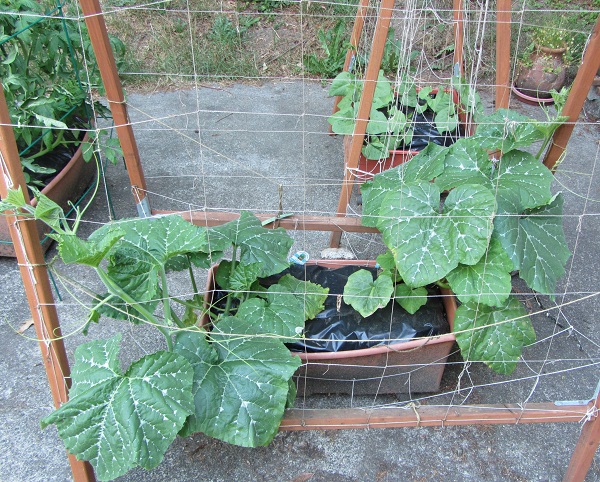
Cucumbers: 1 box, 4 plants, 34.6 pounds. We grew “Marketmore” cucumber plants. The cucumbers started early and stayed productive until late. This was a relatively good year for “attractive and straight” fruit too.

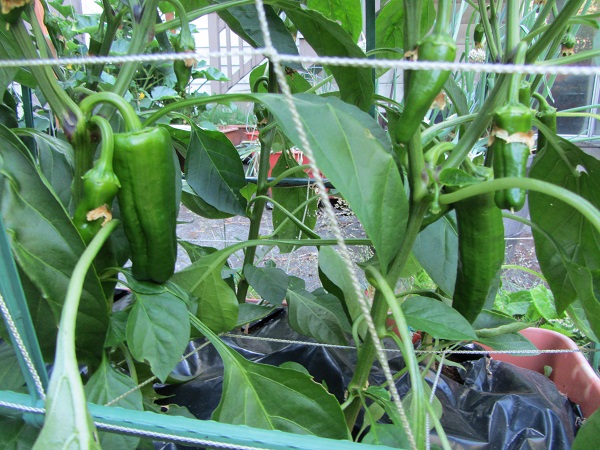
Carmen Peppers: 2 boxes, 12 plants, 16.0 pounds. We located the peppers in a relatively sunny/premium location. The plants grew taller than usual and we had fewer problems with bugs and most everything ripened. The basil is not getting its spot back.

Tromboncino Zucchini: 1 box, 2 plants, 18.6 pounds. It was a solid year for the zucchini as well. Mid-season we got this:

I think the hand pollinating helped (again). An old toothbrush is now a permanent part of the gardening tool kit.

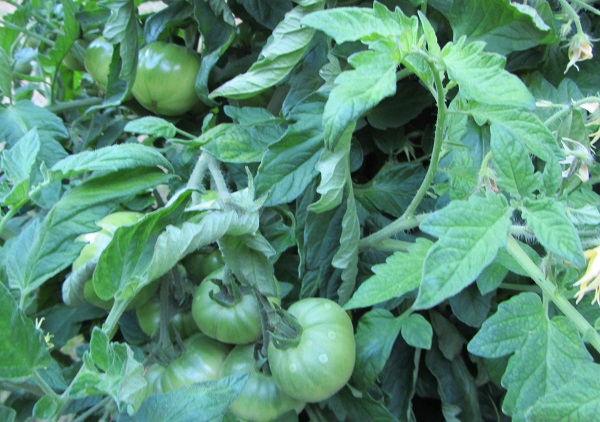
Black Krim / Carbon Tomatoes: 1.5 boxes, 3 plants, 28.5 pounds. The three plants mostly intermingled and it wasn’t worth figuring out which was which. We grew two Black Krim but one of them didn’t do well at all and was dead by mid-September. I have no idea what caused it so hopefully it was just rough handling. Ten pounds per plant is fine, and the Black Krims tasted amazing, as usual.

Tigeralla Tomato: .5 box, 1 plant, 12.2 pounds. The Tigerally did “fine”. They ripened fairly late. It’s fun to have colorful tomatoes though this year they were pretty “meh”.

Oregon Spring Tomato: 1 box, 2 plants, 20.7 pounds. The Oregon Springs were a top performer again. They started early and the taste and yield were both very good. Highly recommended.

Roma Tomato: 2 boxes, 4 plants, 42.5 pounds. Romas always yield well for us, and even the unripe fruits all ripened after harvest.

We also grew four basil plants in one box in the middle of the garden. They produced way more than we could consume so the neighbors got a lot of our excess basil. The EarthBox directions call for six plants per box, but I think the yield winds up being about the same with a little more space per plant.

Finally, we had one box of 20 Fortex (pole) beans, yielding fistfuls of pods all summer.

Considering we didn’t pay a ton of attention to the garden it went pretty well.

Container Garden Update — September 24, 2023

The annual Seattle rains started yesterday afternoon. I wanted to stay relatively dry while harvesting, so I harvested all the Really Ripe Things last weekend and The Rest Of It yesterday morning.

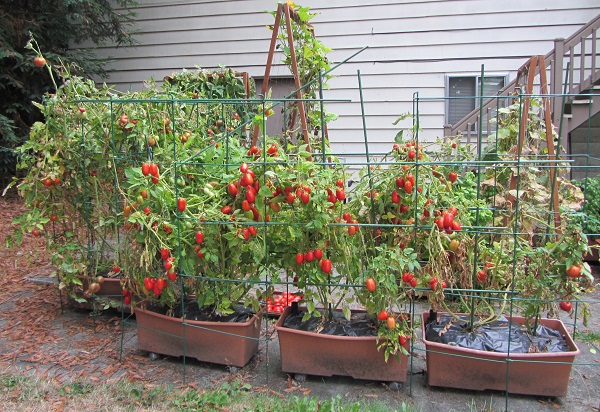
A front view prior to last weekend’s harvest:

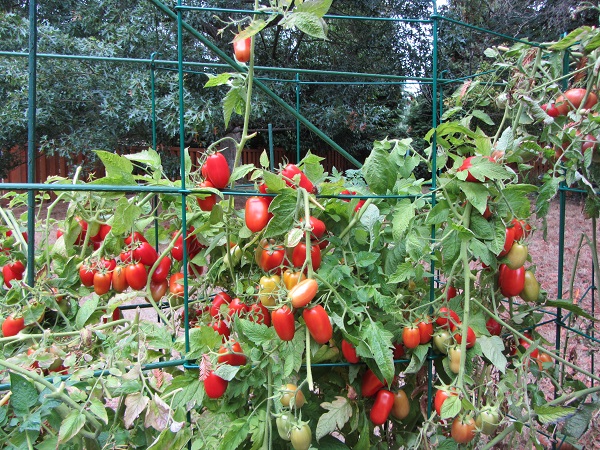
From the house side “back” of the garden:

The remaining peppers:

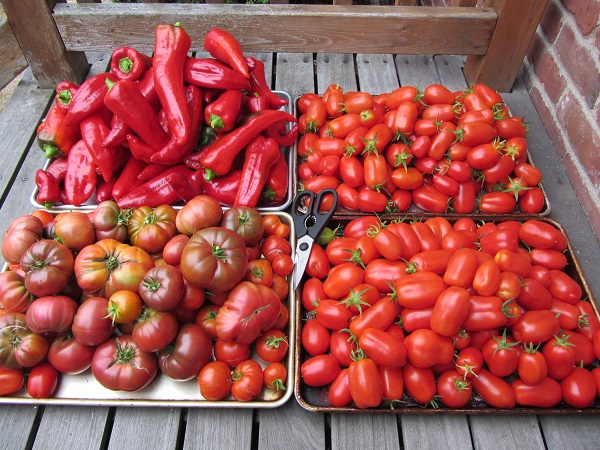
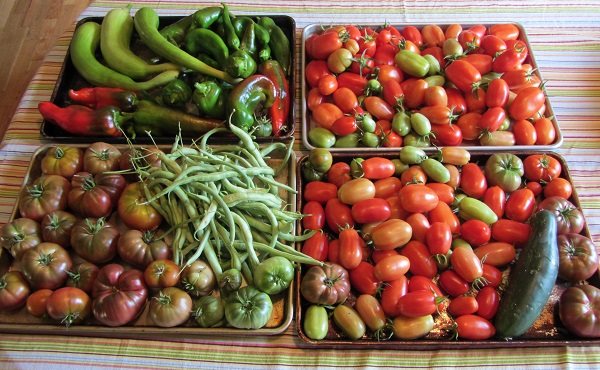
The “Ripe” harvest. It’s 9 pounds of peppers and 37 pounds of tomatoes, mostly Romas (20 pounds) and Black Krim (12 pounds):

Yesterday’s “Rest Of It Harvest”:

As for the under-ripe tomatoes — we’ve had good success the last few years by spreading them out on cooling racks near a heater vent in the kitchen and letting them ripen for 2-3 weeks. I think it’s the combination of air-flow and warmth that does the trick.

Finally, one straggler that I found doing the final clean-up:

It’s a nice discovered reward at the end of the process.

Container Garden Update — August 29,2023

We’ve had a long series of days mostly in the 70’s punctuated by a fairly warm weekend in the 80’s. The cucumbers and zucchini are basically “done”. The tomatoes plants got a big thinning and haircut — the indeterminants got topped, and the centers (side-branches) of all of the tomato plants were aggressively pruned. Any blooms or non-mature tomato fruits were trimmed off, there’s not enough time left in the growing season for those.

We gave the peppers the prime spot in the garden this year. It feels like the plants grew bigger than in most years, the yield will be greater and more peppers ripened, and we lost almost none to bugs and critters. Usually it’s much more “congested” than this, which may related to the bug attacks. We harvested around a third of the peppers after this picture:

The harvest:

The basil was kicked from the prime spot and moved to the center of the garden, where it’s done great. One of the six plants flopped over and was gifted around the neighborhood a few weeks ago. The other plants just filled in the space:

A “before” picture from inside the garden looking at the Krims and Tigerella:

Another “before” picture. (front L-R) – Roma, Roma, Oregon Spring tomato, 2 boxes of Carmen peppers:

After the haircut:

Starting this week is when we’ll see the tomato harvest really ramp up. We can use the upcoming long weekend partly for making tomato sauce for the freezer.

The weather has gone from sunny and 80 degrees to now a hard rain and 65 degrees. I’m guessing when the rain passes we’ll have some tomatoes to pick up off the ground, but still, it’s good we got the bulk of the pruning out of the way.

Container Garden Update — August 2, 2023. The Zucchini

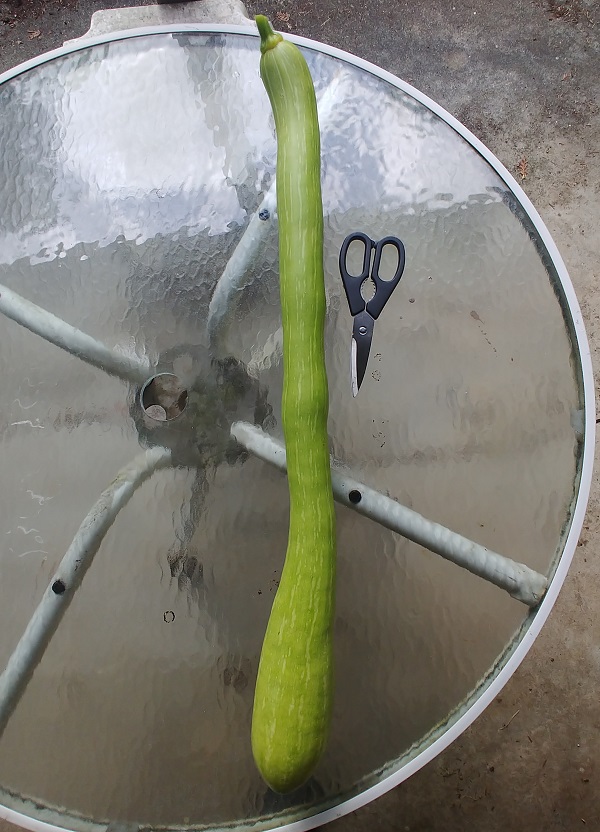
Here in the Seattle area It’s been a dry summer and it’s also been relatively mild. The garden is doing fine, maybe developing a little more slowly than usual. We’ve harvested around 15 pounds of cucumbers, some early Oregon Spring tomatoes, Fortex (haricot vert / pole) beans, basil, and a few Tromboncino zucchini, including this one:

For reference, the table is 36″ in diameter. The fruit is 33″ long and weighs 4.3 pounds. I’m pretty sure this is a record for us. It may be that if left on the vine it would have gotten even larger, but it also might have started the transition to “yellow winter” squash, and that’s not what we had in mind.

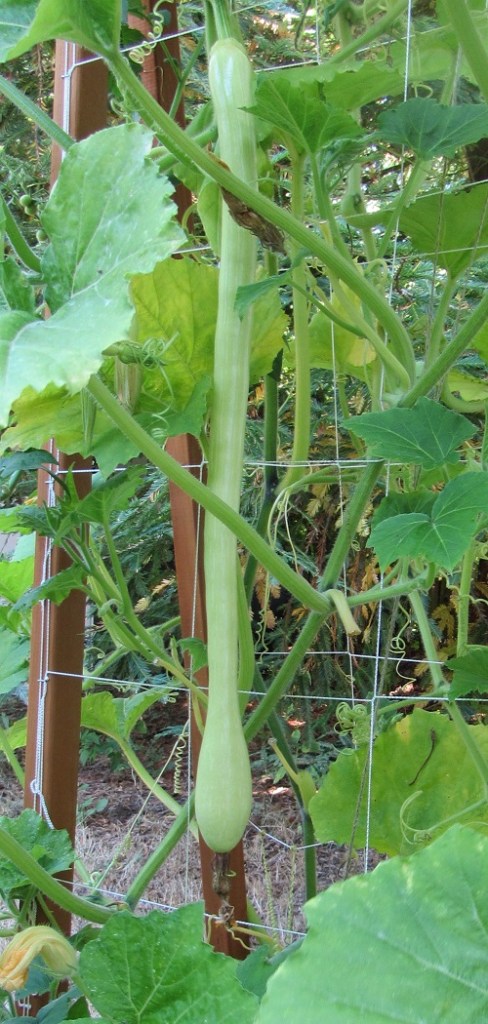
I wasn’t able to get a photogenic picture of it on the vine. The next picture shows what that looks like. (2014 photograph):

We like to grow the Tromboncino variety for a few reasons: We like the firm texture of the flesh. The seeds are all in the ball at the end, the rest of the zucchini is totally usable. The plants themselves are relatively mildew resistant, and because they can be trellised they work well with the fact that we’re gardening on a concrete patio.

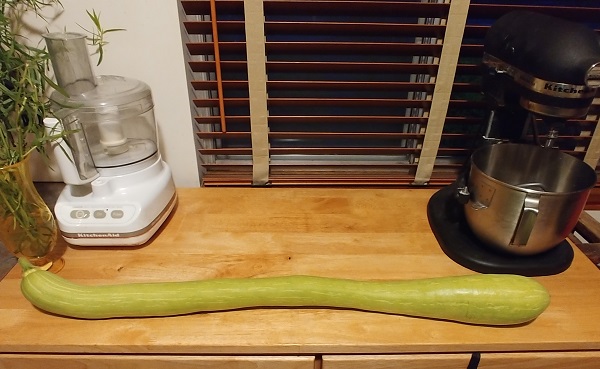
Another picture of the “new” zucchini for fun, this time posing on a 4′ long table with the kitchen appliances and a vase full of tarragon:

The next post will have pictures things besides Tromboncino. By mid-August The Ripening should be in full swing.

Container Garden Update — July 2, 2023

It’s been a very mild summer. When I compare notes with people it feels like our garden is behind most everyone. The flip side to that is it’s the start of July and the lettuces and cool season herbs are still doing well.
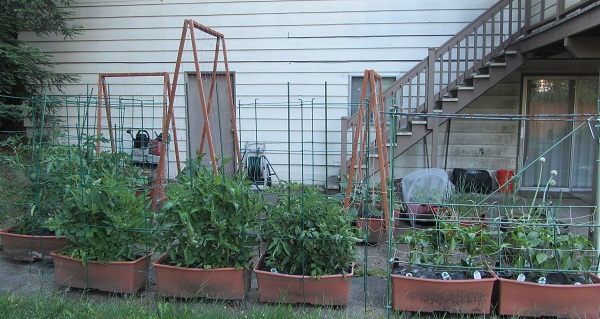
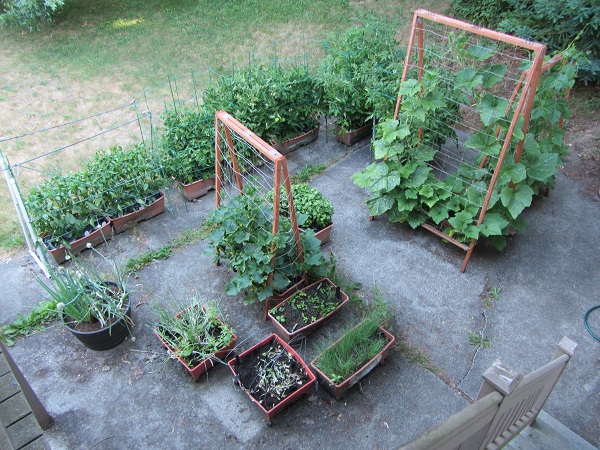
A picture with a different angle, from the deck:

An overview from the front:

Something happened to the asparagus between last year and this year. About a third of the crowns either died off or (optimistically but unlikely) refused to come up. I don’t have an explanation for it — I’ve been adding compost every year and I didn’t do anything differently that I can think of. I may leave it alone next year and see what happens.

Instead of sad asparagus, here’s the first cucumber. Or the second, I didn’t see the one hiding on the right when I took the picture:

Romaine lettuce – “Slow Bolt Mix” from Territorial seed. I had the date that I seeded these written on a white board. The white board has since been erased by someone being helpful. I think it’s been 3-4 weeks? Bird netting to keep the squirrels from digging:

The basil. We originally started with one EarthBox and the basil did so well that it turned into this garden post many years later:

The Fortex beans:

The Tromboncino zucchini. We’ve harvested two decent-sized specimens so far. Pollinating the flowers with a toothbrush may be helping:

The indeterminant tomatoes (Black Krim and others) and the determinates to the left (Oregon Spring and Roma):

A closeup of the Oregon Spring tomatoes, which are always the earliest and most prolific. There are more than a few hiding:

The Carmen peppers:

Looking ahead – hopefully the weather does historically normal July / August things around here and the garden picks up. The trees around the property have grown to the point that we’re never going to see the harvests that when we first started gardening, but we should still be able to freeze plenty of veg to carry us through the winter months.

Container Garden Update — June 4, 2023

A few pictures of the garden in early June. North of Seattle that means that we’re still a month or more away from the first real harvests.

The first picture is an overview from the “front” , facing east.

Front Left – tomatoes (indeterminates are on the north/left, determinates in the front).

Front Right – Carmen peppers.

Back Left – Fortex beans and Tromboncino zuchinni.

Back Center – basil (hiding) and cucumber trellis.

Facing north:

Close-up of the Tromboncino zucchini. The Fortex beans are in the background:

The Marketmore cucumbers:

The Joi Choi. Planted on April 6, the bigger plants are ready to harvest. The tulle over the wire hoops seems to have kept the bugs out this time:

The frilly cilantro and dill that was planted on March 20. They’re sitting in a place where they get morning sun, then dappled sun after that. I think they’re going to bolt within the next two weeks regardless of care:

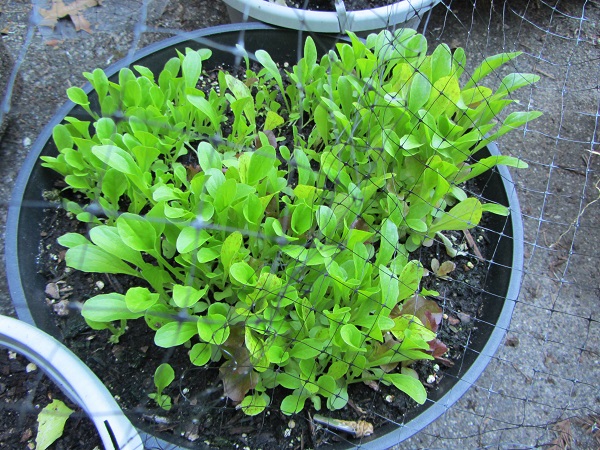
One nice thing about planting in pots is that they can be moved around depending upon the season and the demands of what’s been planted. The next picture has young leaf lettuce that is covered by bird netting. We have lots of squirrels and they’ll destroy any seedlings that aren’t protected from digging:

I’m still getting the hang of succession planting. I think I’m always waiting too long between plantings, and I try to start outdoors when it’s still cold and the cold nearly stops any growth or germination. This year I tried planting lettuce outside in early March and the it didn’t germinate at all, though that could have been because the seeds were a few years old. I think that I may need to start in February/March indoors, then move that group out into the cold frame in a “warm” spot, then continue with a new group every two weeks through April.

It sounds good in theory anyway.