The Slugging Houston Astros

By Blaidd Drwg

How bad did it get for the Mariners Tuesday night? Well they lost to Houston 16-9:  This is the  same Astros team that had not won since opening day and in their previous 7 games racked up these overwhelming totals:

Runs – 17
Home Runs – 2
Walks – 10
Hits – 46

So of course, Tuesday they hang 16 Runs, 5 Home Runs, 6 Walks and 22 Hits on Mariners pitchers. I have an upcoming post on just how bad Houston actually is, so check that out tomorrow.

The M’s also drew a stellar 10,700 for a game that was played on a nice evening, which was right about what I figured they would draw for the game, although I am sure that the number of people who showed up was far less.

In the meantime, I think that young Brandon Mauer may have just pitched himself back to Tacoma, as he gave up 6 runs in just 2/3 of an inning in his second start. After sporting a nifty 1.50 ERA during spring training, he now has an ugly 16.20 ERA in real games. This is why I put no faith in spring training numbers. He is 23, so I think it is time to send him down and bring someone else up before his confidence is completely destroyed. My guess is that Jeremy Bonderman is called up to fill the spot until May when we see Danny Hultzen make his debut.

Tourney Wrapup

by A.J. Coltrane

Before the NCAA Tournament I thought it would be fun to get a few people, give them $100 in Monopoly money, and have a blind bid on the tournament teams. The entry fee was 1 “twinkie” per person. The high bidder on the team that won the tournament would receive 3 twinkies, and the 2nd highest bidder would break even and gets his/her twinkie back.

I thought it would be an interesting experiment in game theory — do you put all of your money on a big favorite? There’s a very real possibility that everyone else will want to do that too, so you’d better bid a lot or risk wasting your investment. Alternately you could spread your money around, but what would be the minimum to “claim” each team?

As an added twist, it was possible to bid on “The Field”. “The Field” was defined as every team “leftover” that nobody had expressly bid upon. So — do you bid a lot on The Field, or do you value certain teams enough to put a nominal amount of money on them and hope you don’t get outbid?

The Outcome Of The Bidding:

Team CW BD AJC AS Total Result
Louisville 30 30 12 72 Win Champ
Ohio St 20 10 6 20 56 Elite 8
Georgetown 20 10 20 50 1st Round
Florida 20 10 16 46 Elite 8
Kansas 20 22 42 Sweet 16
The Field 10 10 2 20 42 Final Four
Duke 16 20 36 Elite 8
Indiana 10 12 22 Sweet 16
Miami 2 20 22 Sweet 16
Michigan 2 2 Champ Game
Michigan St 2 2 Sweet 16
Syracuse 2 2 Final Four
Wisconsin 2 2 1st Round
Gonzaga 2 2 Round of 32
Pittsburgh 2 2 1st Round

I [AJC] went with the strategy of trying to get as many teams as possible. I feel like I did pretty well for myself — I “won” Kansas, Indiana, Michigan, Michigan State, Syracuse, Wisconsin, Gonzaga, and Pittsburgh. If Florida, Duke, or Miami won the tournament I’d still break even. Overall it represented two #1 seeds plus a bunch of good quality to back it up. That “quality” wound up being half of the Final Four teams (Michigan and Syracuse.)

But what was I thinking with Pittsburgh? Bleh.. at least they were cheap.

Ultimately my strategy didn’t work out, of course. The #1 overall seed in the tournament was Louisville, and they did indeed win it all. (Though I was feeling pretty smart when Michigan was up 12 in the first half of he championship game.) Louisville was the team that we bid the most upon in total, and there’s definitely a good correlation between where we chose to invest and how wells the teams actually fared. The biggest “overperformers” were Michigan and Syracuse, while Georgetown was the biggest letdown.

Anyhow, I had fun with it. Hopefully somebody will want to try it again next year.

Beer of the Week: Stone Collaboration Saison Du BUFF

By Iron Chef Leftovers

Collaboration beers can be fun and produce some interesting stuff. Stone has been running a collaboration series for a couple of years now working with brewers from around the world to produce some interesting beers. One of the first ones from this series that I tried was the Saison Du BUFF, collaboration between Stone, Victory out of Pennsylvania and Dogfish Head out of Delaware. This bottle was from the second brewing and was a 12 oz. container which ran about $4.


From the Stone website:

Appearance: This beer pours a beautiful pale gold with a white head of foam.
Aroma: Pronounced herbal characters, a wonderful blend of sage, lemon thyme, rosemary. It has some very pleasant citrusy notes, perhaps from the lemon thyme and the Citra dry-hop. And the Belgian yeast strain contributes low level banana esters and a hint of clove.
Taste: The taste starts with the herbal blend in the forefront, and then is backed by a clean malt balance and a very nice citrus and tropical fruit-influenced finish. The finish has a substantial, but balanced hop bitterness and hop flavor. It is a very dry beer, and has a nice refreshing quality that makes it wonderful for this time of year.
Overall: This is the second time that Greg, Sam, and Bill have brewed this beer here at Stone Brewing Co., and this time we were able to get all the herbs from Stone Farms! How cool is it to brew with ingredients from your own farm? Very, very cool.

Stats: 7.7% abv, 52 IBUs

Malts: Pale Malt, Pilsner Malt, Wheat Malt, Flaked Rye
Hops: Centennial & Citra


BUFF pours hazy yellow in color with a white head. Lots of lemon and herbs on the nose with hints of grain and yeast – basically this beer smells like a saison should.  The initial taste starts with notes of lemon followed by a medley of herbs and a hint of hops. The finish is dry and lacking direction – some of the time it is green and unbalanced and other times it is even with a distinct progression through the herbs. It is a beer that relies heavily on the olfactory senses as well as taste and it reminds me of a liquid herb garden. The alcohol is there but it is hardly noticeable, I just wish the flavors from the herbs were more consistent throughout the beer.

Saison Du BUFF was interesting but uneven and definitely not a beer that someone who was a casual beer drinker would remotely enjoy. I had higher expectations for this beer and was unfortunately let down.

Saison du BUFF lifts into your fridge with a somewhat disappointing 2 Thymus citriodorus out of 5.

The Art of Complaining

By Iron Chef Leftovers

Former Top Cheftestant and all around douchebag John Tesar recently tweeted the following:

Why do people wait in line for hours for BBQ and then go to a rest. and then complain after waiting 10 minutes for a table ?

I think that the difference is that going out to certain BBQ places require advanced planning and waiting in line for 2 or 3 hours is an expectation whereas going out to a restaurant is really much more about instant gratification, although I have to admit, I once did wait 3 hours for a seat at a restaurant. Was it worth it, hell yes, but I am also a really patient person when it comes to things like that.

I really don’t like Tesar, but he has a point, although it depends on the circumstances. These are my rules for complaining, not anyone else’s:

If I have a reservation, my expectation is that I should be seated within 15 – 20 minutes of my reservation time, especially if the restaurant has a policy that they will give my table away if I am not there within 15 minutes of my reservation time. Look, I get it that sometimes there are circumstances that will cause a delay (and I am fine with that if you explain it to me when I walk in), but if I am waiting for 45 minutes with a reservation, you are definitely not doing something right and I am going to complain.

If I don’t have a reservation and the place doesn’t take reservations and I wait more than 15 minutes for a table and I see empty tables that are set for service, I am also going to complain. I sometimes wonder if restaurants realize how much business they are losing in this scenario. Ever y minute that I am standing in the waiting area means you are not producing revenue – putting a butt in the empty seat means drink and food orders coming in. Yes, you may be slammed, but if I am sitting down, I am probably going to order that second beer or another bottle of wine while I am waiting, an order that I probably would not have placed on a normal dining night and one that I am definitely not going to place in the waiting area.

If I don’t have a reservation and the place does take reservations, I think I have no right to complain about not being seated in any timeframe. The only time I would complain is if someone who walked-in after me with the same number of people got seated ahead of me and they obviously did not have a reservation.

Beer of the Week: Laughing Dog Pure Breed Citra American Pale Ale

By Iron Chef Leftovers

I really like the concept of a single hop beer. The great thing about them is that you really get to understand where certain hop flavors come from in the beers which use a combination of hops. When I found out that Laughing Dog Brewing out of Idaho was doing a single hop beer, well, I had to try it. I consider Laughing Dog one of the more underrated breweries in the US and I think they do particularly well with hops. The Pure Breed Citra American Pale Ale, their first entry into the single hop realm, came to me in a 22oz. bottle which ran about $5.

The description from the Laughing Dog website:

The first in our Purebred series of single hop A.P.A.s showcases the hop variety Citra. These are used for everything from bittering and flavor to aroma. The soft bitterness of the Citra hop makes this an extremely drinkable beer.
ABV 6.14%, IBU 67.8

purebredGolden yellow in color and lots of carbonation on a slightly off white head. Strong notes of citrus dance around the nose with just a hint of grain lying in wait in the background. The first sip slaps you in the face – a very brief and pleasant bitterness quickly yield to a hop monster – lots of grapefruit and citrus peel, which lingers for a good few seconds before giving way to a light grain backbone and finally transitioning to a slight bitterness with hints of green hops in a long and pleasant fade. As the beer warms slightly, notes of peach show up on the nose and palate with the citrus, giving just a tease of sweetness before fading into the hop bitterness.

This is a fine beer which showcases the citrus aspects of citra hops in the best possible way. Grab your pooch and head on over to your local bottle shop and get yourself a bottle or three of this great beer.

Laughing Dog Pure Breed Citra American Pale Ale grabs 4 Best in Shows out of 5.

Attacking the Zone

By Blaidd Drwg

I have seen goalies play up late in the game to try to give their teams an advantage on the attack when they are behind, but this is brilliant.

The scene is set in the offensive end of the field and the attacking team’s goalie (the one in the yellow jersey) is near the attacking goal. What happens next is a brilliant way to recover.

The full story can be found here.

What Will Happen Next?

by A.J. Coltrane

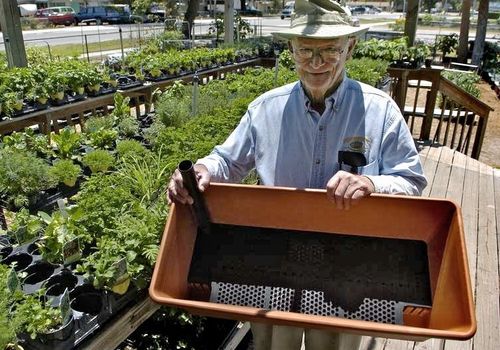
The herb garden that came with the back yard has proven to be in a far from ideal location. We’ve had good success with Earthboxes in the past, so yesterday I ordered 10 more direct from the company, to go with the two that we already have. With shipping these came out to $31 each. (Retail on the Earthboxes with casters is about $54 —  foregoing the casters and buying direct saves around $20 per unit.)

The inventor.
The inventor.

The nice thing about the Earthboxes is that they’re basically self-watering. There’s a reservior at the bottom of the box, and the water is drawn up to the plants by capillary action. Basil seems to love it, though I’ve killed it every time I’ve tried it any other way.

The plan is to “terraform” a very sunny slope near the house and group the Earthboxes on the former slope. (It’s steep enough that it’s kind of a hassle to mow anyway, so… two birds with one stone!) I’m leaning towards leaving the slope terraced, rather than leveling the whole thing out, which leads to the next point…

I also plan to construct or purchase some sort of a low-slung greenhouse/ tall cold frame to (hopefully) extend the growing season and increase yield, though a terraced slope is going to mean either constructing a custom greenhouse or figuring out some other funky solution. Once I have the greenhouse I can start throwing more money at cool techie stuff like this.

So…. what to plant? Recommended:

2 per box:  Artichokes, Eggplants, Tomatoes, Zucchini

4 per box:  Cucumbers, Melons, Squash (vining)

6 per box:  Bell Peppers, Broccoli, Brussels Sprouts, Cabbage, Cauliflower, Celery, Chard, Greens, Herbs, Hot Peppers, Strawberries

8 per box:  Beans (bush), Flowers, Kohlrabi, Leeks, Lettuce, Okra, Salad Greens

10 per box:  Beets, Onions, Spinach, Turnips

12 per box:  Beans (pole), Carrots, Corn, Garlic, Peas, Radishes

I’m figuring at least four tomato plants (two boxes) and at least 6-12 basil (1-2 more boxes).

Other than that…. suggestions?

Beer of the Week: Reuben's Brews Doubloon's India Wheat Ale

By Iron Chef Leftovers

Yay! Another Reuben’s beer review! I admit it, I love their beer and with the ever changing tap list they have and the 5 minute walk to the brewery from the Iron Chef abode, it makes for an easy place to review their beers. One of their recent new additions was their Doubloon’s India Wheat Ale. Clocking in at 50 IBU and 6.9% ABV, I had to give it a shot.

This beer is golden in color with a nice grain and citrus nose – lots of wheat and grapefruit with hints of malt. The initial sip delivers a pleasant grain shot, yielding to grapefruit and citrus peel before finishing long and slightly bitter. Being a wheat beer, it was drier than I expected (think more like a kolsh than a wheat beer in terms of sweetness, not flavor) and showed more hop character than I expected given the IBU. Despite its higher alcohol content, the beer goes down easily and well-balanced, so it could sneak up on you if you are not careful, especially if you find yourself having 2 or 3. This beer is different than most hoppy beers on the market and is a nice change of pace if you are looking for something interesting with a great deal of hop character, but don’t want to blow out your palate with a giant hop bomb.

Doubloon’s IWA from Reuben’s eases into port on a score of 4 Spanish Galleons out of 5.

Beer of the Week: Reuben’s Brews Doubloon’s India Wheat Ale

By Iron Chef Leftovers

Yay! Another Reuben’s beer review! I admit it, I love their beer and with the ever changing tap list they have and the 5 minute walk to the brewery from the Iron Chef abode, it makes for an easy place to review their beers. One of their recent new additions was their Doubloon’s India Wheat Ale. Clocking in at 50 IBU and 6.9% ABV, I had to give it a shot.

This beer is golden in color with a nice grain and citrus nose – lots of wheat and grapefruit with hints of malt. The initial sip delivers a pleasant grain shot, yielding to grapefruit and citrus peel before finishing long and slightly bitter. Being a wheat beer, it was drier than I expected (think more like a kolsh than a wheat beer in terms of sweetness, not flavor) and showed more hop character than I expected given the IBU. Despite its higher alcohol content, the beer goes down easily and well-balanced, so it could sneak up on you if you are not careful, especially if you find yourself having 2 or 3. This beer is different than most hoppy beers on the market and is a nice change of pace if you are looking for something interesting with a great deal of hop character, but don’t want to blow out your palate with a giant hop bomb.

Doubloon’s IWA from Reuben’s eases into port on a score of 4 Spanish Galleons out of 5.

This Little Piggy Went to Market…

By Iron Chef Leftovers

…and this little piggy came home, with me…

Thanks to the folks at Sea Breeze Farm, I was able to try something that I have always wanted to – roast a pig’s head. This is more of the FYI post rather than the recipe, since that is a much more involved writing process, so I will post the actual details of that later. They were kind enough to split it in half, leave the skin on (which is not easy to find) and even gave me the tongue, which I am looking forward to using at a later date. This meat itself was delicious and was probably one of the 5 best pork dishes I have eaten.

A few things I learned from doing this:

  • If the food is looking at me, I need to name it, so I named it Pig after the character from Pearls Before Swine (real original, I know).
  • A blowtorch is not the best way to remove any remaining hairs from the pig – buy a disposable razor.
  • I am not used to roasting pieces of meat that are terribly uneven and I need to work on the technique to better suit my oven.
  • When you don’t have a roasting pan that will fit something properly, heavy duty foil wrap and a baking sheet work really well.
  • Trying to carve a pig’s head with a knife is an interesting proposition – you really need to get a feel for where the bones are.
  • It is easier to tear the meat off the head rather than carving it – there is meat in places that you will never be able to get to with a knife.
  • Glazed pork skin has the consistency of rock candy and is sweet, salty, crunchy and fatty – basically the best thing you will ever eat.
  • The meat and fat under glazed pork skin remains volcanic for long periods of time.
  • A friend suggests that half a pig’s head will feed 2-3 people for 6 lbs.; mine was just over 7 lbs. and I could have fed at least 5-6.
  • There is less meat than you would expect, but there is a healthy amount of fat and fat makes you fuller quicker, so you eat less than you do with lean meats.
  • The snout and ears are still two of my favorites, but there is something special about eating the jowl and cheek.

More info and the happy pictures after the jump.

Continue reading “This Little Piggy Went to Market…”