The 2026 Garden

We cut back on the 2026 garden for a variety of reasons. One of the reasons is the yield is declining every year.

Mid-morning picture taken before the sun has come over the house, facing west.

That yellow tree was planted shortly after we moved in. The garden is in the back of the house facing west, and the sun sets through that gap between the trees, mostly on to the left, which is south. Very conservatively I think it’s reduced the amount of direct sunlight on the garden by at least 30%.

For our 2025 garden we’re growing basil, Oregon Spring tomatoes, and cucumbers. We just harvested the first ripe tomatoes. The basil has been doing fine. We’ve also gotten a decent numbers of cucumbers from two plants, though the cucumbers are now mostly done for the year. To be fair, we started a little late this year, so that could be contributing to the somewhat late harvest.

Going forward, I think we’ll continue with a more limited garden, at least so long as we eat the output. If I get excited or have extra time available maybe we’ll try growing something in the front of the house on a limited scale — there’s not much space without tearing up the yard. Alternately we’ll go all-in, pull out a few shrubs, and tuck a long skinny greenhouse up against the front of the house.

On the other hand — we have a big yard for suburbia, so as I age I may also decide the yard is plenty of work as is. One of our older neighbors moved out a few years ago and he said at the time that the yard and house was too much for him to maintain. We’ll see how it goes.
2024 Container Garden Recap

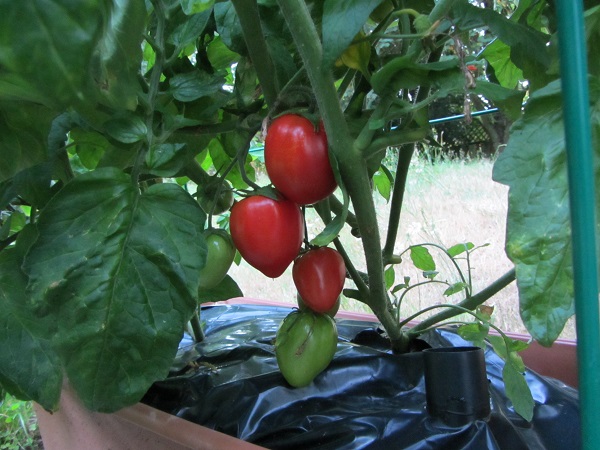
2024 was our worst year ever by total yield or by EarthBox by quite a bit. This year we grew four boxes of tomatoes (8 plants), one box of cucumbers (4 plants), one split box of zucchini and tomatillos (one of each), and one box of basil (4 plants).

Typically we get around 20 pounds per tomato plant — around 40 pounds per EarthBox. Not this year:

One box (four plants) Cucumbers: 27.9 pounds. Not a terrible year for cucumbers. They maintained good shape and taste deep into the harvest season.

One box (two plants) Black Krim Tomatoes: 14.6 pounds

One box (two plants) Oregon Spring Tomatoes: 12.6 pounds

Two boxes (four plants) Roma Tomatoes: 22.2 pounds

1/2 box (1 plant) Zucchini: 6.7 pounds

1/2 box (1 plant) Tomatillo: 3.3 pounds

87.3 pounds total.

We also grew one box of basil, and as usual the box produced way more than we could consume. At the end of every season it gets distributed around the neighborhood before the cold damages it too much.

We’re in the Seattle area. Almost everyone I talked to said they were having a bad year for tomatoes, so I don’t think it was just us. We did have one Roma die outright, which is the first tomato plant we’ve had die in over ten years of gardening. On average the yield this year was about 1/3rd of what we’ve seen historically.

The other “problem” was that we bought the last zucchini plant labeled as Tromboncino from the nursery. It turned out it was a “regular” zucchini plant, so it flopped all over the Tomatillo, rather than vining and staying out of the way like it was supposed to. There were no winners in that competition for space and light.

The flip side is 80 pounds of produce is a lot of stuff. We processed the tomatoes into sauce and froze dinner-sized portions. Both the downstairs chest freezer and the upstairs freezer are packed solid with vegetables.

Going forward, it may be we need to cycle out potting soil and replace it with fresh. It may also be that 2024 is closer to the new normal as the large trees around our lot continue to encroach on good sun for the garden.

I think overall it was a combination of relative lack of attention, bad weather, and bad luck (mislabeled pant and the dead tomato plant).

We’ll try again next year.

The Reduced Footprint 2024 Container Garden

In a typical year we have twelve active EarthBoxes. The yield is usually around 250 pounds of produce. We have plenty of frozen vegetables in the freezer, so this year we have seven boxes:

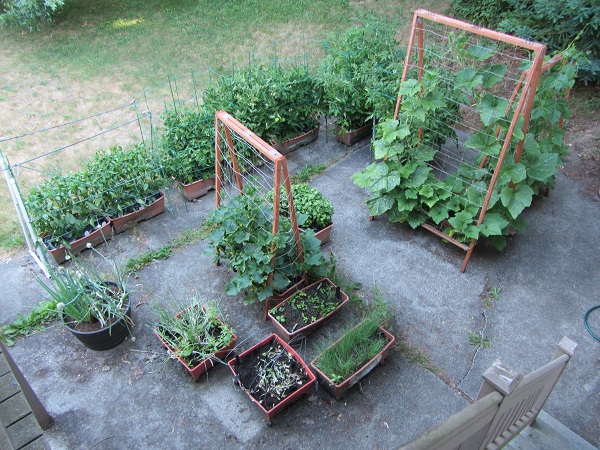
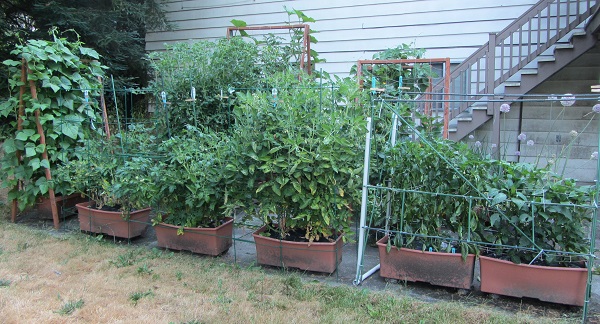
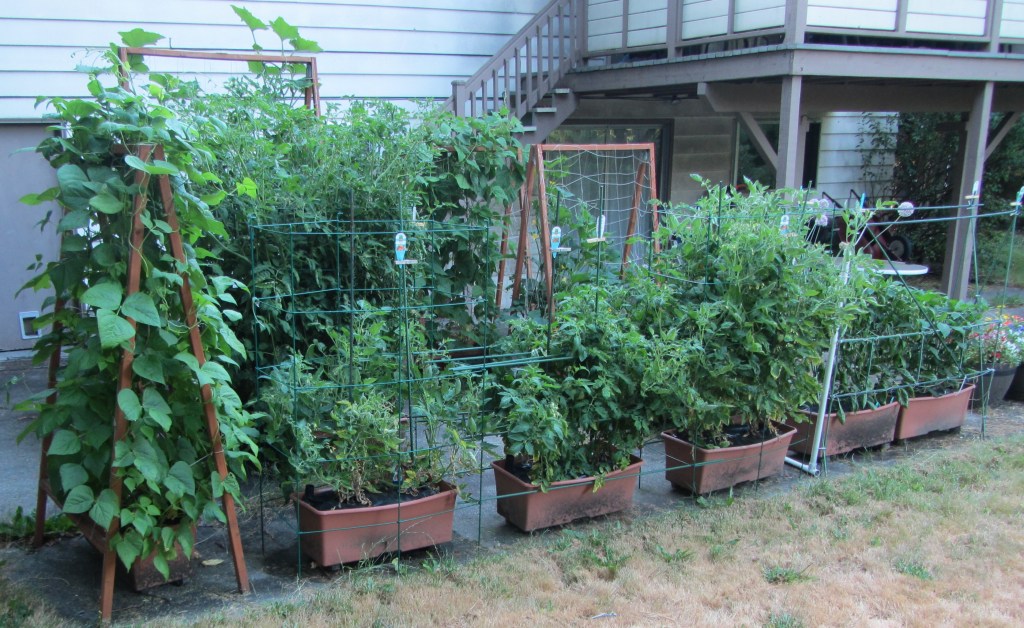
The picture is facing east — the sun is just clearing the house and striking the cages and the tops of the tomato plants.

Front row (L-R): box of two Romas, box of two Romas, box of two Oregon Spring. There’s going to be one more box to the right containing basil — I didn’t like what I saw when I went shopping for basil this morning.

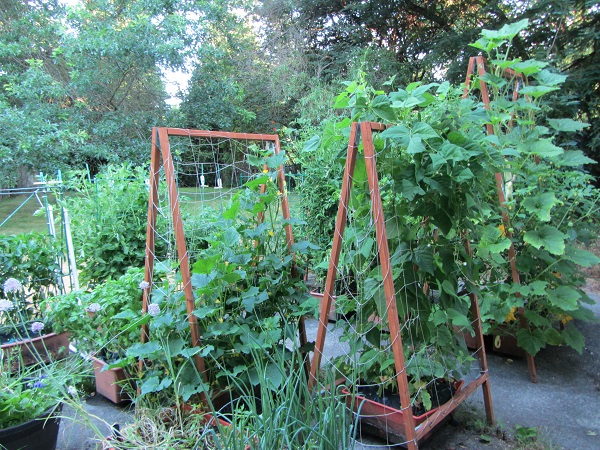
2nd row (L-R): Box of Black Krim tomatoes. Under the right-hand trellis are Marketmore cucumbers.

Back left: A box with one tomatillo (Verde) and one zucchini. We purchased the zucchini as a Tromboncino (we got the last one!) but it now has all the appearances of a “regular” zucchini plant.

North of Seattle it’s been very mild bordering on “too cold for basil”. Hopefully over the next few weeks we see some real growth.

Container Garden Update — September 24, 2023

The annual Seattle rains started yesterday afternoon. I wanted to stay relatively dry while harvesting, so I harvested all the Really Ripe Things last weekend and The Rest Of It yesterday morning.

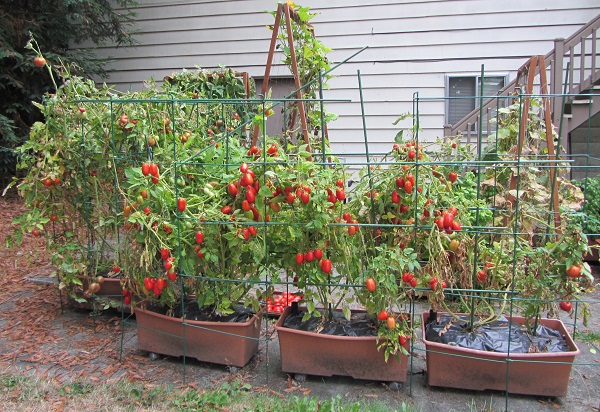
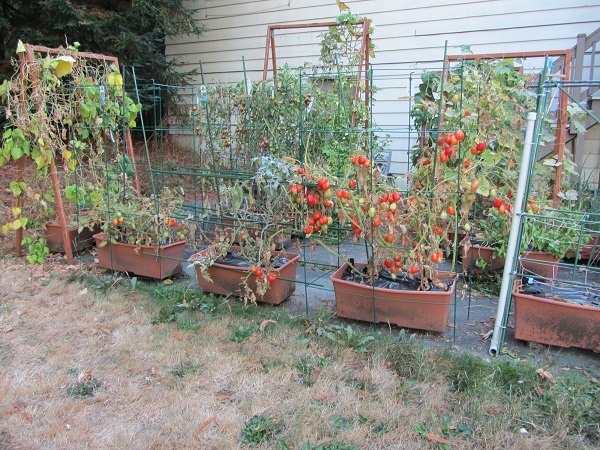
A front view prior to last weekend’s harvest:

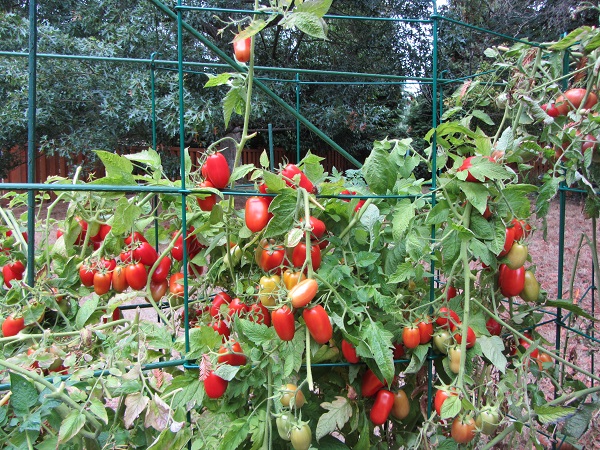
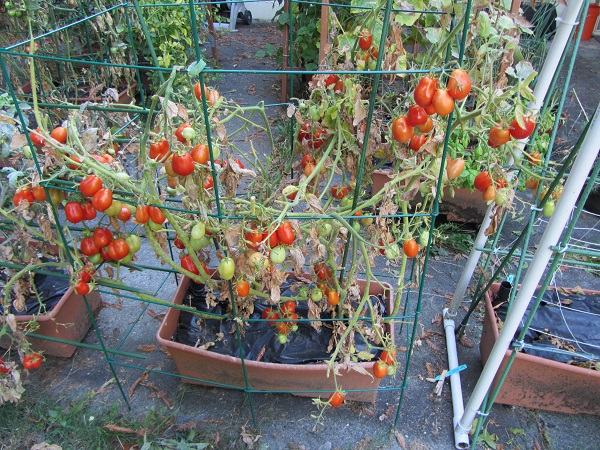
From the house side “back” of the garden:

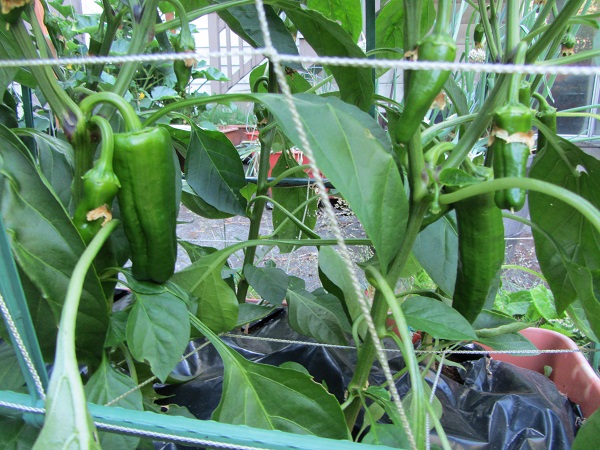
The remaining peppers:

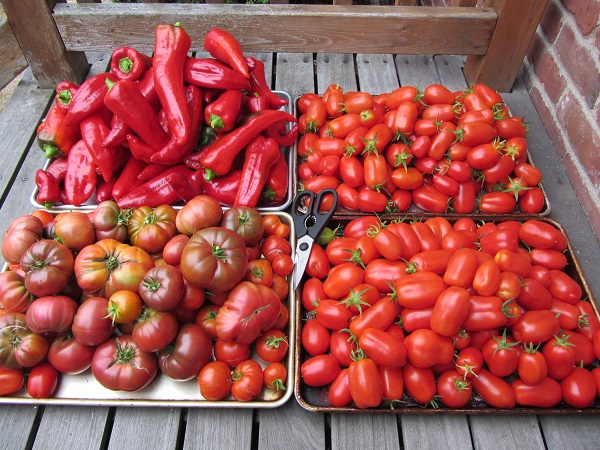
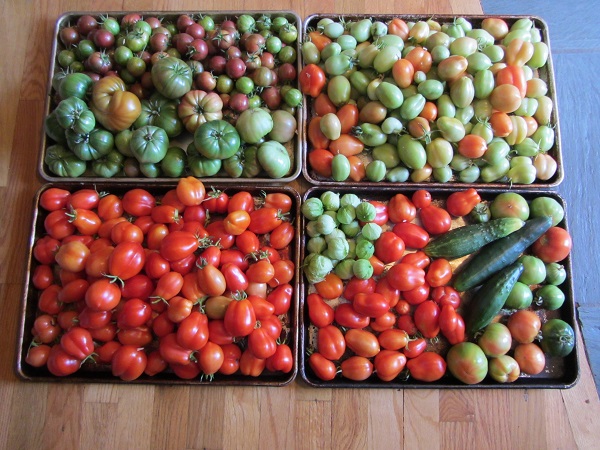
The “Ripe” harvest. It’s 9 pounds of peppers and 37 pounds of tomatoes, mostly Romas (20 pounds) and Black Krim (12 pounds):

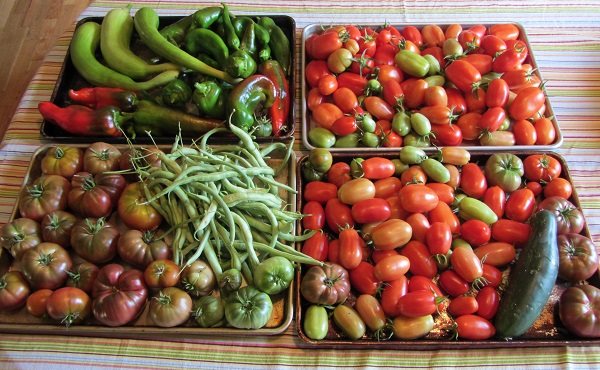
Yesterday’s “Rest Of It Harvest”:

As for the under-ripe tomatoes — we’ve had good success the last few years by spreading them out on cooling racks near a heater vent in the kitchen and letting them ripen for 2-3 weeks. I think it’s the combination of air-flow and warmth that does the trick.

Finally, one straggler that I found doing the final clean-up:

It’s a nice discovered reward at the end of the process.

Container Garden Update — August 2, 2023. The Zucchini

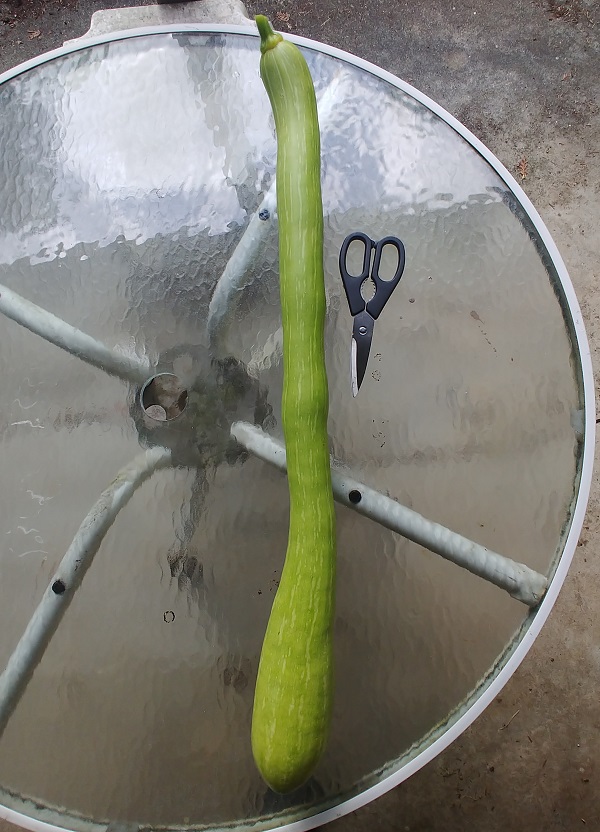
Here in the Seattle area It’s been a dry summer and it’s also been relatively mild. The garden is doing fine, maybe developing a little more slowly than usual. We’ve harvested around 15 pounds of cucumbers, some early Oregon Spring tomatoes, Fortex (haricot vert / pole) beans, basil, and a few Tromboncino zucchini, including this one:

For reference, the table is 36″ in diameter. The fruit is 33″ long and weighs 4.3 pounds. I’m pretty sure this is a record for us. It may be that if left on the vine it would have gotten even larger, but it also might have started the transition to “yellow winter” squash, and that’s not what we had in mind.

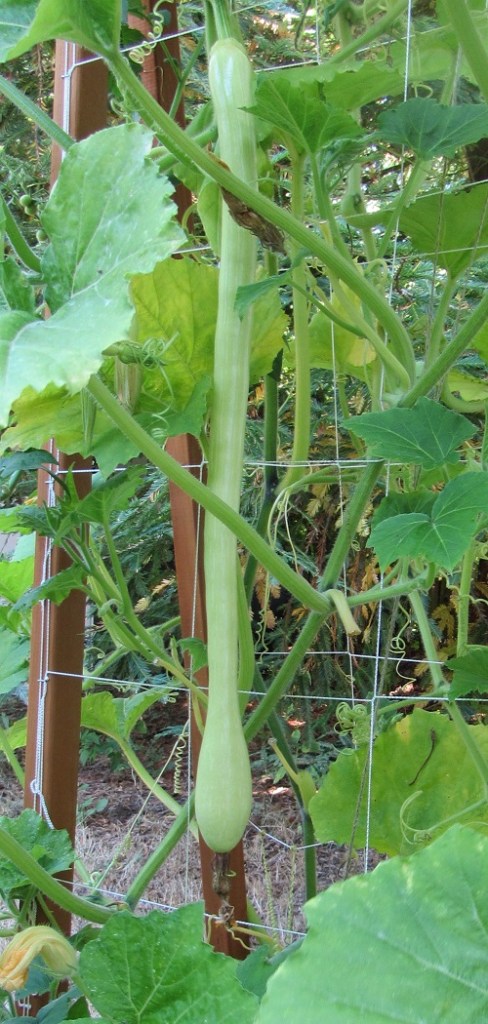
I wasn’t able to get a photogenic picture of it on the vine. The next picture shows what that looks like. (2014 photograph):

We like to grow the Tromboncino variety for a few reasons: We like the firm texture of the flesh. The seeds are all in the ball at the end, the rest of the zucchini is totally usable. The plants themselves are relatively mildew resistant, and because they can be trellised they work well with the fact that we’re gardening on a concrete patio.

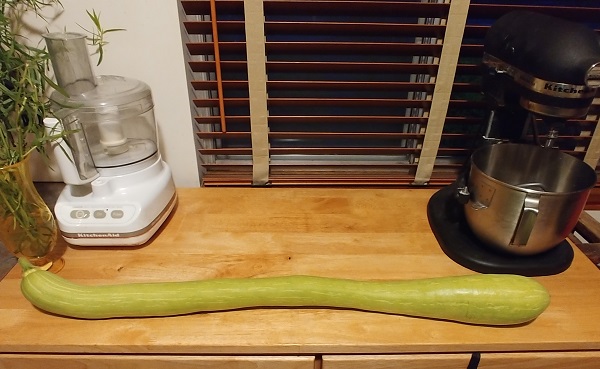
Another picture of the “new” zucchini for fun, this time posing on a 4′ long table with the kitchen appliances and a vase full of tarragon:

The next post will have pictures things besides Tromboncino. By mid-August The Ripening should be in full swing.

Container Garden Update — July 2, 2023

It’s been a very mild summer. When I compare notes with people it feels like our garden is behind most everyone. The flip side to that is it’s the start of July and the lettuces and cool season herbs are still doing well.

A picture with a different angle, from the deck:

An overview from the front:

Something happened to the asparagus between last year and this year. About a third of the crowns either died off or (optimistically but unlikely) refused to come up. I don’t have an explanation for it — I’ve been adding compost every year and I didn’t do anything differently that I can think of. I may leave it alone next year and see what happens.

Instead of sad asparagus, here’s the first cucumber. Or the second, I didn’t see the one hiding on the right when I took the picture:

Romaine lettuce – “Slow Bolt Mix” from Territorial seed. I had the date that I seeded these written on a white board. The white board has since been erased by someone being helpful. I think it’s been 3-4 weeks? Bird netting to keep the squirrels from digging:

The basil. We originally started with one EarthBox and the basil did so well that it turned into this garden post many years later:

The Fortex beans:

The Tromboncino zucchini. We’ve harvested two decent-sized specimens so far. Pollinating the flowers with a toothbrush may be helping:

The indeterminant tomatoes (Black Krim and others) and the determinates to the left (Oregon Spring and Roma):

A closeup of the Oregon Spring tomatoes, which are always the earliest and most prolific. There are more than a few hiding:

The Carmen peppers:

Looking ahead – hopefully the weather does historically normal July / August things around here and the garden picks up. The trees around the property have grown to the point that we’re never going to see the harvests that when we first started gardening, but we should still be able to freeze plenty of veg to carry us through the winter months.

New Seeds For The Garden

The new seeds for 2023:
JOI CHOI × 1
SEED / 1 gram
RED BARON × 1
SEED / 1/2 gram
SIMPSON ELITE LETTUCE × 1
ORGANIC SEED / 1/2 gram
ITALIENISCHER LETTUCE × 1
ORGANIC SEED / 1/2 gram
HEAT TOLERANT LETTUCE MIX × 1
ORGANIC SEED / 4 grams
SWEET BASIL × 1
SEED / 1/2 gram
DILL, DUKAT × 1
SEED / 2 grams
CONFETTI CORIANDER × 1
SEED / 1 gram
CRUISER CORIANDER× 1
SEED / 1 gram

It’s mostly fill-in for what’s been used up over the last few years. Looking at the weights, it’s a lot smaller quantities per variety than we’ve historically purchased. In retrospect it might have been better to buy some larger amounts.

For some other things, we’ve been setting a few aside and drying the pods — Fortex beans, Rattlesnake beans, and Super Sugar Snap peas, and replanting with “seeds” from the previous year. We also let some cross-section of the Guardsman bunch onions (scallions) go to seed so those are self-sustaining as well. We used to have Red Barons but I must have failed to propagate those, so more are on the way.

We’ve tried Bok Choi and Pak Choi in the past and those always got wiped out by bugs. We’ve tried row covers and organic pest solutions and neither really helped. I see other people succeeding so it must be possible. It’s worth a cheap try.

I’m going to hang some of the heat-averse herbs and lettuces in planters under the west-facing edge of the 2nd story deck, both to avoid the worst of the sun, and to keep squirrels from digging everything up. If at the end of the summer I feel smarter than the squirrels then it’ll be a win. I may add shade cloth around or over the hanging planters, though that might be too much shade in total. I’m always trying to increase our yield on lettuces and “under the edge of the deck” is one more thing to try.

Now that I think about it — Maybe under the north-facing side of the deck would work better. No direct hot sun during the day.

Container Garden Update September 25, 2022

To paraphrase Yogi Berra: It’s getting late early around here. Our oak tree that always confirms the season is just starting to turn to fall colors and the garden is basically done.

On the 12th it became clear that the bugs were threatening to impact the pepper harvest, so we pulled what was left of the peppers:

Clockwise from top left: Oregon Spring, Roma, Rattlesnake beans, Black Krim, Purple Bumblebee (cherry tomato), tomatillos and cumbers, Cherokee Chocolate tomatoes, Carmen peppers, King of the North peppers

The next week we harvested another sheet tray of ripe Romas. (not pictured)

As of the morning of the September 24 the garden looked like this:

L-R Front: Rattlesnake beans, Roma, Oregon Spring, Roma. Middle Left is the other tomatoes with cucumbers on the right. Back left is tomatillo and Tromboncino with Fortex beans on the right.

A closeup of the “better looking” Roma box on the 24th:

The Purple Bumblebees on the 24th:

The tomatillo and Tromboncino shared a trellis. I think it worked out well. Our Tromboncino yield is up relative to the last couple of years and it didn’t seem to impact the tomatillos one way or the other. Yay pollenators:

Then after “picture time” we harvested everything except the tomatillo and Tromboncinos. We left those two boxes with the hopes we’d see a little more output. And the yard waste bin was full so that was a good stopping point.

The Rattlesnake and Fortex beans that we’re saving for seed or dried beans for eating. We’ve been harvesting the Fortex all summer in addition to what’s pictured:

And the last somewhat unripe harvest — it’s around 30 pounds of tomatoes:

We’ve had the most success with ripening not-ripe tomatoes on the floor of the kitchen on cooling racks. The kitchen is generally warm, and when the furnace starts up there’s a heater vent that provides good air circulation.

I feel like 2022 was a better year for the garden than 2020 or 2021, though the shade trees continue to grow and are gradually going to force us to reduce the size of the garden or just accept that the yields are not going to be what they were ten years ago. The wildfire smoke was minimal, and July and August were relatively warm and clear.

Next post will be the How Much Did That All Weigh? I’m curious to see if my perception of yield matches reality.

Container Garden Update August 28, 2022

In the Seattle area, mid-to-late August is when the garden starts to ripen in earnest. It’s also when the plants are starting to show that they’re thinking about being “done”.

A sort of close up overview picture:

The front right is Carmen Peppers and King Of North Peppers. The Carmen’s are having a much more productive year. A Carmen close up:

Normally we lose a few to earwigs, but that doesn’t seem to be the case this year. I’ve only counted one lost to the bugs.

Pictured next is the more energetic of the two Roma Tomato boxes. This box got the sunnier location and it shows:

That’s two plants in one box. They’re leaning over to the left and invading the space of the Oregon Springs. The nice thing is that the Oregon Springs are a very early harvest so we should be able to pull those plants out in 2-3 weeks from now.

I think the Tomatillo and Tromboncino “sharing a trellis” is working out pretty well. The center of the space is dominated by the Tomatillos. We need to harvest a big batch of them within the next few days.

The Tromboncino are growing up the sides and along the top. They’re having a better year this year than they have in the last few. We got a 32″ fruit about a week ago. Today we harvested this:

Tromboncino have all of their seeds in the bulb at the end of the fruit. The flesh firmer than a regular zucchini. Their leaves are less susceptible to mold, which helps in our climate. They work especially well for us because we’re gardening on a concrete patio and the vining aspect of the variety keeps the fruit off of the hot summer cement.

Finally, the Rattlesnake Beans:

We’ll let these dry and use them like Pinto Beans. I like growing beans – we plant 20-40 seeds in a box and make sure they get water and that’s about it. It’s basically “free” food.

The cucumbers are also having a better year than in the last couple of years. After the early cool weather it’s turned into a fairly warm summer, but we haven’t had wildfire smoke sucking up the UV.

So that’s good on a few levels.

Container Garden Update July 31, 2022

Up until three days ago it’s been a very mild summer. The last three days have been in the mid-to-high 80’s. So far we’ve harvested basil, beans, and zucchini, which is normal for this time of year. We should have cucumbers in the next few days. The tomatoes and peppers are further away.

A view from the front right:

Peppers on the right, tomatoes in the center. More tomatoes in the middle-left. Cucumbers middle right.

From up the slope on the left:

The three tomato plants in the front from left to right are Roma, Oregon Spring, and another Roma. The left side of the garden is North, and that side of the garden has been more shaded over the last few years by the ever-expanding oak tree to the northwest. The Roma plant to the South is doing tons better and it’s not close.

From the house:

The big thing in the center is Fortex beans. They always do well, and we always save bean seeds for replanting in the early summer. The basil is poking out from behind the left of the cucumbers.

We also set up the Tromboncino Zucchini and Tomatillos to share a trellis with the idea that the pollinators would hit both and we’d see a better yield from the Tromboncino. There aren’t very many bees this year, so we’ll see how much it helps. What’s odd is all of the Tromboncino flowers were male a couple of days ago:

But so far so good anyway. The Tromboncino on the left weighs right around three pounds.