King Arthur Baking Dutch Oven Dinner Rolls

King Arthur Baking Dutch Oven Dinner Rolls. Recipe is here

2025 Thanksgiving modifications:

All of the water (227g) , milk powder (28g), 70g whole wheat flour (Sonora White), 157g AP flour, and a tiny tiny pinch of active dry yeast were combined into a poolish, covered, and refrigerated for 2 days. I also removed the butter from the refrigerator at that time to ensure it was room temperature when needed.

About 4-5 hours before time to bake, combine the rest of the ingredients (including the remaining 127g AP flour) and mix until a smooth ball of formed.

The recipe calls for a total of 350g flour, one half AP and one half whole wheat. I used 20% of the total flour weight as fresh milled Sonora White flour.

The rest of the recipe was used as directed except that I baked 10 minutes covered and 13 minutes uncovered. I have found that 15 covered and 10 uncovered leaves the tops relatively light.

The poolish and Sonora White combined nicely to make smooth but interesting on their own dinner rolls.

King Arthur Epi de Ble and Dutch Oven Dinner Rolls. And A Couple Of No Kneads.

I went a little over the top with the Thanksgiving breads this year: A 1.3x batch of King Arthur’s Epis de Ble, two batches of King Arthur’s Dutch Oven Dinner rolls, and two No-Knead breads. All of that for nine people. I started at 4:30am and finished around 11am.

I made a couple of changes to the Epi de Ble recipe. I increased the total flour weight to 620 grams and used bread flour instead of all purpose. This made four epi. The poolish was changed to incorporate all of the water — 403 grams water and 403 grams flour. The total formula included 63% water, 2% salt. King Arthur original recipe here.

I made a double batch the Dutch Oven Dinner Rolls and modified that recipe slightly as well. All of the water (227g x 2 = 454g) and 454g of the flour were included in poolish that spent three days in the refrigerator. And I used 2% salt by weight. King Arhur recipe is here.

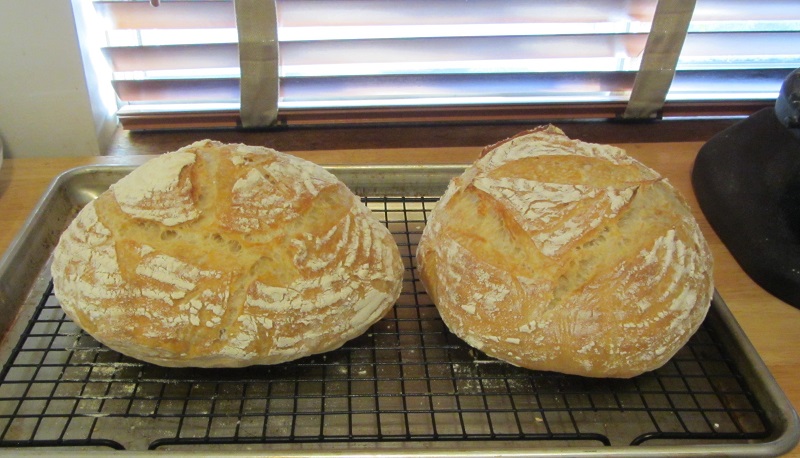
Finally, I made two No-Kneads using the recipe in the header at the top of the page.

I think overall everything came out a little bit lighter colored than usual — I put a sheet tray in the bottom of the oven so that none of the bottoms would get too dark. It had the side effect of not allowing the breads to deeply brown either, but I thought it was a reasonable tradeoff and nobody seemed to mind.

It was basically five individual bakes, so I made a chart of when everything needed to be handled, mixed, or if the oven needed a temperature change for the upcoming items. With that many things happening I was glad I did, and I didn’t wind up with any timing conflicts.

Next year I’m going to make half as much stuff and get more sleep.

Happy Baking