More Chess On The Brain — And Other Resources

Returning to chess many years later, I’m realizing that “modern theory” didn’t wait around while I was gone. Almost all of the books that I read back in the day were written pre-1960.

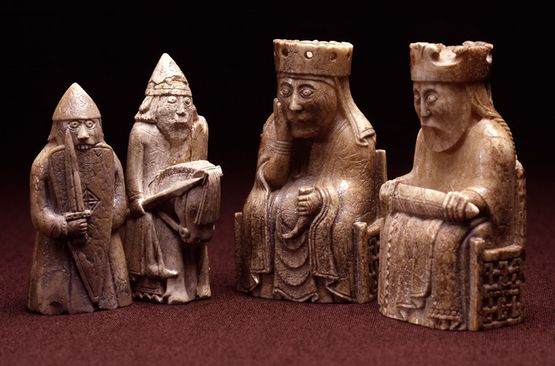
The 12th century Lewis Chessmen

I recently came across Secrets of Modern Chess Strategy: Advances Since Nimzowitsch by John Watson. (Nimzowitsch’s classic “My System” was written in 1925.) I’d heard of Watson’s book, and it happened to be available at the local used book store, so that one has been added to the library. Modern Chess Strategy was written in 1998, which for me qualifies as “new theory”.

In a lot of respects Modern Chess Strategy has been more eye-opening for me than Silman’s How to Reassess Your Chess. (Published 2010). Given the reading foundation I already have, the Silman book seemed like a lot of “I’ve already seen that idea”. Though there are a lot of people who read Silman’s book and attribute significant rating gains to having read it.

All of this is not intended as a dig at How To Reassess Your Chess. Had I not already worked through Pawn Power In Chess (Kmoch), My System, and other old classics, I’m sure Silman’s book would have opened up my mind to a lot of things that I’d previously had no idea about.


So that’s not where intended this blog entry to go…

My phone has been acquiring an increasing number of Chess apps and website links, with an emphasis on free stuff. I might be fine with paying a one-time fee for some of these sites, or making a donation, but I’m not going to sign up for several hundred dollars annually in courses and membership fees. There are some instances better database manipulation would be nice, but I have no intention of ever turning pro, so I can live with my workarounds. Chess can be an almost free hobby if you want it to be.

Listed below is online stuff I’ve been using. Note that I’m not covering all of the features available for each, just the features I’m using right now. Most of these offer games and training at the very least:

The Lichess app, Lichess.org, and Listudy: The Lichess app is where I spend most of my chess time. All free, no ads, free studies about nearly any chess subject. You can even personalize studies if you choose to. Or create your own study with the subject you’re focused on. Terrific resources. Lichess.org is the web version which offers some different functionality. Listudy is maintained by a different group of people I think, and offers some training and studies.

Chess.com: Monetized through and through. Some good free stuff available but if you’re not willing to pay a monthly fee then many or most of the useful things are behind a paywall. For me that’s a hard pass.

Chessbook: I’ve been using this for spaced repetition opening training. The free limit is 100 moves per side per color. That worked fine when I could fit all of my white openings with only a few lines each under the limit. I’m now to the point where I can practice a subset of the current white opening that I’m working on, so I’ve broken the opening into smaller modules that I can save and swap out when I want to work on something else. Again, workarounds.

PGN files: Mostly freely available from virtually every site. Games, openings, studies, you name it. This is (I think) the most common file format for chess content. Many websites and apps will allow you to export your study/opening/game to a PGN file, which you can save and share with other sites or friends. I’m still learning the syntax for writing directly into a PGN file — it hasn’t been a priority yet so it hasn’t happened.

Scid vs PC: A PGN Database handler, among other things. I’ll be using this a lot more in the future. You can import games/ openings/ studies, etc in PGN form. It allows for chess engine plug-ins. It’s free in contrast to many other options. I haven’t had the time to really explore this yet either, but I think it’s going to get a lot of use.

Chessable: I’ve started using Chessable a little more lately. They offer free courses, with a whole bunch more courses behind a paywall. There are a couple of free openings courses that I’m working through, but I don’t know what my long-term relationship with that site is going to look like. I do think there’s some functionality I haven’t really looked at yet, so maybe I’ll be singing a very different tune later.

QChess.net: Pretty new, and I only happened across it last week. There’s a searchable database and an opening trainer, among other features.

Chess Tempo: Has both an app and a web presence. I’ve been using its Advanced DB search to look for particular players playing particular openings. It offers many other features as well that I haven’t delved into yet.

And that’s what I’ve found in the first couple of months. I know that I’m missing a bunch of quality sites and quality content creators. This blog post will likely need a revisit at some point.

As for me, I’m not playing a ton of games, and I started out with a relatively not-awesome Lichess Rapid rating, but my win rate remains high and I’m gaining a significant amount of rating each month. I’m sure there’s a plateau coming eventually but I haven’t hit it yet. “To Infinity And Beyond!” …. No, of course not. But the journey is fun.

Returning To Chess As An Adult Learner

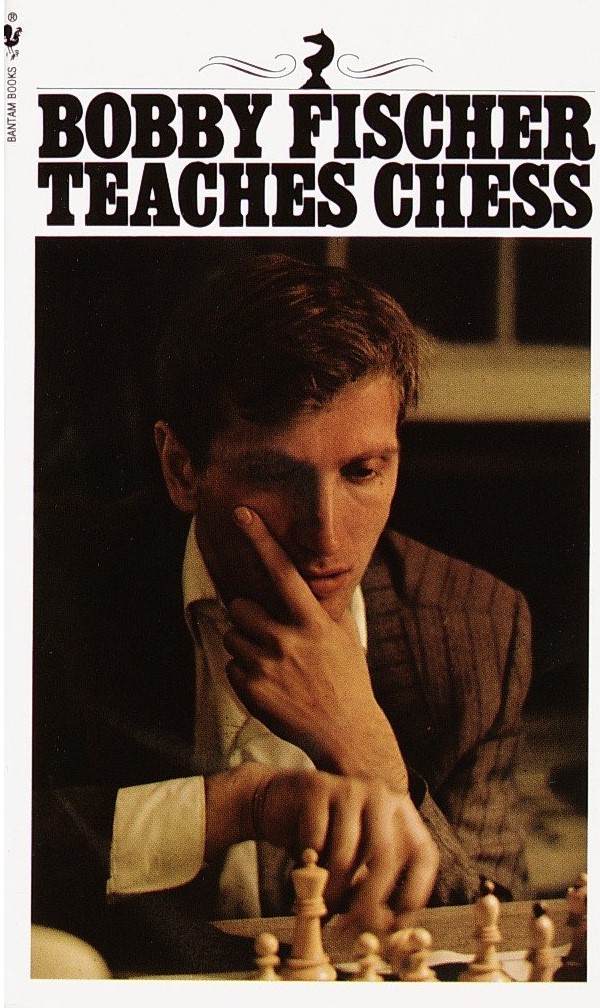
Before home internet. That’s the last time I would have been considered an “active” chess player. At that time the resources for learning were either books or people. Back then I was a member of the local chess club, and I had a small handful of books including Bobby Fischer Teaches Chess, Pawn Power In Chess by Hans Kmoch, Nimzovich’s My System, and a massive encyclopedia of openings that probably dated from the 1970s.

I recently got the bug again. I did some internet reading, and started watching a few Youtube videos. I loaded the Lichess app onto my phone (totally free and no ads!), and after a couple of games against bots decided to try some rated 10+5 games (10 minutes + 5 seconds added per move).

To backtrack just a bit — when I played at the club a zillion years ago many of the players were better than I was. Everyone had favorite openings and pretty much stuck to them. My openings were mostly sharp, tactical, and study intensive because I liked games like that. (Ruy Lopez or Sicilian Dragon as white, Sicilian Dragon as black when I could get them. I was trying to attack and channel Fischer and Alekhine.) Overall though, the whole experience was pretty controlled and genteel.

When I recently started playing online I discovered I was playing against a large percentage of people who would substitute traps, straight aggression, or just insane crazy moves in place of what I’d call an “opening”. Initially I had trouble with it and it’s taken a little while to adjust, but by now I’ve figured out that if I just play it cool and “sound” — most of that stuff blows up at some point and I’ll have a superior position. But it’s wild, at the level where I am there’s a lot of rock fights.

So now I’d be considered an Adult Learner. Or Adult Improver if was ambitious and trying for a high rating. What that means to the community is that I have interest in the game but I also have a very definite ceiling as to how far I could reasonably advance, mostly due to lack of a malleable brain and a finite time available for commitment. Which is fine with me, I’m having fun with it. I enjoy the learning and I enjoy the competitiveness of playing the games. I do want to improve but I don’t have any illusions of ever getting to be better than the level of a respectable club player.

I’ll close with a few things that have been helpful for me getting back into the swing of it after a very long time away.

For Youtube: I watched all of the Chessbrahs Building Habits series. Building Habits is pretty universally recommended and it helped me feel much more comfortable and confident. I watched a number of Gothamchess videos (Levy Roseman). Lately it’s been Daniel Naroditsky, who to my mind does the best job of teaching more advanced concepts and getting deeper into the positions and potential positions in his games.

For general books: How To Reassess Your Chess: Chess Mastery Through Chess Imbalances by Jeremy Silman (4th ed). By far the most recommended book I’ve seen and for good reason. It covers some of everything. I can do without some of the writing style, but it was a very good refresher for a lot of concepts for me with a few new ideas sprinkled in. Lots of people say they get better after reading this book. His endgame book is very highly regarded as well. I own it, but I haven’t gotten deeply into it yet.

I also feel more comfortable when I have openings to refer to as a templates for piece and pawn placement. For me, even learning 5-7 moves into a smallish numbers of common openings helps me not wind up all twisted going into the midgame. My pieces tend to wind up better deployed if I have the framework of an idea to work around.

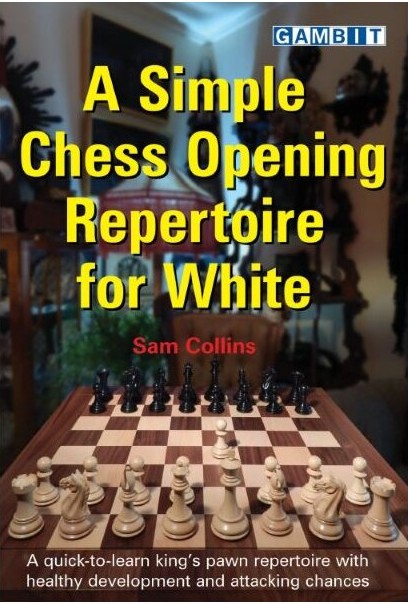
I always played e4 (Kings Pawn) back in the day (The Fischer influence, again). Returning to chess, I was looking for a repertoire that wouldn’t require a ton of study and matched what I think I want the games to broadly look like. I landed on A Simple Chess Opening Repertoire For White by Sam Collins. It includes some openings I had already independently decided I was going to use, such as the Alapin Sicilian against …c5 and the Italian Game against …e5 . There were a few of other commonalities as well. The overall theme of the book is sound openings requiring limited study where I can still start with my preferred e4. The repertoire is based around white steering the game into Isolated Queens Pawn (IQP) structures, where the white advantage is to come from superior familiarity with the ideas of the position. The IQP approach is newish to me, but I happened to spend part of a week in a cabin in the woods with the book and no internet, and I’ve now worked through most of the main lines presented. I think the framework has promise.

———

Thoughts about the blog:

I used to write about games fairly frequently here. Given that chess currently has my interest I’d imagine I’ll be posting about the subject as well going forward. I can also see my sourdough baking getting more attention. We’ll see what else gets my attention next — I was feeling in a rut, and today’s chess post is fresh air.

Diablo 4 – Alphabetical List Of Aspects Through Season 2

An alphabetical list of all Diablo 4 Aspects through Season 2, with all of the non-relevant Aspect title removed. The list on top is intended to print and fit on one page. Below the break is a straight alphabetical list.

AspectClassAspectClassAspectClassAspectClass
Abundant Energy SorcDeflecting Barrier GeneralLethal Dusk RogueShielding Storm Necro
Accelerating GeneralDevilish BarbLightning Dancer’s DruidShockwave Druid
Aftershock DruidDire Whirlwind BarbLimitless Rage BarbSinged Extremities Sorc
Alpha DruidDire Wolf’s DruidLong Shadow NecroSiphoned Victuals Rogue
Ancestral Charge BarbDisobedience GeneralLuckbringer BarbSkinwalker’s Druid
Ancestral Echoes BarbDust Devil’s BarbMage-Lord’s SorcSkullbreaker’s Barb
Ancestral Force BarbEarthguard DruidMangled DruidSlaking Barb
Ancient Flame SorcEarthquake BarbMangler’s RogueSlaughter General
Anemia BarbEarthstriker’s BarbMending Stone DruidSmiting General
Armageddon SorcEchoing Fury BarbMetamorphic Stone DruidSnap Frozen Rogue
Arrow Storms RogueEdgemaster’s GeneralMight GeneralSnowguard’s Sorc
Artful Initiative RogueEfficiency SorcMighty Storm’s DruidSnowveiled Sorc
Assimilation GeneralElementalist’s SorcNatural Balance DruidSplintering Energy Sorc
Audacity GeneralElements GeneralNature’s Savagery DruidSplintering Necro
Balanced DruidEluding GeneralNeedleflare GeneralStable Sorc
Ballistic DruidElusive Menace RogueNighthowler’s DruidStampede Druid
Battle Caster’s SorcEmbalmer NecroNoxious Ice RogueStarlight General
Battle-Mad BarbEmpowering Reaper NecroNumbing Wrath BarbSteadfast Berserker’s Barb
Bear Clan Berserker’s BarbEncased SorcOpportunist’s RogueStolen Vigor Rogue
Berserk Fury BarbEncircling Blades RogueOsseous Gale NecroStorm Swell Sorc
Berserk Ripping BarbEncroaching Wrath BarbOvercharged DruidStormchaser’s Druid
Binding Embers SorcEnergizing RogueOverwhelming Currents SorcStormclaw’s Druid
Biting Cold SorcEngulfing Flames SorcPerpetual Stomping BarbStormshifter’s Druid
Bladedancer’s RogueEnshrouding RoguePestilent Points RogueSubterranean Druid
Blast-Trapper’s RogueEscape Artist’s RoguePiercing Cold SorcSurprise Rogue
Blighted NecroEverliving SorcPiercing Static SorcSwelling Curse Necro
Blood Getter’s NecroExpectant GeneralPlunging Darkness NecroSymbiotic Druid
Blood Seeker’s NecroExploiter’s GeneralPotent Blood NecroSynergy Rogue
Blood-bathed NecroExplosive Mist NecroProdigy’s SorcTempering Blows Barb
Blood-soaked NecroExplosive Verve RogueProtecting GeneralTempest Druid
Blurred Beast DruidExposed Flesh NecroProtector GeneralThree Curses Sorc
Bold Chieftain’s BarbFastblood NecroQuickening Fog RogueTidal Necro
Bounding Conduit SorcFlamewalker’s SorcQuicksand DruidTorment Necro
Branching Volleys RogueFlesh-Rending NecroRampaging Werebeast DruidTorturous Necro
Brawler’s BarbFortune SorcRapid GeneralToxic Alchemist’s Rogue
Bul-Kathos BarbFrenzied Dead NecroRathma’s Chosen NecroTrampled Earth Druid
Burning Rage BarbFrostbitten RogueRavager’s RogueTrickshot Rogue
Bursting Bones NecroFrostblitz SorcRavenous RogueTrickster’s Rogue
Bursting Venoms RogueFrozen Memories SorcRaw Might DruidUltimate Shadow Necro
Cadaverous NecroFrozen Orbit SorcReanimation NecroUmbral General
Calm Breeze DruidFrozen Tundra SorcRecharging SorcUmbrous Rogue
Changeling’s Debt DruidFrozen Wake SorcRelentless Armsmaster BarbUnbroken Tether Sorc
Charged SorcGhostwalker GeneralRelentless Berserker’s BarbUncanny Treachery Rogue
Cheat’s RogueGiant Strides BarbRepeating RogueUnrelenting Fury Barb
Coldbringer’s NecroGlacial SorcRequiem NecroUnsatiated Druid
Conceited GeneralGore Quills NecroRetaliation DruidUnstable Imbuements Rogue
Concentration SorcGrasping Veins NecroRetribution GeneralUntimely Death Necro
Conflagration SorcGrasping Whirlwind BarbRotting NecroUnwavering Sorc
Control SorcGravitational SorcRuneworker’s Conduit DruidUnyielding Commander’s Necro
Corruption RogueHardened Bones NecroSacrificial NecroUrsine Horror Druid
Crashstone DruidHulking NecroSearing Wards SorcVengeful Rogue
Craven GeneralHungry Blood NecroSeismic-shift DruidVeteran Brawler’s Barb
Crowded Sage GeneralIcy Alchemist’s RogueSerpentine SorcVigorous Druid
Cruel Sustenance RogueImitated Imbuement RogueSerration NecroViscous Necro
Cyclonic Force DruidIncendiary SorcShadowslicer RogueVoid Necro
Damned NecroInfiltrator’s RogueShared Misery GeneralVolatile Shadows Rogue
Dark Howl DruidInner Calm GeneralShattered Stars SorcWanton Rupture Barb
Death Wish BarbIron Blood BarbShattered SorcWeapon Master’s Barb
Decay NecroIron Warrior BarbShepherd’s DruidWildrage Druid
Wind Striker General
Windlasher Barb
Continue reading “Diablo 4 – Alphabetical List Of Aspects Through Season 2”

Alphabetical Sorted List of Games on Doc and Pies 412 Retro Arcade Cabinet

We recently purchased the Doc & Pies 412 game arcade cabinet. I may do an in-depth review of what we think in a later post. A few bullet points:

  1. It has a lot of the games we wanted. Of the 412 games we’ll eventually play probably 30-50 of them, and about 10-20 of them we’ll play frequently. Winners (for us) include Ms. Pac Man, Pac Man, Frogger, Donkey Kong, Donkey Kong Jr., Galaga, Galaxian, Sinistar, Lady Bug, Bump n Jump, Tetris, Dig Dug, Raiden, Xevious, Zaxxon, Burger Time, and Mr. Do, as well as modified games like “fast shoot Galaga”.
  2. Any game that requires a “spin” controller won’t play well, to the point where they’re not worth bothering with. This knocks out some favorites like Tempest, Arkanoid, and Tron. There is no “roller” controller either, which knocks out Centipede and Millipede if you’re serious about them. Q-Bert also won’t play correctly — I think that’s because it’s a 4-way joystick and not an 8-way joystick.
  3. The volume controller can only be accessed by removing four screws on the back of the machine. There’s a significant difference in loudness between some games. We wound up setting the volume on the low side and leaving it.
  4. The games, annoyingly, are not loaded alphabetically into the machine. Because I couldn’t find an alphabetical list anywhere — below is a list of all games sorted with their associated game number. Ours is printed out onto four pages. We used colorful paper and laminated them, the lamination should dramatically increase the life span of the lists.
  5. Overall it’s not perfect, but it’s fairly reasonable considering the price point. It’s a fun looking box. We selected the Galaga stickers but it’s available with others:

It’s about 40-50 pounds and fairly substantial. We’ll see how it holds up — it coughed today when we turned it on, but so far no other glitches.

The list of games is below the break-

Continue reading “Alphabetical Sorted List of Games on Doc and Pies 412 Retro Arcade Cabinet”

GNOIF: GNOIF Is Working For A Living

-A.J.

GNOIF #28 recap — GNOIF:  GNOIF Is Working For A Living (Industry/ Worker Placement themes)

Games That Got Played:  Biotix, Circus Flohcati, Terraforming Mars.

Games That Didn’t Get Played:  We really only offered the three games. Everyone was looking forward to Terraforming Mars, so that’s what we played.

The small crowd  had fun late late late into the night. I think I wound up making finger sandwiches for the group sometime around 11pm.

In Terraforming Mars you play as a corporation that is working to make the conditions on Mars habitable for humans. Players receive cards each turn that represent actions, events, or building projects. You can do almost anything from bombarding Mars with asteroids, to building domed or underground cities, to encouraging forests or microbes or predators or pets. It seems even on Mars, people like their pets.

I like it for a lot of reasons — It scales well to different numbers of players. There are interesting decisions to make but not so many that the game bogs down. The artwork is good. The cards carry through on the theme extremely well. It’s a very highly regarded game on BoardGameGeek, and it’s easy to see why.

Thanks to everyone who played!

Recommended Game: Darkrock Ventures

-A.J.

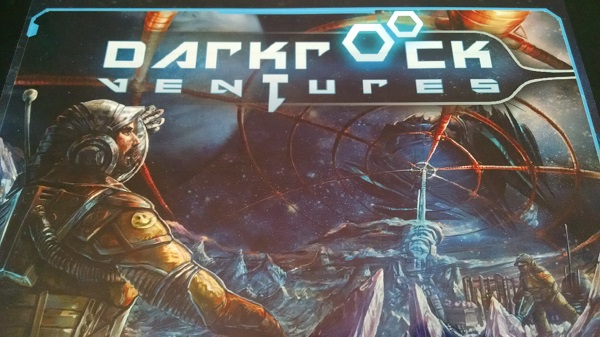
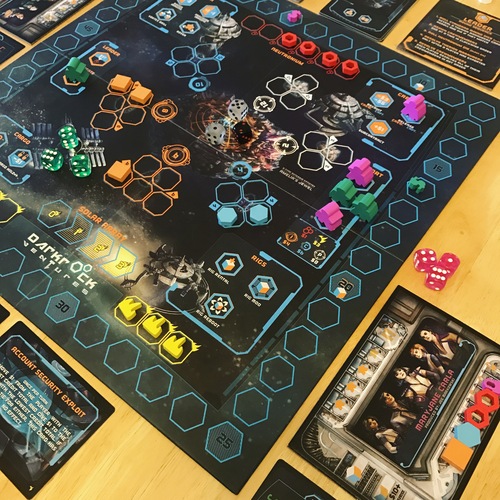
Title:  Darkrock Ventures

Darkrock Ventures

Game Type:  Worker placement. Think Agricola, except that the theme is mining in outer space instead of farming in the Dark Ages.

Number of Players:   1-5. I’m guessing it’s best with 4.

Complexity of Rules:  Low-Medium. The rulebook is awful. Much more on that in a moment.

Time to Play:   The box says 30-45 minutes. We’re usually running over an hour, even with only two players.

The Concept:  Each player represents outer space mining interests. The object is to make the most Credits by the end of the game, since Credits double as Victory Points. Each turn a couple of dice are rolled. Players then take turns placing workers either on mines, or on bases that offer other advantages, such as bonus dice, dice manipulation, more crew, or increased space in your cargo hold. More dice are rolled, and the player(s) that can manipulate the dice to make favorable outcomes receive resources. The resources can then be “exported” for Credits. We haven’t played with the optional “Hostile Alien” cards yet, though I’m of the suspicion that they’ll mostly just increase the “luck factor” and drive me nuts.

Photo from the BoardGameGeek site.

Why I Like It: It has an outer space theme, and I’m a sucker for those. It involves risk management/estimation too, which is another plus. Once the rules are understood the game moves fairly briskly, and with low downtime.

Having said that:  The rule book is among the worst I’ve ever seen, period. We learned a lot more about how to play from just from watching a guy do a walkthrough online. The rules feature minimal pictures and illustrations, and the graphics are poorly thought out and not very informative. Many passages are poorly or ambiguously worded. And no, I’m not being too harsh. I get the impression that the developers taught the play testers how to play and didn’t force the players to learn by using the rule book.

Other issues:

  • Worker placement covers up information on the board.
  • The “Captain” meeples are very similar in size to the “Crew” meeples — we’re going to add stripes to the Captain meeples so that they’re easier to tell apart from the crew.
  • If the player cards were larger the game would feel less fiddly.

I know that’s more than a few negatives, but it’s an enjoyable game with a fun theme, and it was a holiday gift so the price was right. It does feel like the game was rushed to market though.

Recommended.

BoardGameGeek page here.

Recommended Game — STOP THIEF!

-A.J.

Title:  STOP THIEF!

170206 Stop Thief

Game Type:  Deduction/reasoning.

Number of Players:   2-4

Complexity of Rules:  Low

Time to Play:   30 minutes. Usually less

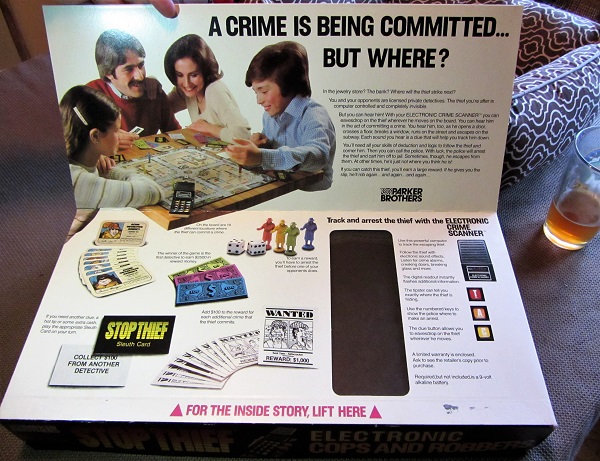
The Concept:   [From the inside of the box:]

ELECTRONIC COPS AND ROBBERS. Featuring the ELECTRONIC CRIME SCANNER.

A crime is being committed…but where?

In the jewelry store? The bank? Where will the thief strike next? You and your opponents are licensed private detectives. The thief you’re after is computer controlled and completely invisible. But you can hear him! With your ELECTRONIC CRIME SCANNER you can eavesdrop on the thief whenever he moves on the board. You can hear him in the act of committing a crime. You hear him, too, as he opens a door, crosses a floor, breaks a window, runs on the street and escapes on the subway. Each sound you hear is a clue that will help you track him down. You’ll need all your skills of deduction and logic to follow the thief and corner him. Then you can call the police. With luck, the police will arrest the thief and cart him off to jail. Sometimes, though, he escapes from them. At other times, he’s just not where you think he is! If you can catch this thief, you’ll earn a large reward. If he gives you the slip, he’ll rob again…and again…and again…

Why I Like It:  First of all — Wayback Machine! Our copy still has the original 1980 price sticker from the department store attached.

170206 Stop Thief2

There are numbered squares on the game board. When it’s your turn you press the “C” (Clue) button on the controller and the Thief moves from square to square. Each movement is represented by a distinctive noise, such as a window breaking or a door opening. By process of elimination you attempt to figure out the Thief’s current location and send the cops to arrest him. We’ve always played it without the Sleuth Cards since they make the game too easy. (“Tips” given by the cards tell you exactly where the Thief is, and what’s the fun in that?) Without the Sleuth Cards it can really be a challenge to find the Thief.

I loved this game at the time and I still love it. It’s also nice that we really took care of it when we young and never stored a battery in the controller. Almost everything is near-immaculate.

Great fun!

BoardGameGeek page here.

GNOIF: GNOIF Gets Lucky

-A.J.

GNOIF #26 recap — GNOIF:  GNOIF Gets Lucky (Wealth/Luck/Asian Themes (Chinese New Year))

Games That Got Played:  Code Names (Deep Under Cover), The Dragon & Flagon, Hanabi, Incan Gold, King of Tokyo, Lost Cities Board Game, Seven Dragons, Ticket to Ride Asia, Ticket to Ride Europe.

Games That Didn’t Get Played:  Avalon – Resistance, Five Tribes, Get Dr. Lucky, Mottainai, Tiny Epic Kingdoms.

The crowd showed up early and stayed late. Altogether it was more than ten hours of gaming. We played a bunch of looong games with a few short games as spacers in between.

An early evening game was The Dragon & Flagon. Think D&D bar fight. People were throwing mugs, chairs, and lightning at each other. Generally silly and definitely fun.

I really enjoy King Of Tokyo. To requote from the GNOIF #24 Recap:  “I enjoy it quite a bit. Players play as big, stompy, city-wrecking monsters, and the object is to dominate Tokyo and beat up everyone else — think Gozilla vs Mothra vs Kong. It’s fast and violent, and there’s an element of “chicken” to it. Good fun.”

It’s also possible to “upgrade” your monster. I went with Poison Quills, which in the right circumstance allows for more damage dealing. My opponent on my left purchased an “Extra Head”, which she used to roll an extra die and deal out terrible carnage. She won.

Later in the evening the gaming broke into two groups — one group focused on Ticket to Ride and the other on Code Names. That’s the nice thing about offering a range of game lengths and complexities — there was something for everyone.

Thanks to those who played!


Recommended Game — 7 Wonders Duel

-A.J.

Title:  Seven Wonders Duel7-wonders-duel

Game Type:  Card Drafting/ Civilization Building

Number of Players:   2

Complexity of Rules:  Medium-Low. Easy to learn if you’ve already familiar with 7 Wonders.

Time to Play:   30 minutes according to the box. I think we’ve been running vaguely longer.

The Concept:   Players take turns drafting cards from the available (topmost) cards in the stack. (See picture, the cards on the bottom and far right are “available”. If the card at the bottom were to be drafted then the next two cards would be flipped over and become “available”.)

The cards themselves represent either economic advancement, a stronger military, scientific advancement, or Victory Points (or a combination of those things.) Like the original game you can also “burn” a drafted card for gold or to Build A Wonder. The strategic part is picking the right combination of cards that allow you to acquire the “best” civilization, represented by having the most Victory Points at the conclusion of the game. Alternately you could buy a big stompy military and beat your opponent into submission, or advance far enough in science that you win outright.

Why I Like It:  It’s a fairly deep two player game with many possible ways to attempt to win. There’s some real strategy in card drafting to optimize your potential outcomes while damaging the other player’s as much as possible.

My one concern is that as we gain experience – we may find that trying to win with science is a high-risk idea. You really need to commit to science, and if the cards don’t fall right then you’re screwed. Basically any other approach is “safer”.

Overall though, it’s a very fun game.

—————-

BoardGameGeek page here.

The CheapSeatEats 7 Wonders recommendation page here. (I had/have concerns about the “science strategy” on that one too.)

GNOIF: GNOIF’s Day Of Infamy

-A.J.

GNOIF #25 recap — GNOIF:  GNOIF’s Day Of Infamy (War/Water themes. (Pearl Harbor))

Games That Got Played:  Amerigo, Avalon – Resistance, Hanabi, Star Realms.

Games That Didn’t Get Played:  Bang!, Batt’l Kha’os, Castle Panic, Pirate Fluxx, Forbidden Island, Nuclear War, Pirate’s Cove, Small World, Tiny Epic Kingdoms, Ultimate Werewolf.

Not many games got played, because GNOIF was taking place at the same time as:

sounders-win

Or:

sounders-win4

Or:

sounders-win2

Or:

sounders-win3


I could do this all day!