Populuxe has made a name for itself by brewing beers that you normally would not find at other breweries and doing them well. Beersnob brown is no exception. Browns are an old English style described as such on Wikipedia:
Brown ale is a style of beer with a dark amber or brown color. The term was first used by London brewers in the late 17th century to describe their products, such as mild ale,[1] though the term had a rather different meaning than it does today. 18th-century brown ales were lightly hopped and brewed from 100% brown malt.[2]
Today there are brown ales made in several regions, most notably England, Belgium and America. Beers termed brown ale include sweet, low alcohol beers such as Manns Original Brown Ale, medium strength amber beers of moderate bitterness such as Newcastle Brown Ale, and malty but hoppy beers such as Sierra Nevada Brown Ale.
The beer clocks in at 5.1 abv.
Beersnob pours mahogany brown in color with pleasant notes of chocolate and roasted malt and very mild coffee notes. The beer starts off with significant malt with building complexity – yeast appears first before moving into the heavier flavors . Initially, roasted malt appears then dark chocolate and toffee before finally finishing off with black coffee without any real bitterness. Layered and complex, the beer has incredible balance and depth without being overly sweet or bitter at any point. Call me a beer snob, but this is as good a brown as I have had anywhere.
Populuxe Beer Snob Brown walks around with its nose in the air gathering a well-deserved 5 cicerones out of 5.
The cucumbers and zucchini were some of the best, and some of the most disappointing plants of 2013. The disappointing portion was due to a good dose of “user error” of course. Onward:
June 30.
Patty-pan squash — 1.7 pounds. In terms of expected output vs received output, the patty-pans were at or near the bottom of the 2013 list. About the time that they swung into gear the issues with mold started, and it was all downhill from there. These were trained vertically in an Ultomato cage, which may not have helped. More on that in the next paragraph.
Cocozelle zucchini — 12 pounds. The cocozelle zucchini shared a box with the patty-pans. I think that both plants would have benefited from trellising, rather than the Ultomato cages. I had read somewhere that the cocozelle could be trained up a cage, and it didn’t work out well. There wasn’t adequate support all the time, and there was some critical vine breakage right when the plant should have been cranking out fruit. I’m of the suspicion that the cramped cage also contributed to the start of the mold.
The patty-pans won’t be seeing a return visit in 2014. The cocozelle will likely get tried again, with a trellis this time. I’m also inclined to try the Trombocino (rampicante) variety. They’re supposed to be relatively mold resistant and pretty low-maintenance overall.
August 4.
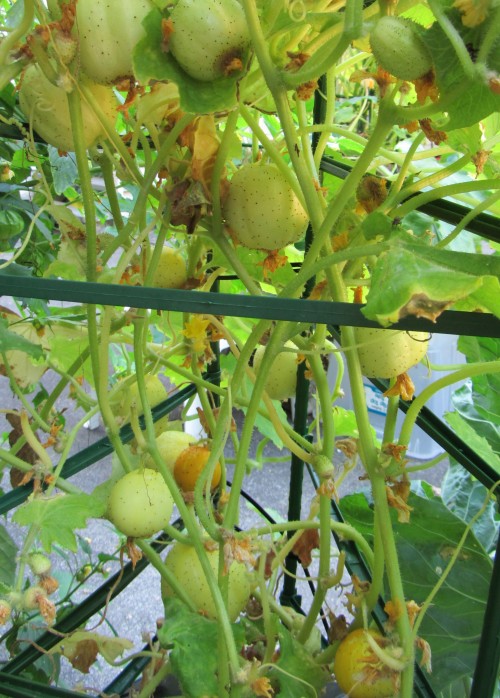
Lemon cucumbers — 15.3 pounds. One plant that was purchased by accident, it was actually very productive. It was tolerant of the Ultomato cage and was easy to train. We may not do them next year, simply because of how productive the Marketmore cucumbers were. We had *way* more cucumbers than we could eat.
The whole box is listing to the right a little bit. September 2.
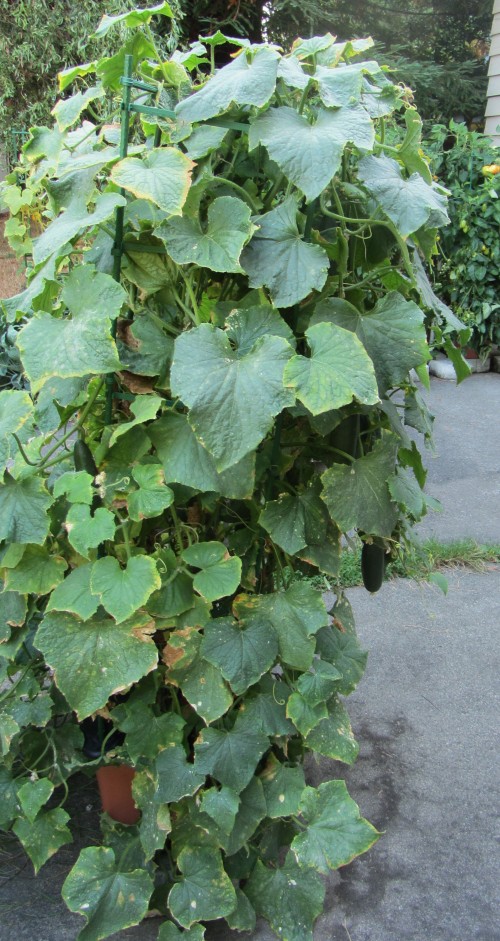
Marketmore 76 cucumbers — 56 pounds. The most productive single EarthBox. Four plants that were trained into two squares of Ultomato cages. This is something like the weight that I expected to see from the zucchini box. A no-brainer winner for next year.
This is the first Anacortes beer that I ever had, fist trying it way back in the first spring that I lived in Seattle and starting my love affair with Anacortes brewing. Virtually no one in the Northwest makes a Maibock so that was what originally drew me to the beer. It takes guts to make a beer that is the opposite of hoppy in the land of hops, and Anacortes is up to that task.
From the Anacortes website:
Mai Oh Maibock
OG 1.070 / 6.5% ABV / 30 IBU
This golden seasonal version of the classic bock style is malty with a delicate hop character from German Perle, Tettnang and Hallertau varieties. Named in honor of Mariners announcer Dave Niehaus’ classic exclamation.
The beer pours golden yellow in color with light notes of grain and hints of citrus on the background of the nose. Slightly sweet on the initial sip, with a nice long grain and citrus middle and finishing clean and crisp with hints of apple and wheat, making it a great beer to drink on a warm, sunny day on the back deck. As the beer warms, the sweetness dissipates and the citrus and grain becomes more pronounced, making the beer more complex and appealing to those who like hops.
Anacortes knocks it out of the park with a call of 4 Grand Salami’s out of 5.
The 2013 harvest came to a little over 230 pounds, not counting the shiso and lemongrass. Of that, eleven pepper plants produced just over 22 pounds of fruit.
The quantity of peppers could have been a lot higher had I actually followed the EarthBox directions and not mixed plant varieties within the boxes. That’s a recurring theme below:
The October 7 harvest.
The Hot Pepper Box:
The three pepper plants in this box were buried behind the lemongrass and shiso, and I think it dramatically impacted the output.
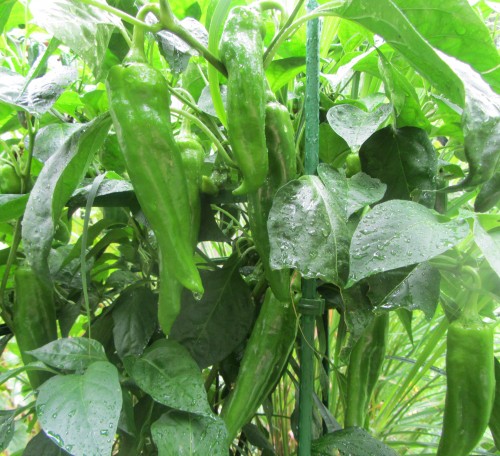
Anaheim — 2.9 pounds. The Anaheims basically filled a one gallon freezer bag. We’ll be planting these again next year.
Banana — 0.4 pounds. Just a few peppers. This plant was the most buried of the three, and it showed. Needs a fair trial in 2014.
Jalapeno — 2.2 pounds. This again is way more peppers than it sounds like. Visually it’s a couple of freezer bags worth in a single layer, about 50 Jalapenos or so. A few got a tinge of red, but that was about it as far as ripe Jalapenos. A 2014 keeper.
That’s 5.5 pounds of sun-demanding peppers out of the shady, cramped side of 1/2 of an EarthBox. –*facepalm*– On the bright side, it’s still enough peppers to easily last into next spring. We’ll be throwing Anaheims and Jalapenos into everything.
The Anaheim peppers on September 15.
The Sweet Pepper Box:
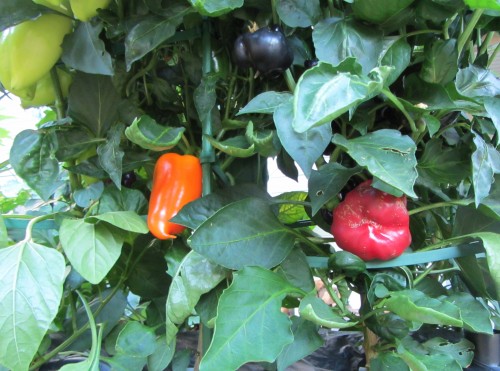
18.2 pounds from the six peppers in this box. No competition for sun = the output per plant was 65% greater — 3 pounds per plant vs 1.8 pounds per plant for the hot peppers. Not mixing plant types is the “right” way to do it:
Cute Stuff — 1.5 pounds. They weren’t cute; they were actually fringe-deformed in appearance. They weren’t particularly productive. (SW corner of the box, which should be about the best spot.) The interior was a little pithy. I think it’s fair to say that we weren’t in love with these. They may not make the cut for 2014.
Gourmet — 1.5 pounds. The yellow ones that eventually turned a little orange. Definitely photogenic. Moderate output, but then they were in the middle-front (middle-west side) of the box. Probably a keeper for next year.
Gypsy — 3.2 pounds. Good production from the NW corner of the box. Probably a keeper.
King of the North — 5.3 pounds. Excellent production from the SE corner of the box. It’s basically a standard bell pepper. Winner.
Lipstick — 1.7 pounds. Another photogenic pepper that ripened to red. Decent production from the East-center part of the box. Fairly thin walled. Probably a keeper, though I’d be fine with something else.
Tequila — 3.3 pounds. Purple peppers that turned white when we grilled them. They’re more of a crudite pepper, and even then they don’t taste like much. Not making the 2014 cut.
The sweet peppers on August 25.
The Straggler:
Even though we tried to pre-plan the garden layout, the piecemeal approach to purchasing things meant that we wound up with one “extra” pepper plant that had to be shoehorned in somewhere. That somewhere was behind the brussels sprouts and the lemon cucumbers:
Bell — 0.3 pounds. One pepper from this plant. It never really had a chance. I’m actually inclined to do a mono-box of these next year to see how much it would produce in favorable conditions.
This year we budgeted 1.5 boxes for peppers. Next year I think it will be either 2 or 3 boxes. I’m leaning towards three. No sharing space next time though.
I was going to post a recipe here, but I am being lazy about writing it, so I debated what to put in its place. So you get Pearls Before Swine from October 29th.
In poor taste? Probably, but trust me – the alternative was much worse – Patrick Stewart in a lobster suit laying in a bathtub.
Reuben’s branches out into the world of pilsner in a collaboration with Airways Brewing, mixing in their signature use of Rye with a style that is known for mild, clean lines and flavors. Curious on what rye would do to pilsner; I had to give this beer a shot. It clocks in at a fairly mild 36 IBU and a light 5.0% ABV.
Golden amber in color with an interesting nose – hints of rye are noticeable but the pilsner yeast notes and grain dominate this beer. Think of this beer as a pilsner with a bite. The beer starts out unremarkably mild before building into something that is unmistakably a pilsner – dry with noticeable grain and a pleasant crispness. Once you move beyond that, the beer gets really interesting – the rye notes slowly replace the pilsner flavor, transforming the beer into something more spicy and deep. The rye notes accentuate the crispness taking it to a much drier place and bringing out just a hint of the hop flavor. The rye finish is long and pleasant and just hints of the pilsner notes hang around with it. This is definitely a different beer – not sure if a pilsner drinker would appreciate it and I am not sure that a hop-head would recognize the mild complexity of the beer, but if you are looking for something different and a touch on the lighter side, this would be a good beer to give a shot.
The September Mountainbeer pair from NW Peaks was fun – a kolsch and a saison, two styles which are gaining in popularity, and two styles that Mrs. Iron Chef happens to like. She was happy when I mentioned to her that our NW Peaks tasting would consist of those 2 beers.
From the NW Peaks website:
The name. The mountain. The enchantments are a string of alpine lakes just outside of Leavenworth. Permits for camping here are arguably the most sought after permits in the area, with good reason. Enchantment Peak is one of the mountains that surround the valley. What sets this mountain apart is obviously the setting, not the climb. As a climb it’s a nice scramble from prussik pass, but atop, it gives a birds eye view of the enchantment basin below.
The beer. Enchantment ale is a saison, a style that is categorized as a ‘farmhouse ale.’ Indeed, there are (musty?) notes of straw and hay reminiscent of walking through a farm. But these styles also have a nice fruity notes (apple and pear), with a slight perception of sweetness. Using a cousin to the Belgian yeasts, these beers ferment dry and somewhat spicy. Enchantment ale is a nice example of the basic style. We started with an average specific gravity but let it ferment very dry resulting in a higher alcohol content than most of our mountainBeers. We also added some grains of paradise adding to the spicy complexity on top of the other defining characteristics. Simply enchanting.
Original gravity: 1.054. Finishing gravity: 1.002. ABV 6.8% – enjoy with some friends over dinner.
The beer pours pale yellow in color with notes of lemon, hay and farmhouse yeast. The beer starts out very light, almost imperceptible, before building in flavor. First comes notes of very mild yeast then a louder grain component before reaching a crescendo with a slightly funky lemon plateau that seems to linger and build upon itself well into the next sip. The funk is more subdued than many saisons, but the beer has a great progression of flavor and character and more balance than most saisons I have tried. The high alcohol is completely unnoticeable in this beer. The beer is light enough to please those who love a mild beer, but complex enough to please an advanced beer drinker.
NW Peaks Enchantment Saison charms the pants off of drinkers with a strong 3 Prince Charming’s out of 5.
On a related note, we enjoyed this on a night where we shared a pot of Belgian Beef Carbonnade with spatzle with AJ Coltrane and Annie S. Somewhere in Europe; many people are turning over in their graves – Belgian style stew over German style pasta served with a French style beer.
The beauty of Elysian’s beers is that they not only have some grate creativity, but they do produce a good number of tribute beers – beers that are clones of very well known, but not necessarily great beers. One they did recently was a clone of Yuengling Porter as a tribute to one of their employees. In case you are not aware, Yuengling from Pottsville, PA, is the oldest continuously operating brewery in the United States, brewing beer back to 1829, and their porter holds a soft spot in my heart as one of the first dark beers that I truly loved 20+ years ago (although calling the beer a porter is a bit of a misnomer, it is actually a black lager and not a true porter). The beer was only available on tap and clocked in at just 25 IBU and 4% ABV.
Raconteur looks very much like Yuengling in the glass – a slightly opaque black, not the deep black that you might expect from a porter. Chocolate malt with hints of grain dominate the nose, with much a more pronounced aroma than the original. There is lots of grain up front on the initial sip with notes of chocolate and caramel interspersed – much bolder than the original, with a long and slightly hoppy finish. You get a great deal of the lager character on this beer, same as the original, but the malt, roasted flavors and hops are amped up making the copy a bolder and better beer than the original while still retaining much of the original character of the recipe. Raconteur takes a stab at an American classic and delivers a fine tribute while taking the flavors from a mass consumption beer to a fine specialty beer.
Raconteur brings me back to my college days and delivers a solid 3 TEP’s out of 5.
I recently got asked for this recipe again and realized that I have made a few tweaks to it from the original. Basically, make a graham cracker crust rather than using a pie crust if you want this to actually look like a cheesecake. It is easy if you have a spring-form pan. I also updated the recipe to use a single type of chocolate rather than the blend that I was originally using.
The Software
13 oz Chocolate – roughly chopped (Dark Chocolate, somewhere around 70% works the best
1/3 cup coffee liqueur or strong coffee
1 teaspoon vanilla extract
1 pound Silken Tofu (extra firm) drained
1 tablespoon honey
1 9 inch graham cracker crust or pie crust
The Pie
Pre-bake your crust (if necessary) and let cool. If you need to know how to make a graham cracker crust, check here (just leave out the sugar, you won’t need it). Melt the chocolate, liqueur or coffee and vanilla in a bowl over a sauce pan of simmering water, stirring often. (This can also be done in a microwave, but be careful of burning the chocolate). In a blender or food processor, combine the tofu, honey and chocolate and spin until smooth, about 1 minute. Pour the filling into the crust and refrigerate for 2 hours or until firm. That’s it. You have dessert. Serve with whipped cream, chocolate sauce, or just eat it as is.
Notes
I personally use a good single origin, 70% chocolate, but if you don’t have access to a really good chocolate shop, you can use pretty good chocolate like Callebaut or Schaffen-Berger, which are available just about everywhere these days (read – most mega marts carry them). Just remember, chocolate is the dominant flavor in this dessert, so go with one that you like the taste of. If you like it sweeter, add more honey, but I would recommend waiting until after everything is combined and tasted. This will set into the consistency of something resembling a dense cheesecake. If you want something more pudding like, I would recommend using a less firm silken tofu.
 Beersnob pours mahogany brown in color with pleasant notes of chocolate and roasted malt and very mild coffee notes. The beer starts off with significant malt with building complexity – yeast appears first before moving into the heavier flavors . Initially, roasted malt appears then dark chocolate and toffee before finally finishing off with black coffee without any real bitterness. Layered and complex, the beer has incredible balance and depth without being overly sweet or bitter at any point. Call me a beer snob, but this is as good a brown as I have had anywhere.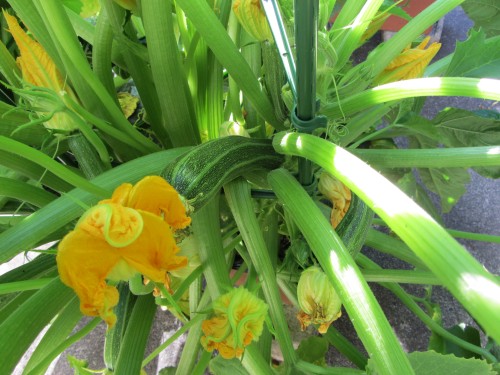







 FlatbreadGarden