A few months back, the NW Peaks Mountainbeers were both pale ales, brewed with different hop varieties. I was excited for both of them, but especially for the Silver Pale Ale, which included spruce tips in the beer.
From the NW Peaks Website:
The name. The mountain. Like one of the April beers (Tinkham), Silver is off Snoqualmie pass. In fact, it’s juxtaposed to Tinkham just off the PCT and a great place for a good, light summer excursion. The climb is ~ 1,000 feet of a boot path from the PCT. The summit offers great views of the ever popular summits peppering the Snoqualmie area and serves as part of the boundary that surrounds one of Seattle’s 2 major watersheds (the Cedar River watershed).
The Beer. Silver pale is a standard NW style pale, featuring a couple of interesting ingredients, namely the sorachi ace hop variety and spruce tips. It has a medium body with nice hop notes and slightly forward bitterness. However, the sorachi ace imparts a “lemony” and to a lesser extent “dill” aroma which we paired with the (very subtle) spruce tips (and a few other hop varieties to round out the taste). The result was a nice, slightly bitter, NW pale ale.
The beer pours hazy yellow in color with light hops on the nose coupled with grain and faint raspberry/spruce hints. The beer starts off as a combination of slightly bitter and sweet before transitioning into light grain middle with strong notes of hops and lemon. The beer then pushes to the finish with a slightly sweet notes of grain and significant notes of raspberry and lemon in a very long finish. The beer is interesting, producing pronounced flavors from both the hops and the spruce tips and is one that is definitely not your average Northwest pale ale.
NW Peaks Silver Pale Ale pans the river and comes up with a solid 3 prospectors out of 5.
Alaskan Brewing makes some pretty solid beers, but where they really excel is with their Pilot Series beers. These beers are small production, big beers which usually rate as outstanding brews and in a bunch of cases, age really well. One of their spring Pilot Series beers over the last few years has been their Raspberry Wheat. This beer clocks in at 6.5% ABV and 20 IBU. The beer is not cheap, with a 22 oz. bottle setting you back $9 at your local bottle shop.
From the Alaskan website:
Alaskan Raspberry Wheat is an American-style Wheat Ale with the lively addition of red raspberries during fermentation.
With nearly one pound of real fruit per gallon, Alaskan Raspberry Wheat has the inviting aroma of fresh-picked raspberries and an enticing red hue. The flavor of the raspberries lends a tartness that balances the full-bodied wheat profile and malt sweetness. Bigger than most traditional fruit beers, Alaskan Raspberry Wheat adds an extra kick to its dry and effervescent finish.
The fruit beer style became popular more than 500 years ago with the lambics of Belgium where they brewed with wild yeast and fruit was added to the beer during secondary fermentation. Alaskan Raspberry Wheat follows an American take on this Old World style, highlighting the bright flavors of raspberries.
Years of local demand as a Rough Draft brew and a Silver medal from the 2008 Great American Beer Festival made Alaskan Raspberry Wheat the perfect beer to launch Alaskan’s Pilot Series of limited edition specialty beers.
This limited edition batch of Alaskan Raspberry Wheat is made from glacier fed water, the finest two-row barley, wheat and specialty malts, premium quality European and Pacific Northwest hop varieties, and more than 3,000 pounds of real raspberries.
The tart, sweet flavors and effervescent finish of Alaskan Raspberry Wheat pair best with light foods and desserts including fruit salads, grilled vegetable dishes, light fruit baked goods, crepes, crumbles and warm summer weather.
Berry picking in Alaska can be a busy pastime. With nearly 50 types of wild berry species across the state fruiting throughout the spring, summer and fall, berries have long been a staple in the Alaskan diet. This is also true of the diet of Alaskan black bears. These omnivores load up on rich raspberries and other berries in the late summer before hibernating for the long winters of Alaska. This beer celebrates the natural bounty and fresh flavors of summer in Alaska.
The beer pours reddish amber in color with an off white head. There are strong notes of raspberry with hints of wheat on the nose. The initial sip yields notes of slightly sweet raspberry before becoming drier with a more subtle raspberry profile complimented with notes of yeast and wheat. The finish is long and raspberry dominant, reminiscent of eating fresh fruit (without the seeds!) with a light tartness that lingers pleasantly. The balance is superb – slightly sweet and slightly tart at various times, with plenty of raspberry character, but not so much that it overpowers the subtle wheat and yeast character that exists in this beer. I wish more fruit based beers showed this balance.
Alaskan Raspberry Wheat picks its way through the bushes with a happy 4 Rubus strigosusout of 5.
Homemade pasta is one of those things that is insanely easy (with the right recipe) and will impress the crap out of your guests if you make it. It also comes in handy because you can make it with a few ingredients you have at home. I have made pasta completely by hand and it is hard work – mixing and kneading the dough and rolling it out. Taste-wise it is outstanding, but time wise, it isn’t worth it. A few years back, Alton Brown came out with a recipe that significantly cuts back on the time – all of the mixing is done in a food processor. It takes about 3 minutes to make the dough with this process, so you could actually make fresh pasta for a Tuesday night dinner rather than a special occasion.
The Software
10 oz. All Purpose Flour
1 teaspoon salt
2 large eggs
3 tablespoons water
1 teaspoon olive oil
The Recipe
In the bowl of the food processor combine the salt and flour and pulse for 2 seconds to combine. In a measuring cup, combine all of the remaining ingredients and beat lightly. Turn on the food processor and slowly stream the liquid into the bowl, until all of the liquid is incorporated or the dough just begins to pull away from the side of the mixer bowl. If you have used all of the liquid, slowly stream in 1 tablespoon of water at a time until dough is ready (It should feel slightly tacky, but not wet or sticky). Remove from the bowl, give it about 10 seconds of kneading to bring it together and wrap in plastic and refrigerate for at least 30 minutes or up to 24 hours (the longer you refrigerate, the easier it is to work with).
Notes
It is hard to describe exactly what the dough should feel like, so you will probably have to experiment a bit with it. Sometimes you need to add a tablespoon or two of additional water, other times you will not end up using all of your liquid, so there is really no exact way to do this. Some fun additions to pasta – a couple of tablespoons of minced spinach or stinging nettles (just make sure you remove as much water as possible), fresh herbs, lemon zest and pepper or hot pepper flakes. Just add them in with the flour salt and pulse to combine.
The tomatoes and tomatillos drew most of the attention whenever people would check out the garden, so it makes sense to me to save them for the last recap.
Tomatillos — 14.6 pounds. The bees looooved these. There was one strong plant and one weaker plant. The weaker plant needed additional support by the time it was a couple of feet tall, and by September 5 it was completely done. The overall yield was still very good, and we’ll have roasted tomatillo salsa into next year. Rick Bayless’ Roasted Tomatillo Salsa Recipe is here.
Tomatoes — The total yield was 91 pounds, out of 3 boxes. The indeterminate varieties got well over eight feet tall and flopped over the top of the cages. The Sun Golds in particular were crazy vigorous.
Here’s the May 18 summary of the types of tomato and tomatillo plants:
The varieties — back to front, starting with the leftmost box. Descriptions from the Seattle Tilth plant sale:
Two Mexican Strain tomatillos. 65 day maturity.
Glacier. 56 day determinate. Grows to 2-1/2 feet high by 3-1/2 feet wide. “Great for containers”.
Siletz. 70-75 day determinate. “One of the most reliable slicing tomatoes you can grow.”
Stupice. 60 day indeterminate. Red, 2″ fruit on 6′ vines.
Sungold. 65 day indeterminate. Apricot-orange 1-1/4″ cherry-tomato fruit on grape like trusses.
Brandywine. 85 day indeterminate. Fruits up 1 pound and 7″ in diameter. (The Brandywines are near the house to try to get some reflected sun off of the house.)
Roma. 75 day determinate.
And the results:
Glacier — 13.9 pounds. The Glaciers were early, consistent, and tasty… excellent all the way around. A definite keeper for 2014.
Siletz — 12.9 pounds. The Siletz were the most compact of all of the varieties. They were a nice halfway point — not as big and slow maturing as the Brandywines, but they still had some good size and taste. It felt like we got *way* more Glaciers than Siletz, but the numbers don’t back that up at all. These might benefit from being planted with something else equally compact. Most likely a keeper for 2014.
Stupice — 9.4 pounds. The Stupice suffered a little bit from being in the “back center” of the stack of tomatoes. That, and the Sun Golds went nuts. These were probably the most unremarkable of all of the tomatoes, that is, they weren’t especially big or tasty or prolific… they were “fine”. That means that they may get another try in 2014.
Sun Gold — 19.2 pounds. Craaaaazy prolific orange-colored cherry tomato. As sweet as candy. Winner.
Brandywine — 10.1 pounds. Slow to mature. The Brandywine had the longest theoretical maturity, which is what actually came to pass. These all split into craggy “rustic” fruits. I’d be fine with passing on these next year in favor of an early variety.
Roma — 26.o pounds. The biggest output by weight, the Romas were very late. Ultimately the tail end had to be rescued off of the vines before they were completely ripe. If we do these again they’re going to need a sunnier spot — they were sort of behind and under the Sun Golds *and* crowded by the Brandywines.
We intentionally mixed earlier and later varieties of tomatoes, and it worked out about as expected. The early ones did great, and the later plants had to race to ripen before calling it a year. Given that this summer was supposed to have been especially nice, we might have seen the best case scenario for the really long maturity types. Overall though, the tomatoes were relatively cramped, so it could go better next year just by giving them the appropriate amount of space.
All in all, 230 pounds of herbs and vegetables out of 12 EarthBoxes, and the yield should have been greater than that. We’ll get ’em next year.
I can really appreciate the complexity of a saison – on the surface it looks like it is going to be a light beer with not much going on, but once you get past the looks, you discover that you are drinking something that can have as much complexity as any other beer on the planet. Saison has been made for hundreds of years and is not a beer that you usually see with much variation in the recipe – you will find very different tasting saisons from brewery to brewery, but they don’t generally deviate in their ingredients too wildly. When Reuben’s decided to do their take on saison by including rye, I had to give the beer a shot.
The beer pour a very un-saison like beautiful brown in color with notes of sugar and malt on the nose with mild fruit and hints of chocolate. Despite the lack of rye on the nose, there is no question that it is in this beer. The beer has roasted rye notes upfront before yielding slowly to a more saison-like back end with notes of grain and citrus in a slightly sweet, subdued finish. There is a very long, slow fade back into rye at the very end of the beer, producing something that just a touch dry at the very end.
I had some major doubts about this beer – saison’s appeal comes from subtlety of character and I was worried that the strong flavors of rye would overpower the beer completely, but Reuben’s did a great job balancing the beer out so that you get the strong rye character while still having enough of the saison character to appreciate the beer for what it is – an amped up version of a saison.
Reuben’s Rye Saison brings you back to the countryside with a stellar 4 farmhouses out of 5.
I’m saving the tomatillos and tomatoes for the last 2013 recap. As a group, the following plants could have done better had they been planted earlier. With the exception of the basil, most everything else likes cool weather. The end of April/early May was too late to get started. It never occurred to me that some vegetables and herbs wouldn’t dig themselves some nice, hot, sun…
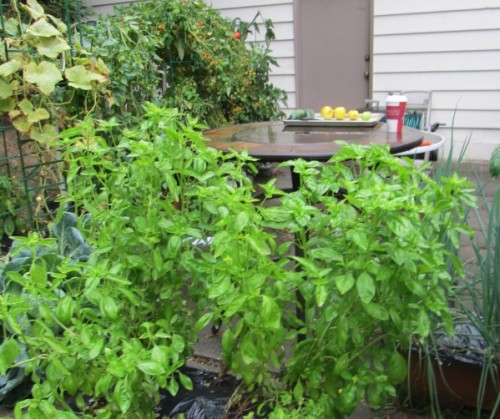
Basil – 6.3 pounds. As mentioned in a previous post, basil is the reason that two EarthBoxes became twelve. We’d had great success with no effort on a fresh herb that we love. The QFC price in September was .66 oz for $2.79. That’s $4.22 per ounce – 6.3 pounds would cost $425. If you’re thinking about doing EarthBoxes, do basil. Just make sure it gets lots of sun, remember to water, and prune it when it wants to flower. That’s it.
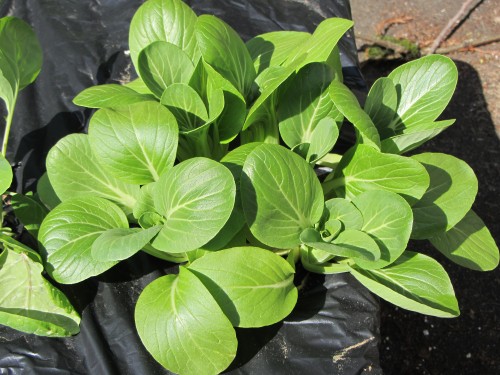
Bok Choi — 0.7 pounds. A cool weather vegetable that was started too late in the spring (April 20), then got buried under the brussels sprouts, then went to seed when it got warmish. What we thought was one plant was actually multiple plants, so they wound up cramping each other as well. Total user error start to finish. We’ll try again in 2014.
Brussels Sprouts — 1.0 pounds and counting. What we thought was one plant was really four. (again) These weren’t planted until April 20. (again) In retrospect, the correct way to do them is to start earlier and make sure to cover them with tulle to protect against cabbage moths. The sprouts were super slow to mature, and the final yield won’t be very much, but they’re a favorite at dinner around here, so they’ll get another shot in 2014. As a flat guess, the maximum yield could be about 1-2 pounds per plant — six plants per box would equal maybe 10 pounds total(?) Twelve pounds of brussels sprouts would be a *lot*.
Cilantro — 0.8 pounds. Planted on May 5, which was way too late, and it bolted before producing a whole bunch. There is now some cilantro in the plant house. I don’t know that it’s loving the cool weather, but it’s not bolting either, so we’ll see. The parsley is definitely the happier plant house resident right now.
Dill — N/A. Planted with the cilantro and parsley in the spring, it bolted before we got a whole lot out of it. On the other hand, it did make for one delicious salmon dinner. Needs another shot in 2014.
Spinach — zero pounds. Planted too late (April 20), it bolted instantly when we had two or three warm days in early May. There’s now spinach growing (slowly) in the plant house.
Bibb Lettuce — 2.0 pounds. Planted on April 20. Too late. Harvested using the cut and come again technique, two pounds is more than it sounds like, and we got some nice salads out of these plants. Still, this is another plant that might have had a dramatically better yield if it had been handled correctly. The slugs didn’t help out either.
Romaine Lettuce — 2.3 pounds. Same story as the Bibb. I’d like to think we could get 7-10 pounds of lettuce out of one box next spring. I think the “right answer” is succession planting three or four boxes in the early spring, then replacing the lettuce with summer vegetables as it warms up.
Bok choi.
Parsley — 0.3 pounds. That number doesn’t look right, but maybe it is. Planted too late…yadda. yadda. yadda. There’s currently some in the plant house that’s looking pretty happy. In theory it’ll last through until the spring. Fresh herbs in December and January would be nice.
Scallion, Bunch Onion — ~2 pounds and counting. They’re still out there. It was scallions in the spring, and now bunch onions in the fall and winter– nice placeholders.
Lemongrass and Shiso — N/A. The lemongrass is doing well. It needs to be divided and replanted, assuming that it survives the winter. The shiso was a cool idea in theory, but in reality we couldn’t use the huge bush that it evolved into. The lemongrass and shiso also squished the hot pepper plants. The lemongrass may just get a standard pot next year.
There was a whole lot of living and learning going on this year. Hopefully the 2014 yields will be dramatically better with more experienced humans.
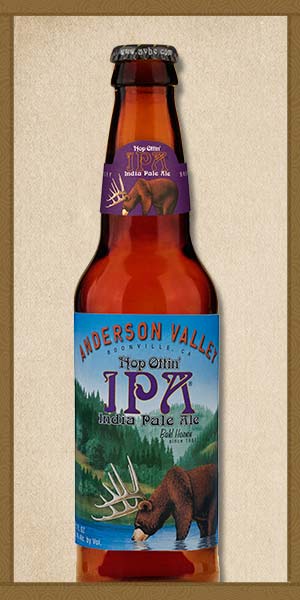
Anderson Valley makes some interesting beers, many of which I definitely like. I happened to be out at Beveridge Place Pub in West Seattle and saw Hop Ottin’ on tap and, never having had it before, I felt compelled to try it.
From the Anderson Valley website:
Hops. They are the cornerstone of India Pale Ales around the world, and our Hop Ottin’ IPA is no exception. Handcrafted with copious amounts of Columbus and Cascade, this beer is a showcase of bright citrusy aromas, bold grapefruit and pine-like flavors, and the resiny bitterness that hop heads crave. With a brilliant, deep amber color and solid malt backbone, hints of citron, roses, and bergamot climax with a dry, herbal finish in this well balanced interpretation of a West Coast IPA.
FOOD PAIRINGS: Garlic fries, curry chicken, mahi fish tacos, carrot cake cookies
CHEESE PAIRINGS: Sharp Cheddar, Gorgonzola
GLASSWARE: Pint Glass
ALC/VOL: 7.0%
BITTERNESS: 78 IBU
MALTS: Pale Two-Row, Crystal (40L), Munich (20L)
HOPS: Columbus, Cascade
AVAILABILITY: Year-Round: Draft, 22oz & 12oz bottles, 12 oz cans
The beer pours pale amber/orange in color with floral hops and grain on the nose. Slightly floral and sugary with the initial sip, the beer yields large amounts of burnt orange peel as the dominant flavor in the beer with hints of slightly astringent hops. It felt really out of balance – not really dominantly bitter, or floral or citrus, but all of those were present and it felt like the beer wasn’t sure where it wanted to go. The balance got slightly better as it warmed, but it was still off-kilter and really didn’t enjoy it.
I think that Hop Ottin’ was the first disappointing Anderson Valley beer that I have come across and it shows with an unspectacular 2 fur trappers out of 5.
An interesting article from Bloomberg about how “Mexican” Coca-cola isn’t all that Mexican.
The best part here:
But when Francisco Garza Egloff, chief executive of Arca Continental (AC*:MM), Coca-Cola’s Mexican bottler, let slip in an earnings call two weeks ago that the company is considering using more corn syrup to cut costs (the government would soon approve a tax on junk food), America’s small but vocal Cult of Mexicoke freaked out. It was enough to prompt a reversal of sorts from Arca, which subsequently vowed to continue using only cane sugar in the Coke it exports to the U.S. Call it a New Coke moment in reverse for the maker of Mexican Coke. The uproar also revealed that much of the Coke sold south of the border already contains high-fructose corn syrup. Arca’s corn-to-sugar mix for the soda it sells at home is around 50/50.
Dunkelweiss is a style that you just don’t see too often in Seattle, so it was a nice surprise when NW peaks decided to brew one as part of their Mountainbeers series.
From the NW Peaks Website:
The name. The mountain. Lichtenberg mountain is situated just off of the PCT overlooking Hwy 2 east of Steven’s pass. Lichtenberg rises from the shores of Lake Valhalla, a deservedly popular day hike or snowshoe destination. The upper slopes above the lake offer some rock climbing routes as well as a few gully scrambles to reach the summit. However, we went up in the winter when accessibility, terrain, and the N ridge were great for skiing. A great place to frolic in any season.
The Beer. The dunkelweiss style is slightly lesser known than its hefeweizen cousin, but has many similar attributes – the most pronounced being a low ABV, light body, and refreshing – with significant notes of banana and cloves. We brewed this German style with the typical amounts of wheat and munich malts, and added a little chocolate malt to give it some color and add some darker essence. We fermented Lichtenberg with the same strain of yeast that weihenstephan uses which produced a nice banana character and some clove notes. The result was a light-bodied, cloudy, dark beer with the nice banana and clove character.
Malts: Wheat and munich with a tad of crystal, chocolate, and flaked. Hops: Hallertau. ABV: ~4.25%
The beer pours amber brown in color with note of roast and caramel appearing first on the nose, followed by copious amounts of malt. A slight sweetness appears on the initial taste, yielding quickly to light roast coupled with some toffee and caramel interspersed. The finish is a bit short by pleasant – hints of malty sweetness that fades quickly. The flavors are more pronounced as the beer warms, 47-50 degrees seeming to be the sweet spot, where you can really appreciate the balance between the stronger roasted flavors and the sweetness of the malt. Overall, a nice beer for a cool, rainy day hanging out with friends and watching some sports on TV around a roaring file.
NW Peaks paints a work of art with the Lichtenberg Dunkelweiss with 4 Crows in the Wheatfield out of 5.
Maybe I should just sell my remaining stash of Sink the Bismark and Tactical Nuclear Penguin. They did only cost me about $75 per bottle…
BrewDog Beers Commanding Stupid Money in Oz(Sydney, Australia) – Although hardly a phenomenon unique to Australia, BrewDog beers are commanding big bucks “down under.” The Australian is reporting that a Dan Murphy liquor store “sold out of $169 BrewDog Tactical Nuclear Penguin, a Scottish tipple that is double-barrel-aged for 14 months and has a 32% alcohol content.” The liquor store chain is also sold out of BrewDog’s Sink The Bismarck India Pale Ale, which sells for $200 a bottle!
Nah. Those are both getting opened in a forthcoming beer tasting. I just need to figure out when to have it.
My precious. You won’t be going to no hobbitsis lands.
 A few months back, the NW Peaks Mountainbeers were both pale ales, brewed with different hop varieties. I was excited for both of them, but especially for the Silver Pale Ale, which included spruce tips in the beer.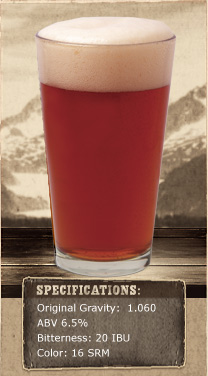



 FlatbreadGarden