One Year Back Into Playing Chess — Evaluating What Worked And What Didn’t

I’m almost exactly one year back into playing chess after decades away. I’ve been playing Rapid (10 minutes + 5 seconds per move) on Lichess and I’ve gained around 300 points on that platform in the year since my return. I hit a plateau in May and it took me a few months to (I think) determine what I could be doing differently to continue to gain rating. More on that subject lower down the post.

When I came back I started collecting books, which, from a “getting better” standpoint… many books won’t make you better at chess, especially when you buy a whole bunch of them and there’s not enough hours in the day, so some just sit on the shelf. But for me it’s fun to collect books about things I’m interested in, and I happen to work about two blocks from a used bookstore that’s on my way home. It was going to happen that I wound up owning a lot of books.

I now have 15-20 books on openings, most of which have been at least somewhat useful. One thing I’ve decided is that generally speaking “repertoire” books are mostly a waste of time. With only one exception I only use bits and pieces of the repertoire books that I own. So I wind up with 4 or 5 books on the Caro Kann and just use various chapters from each book. Alternately I just use them for reference ideas after I’ve decided on my opening lines on my own.

I also have another dozen or so books on strategy, about six or more game collections, and four or five books on tactics, and a hodgepodge of books that fit into multiple categories.

You don’t know what you don’t know. And I’m sure I still don’t know what I don’t know.

To summarize: I bought a bunch of books. I installed a games database handler (SCID vs PC) and made game collections of games based around openings from grandmasters I wanted to emulate. I created opening lines from the GMs and Lichess Opening Explorer, focusing on solid positions with pawn structures I’m comfortable in, and that the engine and peer results don’t hate. In the process I decided I was best as a positional player and I leaned into study of positional play. And that worked to a point.

One big eye opener was (finally) getting a weekly sparring partner who is around 300-400 rating points better than I am. Going in I knew I was going to lose a lot. I definitely didn’t think I’d lose That Much.

But that has been a good thing. It’s become extremely obvious what I could be doing better.

I’ve now realized what’s holding me back is mostly tactics. And blunders, but those two things go hand in hand. I thought my tactics were “fine” — “I’ve been playing chess forever, of course I know what a fork is, what a pin is, what a discovered attack is…” Hubris. The people who say chess is 99% tactics I think are overstating it somewhat, but tactics are massively important.

In the last few months I’ve acquired three books of tactic puzzles/problems:

Prior to getting the sparring partner I bought Laslo Polgar’s “brick” of 5334 puzzles. And it sat on the shelf for at least a couple of months. (“I know tactics”..) I then went through the first ~400 puzzles and it did seem to be helping, so it’s now the book I spend the most time with. The Mate In Two problems in particular have been very helpful with improving calculation and visualization. Initially I’d have to stare at many of the problems for a while before the answer would click. Having to stare for a while is much less common now, and I’m getting many more of the answers is a minute or two.

Then when I started getting my doors blown off regularly I decided I needed tactics books that were more specifically about “tactics”, I settled on these two books:

1001 Chess Exercises For Beginners. I’m about 250 problems in on this one. I like that it’s organized by tactic. Some of the problems are a little longer than two moves but nothing crazy. I think it’s a good start. I’ll either go through the book again when complete or move on to the 1001 Club Player level book. Or another lower level book. TBD.

Susan Polgar’s Chess Tactics For Champions is now back on the shelf. I made that decision after I encountered a solution to a problem that was five moves long and the solution involved a queen sacrifice, tossing a rook, and a pawn promotion to a knight. Never ever ever going to happen in a game. Maybe if I stuck with the book it would help my creativity and problem solving, but for right now I’ll plan to revisit it in the future.

If I had the year to do over again I may have still have collected a bunch of books because that was fun. As far as reading I would have focused on-

Opening books:

Fundamental Chess Openings. I think this might be the only opening book beginner/low intermediate players “need”. Terrific explanations of the first 5-10 moves of literally every opening.

The Slow But Venomous Italian is a great book and my go-to e4 opening, so it gets a *lot* of play.

The Nimzo books have been helpful, if far from essential. I especially liked the Easy Nimzo-Indian by John Emms — that produced a few “a-ha” moments for me. I like playing the Nimzo, and I’ll play Nf6 whenever I see 1.d4. I’ve enjoyed having the 3-6 Nimzo (and related) books in my collection. Having said all that, I wouldn’t recommend the Nimzo to new players. It can be played in a million ways and it has several distinct branches, so it’s not “plug and play”.

Middle Game:

I enjoyed Watson’s : Secrets of Modern Chess Strategy: Advances Since Nimzowitsch. I picked this up early on in a used book store for relatively little money. Given the last time I read books it was authors like Lasker, Nimzowitsch, and Kmoch, this book helped bridge the gap towards the turn of this century rather than the last one.

I got nothing out of Silman’s Reassess Your Chess. I thought it was a new coat of paint on old ideas and I thought it was somewhat remedial. And I don’t love his writing style. I think the Seirawan books are better, and I’ve seen those for as little as $5 at used book stores. Seirawan’s Winning Chess would be good for new players, his Winning Tactics, Winning Strategies, and Brilliancies are all good books.

Endgame:

I recently purchased Mastering Endgame Strategy and Fundamental Chess Endings. I own Silman’s Complete Endgame Course and didn’t love that one either. There are numerous recommended endgame books, so long as I stay out of the real deep end the two new books should be helpful — I’ve already learned things from the Mastering Endgame Strategy book and I’ve only had it a few days. I also own Capablanca’s Best Endings, I haven’t had a chance to get to it, but it’s supposed to be excellent.

Very Non-Essential Game Collections:

I always loved Alekhine’s games as a teenager, though I could never hope to play in his style. I’ve beeen going through his Best Games collection and it’s been very entertaining.

Others in the collection are Zurich 1953, Fisher’s 60 Memorable Games, Capablanca’s Immortal games, Seirawan’s Brilliancies, an older edition of The Mammoth Book of Games, and Understanding Chess Move By Move by John Nunn.

Final Thoughts:

Really, had I started with a good tactics book or two and Fundamental Chess Openings and played more I’d be about where I am now or possibly ahead. But it’s about fun, and I’ve enjoyed reading all the books and all the inexpensive thrift store or clearance chess sets — pics of the chess sets may get it’s own post at some point.
Trying To Catch The Deluge In A Paper Cup — Sorting Through An Ocean Of Ideas Related To Chess

There’s basically an infinite amount of information available for free or nearly free when it comes to learning about any specific aspect of chess. Especially chess openings, people as a group love books about openings. And used books are “nearly free”.

Part of the “problem” is sorting through so much information and determining what openings will be the best fit for you when you won’t really know what’s best for you until you get there. And even when you think you’ve gotten there you’re not really there, chess goes on forever, and it’s hubris to think you really know anything. You’re always doing the best you can with imperfect knowledge and that’s how it goes.

When I was re-starting the hobby I decided that I wanted to learn the Caro-Kann opening. The thing is, most books aren’t broadly about a selected opening — many or most are “repertoire” books. What that means is that the author has picked out responses to the moves that the opponent could play and that’s the cross-section ideas that the book presents. Often the moves will represent one general approach and they’ll be internally consistent with each other. Mostly.

What I ran into was that two Caro-Kann books each had ideas that agreed with how I wanted to play the opening, but I wound up using 70% of one book and 30% of another specifically because the 70% author decided to throw in a “twist” for one very common series of moves. The thing is, while I do settle on a specific repertoire for each opening I’m much more interested in the concepts behind each one. Knowing the ideas is at least as important as memorizing the move orders themselves. The foundational ideas make the memorization easier, and they give you a backup if you blank on a move during a game.

I’m also learning the Nimzo-Indian, and that’s involved three books because (I think) the writers feel like if they don’t offer something new and novel then they’ll either be accused of copying an earlier idea, or the book won’t sell if it doesn’t offer something “fresh”. The books are all a hodgepodge of “solid” stuff mixed in with somewhat interesting-probably-not-very-accepted novelties. One way I’ll check a line is to go Lichess Opening Explorer and see how that line performs at the master level and around my level. If the line is a dog at both levels I’m going to pick something else that still fits within the framework of stuff I’m comfortable playing. Ideally the line should agree with what my “guys to emulate” (The “Posse”) would play as well.

As I write this, it’s raining and the mail carrier came and went. I just rescued another used/new to me book from the mailbox. It’s a well-regarded book on the Slav opening, and it has an overview of the core ideas and annotated instructive games. At the very least it should help broaden my knowledge of Black’s responses to White queen pawn openings. As of right now I’m using a combination of the Nimzo/Bogo/Queen’s Indian defenses, so the new material might be fun for some casual games to get a feel for it, though at this point I’m enough invested with what I’ve already chosen that I wouldn’t make a permanent change away from that existing group of openings lightly. Additionally- of the nineteen guys in my “Posse” database, only one plays/played the Slav as Black as their primary opening. For the other 2/3rds it’s primarily Nimzo.

So hopefully I’m on the right track.

Emulating Role Models And How I’m Applying It To Chess

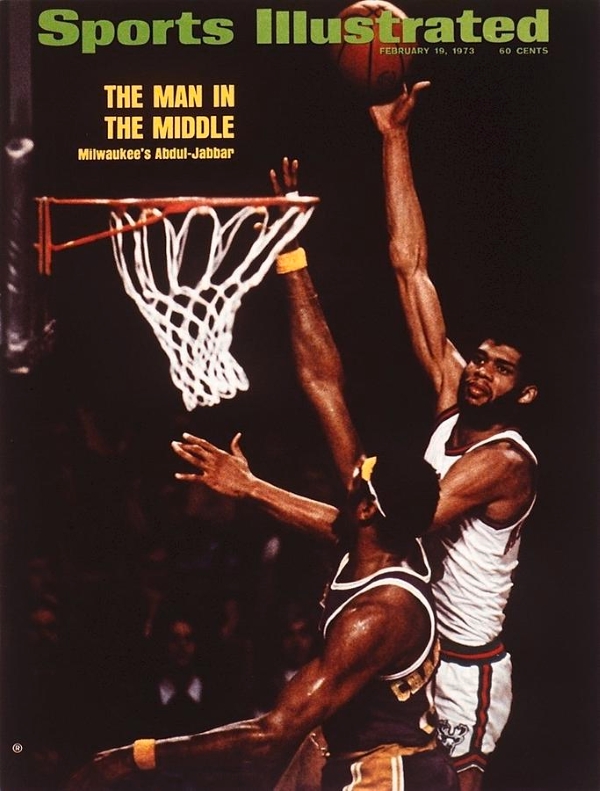
When I was a young basketball player I tried to copy the style of Kareem Abdul Jabbar. After a while I developed a very passable version of his Sky Hook.

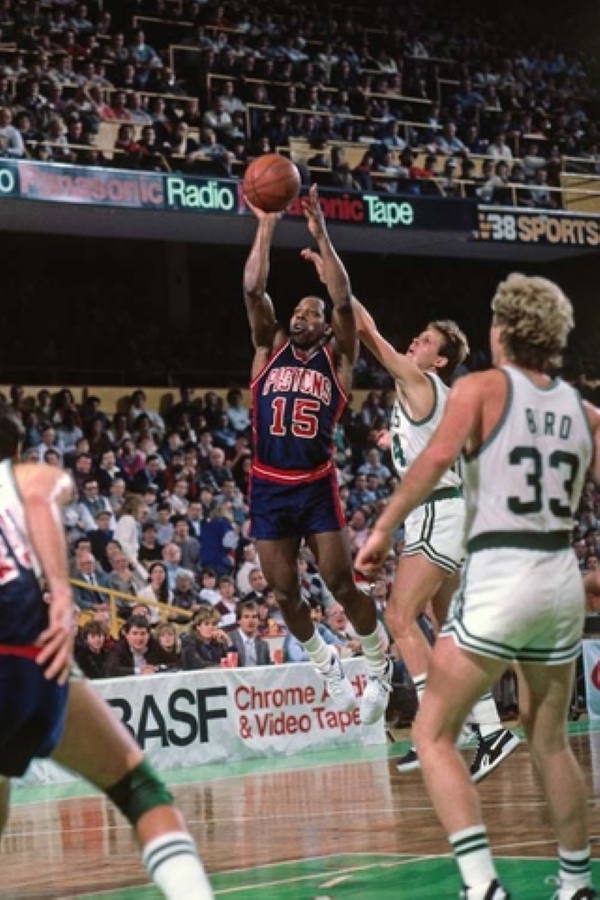
When it became clear I wasn’t going to grow to be over seven feet tall I changed the guy I was copying to Vinnie “The Microwave” Johnson. Vinnie is best remembered as the first guard off the bench for the Bad Boy Pistons of the early 1990’s. He was exciting and he could score in bunches from all over the place, hence the nickname “The Microwave”. He wasn’t much of a three-point shooter but he didn’t let that stop him. And that’s how I made the transition from “big” to “guard”, by copying a guy who was stylistically nothing like Kareem. A whole lot more of my practice time went into shooting jump shots and ball handling rather than Sky Hooks.

I think there are many times in life when learning how to do something that it’s helpful to find someone who’s good at that thing and try to emulate how they do it. It could be any activity from basketball to baking bread. When searching for a model to emulate I need to see their style as attractive and/or efficient, and it should be a style I think I can potentially copy reasonably closely, even if my version is pitched at a lower level.

When playing chess I’ve decided that I play best as a quieter positional player, rather than a player who’s more focused on fireworks and tactics. As a teenager – emphasizing tactics, deep calculation, and using memorization-dependent openings was a realistic way to play. As an adult With Things To Do I’m much happier squeezing opponents positionally until they crack.

In light of that, I used SCID vs PC to make a White database and a Black database for the players I’ve decided I want to try to emulate. I don’t think it’s a perfect list, but it does allow me to go to the Tree Window in SCID, look up a specific position, and see how it was played by my group of model grandmasters. The model grandmaster list is below, with a little (partially AI generated, then edited by me) blurb that describes a bit about how each one plays.

I’m sure I’ll add/remove guys from the list over time. But for now it’s enough total players, both old and new, that it should cover most situations I’m likely to run across over the board. It’s also enough of a sample size for Wisdom Of The Crowds to kick in. My nickname for the group is “The Posse”. As in: “Let’s see what The Posse has to say about this position”. I think the name is fun and irreverent, so there it is:

Adamsdeeply strategic, focusing on building small, incremental advantages without taking unnecessary risks
Anderssonextreme positional solidity, elite prophylaxis, and a “slow squeeze” technique
Botvinnikgrip his opponent in a vice straight from the opening,  then squeeze him methodically
Capablancasupreme simplicity, incredible speed, and profound positional understanding
Dorfmanhighly structured, positional, and “algorithmic” approach to chess
Dreevactive positional style
Fischeruncompromising, aggressive, and highly principled approach
Gelfandpositional and classical player known for deep strategic understanding, precise maneuvering, endgame
Girisolid, positional, and deeply theoretical style of play
Karjakansupremely solid, defensive, and positional player “Minister of Defense”
Karpovimproved his position by positional understanding. Few risks, few mistakes “Boa Constrictor”
Leko“cemento” (cement), “clean and clear” style focused on extreme solidity, positional mastery, endgame
NimzovichHis approach was strategic, patient, and often aimed at forcing zugzwang
Petrosianextreme caution, deep strategic planning, and an almost impenetrable defense
Reshevskygrinding. “calculating machine” who thrived in complex, closed positions
Rubinsteinpositional, logical, and technical style, often focusing on accumulating small advantages, endgame
Seirawanpositional, strategic, and classical. compared to a “19th-century player” for his complex, slow-burning games
Smyslovharmonious, profoundly positional style, often described as a modern-day Capablanca
Tiviakov“rock-solid” positional style, deeply rooted in the classical Russian school.

They all play differently. You could (correctly) say that some play very differently from others. But if I can play like a poor-man’s amalgamation of that group with any consistency I’ll be pretty happy with it. To date I’d mostly been “following” Adams, Karpov, and Tiviakov as models. I recently added Capablanca. Those four guys will be the tie-breakers when there’s a difference of opinions in the databases.

None of this is anything I could have conceived of as a teenager. It’s pretty neat that these tools exist now.

In conclusion, a picture of Vinnie because Vinnie deserves some love too. Here he is beating Danny Ainge off the dibble:

Scid vs PC. Thoughts About The Getting Started Process

I think I now have the very basics of Scid vs PC together. Initially I was somewhat hesitant to get involved with the setup because I wasn’t really sure where to go or what to download. And because I wanted to focus on other things chess. Then there was the word “database”, which can often translate to “Byzantine”, which was also a turnoff. To try to warm up to the idea I watched parts of a few (mostly dry) videos and chose to dive in.

Here’s how I got started:

I downloaded Scid vs PC here.

I ultimately decided to start with just the OTB (Over The Board) files at Lumbra’s Gigabase. It’s actually about ten zipped files containing 9 million+ games of OTB, split up by years or decades (or more). The free unzip utility I used was 7-Zip (here).

The “trick” is to download all of the zip files, create a new database on Scid vs PC, then load each unzipped file into that database so all the games are in one larger db file. Then save *that* file to a new name. That’s the file to be used going forward.

There are millions of online games available at Lumbra’s as well. My feeling is that I may download them at some point, but for now I’m mainly interested in parsing the database for masters OTB games. For example: as White when I play e4 and Black responds with the French defense – I like to play the Tarrasch variation. For model games I can search the main database for just that ECO code, and further narrow my search for GMs I’d like to try to emulate in that opening, for example, Michael Adams. Even better, search terms can also include things like “White Wins”, or “Only games with between X and Y total moves.” I used that last feature to remove super long games since what what I’m really interested in are the openings and middlegames — I can study endgames separately. All of these options are available in the General Filter.

In Scid vs PC there is always a “scratch pad” database open called “Clipbase”. If I search and get say 15 games from one GM and 20 from another, it’s literally a drag and drop process to combine all of those games into the Clipbase, which can then be saved as a new database or exported as PGN game files (or a bunch of other options I haven’t really played with yet.) Note that Clipbase doesn’t and won’t save, so make sure to save what’s in Clipbase as something else if you care about the contents before you close the program.

One neat thing about the PGN export option is that by combining the model games into groups of a maximum of 64 PGNs they can then be easily imported into (also totally free! yay!) Lichess Studies, and Lichess Studies automatically divide the PGN files out into one game per Chapter. So I can have a Study of model games of one particular opening I’m interested in, (or one GMs selected games), and I can share those Studies with friends. (If you want the Study to stay “yours” then Select Unlisted (no one else can see) when creating it and invite your friends as Members. It’s also possible to set “Allow Cloning” and “Share and Export” to “Only Me” if you’re concerned with a Study getting broadcast. There’s no way to “un-ring the bell” if a Study gets public.)

A Note regarding importing bulk PGNs into a Lichess Study: I like to work through model games with the color I intend to be playing at the bottom of the screen — Lichess Studies give you that option to have Black or White at the bottom at the time that you import. If you forget to toggle Black or White at the bottom during a bulk game import then the only way to flip the games is one at a time. Which means you’re better served just trashing the Study and getting the import orientation right the second time.

With Scid vs PC it’s possible to download different analysis engines. It’s also possible to download your own games from your chess website of choice. I haven’t done it yet but you can search the database for specific positions, or specific pawn structures, or search by the material that each side has remaining.

That’s not close to everything you can do with Scid vs PC, I’d recommend checking it out. I think it’s a really nice tool that when combined with the Lichess Studies makes viewing selected games on the go very convenient. I’ve also used the Scid vs PC and Lichess Study combo to put games that are in a paperback “Opening” book into a Lichess study, so I can follow along on my phone or laptop rather than getting a board out and moving pieces around.

Again, highly recommended and not nearly as scary as it all sounds.