Dessert Island Cookbooks

By Iron Chef Lefotvers

I recently saw a list of the top 10 selling cookbooks for 2012 and it is a rather disappointing list, led by the Barefoot Contessa’s new tome. It got me thinking, if I were stranded on a dessert island (no that is not a typo, I really would love to be stranded on a dessert island; a desert island just doesn’t seem like it would be all that much fun) and could only have 10 cookbooks/food related books with me, what would they be? Let’s just assume that I, for some reason, have a fully stocked kitchen and pantry (just don’t ask me how).

Here is my list, in reverse order:
If you were to own just one book on cooking, this should be it.

10 – Silver Spoon – it is generally considered to be the most complete Italian cookbook ever created and didn’t exist in an English translation until about 10 years ago. If you are serious about Italian cooking, you should own this monster.

9 – Charcuterie by Michael Ruhlman. If you watch No Reservations, you know who Ruhlman is. This is a survival guide to curing meats which would come in handy in a stranded situation. It is also an in depth read about the how and why of charcuterie.

8 & 7 – I’m Just Here for the Food / I’m Just Here for More Food by Alton Brown. More useful for why and how things work with cooking than for recipes, I can pretty much assure you that if you ever had a recipe fail, you can find out exactly why here. Be careful, these books are a gateway drug into the world of molecular gastronomy.

6 – On Food and Cooking by Harold McGee. The book is incredibly long (800+ pages), very technical in parts and is not a quick read (it took me over a year to read it cover to cover), but it is probably the single most important book on food ever written. It covers pretty much every aspect of food and food science and you should have it on your bookshelf as reference even if you never read it cover to cover. I doubt there has been a food book written in the last 20 years that has not cited this one as a reference in its bibliography.

5 – Modernist Cuisine at Home. Another book that is more science than recipes, it is another one that you should own, even if you aren’t into the molecular gastronomy thing. Reading this book will make you a better cook even if you never try anything from the book.

However, if you were to own just two books on food, this should be the other one.

4 & 3 & 2 – Bones / Fat / Odd Bits – by Jennifer McLagan. These books are really essential for understanding and cooking the rest of the animal and should really be looked at as 3 parts of a single book; the ultimate in utility – you realize after reading them, everything is useable. They really fill in the gap for all of the stuff that most other cook books don’t address. It doesn’t hurt the descriptions are well written and the anecdotes are funny.

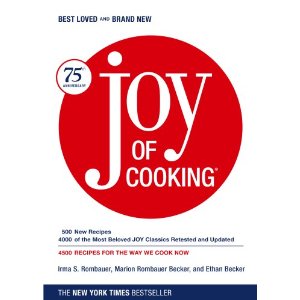
1 – Joy of Cooking – there should be a law that every home cook should have this book on their shelves since it pretty much has a recipe for everything in it. It has been updated about 14 times over its 75+ years in existence, but have some fun and get an edition that is printed before the 1960’s just to see how cooking has changed.

A Burger with Heart

By Iron Chef Leftovers

I have been accused of being a food snob over the years because I tend to shun crappy, mass produced foods in favor of items that are freshly prepared on a small scale and because I will eat things that most Americans won’t, despite, in most of those cases, most of the rest of the world does eat it.

One case in point – beef heart. Before you go “yuck”, understand this – heart is a muscle that is no different from the steaks that you eat and it actually contains significantly less fat than most other cuts of beef. It also has an incredibly beefy flavor (not the metallic flavor that most people would assume it has since it is considered “organ meat”), much more so than just about any other cut off the cow. If you haven’t tried it, you should – it is cheaper than a steak and cooks incredibly quickly so it can be prepared for a weeknight meal.

All of this lead author Jennifer McLaglan to include a recipe for a heart burger in her Odd Bits cookbook. Before you say “yuck” again, be aware that if you are eating any commercially produced burger or using commercially produced ground beef, you probably have had heart already without knowing it. As she writes:

This is a great way to try heart for the first time…

I took this recipe and made it at home without telling Mrs. Iron Chef Leftovers what was in the burgers and she loved them. I suggest you try it for yourself before saying “yuck.”

The Software
¾ lbs. brisket, fat cap on, ground
¾ lbs. heart, fat on, cleaned and ground
1 ¼ teaspoons salt
Freshly ground black pepper
1 tablespoon olive oil, beef drippings or bacon fat

The Recipe
In a large bowl, combine all ingredients, except the oil, mixing gently until combined. Divide into 4 portions and form into patties about 1 inch thick. Place the patties on a large plate or sheet pan, cover with plastic wrap and refrigerate for at least 1 hour. Pre-heat a pan or grill over medium high heat and add oil. When the oil begins to smoke, add the burgers. Cook for 4-5 minutes until a nice brown crust forms and flip, reducing the heat to medium. Cook for another 4-5 minutes until the burgers reach your desired doneness, Server with your favorite burger toppings.

Notes
I would highly recommend sourcing your heart from a small grower and preferably from a grass fed animal. You will get a better quality product with better flavor. I usually get mine from Skagit River Ranch. You probably won’t be able to find either ground heart or ground brisket easily, so you can see if you purveyor will grind it for you, or better yet, grind it at home yourself. I also added about 2 strips of uncooked bacon to my meat mix before I formed the patties and it took these burgers over the top. This comes in especially handy if the brisket you use does not have much fat. I would not recommend cooking these burgers all the way to well-done; they will dry out as a result and won’t be particularly tasty. If you are grinding the meat yourself and you have a good source, you shouldn’t need to cook these beyond medium-rare to medium. If you don’t like beef, pork belly or lamb shoulder can be subsituted for the brisket and the heart of those respective animals can be used.

Bacon Bread Pudding

By Iron Chef Leftovers
Photos By AJ Coltrane

Oh so tasty and oh so bad for you.

The Odd Bits dinner I made a while back was supposed to end with a Pig’s Blood Ice Cream. Everyone cringes when I say this, but don’t knock it until you try it. It is actually healthier than traditionally made ice cream as the blood replaces the eggs as the thickening agent and you need to use less volume of blood than you do eggs and the blood is higher in vitamins and minerals and lower in fat and cholesterol than the eggs. It is also the most intensely flavored chocolate ice cream you will ever have and no, it does not taste like blood – you actually wouldn’t even know blood is in there unless someone mentioned it.

That being said, it is freaking impossible to find usable blood in Seattle. You can get a “blood solution” but it is like jelly and will not return to a liquid state, which is fine for making blood sausage, but not so much for ice cream. As a result, I had to go to plan B on desert and went with Bacon Bread Pudding. Not exactly odd bits, but you generally don’t find many people having bacon for dessert (although you should). The nice thing about this recipe is that it is easy and can easily feed a large number of people with a minimum of effort. I adapted this recipe from Chef Larry Monaco’s original Maple Donut and Bacon Bread Pudding.

The Software

Bread Pudding:
2 cups granulated sugar
5 large eggs, beaten
2 cups milk
2 teaspoons vanilla extract
1 loaf (1.75 lbs) brioche, cut into 1 1/2 inch cubes
1 cup light brown sugar
1/4 cup bacon fat
1 lb thick sliced bacon, cooked crispy

Sauce:
1 1/2 cup of cream
1/2 cup brandy or bourbon
1/4 cup sugar
1/2 cup bacon fat or 1 stick of butter

The Bread Pudding
Spread the cubed bread on 2 rimmed baking sheets and put into a 300 degree oven for 1 hour a to 1 hour, 15 minutes until they are dried, rotating the pans half way through the process. You are essentially making brioche croutons. Let cool and place in a large bowl

Cook the bacon until it is crispy, reserving all of the fat. Dice the bacon into 1/4 inch pieces and set aside

In a bowl, combine the eggs, sugar milk and vanilla and whisk to combine. Pour the mixture over the bread and toss gently to combine (you don’t want to break up the bread). Let sit for 10 minutes for the liquid to absorb.

In a separate bowl, combine the bacon fat, brown sugar and bacon and toss to combine.

Grease a 9x13x2 baking dish with either butter or bacon fat. Put the bread mixture in first, arranging in one even layer, adding any remaining liquid from the bowl. Sprinkle the brown sugar bacon mixture on top in an even layer and bake in a preheated oven at 350 degrees for 35 to 45 minutes until set (you are looking for an internal temp of about 165-170 degrees). Remove from the oven and let stand for 10 minutes before serving.

The Sauce
Add the fat, sugar and cream to a saucepan over medium heat, whisking until the sugar is incorporated, approximately 3-5 minutes. Add the alcohol and bring to just below a boil, stirring occasionally. Reduce heat and simmer for 5-7 minutes until slightly thickened. Drizzle over the bread pudding.

Notes
I used bacon fat, but butter can be substituted for it. I would recommend using very high quality bacon in this dish as it is going to be a dominant flavor. I would caution using bacon that has been cured in maple syrup as it might cause this dish to become too sweet. The drying out the bread in the oven is critical to the creamy texture of the dish – stale bread does not absorb the liquid as well as the dried bread and will lead to a less creamy dish. If you can’t find brioche, you can use just about any bread (challah will work really well), just make sure you can slice it thickly. This recipe will serve 12 people easily, so you can scale it down accordingly.