I’m almost exactly one year back into playing chess after decades away. I’ve been playing Rapid (10 minutes + 5 seconds per move) on Lichess and I’ve gained around 300 points on that platform in the year since my return. I hit a plateau in May and it took me a few months to (I think) determine what I could be doing differently to continue to gain rating. More on that subject lower down the post.
When I came back I started collecting books, which, from a “getting better” standpoint… many books won’t make you better at chess, especially when you buy a whole bunch of them and there’s not enough hours in the day, so some just sit on the shelf. But for me it’s fun to collect books about things I’m interested in, and I happen to work about two blocks from a used bookstore that’s on my way home. It was going to happen that I wound up owning a lot of books.
I now have 15-20 books on openings, most of which have been at least somewhat useful. One thing I’ve decided is that generally speaking “repertoire” books are mostly a waste of time. With only one exception I only use bits and pieces of the repertoire books that I own. So I wind up with 4 or 5 books on the Caro Kann and just use various chapters from each book. Alternately I just use them for reference ideas after I’ve decided on my opening lines on my own.
I also have another dozen or so books on strategy, about six or more game collections, and four or five books on tactics, and a hodgepodge of books that fit into multiple categories.
You don’t know what you don’t know. And I’m sure I still don’t know what I don’t know.
To summarize: I bought a bunch of books. I installed a games database handler (SCID vs PC) and made game collections of games based around openings from grandmasters I wanted to emulate. I created opening lines from the GMs and Lichess Opening Explorer, focusing on solid positions with pawn structures I’m comfortable in, and that the engine and peer results don’t hate. In the process I decided I was best as a positional player and I leaned into study of positional play. And that worked to a point.
One big eye opener was (finally) getting a weekly sparring partner who is around 300-400 rating points better than I am. Going in I knew I was going to lose a lot. I definitely didn’t think I’d lose That Much.
But that has been a good thing. It’s become extremely obvious what I could be doing better.
I’ve now realized what’s holding me back is mostly tactics. And blunders, but those two things go hand in hand. I thought my tactics were “fine” — “I’ve been playing chess forever, of course I know what a fork is, what a pin is, what a discovered attack is…” Hubris. The people who say chess is 99% tactics I think are overstating it somewhat, but tactics are massively important.
In the last few months I’ve acquired three books of tactic puzzles/problems:
Prior to getting the sparring partner I bought Laslo Polgar’s “brick” of 5334 puzzles. And it sat on the shelf for at least a couple of months. (“I know tactics”..) I then went through the first ~400 puzzles and it did seem to be helping, so it’s now the book I spend the most time with. The Mate In Two problems in particular have been very helpful with improving calculation and visualization. Initially I’d have to stare at many of the problems for a while before the answer would click. Having to stare for a while is much less common now, and I’m getting many more of the answers is a minute or two.
Then when I started getting my doors blown off regularly I decided I needed tactics books that were more specifically about “tactics”, I settled on these two books:
1001 Chess Exercises For Beginners. I’m about 250 problems in on this one. I like that it’s organized by tactic. Some of the problems are a little longer than two moves but nothing crazy. I think it’s a good start. I’ll either go through the book again when complete or move on to the 1001 Club Player level book. Or another lower level book. TBD.
Susan Polgar’s Chess Tactics For Champions is now back on the shelf. I made that decision after I encountered a solution to a problem that was five moves long and the solution involved a queen sacrifice, tossing a rook, and a pawn promotion to a knight. Never ever ever going to happen in a game. Maybe if I stuck with the book it would help my creativity and problem solving, but for right now I’ll plan to revisit it in the future. [Edit October 18 , 2026: After several hundred Mate in Two puzzles from the 5,334 book I pulled Chess Tactics for Champions off of the shelf and it seems to be a pretty normal tactics book. I think that the 5,334 puzzles book got me thinking of solutions only in a binary “yes” or “no” rather than “best”. Chess Tactics for Champions is loosely on par difficulty-wise with the 1,001 puzzles book and it’s back in the rotation. Though I do wish that the solutions always started with the actual solution, rather than a few sentences about not-answers first.]
If I had the year to do over again I may have still have collected a bunch of books because that was fun. As far as reading I would have focused on-
Opening books:
Fundamental Chess Openings. I think this might be the only opening book beginner/low intermediate players “need”. Terrific explanations of the first 5-10 moves of literally every opening.
The Slow But Venomous Italian is a great book and my go-to e4 opening, so it gets a *lot* of play.
The Nimzo books have been helpful, if far from essential. I especially liked the Easy Nimzo-Indian by John Emms — that produced a few “a-ha” moments for me. I like playing the Nimzo, and I’ll play Nf6 whenever I see 1.d4. I’ve enjoyed having the 3-6 Nimzo (and related) books in my collection. Having said all that, I wouldn’t recommend the Nimzo to new players. It can be played in a million ways and it has several distinct branches, so it’s not “plug and play”.
Middle Game:
I enjoyed Watson’s : Secrets of Modern Chess Strategy: Advances Since Nimzowitsch. I picked this up early on in a used book store for relatively little money. Given the last time I read books it was authors like Lasker, Nimzowitsch, and Kmoch, this book helped bridge the gap towards the turn of this century rather than the last one.
I got nothing out of Silman’s Reassess Your Chess. I thought it was a new coat of paint on old ideas and I thought it was somewhat remedial. And I don’t love his writing style. I think the Seirawan books are better, and I’ve seen those for as little as $5 at used book stores. Seirawan’s Winning Chess would be good for new players, his Winning Tactics, Winning Strategies, and Brilliancies are all good books.
Endgame:
I recently purchased Mastering Endgame Strategy and Fundamental Chess Endings. I own Silman’s Complete Endgame Course and didn’t love that one either. There are numerous recommended endgame books, so long as I stay out of the real deep end the two new books should be helpful — I’ve already learned things from the Mastering Endgame Strategy book and I’ve only had it a few days. I also own Capablanca’s Best Endings, I haven’t had a chance to get to it, but it’s supposed to be excellent. [October 18, 2026 edit: Capablanca’s Best Endings is terrific. I hope to complete the book by around Thanksgiving at the latest — it’s now the “game collection” book I’m focusing on, supplanting the Alekhine book (below). I also added the old edition of Sherevsky’s Endgame Strategy book, which I expect to be the endgame book I’m focused on for a while.]
Very Non-Essential Game Collections:
I always loved Alekhine’s games as a teenager, though I could never hope to play in his style. I’ve beeen going through his Best Games collection and it’s been very entertaining.
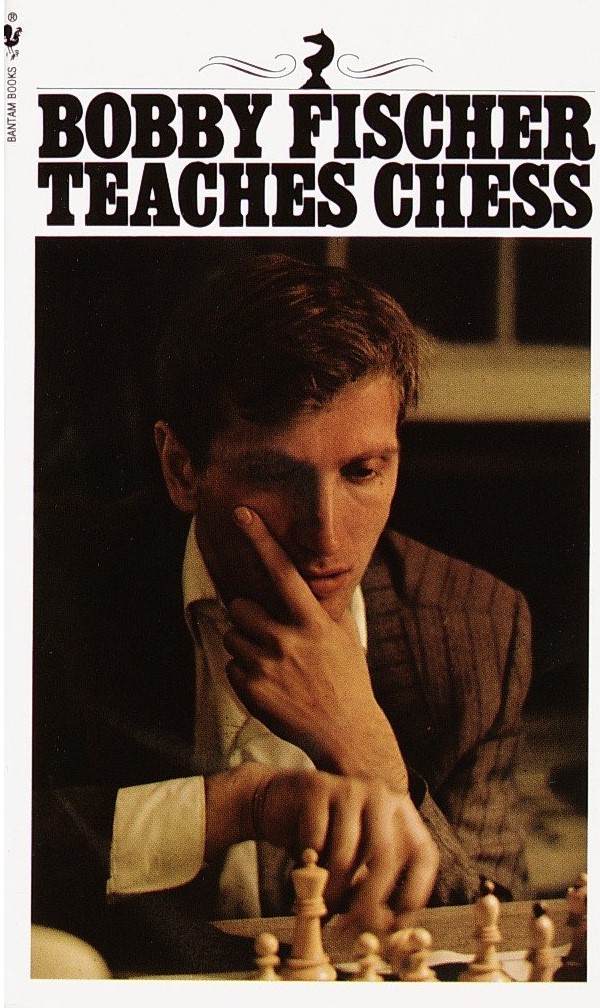
Others in the collection are Zurich 1953, Fisher’s 60 Memorable Games, Capablanca’s Immortal games, Seirawan’s Brilliancies, an older edition of The Mammoth Book of Games, and Understanding Chess Move By Move by John Nunn.
Final Thoughts:
Really, had I started with a good tactics book or two and Fundamental Chess Openings and played more I’d be about where I am now or possibly ahead. But it’s about fun, and I’ve enjoyed reading all the books and all the inexpensive thrift store or clearance chess sets — pics of the chess sets may get it’s own post at some point.