Beer of the Week: NW Peaks Black Berlinerweiss

By Iron Chef Leftovers

untitle8dWhat can I say, I am sucker for sour beers.  Mind you I do have my limits – if it tastes like you make pickles, I really don’t enjoy that flavor in my beer. Give me something with a hint of tartness and some complexity beyond that and I can almost guarantee that you will get me to try it. NW Peaks is back at it with their berlinerweiss, this time putting out a black version of the classic German sour, which is truly something that I had not seen before. I was excited to try it, but it meant that I was going to have to find some other folks to drink the beer with me, since my regular Mountainbeer friends are not much in the way of sour drinkers. Luckily, I know a couple beer people who were happy to share.

Unfortunately, NW Peaks didn’t put anything on their website describing the beer, but it I do remember it being something really low in alcohol (somewhere in the 3-4% range).

The beer pours light brown in color with a very light head and shows a complex nose – chocolate and roast are there without being dominating, coupled with notes of sour cherry and (surprisingly) some light notes of raisin make an appearance. All of this is supported with a tinge of floral barnyard character. The beer drinks light also, hints of roast and chocolate start before quickly yielding to a pleasantly mild sour component with hints of dried stone fruit that linger nicely before being joined at the end by light chocolate. The finish is dry and pleasant and the sour is balanced with the roast, making the beer surprisingly complex for both a small beer and a sour beer. There is an almost lightly gritty quality to the beer, giving it a very rustic quality.

If you don’t like sours, you probably won’t like this one, no matter how mild it is, but if you want to try something that is different without being completely bizarre, go for this. NW Peaks serves it in their taproom with a shot of raspberry syrup which does take the edge off the beer, but I honestly think that this one is better and much more interesting on its own without the syrup.

NW Peaks Black Berlinerweiss circles the city with a perfect 5 Alexanderplatz out of 5.
Beer of the Week: Alaskan Imperial Red

By Iron Chef Leftovers

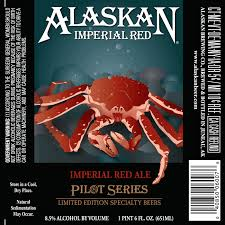
I really love the Alaskan Pilot Series beers – big beers and interesting styles made in small batches. I was excited when they released the Imperial Red for the first time and ran out to pick up a 22 oz. bottle. It wasn’t inexpensive at $9, but Imperial Red isn’t a style that you see much and I figured it was worth a shot. The beer clocked in at 8.5% ABV and 70 IBU.

From the Alaska Website:

Recently made popular by west coast American breweries, Imperial Red ales feature high hop bitterness, full-flavored caramel malt profiles and a higher original gravity. While balance is key, Imperial Red ales are more malt-forward than other hoppy American beer styles.

Alaskan Imperial Red is a full-bodied deep mahogany ale with ruby red highlights. Citrus notes of chamomile, grapefruit and Meyer lemon brighten the aroma. A zesty array of hop flavors from mango and bitter orange to green mint and hibiscus meld with the nutty, roasted caramel and subtle dried fruit flavors of the complex malt profile to create a surprisingly fresh, yet warming example of the style.

Alaskan Imperial Red Ale is made from glacier-fed water, a generous blend of Centennial, Citra, Meridian and Summit hops and premium two-row and specialty malts. Our water originates from the 1,500 square-mile Juneau Ice Field and from the more than 90 inches of rainfall Juneau receives each year.

sasdsThe beer pours deep amber red in color with notes of caramel, wheat, mild hops and just a small amount of oak and whiskey, which was odd since this beer was not barrel aged. The beer starts out with deep notes of caramel and toffee followed by heavy malt and medium hop profile with just a hint of bitterness. The finish is slightly syrupy and sweet without a great deal of complexity. The balance is slightly better as it warms but it was really lacking direction and focus and I got none of the hop character I was hoping for, especially with the high expectations I usually have with Pilot Series beers. I am wondering if I may have had a bad bottle since I did start to detect notes of wet cardboard toward the end of the beer.

Alaskan Imperial Red casts its pots but hauls up a disappointing 2 Paralithodes camtschaticus out of 5.

A New Weekly Feature at CSE

By Iron Chef Leftovers

In an effort to bring in more readers and further expand the scope of the blog, we have hired a new wine writer to produce a weekly review of wines. He comes well recommended with extensive wine knowledge and many years in the industry, so I will introduce you to Larry LeCroc, our new wine expert. Please welcome Larry to the CSE family, we look forward to many years of his insight and enrichment of the blog. For now, you will find him posting on the blog on Sundays.

A Sake Tasting

by A.J. Coltrane

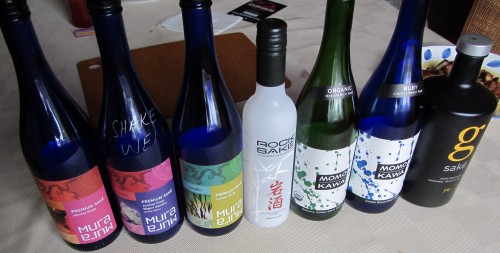
We did a light dinner/sake tasting last night with a total of seven attendees, including us. As a group, nobody really knew much about sake going in. We’d previously decided that the right way to learn was to buy a bunch of bottles and do a big side-by-side tasting. With the exception of #4, the bottles mostly ran in the $17-25 range. This represents “mid-tier” in the sake market — anything better likely would have been wasted on us. All were served out of the wine refrigerator at 55F. The Gekkeiken website recommends 50-59F as an appropriate temperature for the varieties that we were drinking.

140302 sake

The list for posterity — The brand and title are in bold, followed by the type of sake, the text on the bottle is in quotes, then our impressions are in italics:

#1 – Mura “Canyon”. Junmai Ginjo. “Aromatic, crisp and dry with green apple and mineral notes.”  Dry. We intentionally opened with three somewhat contrasting sakes, to try to cover as many bases as possible before everyone’s pallets were shot. Well liked.

#2 – Mura “Mountain”. Junmai Ginjo, Nigori Genshu. “Shake well.” (It’s the only cloudy sake that we served.) “Rich and complex. sweet, full bodied, delicate coconut and tropical fruit aromas.”  The sweetest sake that was served, and big hit with the youngest person at the table.

#3 – Mura “Meadow”. Junmai Ginjo. “Rich Custard Aroma. Smooth lingering finish. Well balanced.” Balanced between sweet and dry. This one was a big hit with everyone.

#4 – Rock Sake. Junmai Daiginjo. “blah, blah, blah…and pure mountain spring water results in a delicate sophistication of aroma and flavor.”  The most expensive bottle with the least descriptive text. Very, very smooth. One taster remarked that it was reminiscent of wine — that it almost didn’t taste like sake.

#5 – Momokawa “Organic Medium Rich”. Junmai Ginjo. “Vibrant tropical aromas open this fruity, medium-bodied organic sake.” This one drew a few comments such as “When I visualize what sake is supposed to taste like, this is what comes to mind.” Another big hit.

#6 – Momokawa “Ruby Lightly Sweet”. Junmai Ginjo. “Lush fruit and dense rainforest aromas with layered tropical fruit and red berry flavors.” #5 was better liked than its cousin here, but this one is still solid.

#7 – Sake “G”, “Joy” (A squat black bottle.) Junmai Ginjo Genshu. “Intense deep lush layers of flavor.” Everyone had already decided what they liked by the time we got to this one. It was a nice bottle, but nobodies’ favorite. I think to some degree seven sakes was one or two too many.

Most of the sakes (perhaps predictably) recommended pairing with seafood and other  “lightweight”  foods. With the sakes we served:

Proteins:  Smoked salmon (from a bottle recommendation), ginger beef, Chinese BBQ pork.

Starches:  Wheat thins, Triscuts, No-knead bread, Pita bread.

Cheeses:  Smoked Gouda, Emmentaler (at least one of the sakes called for Swiss cheese), Kefalotyri, Montasio (the last two were recommended by the cheese monger, and they worked very well)

Dips and spreads:  Butter, Dill (sour cream) Dip, Roasted red pepper (sour cream) dip, tzatziki.

Fruits:  Cantaloupe, Honeydew, Strawberries, Red Grapes.

As a guess, I’d say #1, #3, and #5 were the most universally liked, but I’d feel comfortable serving any of these to guests. Ultimately it’d be about the pairing.

Really, I don’t think you could go wrong with any of them.

Beer of the Week: Populuxe Fresh Hop Chinook Pale Ale

By Iron Chef Leftovers

imagesCAAR87MMI will admit that it is a bit odd writing about a fresh hop beer in March, but yes, I still have a backlog of beer notes to get through (it is getting better) so eventually I will catch up and you will be seeing reviews for beers relatively close to their release date. Populuxe did make a couple of fresh hop beers in 2013, one with chinook and one with citra hops. This was the chinook version of the pale which clocked in at 4.8%.

The beer pours light orange in color with a mellow hop character and hints of citrus. The beer starts out on the palate with a nice grain character before quickly becoming more complex and hoppy – orange and grapefruit first make an appearance, giving the beer a slightly sweet character, before heading in a different direction with light notes of citrus peel and spice, medium notes of green hops and a pleasant bitterness. The beer finishing with long notes of pine needles, hops and citrus coupled with a very long mild bitter finish. The beer is layered and complex at the same time being easy drinking and not palate blowing. This was probably my favorite fresh hop beer in 2013.

The Populuxe Fresh Hop Chinook Pale Ale strikes the line and lands a whopping 5 big fish out of 5.

Beer of the Week: Fremont Bonfire Ale

By Iron Chef Leftovers

I sometimes really love Fremont beers and sometimes really don’t, but I do give them a fair shake and will generally try them all. I was a bit skeptical about Bonfire Ale; I have had way too many smoked beers that the smoke just overpowers everything else and made them undrinkable. At $5 for a 22 oz. bottle, I figured that it was worth the risk in trying this beer.

From the Fremont website:

Bonfire Ale steals from the winter   fires its gift of dark barley and gentle hops to provide you, beer drinker,   with this delightful winter treat. Fremont set the sky rockets to flight and   wrote the book on afternoon delight before waking the night on the wings of a   great blue heron to soar below the radar and above the clouds, raining down   beer to blow your mind and caress your soul. Light a Bonfire today.

Down & Dirty: 2-Row & White Wheat, Midnight Wheat, Rye, Smoked, & Chocolate Malts with Cascade and Goldings hops. 6% ABV


untit21321ledThe beer pours deep brown in color with a dark cream head and presents heavy notes of roasted malt supported by more subtle notes of rye and spice with just a hint of smoke noticeable in the background. The beer starts off on the palate slowly with mild malt before building win to more pronounced notes of roasted grain, chocolate and very mild hops. Up to that point the beer was very enjoyable, but then things went horribly wrong. The finish was astringently smoky, almost too harsh to drink – becoming very off-putting, and felt like someone had just dumped and ashtray into the beer. There was no depth, just burnt wood and ash on the finish, killing what was shaping up to be a very balanced beer (all 3 of the other people I tasted this with had the same opinion of the beer). This beer came so close to me liking it but lost me at the end, although we did discover that it paired better with spicy/fatty food – pepperoni worked well at taming the ashtray qualities while leaving enough of the roast and malt flavors of the beer to make it enjoyable.

Fremont Bonfire Ale is carless with it matches and burn down with 2 forest fires out of 5.

What’s Happening In Sports Right Now

by A.J. Coltrane

Now that the Winter Olympics has evaporated from the public consciousness for another four years, the programming on SportsCenter represents a good analogue for what the sports-addicted care about in the wasteland that is sports in late February.

A  sampling!

NBA trade deadline:  Not much happened. No teams significantly helped or hurt themselves, and no title aspirations were effected. Not much coverage. The biggest of the stories:  Somewhat-Newly-Out Jason Collins got signed by the Nets.

MLB:  Baseball exhibition (spring training) updates on the ticker! Of course, the fact that Pitcher X threw for 5 innings and allowed 2 runs against mostly AAAA competition while working on his curveball for the first time in six months means absolutely nothing — but there it is, crawling across the bottom of the screen.

NFL:  The Michael-Sam-Has-Come-Out discussion got buried after he had a very poor performance at the Combine, in favor of discussion as to whether the “N”-word should be banned in the NFL.  Not suprisingly, the studio hosts were all in agreement about the appropriateness of the “N” word. Also not surprisingly, they looked much more comfortable with the latter subject.

NCAA Basketball:  Highlights involving mens teams that are  1. Very Good,   and 2.  Well funded. Everyone else need not apply.

MLS:  No soccer coverage, even though opening day is in about two weeks. Ignored in favor of  —

NFL again:  NFL Combine Analysis:  And analysis, and analysis. Even in February, the NFL is king.

I’m watching cooking shows at the moment. March can’t come soon enough.

The Randomness of Closers

By Blaidd Drwg

Note: It appears that I wrote this in July of 2013 and never bothered to post it. I found it when cleaning off my hard drive. Lucky you, you get to read it now.

Dave Schoenfield has a nice little piece on ESPN.com about the shelf life of closers. It goes along with what I have been saying for years – your bullpen is a bunch of interchangeable parts. Sure you get the mutants like Mo Rivera or Trevor Hoffman, who remain effective for very long periods of time, but if you are a GM, you probably A) don’t want to spend huge amounts of money on a “proven” closer, and B) want to keep an eye out for the guy who will be your closer in 2 years.

Scoenfield uses 2011 as an example:

Look at the major league save leaders from 2011: Jose Valverde, Kimbrel, John Axford, J.J. Putz, Rivera, Heath Bell, Drew Storen, Joel Hanrahan, Francisco Cordero, Brandon League, Juan Carlos Oviedo, Perez, Brian Wilson, Carlos Marmol, Jordan Walden, Neftali Feliz, Ryan Madson, Jonathan Papelbon, Sergio Santos.

That’s 19 closers who all saved at least 30 games. Only four are still doing the job — the three guys Buster mentioned, plus Papelbon, who switched teams (or five if you count Bell in Arizona, although his hold on the role is tenuous). Joe Nathan missed part of 2011 with an injury, so count him as well if you want, although he too has changed teams. By the way, most of those 19 guys were pretty good in 2011; 14 had an ERA under 3.00.

So where are these guys now? Here is the list:

Player 2011 Team 2013 Team 2013 Role
Jose Valverde Tigers None Didn’t resign until May; released by Detroit after 9 games.
Craig Kimbrell Braves Braves Closer
John Axford Brewers Brewers Set-up man;  lost closer role   early 2013
JJ Putz Diamondbacks Diamondbacks Set-up man; lost closer role early 2013.
Mariano Rivera Yankees Yankees Closer
Heath Bell Padres Diamondbacks Closer (only because JJ Putz got hurt); did lose job with Miami in   2012.
Drew Storen Nationals Nationals Set-up man; lost job in 2012.
Joel Hanrahan Pirates Red Sox Closer before getting hurt in early 2013; out for season.
Francisco Cordero Reds None Couldn’t win closer role in 2012 for Blue Jays or Astros, currently   out of baseball.
Juan Carlos Oviedo Marlins Rays Currently injured; hasn’t pitched since 2011.
Brian Wilson Giants None Hurt early in 2012, hasn’t pitched since.
Carlos Marmol Cubs Dodgers Lost role in both 2012 and 2013, currently in Dodgers minor league   system.
Jordan Walden Angels Braves Lost role in 2012 with Angels; set-up man for Braves.
Neftali Perez Rangers Rangers Converted to starter in 2012; currently injured.
Ryan Madson Phillies Angels Injured in 2012, hasn’t pitched since.
Jonathan Papelbon Red Sox Phillies Closer
Sergio Santos White Sox Blue Jays Lost job early in 2012, got hurt and has barely pitched since.

Beer of the Week: Reuben’s Chocolate Orange Imperial Oatmeal Stout Randall

By Iron Chef Leftovers

untitled2I love that Reuben’s is doing randalls now – it allows you to infuse some interesting flavors into the beer without having to brew it that way and it means that they can turn a beer into something really complex and different with a minimal effort. A recent trip brought us face to face with an Imperial Oatmeal Stout (already a great beer) infused with cocoa nibs and orange zest. Chocolate, orange and stout? I am there.

The beer pours jet black with a nice brown head. The nose shows very mild notes of chocolate roast and slightly floral orange, surprisingly subtle for a big beer. The beer starts with light lactic notes before the chocolate and roast show with mild sweetness and roast, lingering through the end. The deep flavors are joined by very subtle orange and just a hint of bitterness in a long finish. The orange flavors become slightly more pronounced as the beer warms, but never overpowering and it drinks more like milk chocolate than dark chocolate. Reminds me of a really good chocolate bar and had great layered flavors and complexity without being overpowering with any of the flavors or alcohol.

On a side note Mrs. Iron Chef tried this beer (she dislikes all dark beers) and really liked it, so much that my glass of it disappeared for a while. She described it as a liquid Terry’s Chocolate Orange.

Reuben’s Chocolate Orange Imperial Oatmeal Stout rolls in with a perfect 5 orange groves out of 5.

Beer of the Week: Elysian Trip XV Belgian Buckwheat Ale

By Iron Chef Leftovers

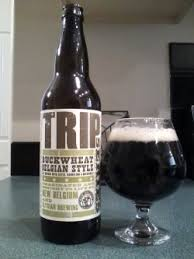
unstitledTrip number 15 in the Elysian/New Belgium series brings us a Buckwheat Belgian Ale. It seems like it would be a bit of a strange combination, but I figured what the heck, this is what beer drinking is all about. The beer was from a 22 oz. bottle and clocked in at a healthy 7.5% ABV.

The beer pours deep brown in color with lots of sediment in the glass, producing heavy notes of banana, Belgian yeast, buckwheat and grain on the nose, with subtle notes of dates and raisins. The beer starts out with a hearty and oat profile before moving into deep notes of roasted dates and plums with hints of bitter chocolate before finishing long with a strong sweetness from the Belgian yeast. The beer has some nice bold flavors but some of the more subtle flavors are lost in the mix, causing the beer to be out of balance, especially as it moved through its grain components. Buckwheat is a strong flavor and was complimented nicely with the roasted flavors, but it does produce an oat-like mouth feel and reminded me of a buckwheat pancake with jam.

Elysian Trip 15 Buckwheat Belgian step it up and throws back with 3 O’Tays out of 5.