By Iron Chef Leftovers

Mrs. Iron Chef loves bacon wrapped tenderloin. While I love cow, this is probably my least favorite part of the animal – it has very little flavor, is very expensive and can be picky to cook with since you don’t have any protection from overcooking because of its lack of fat. Personally, if you are talking supermarket cuts, give me a nice bone-in rib eye. This past Valentines Day, I wanted to do steak, but I didn’t want to do tenderloin, so I went with my compromise cut – the New York strip. It has a fair amount of fat, so it is a little more forgiving to cook, has a more beefy flavor and is still fairly tender. In case you are unaware, the strip is the muscle the run parallel to the tenderloin on the back of a cow – when you get a t-bone steak, the larger side is the strip, and the smaller is the tenderloin. This is the recipe that I came up with – it is pretty simple to put together, cooks relatively quickly and really looks impressive when done.
The Software
2 NY strip steaks, 6-8 oz each
5 strips of bacon, cooked crispy, fat reserved
1 cup chicken stock
1/2 cup dry red wine
1/4 cup Marsala or port wine
2 tablespoons of cognac
1/2 onion, sliced thin
3 oz blue cheese
1 oz butter
salt
pepper

The Recipe
The Steak
About 30 minutes before cooking, remove the steaks from the fridge and season on each side with salt. Put the steaks on a wire rack over a plate. This is going to draw out water from the meat and will lead to a better sear.
Cook the bacon in a large skillet until brown and crispy. Crumble after it is cooked.
Remove from the pan and reserve the fat. Wipe out any brown bits that remain.
Pat the steaks dry with a paper towel.
Heat the skillet on medium-high heat, adding 1 tablespoon of bacon fat until barely smoking.
Add the steaks carefully.
Cook on the first side for 4 minutes. DO NOT MOVE THE STEAKS UNTIL THE 4 MINUTES IS UP.
Flip and reduce heat to medium and cook to desired doneness (it will be roughly 4 minutes for medium rare).
Remove to a plate with the side that you cooked first facing up.
Allow the steaks to rest for 8 minutes.
Wipe out any fat and hit the pan with a shot of wine and deglaze. Add to the sauce.
The Sauce (this can be made ahead of time and stored in the fridge)
In a medium saucepan, combine the stock, wine and port over medium heat.
Reduce the contents by 2/3 this should take about 30 minutes or so.
When ready to serve, over low heat, whisk in the butter and any accumulated juices from the steak.
Taste and adjust the seasonings.
Spoon over steak.
The Onions
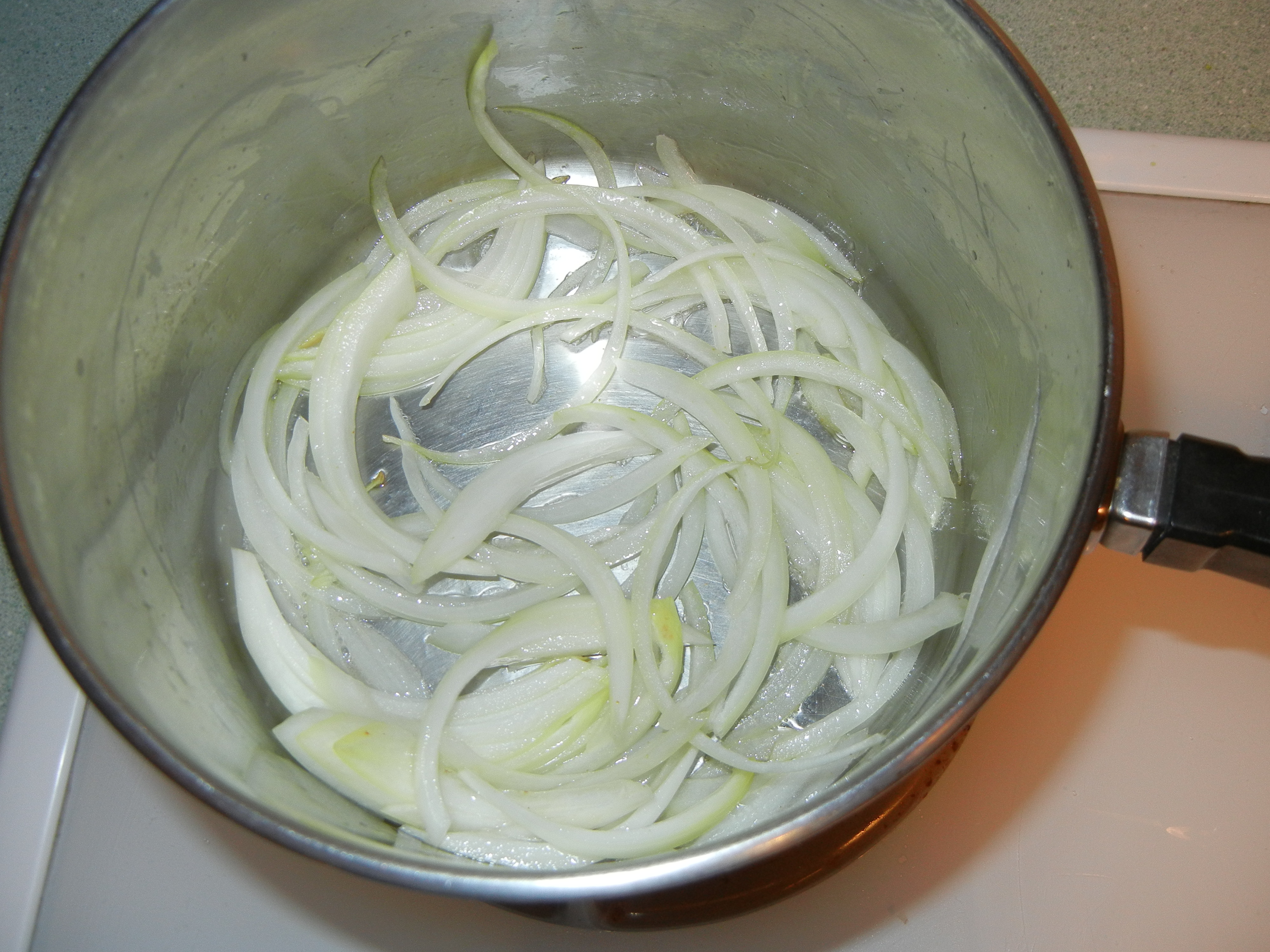
In a heavy bottom pan add 3 tablespoons of bacon fat over medium heat. Add the onions and a pinch of salt and cook until they become crispy, stirring occasionally, making sure they do not begin to burn. This should take about 20 minutes or so.
The Assembly
Heat your broiler and adjust the top rack to the position just below the broiler element.
In a bowl, take the blue cheese and mash with the back of a spoon until soft and spreadable.
Place the steaks in a broiler safe pan and spread the cheese on top. You should have about 1/8 inch layer on the steaks – you also don’t need to worry about going to the edge, the melting cheese will take care of that for you.
Place the steaks under the broiler for 2 minutes, until the cheese is melted and bubbly. Check it after 1 minute and every 30 seconds after that – it can go from bubbly to burnt in a hurry.
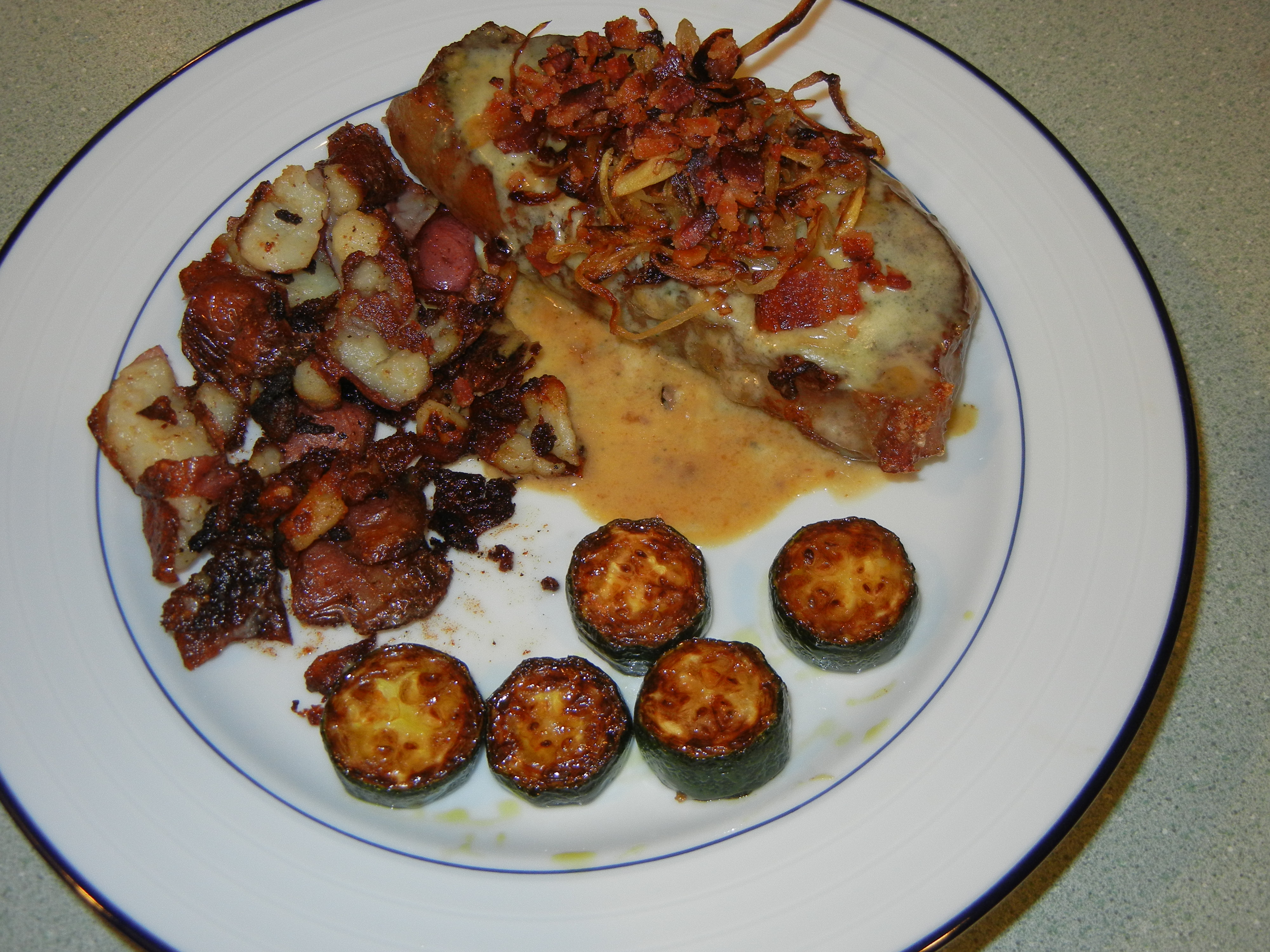
Remove the steaks to a plate. Drizzle with sauce (and any melted blue cheese from the pan) and top with crispy onions and bacon crumbles.
Serve to a happy wife.
Notes
I use Point Reyes Blue out of California. I consider this to be the best cheese on the planet and I love the balance of smoky, sweet and pungent that it brings to the dish. You can use just about any blue cheese you want, depending on your tastes. I also highly recommend using a grass fed beefsteak for this – they have a more pronounced beef flavor that blends well with the blue cheese and bacon. You want the beef as dry as possible before you sear it – it will form a much better crust this way. You don’t need to worry about pre-heating the broiler; since you are using the broiler just to melt the cheese you don’t need to get the entire oven hot to do it. If you don’t want to use the broiler, you could do this on the stovetop in a pan with a lid, but I would highly recommend only cooking the steak on the second side for 2 minutes before trying to melt the cheese. A blowtorch is also effective in doing this (I am not joking – try it sometime). I served this with some skillet-fried potatoes and seared zucchini medallions, but you can use whatever sides you would like. Be careful adding salt to the sauce – the blue cheese might be salty and you might end up over salting everything.